
16 January 2026 The Future is the Product of the Past

Archaeologists Uncover Monumental 2,800-Year-Old Lydian Palace in Sardis, Birthplace of Money

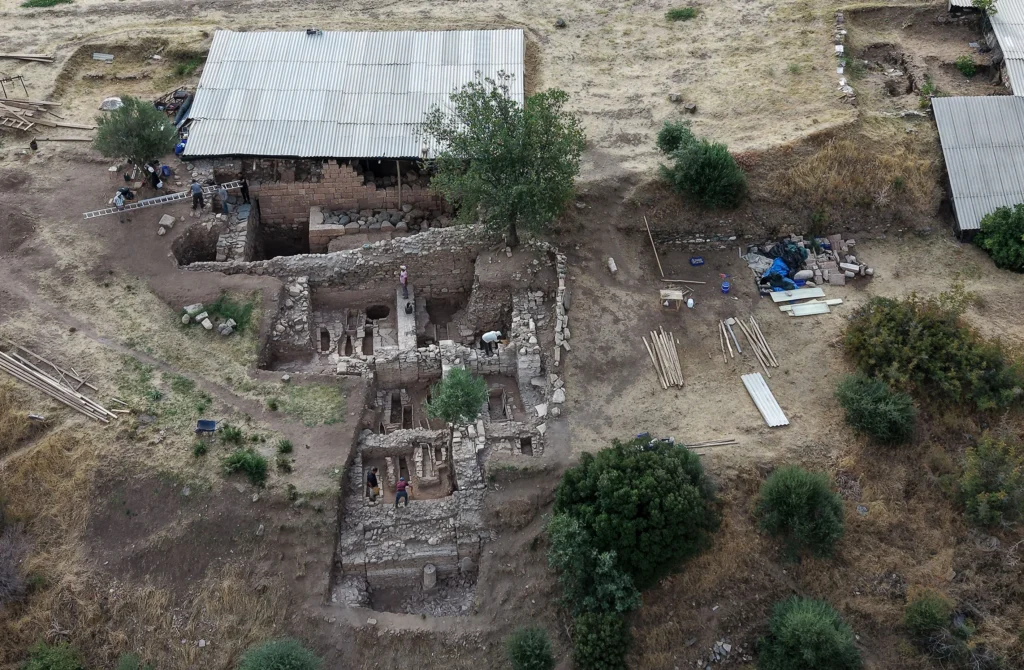
Archaeologists excavating the UNESCO World Heritage site of Sardis, located in the Salihli district of Manisa, Türkiye, have uncovered the remains of a monumental Lydian palace dating back to the 8th century BCE. The find not only pushes back the known timeline of Lydian urbanization but also challenges long-standing assumptions about the civilization’s origins and architectural prowess.

Led by Professor Nicholas Cahill of the University of Wisconsin–Madison, the excavation team reached the palace after digging nearly eight meters below the surface. Over centuries, the site had been buried under layers belonging to the Persian, Hellenistic, Roman, and Byzantine periods. In addition to the palace, archaeologists discovered luxury houses, terraced structures, around 30 bronze arrowheads, human skeletal fragments, and nine silver coins—some of the earliest known silver currency in the world.

A Game-Changer for Lydian History

For decades, historians believed that the Lydians began forming urban settlements around the 7th century BCE, heavily influenced by Greek culture. The new findings, however, tell a different story. The monumental stone walls of the palace, more than six meters high and up to two meters thick, demonstrate that the Lydians were constructing complex, large-scale urban centers much earlier than previously thought.

“This is important because in the 8th century BCE, Greek cities were still building small houses,” Cahill explained. “The Lydians, on the other hand, were already creating monumental terraces and structures, looking eastward for inspiration. They were not a derivative of Greek culture—they were a distinctly Anatolian civilization.”

Some architectural features may have been influenced by the Phrygians, another powerful Anatolian culture known for monumental stone construction in the 9th and 10th centuries BCE. However, the Sardis palace reflects unique Lydian craftsmanship and urban planning.


📣 Our WhatsApp channel is now LIVE! Stay up-to-date with the latest news and updates, just click here to follow us on WhatsApp and never miss a thing!!


Credit: AA

Sardis: Capital of a Kingdom and Birthplace of Coinage

Sardis was the capital of the Lydian Kingdom, a wealthy and powerful state that thrived in western Anatolia between the 7th and 6th centuries BCE. The city held a strategic position at the western end of the Persian Royal Road, linking the Aegean coast to the heart of the Persian Empire.

Perhaps Sardis’s most enduring legacy is its role as the birthplace of coinage. The Lydians were the first to mint coins from a naturally occurring alloy of gold and silver called electrum, introducing a revolutionary economic system that spread across the ancient world. The discovery of early silver coins within the palace site further cements Sardis’s reputation as a center of innovation and wealth.

A City of Many Layers

Today, Sardis offers a unique window into over a millennium of history, with remains from multiple civilizations visible in its ruins. Visitors can explore the massive Temple of Artemis, the largest known synagogue from antiquity, a gymnasium-bath complex from the Roman period, and a Christian basilica mentioned in the Book of Revelation. Burial mounds known as tumuli dot the surrounding landscape, marking the resting places of Lydian royalty.

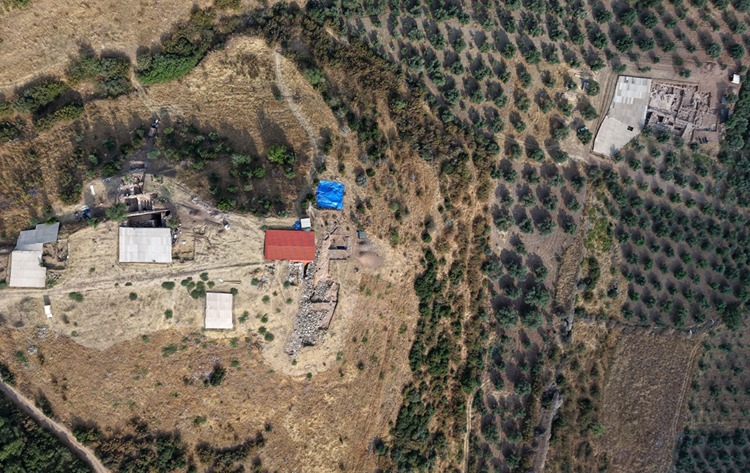
The newly discovered palace stands about one kilometer east of the ancient gymnasium. The monumental scale of the building suggests it may have been not only a royal residence but also a political and ceremonial center, symbolizing the power and sophistication of early Lydian society.
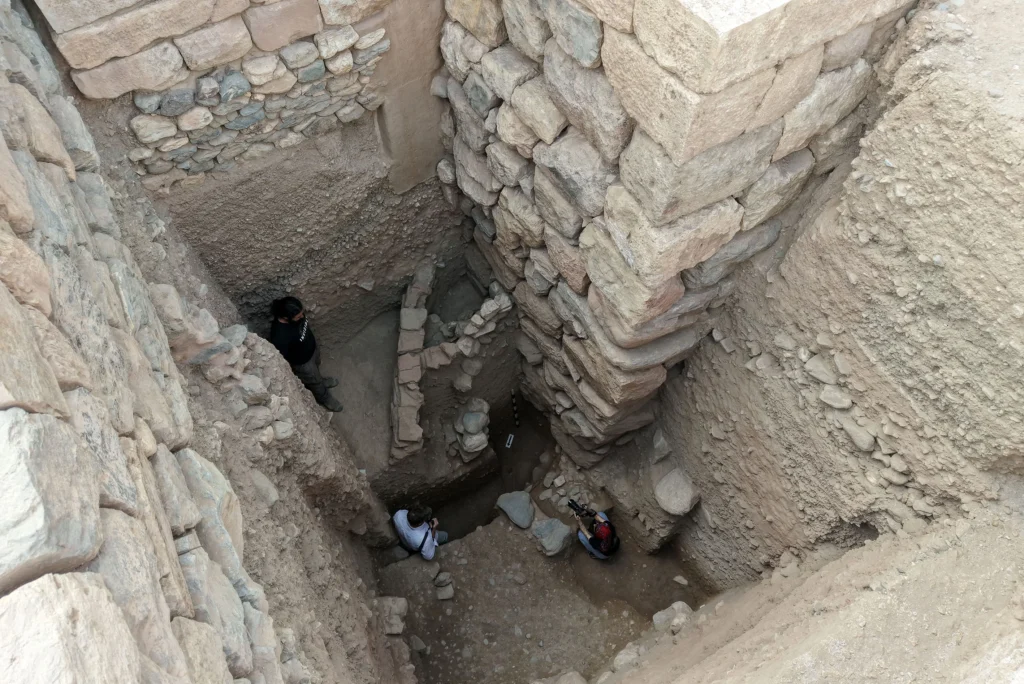
The monumental stone walls of the palace—rising more than six meters in height and measuring up to two meters in thickness, as seen in the accompanying image—stand as powerful evidence that the Lydians were building complex, large-scale urban centers much earlier than historians once believed. Credit: AA

Preserving the Past for the Future

This season’s excavations have now concluded, with the palace remains carefully covered to protect them from winter rains. Further investigations are planned for the next excavation season, as archaeologists continue to piece together the story of Sardis and its role in shaping the cultural and economic history of the ancient world.

The discovery underscores Sardis’s status as more than just an archaeological site—it is a testament to the creativity, resilience, and influence of the civilizations that once flourished in Anatolia. As researchers delve deeper, Sardis promises to reveal even more secrets buried beneath its layered past.

Cover Image Credit: AA

Related Articles

5,000-Year-Old Mysterious Ritual Pits Unearthed in Germany Reveal Burned Homes, Dog Sacrifices, and Human Skulls

1 August 2025

1 August 2025

Archaeologists uncover over 5,000-year-old ritual pits filled with burned structures, dog remains, and human skulls in Saxony-Anhalt, suggesting complex ceremonies...

Ceremonial meals may have been served in the 4500-year-old structure unearthed in the Yumuktepe Höyük in Southern Turkey

3 November 2021

3 November 2021

A 4,500-year-old structure containing a jar, many pots, and food fossils has been unearthed at the Yumuktepe Höyük (mound) in...

DNA Cracks a 750-Year-Old Murder: The Vicious Killing of a Forgotten Duke Finally Exposed

16 November 2025

16 November 2025

For more than seven centuries, the violent end of a young medieval nobleman remained an unresolved whisper in European history—half...

A 5,000-year-old large house has been discovered in China’s Yangshao Village

7 December 2022

7 December 2022

Henan Provincial Institute of Cultural Heritage and Archaeology archaeologists have excavated the ruins of house foundations dating back more than...

Could the Kerkenes Settlement be Gordion the Second?

1 August 2022

1 August 2022

Although the settlement on the Kerkenes mountain, located within the borders of Sorgun district of Yozgat, has been known and...

4,500-year-old rare Canaanite goddess sculpture found by a farmer in Gaza Strip

25 April 2022

25 April 2022

A farmer in the city of Khan Yunis, in the southern Gaza Strip, found a rare 4,500-year-old stone sculpture while...

Beyond ‘Man the Hunter’: Stone Age Burials in Latvia Reveal Gender Equality

12 September 2025

12 September 2025

Zvejnieki cemetery in Latvia, one of Europe’s largest Stone Age burial grounds, has revealed remarkable insights into equality, ritual, and...

Origin of Ivory Rings Found in Elite Anglo-Saxon Burials

2 July 2023

2 July 2023

An elite class of ancient Anglo-Saxon women were buried with hundreds of ivory rings, and the origin of these ivory...

Countless Votive Offerings Discovered at Ancient Sanctuary on Greek Island Kythnos

10 June 2023

10 June 2023

Archaeologists excavating a hilltop temple complex on the Cycladic island of Kythnos (commonly called Thermia) Greece have unearthed more than...

Two monumental sculpted Roman heads unearthed in Carlisle, northern England

25 May 2023

25 May 2023

Two monumental statue heads believed to be dated to the early 3rd century have been unearthed during excavations at a...

Symbol of Eternal Loyalty Found on Rare Medieval Sword in the Netherlands

14 June 2025

14 June 2025

A remarkable medieval sword, dating back nearly 1,000 years, has been discovered in the Dutch province of Utrecht bearing a...

The Largest Medieval Coins Treasure found in Recent Decades discovered in Germany

16 August 2024

16 August 2024

Archaeologists have unearthed one of the largest medieval coin hoards, consisting of approximately 1,600 coins, in recent years in the...

A Roman statue of the sea god Triton discovered near A2, London Road

13 September 2023

13 September 2023

Archaeologists have uncovered a Roman Statue of Triton during excavations in preparation for a housing development in Kent, England. Archaeologists...

Archaeologists have discovered a treasure trove of sixth-century coins in ancient Phanagoria in Russia

27 July 2021

27 July 2021

Archaeologists have discovered 80 coins known as Copper staters dating back to the sixth century at Phanagoria on the Black...

The Entire Genome Of 35,000-Year-Old Skull From Romania Sequenced “Peştera Muierii 1”

24 May 2021

24 May 2021

Researchers have successfully sequenced the whole genome from the skull of Peştera Muierii 1, women who lived in today’s Romania...