
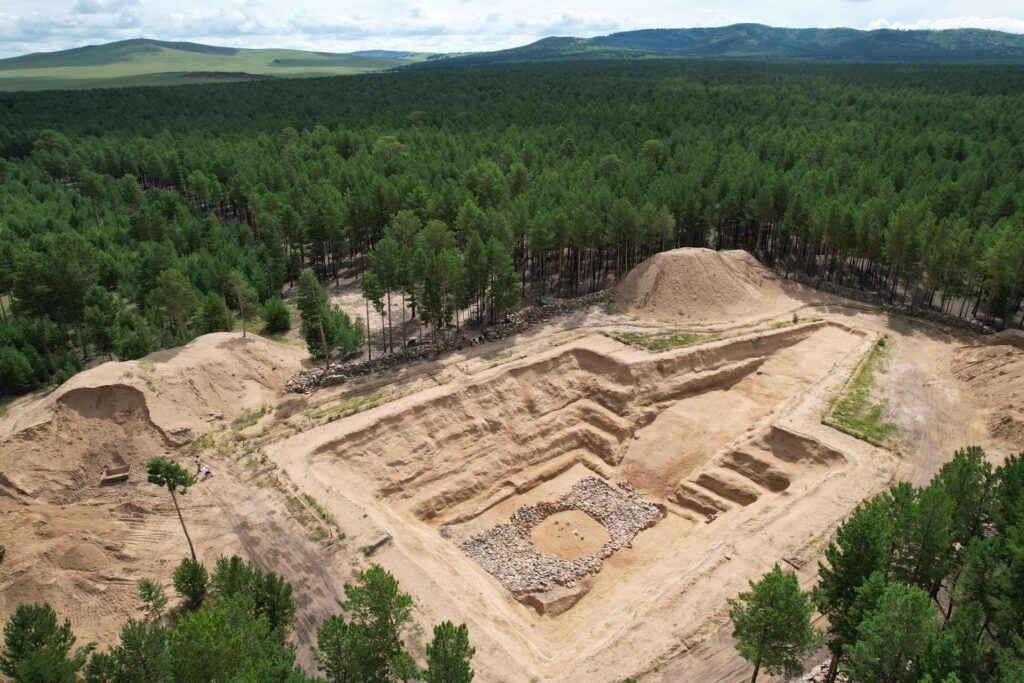
In the steppes of eastern Mongolia, one of the Hun elites who lived approximately 2,000 years ago was granted an extraordinary burial upon death. To construct the tomb, laborers dug 14.5 meters deep into the earth, creating nine layers of stone fill and arranging precious belongings around a wooden coffin. Archaeologists have now completed four years of excavations at this monumental site. Among the 413 finds are a glass vessel potentially of Roman origin, jade objects reflecting Chinese funerary traditions, and silver ornaments resembling those found on the Korean Peninsula—all of which indicate that the Huns were part of a vast network of cultural exchange.
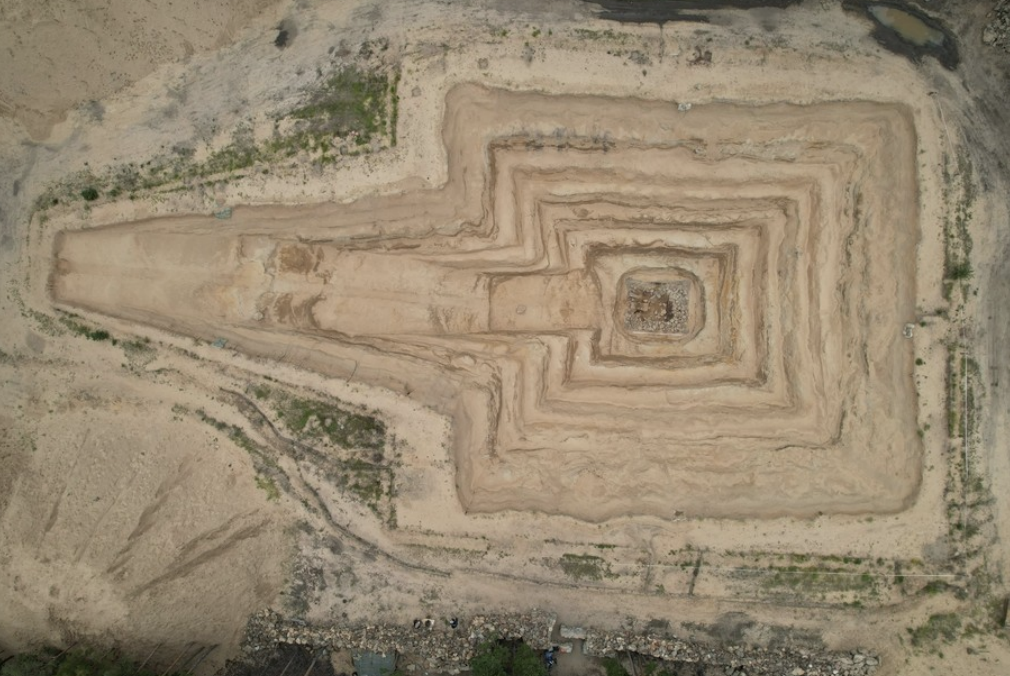
However, there is a striking discrepancy between the overall size of the tomb and its central burial chamber. Despite the structure being approximately 73 meters long, the central burial section is small compared to similar Hun tombs. Researchers believe this feature may be linked to societal changes occurring during a period when Hun political power was waning.
Four-Year Study of Mongolia’s Largest Hun Tomb
In 2023, a joint excavation began at Tomb 160 in the Duurlig Nars cemetery, conducted by the National Museum of Korea, the Institute of Archaeology of the Mongolian Academy of Sciences, and the National Museum of Mongolia. The team concluded its work in 2026, providing detailed documentation of the artifacts and the architecture of what is now the largest Hun tomb ever identified in Mongolia.
The Xiongnu, often referred to as the Asian Huns, established a powerful steppe empire centered in present-day Mongolia. From the 3rd century BCE onward, the Xiongnu controlled vast territories across the Mongolian steppes. They fought wars with China’s Han Dynasty but also maintained diplomatic and economic relations with it.
Because the Huns left few written records of their own, archaeologists rely heavily on evidence from burial sites. The monumental structure at Duurlig Nars is vital for understanding how the elite of this society displayed their status and organized their funerary rituals.
Including the entrance path to the south, the tomb reaches a total length of approximately 73 meters. The builders excavated the ground in steps and sealed the structure with nine separate layers of stone fill. The excavation team removed these layers to reach the wooden burial chamber at the center.
Roman Glass, Chinese Jade, and Korean-Linked Ornaments
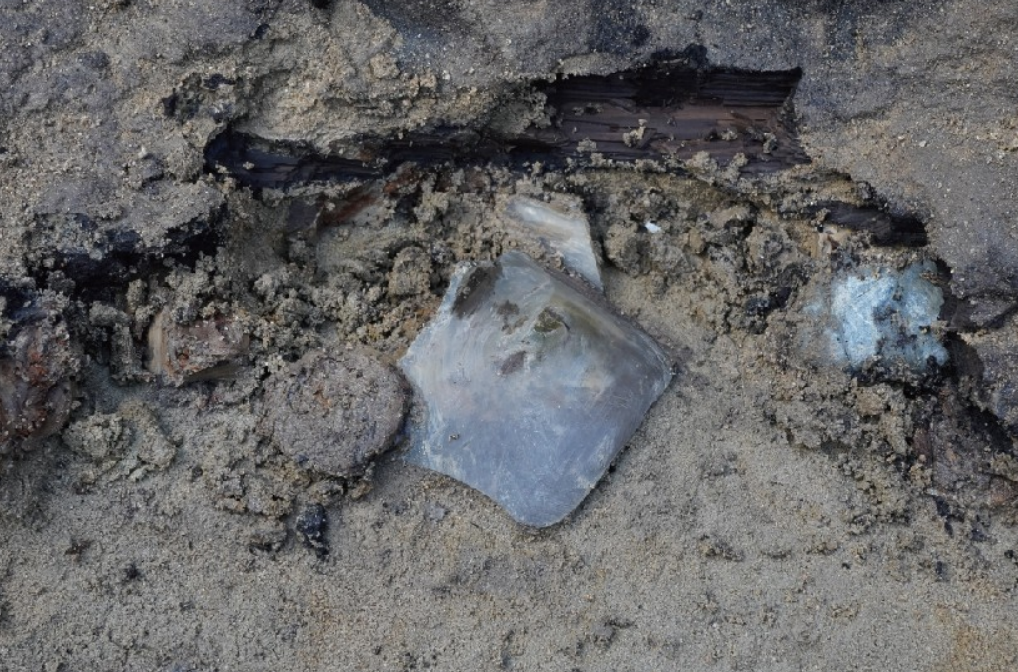
Among the 413 finds, one of the most notable objects is a transparent glass vessel with a handle. Researchers suspect the vessel may have been produced within the territories of the Roman Empire; however, as the exact production center has not yet been determined, they plan to analyze the chemical composition of the glass.
Archaeologists also discovered 15 jade objects stacked at the bottom of the coffin. These items evoke the “bi” disks used in the funerary rites of China’s Han Dynasty. Unlike traditional round disks, however, these are irregularly shaped and feature highly detailed decorations. This difference suggests that Hun society reinterpreted Chinese funerary traditions to fit their own cultural preferences.
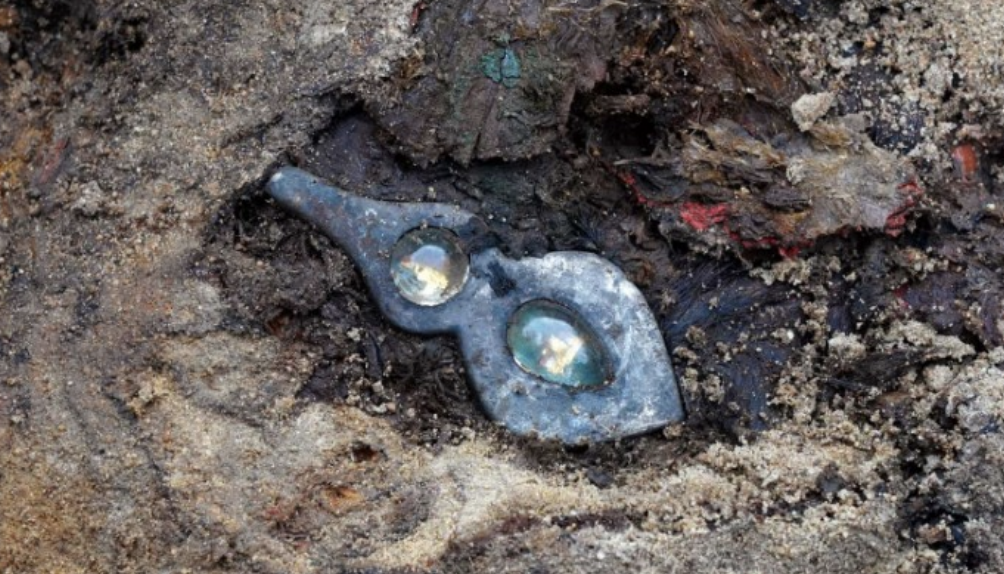
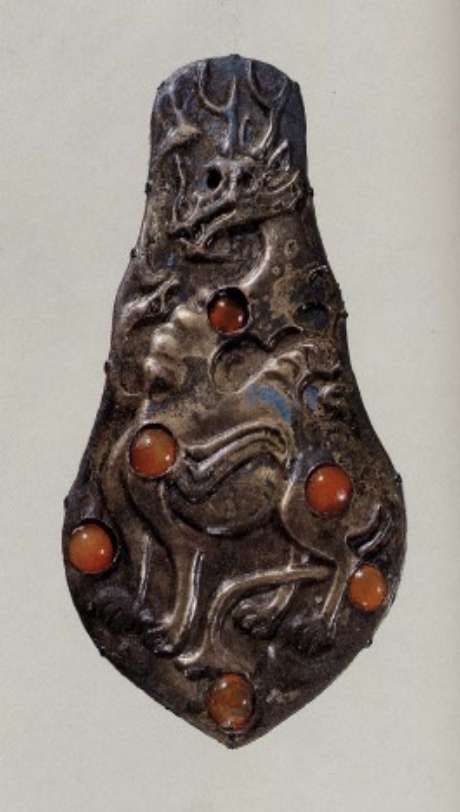
Silver horse harness ornaments directed the researchers’ attention toward the Korean Peninsula. The gourd-shaped ornaments, crafted from thin silver sheets, bear a resemblance to examples found in Lelang-period tombs around Pyongyang in present-day North Korea.
In some of the ornaments from Duurlig Nars, artisans placed red and blue materials alongside gold leaf beneath a crystal layer. This technique allows light to pass through the transparent crystal, making the underlying colors visible. Researchers noted the same technique in round gold ornaments and stated that this is the first time such a decorative style has been encountered in Hun tombs.
These findings demonstrate that the Hun elite were familiar with the material culture traditions developing in different regions of Eurasia. However, the exact routes by which these objects reached Mongolia remain unclear. Trade, diplomatic gifts, or intermediary communities may have played a role in the circulation of these items.
A Giant Tomb with a Small Burial Chamber
The monumental dimensions and precious belongings suggest that a person of high status was interred here. Archaeologists also discovered a lacquer-coated carriage directly above the central burial section. Such ostentatious objects indicate that the Hun elite reflected their social standing in their funeral ceremonies.
Nevertheless, the internal architecture of the tomb does not fully align with examples known from similar structures. The team identified two nested wooden burial chambers at the center, containing a single coffin. While the total depth of the structure reaches approximately 14.5 meters, some Hun tombs of similar size in central Mongolia reach depths of 22 meters.
Researchers encountered similar characteristics in associated graves examined at the same cemetery in 2019. This suggests that the small central burial chamber may not be unique to this specific tomb.
The Duurlig Nars tomb dates back to the late 1st century or 2nd century CE. During this period, Hun political power underwent significant changes. The research team evaluates that the differences in tomb architecture may reflect this transformation, although more evidence is needed to establish a direct link between the two developments.
DNA Analysis to Investigate the Identity of the Deceased
The identity of the owner of the monumental tomb remains unknown. Archaeologists recovered teeth and hair remains from the coffin and collected these samples for future DNA analysis. The researchers aim to determine the individual’s biological sex and age, as well as possible kinship ties with individuals buried in the surrounding associated graves.
The National Museum of Korea has participated in archaeological research in Mongolia for approximately 30 years. The Duurlig Nars project represents one of the final stages of this long-term scientific cooperation between the two countries. Following the conservation and scientific analysis of the new finds, the museum plans to prepare a comprehensive excavation report.
The next phase of the research may clarify both the identity of the tomb’s occupant and the origins of the precious objects.
