
10 March 2026 The Future is the Product of the Past

Geological Surveys in Mongolia Uncover 3,000-Year-Old Nomadic Khirgisuur Burial Mounds

Geological surveys at Mongolia’s Oyut Deposit uncovered 3,000-year-old nomadic burial mounds, revealing Bronze Age and medieval khirgisuur graves.

Geological exploration aimed at unlocking Mongolia’s mineral wealth has unexpectedly opened a new window onto the country’s ancient nomadic history. During large-scale surveys at the Oyut Deposit in central Mongolia, researchers identified a cluster of ancient burial sites that shed light on funerary traditions spanning more than a millennium. The discovery, reported by MONTSAME, highlights how industrial exploration can intersect with archaeological heritage when strict preservation laws are applied.

The findings emerged from mineral exploration conducted by the state-owned Erdenet Mining Corporation (EMC) under a government permit covering parts of Orkhon and Bulgan aimags, regions long known as cultural heartlands of ancient steppe civilizations. Exploration work at the Oyut Deposit began in 2023 and confirmed an estimated 357 million tonnes of ore containing more than 1.1 million tonnes of pure copper, marking the site as one of Mongolia’s most significant recent mineral discoveries.

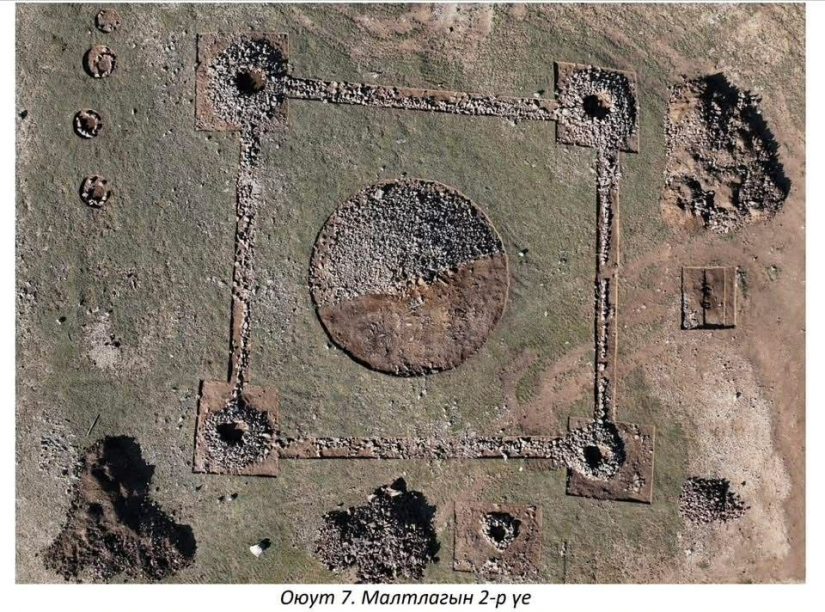
Yet alongside these economic results, geological teams encountered something far older. In 2024, surveys within the exploration field revealed 10 ancient burial mounds, locally known as khirgisuur. In line with Mongolia’s cultural heritage legislation, all industrial activity in the immediate area was halted, and archaeologists were brought in to document and study the sites.
All ten graves were documented, including Bronze Age burials, undated graves, and two from the medieval period (8th–13th centuries). Credit: Montsame

Collaboration Between Industry and Archaeology

EMC’s excavation team worked in cooperation with the Institute of Nomadic Archaeology at the National University of Mongolia (NUM). Fieldwork was carried out over several months and concluded in October, when researchers finalized a comprehensive archaeological report, according to MONTSAME.


📣 Our WhatsApp channel is now LIVE! Stay up-to-date with the latest news and updates, just click here to follow us on WhatsApp and never miss a thing!!


All ten graves were systematically excavated and recorded. Four were securely dated to the Bronze Age, four could not yet be assigned to a specific period, and two belonged to the Medieval era, roughly between the 8th and 13th centuries. The preservation level of the burials, particularly those from the Bronze Age, was described as notably high given the region’s harsh climatic conditions.

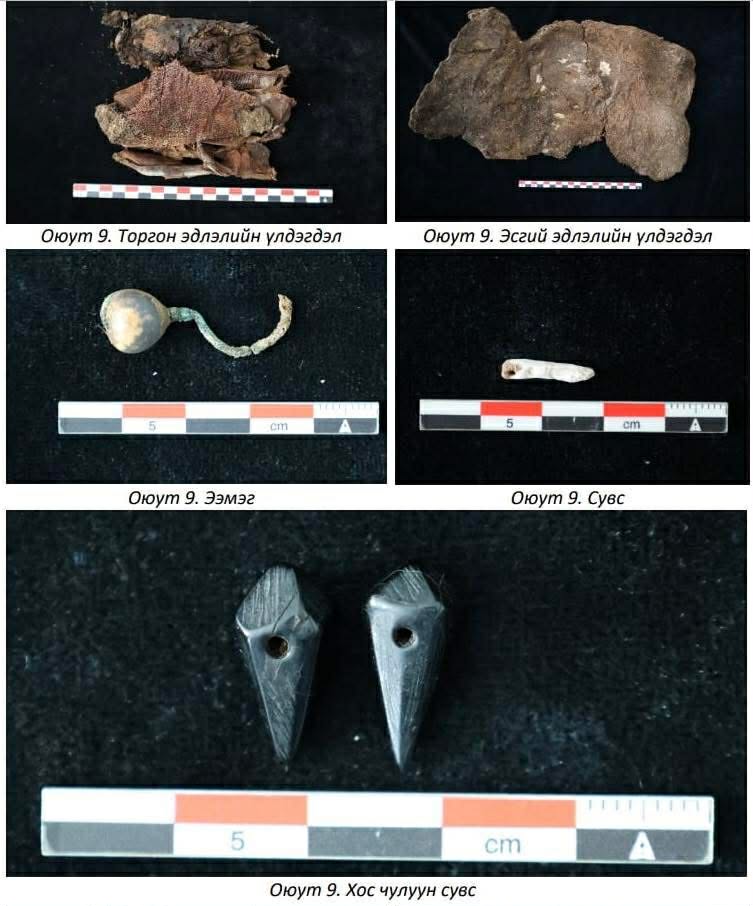
Artifacts recovered from the graves included bronze toli (mirrors), felt fragments, animal bones, and a range of funerary offerings. Such objects are typical of steppe nomadic burial customs, where personal belongings and symbolic items accompanied the deceased into the afterlife.

What Is a Khirgisuur?

The term khirgisuur refers to a distinctive type of burial mound found across Mongolia and parts of Inner Asia. Dating primarily to the Late Bronze Age, khirgisuur consist of stone-covered mounds often surrounded by satellite features such as standing stones or sacrificial animal remains. Scholars believe these monuments were not only graves but also ceremonial landmarks, reinforcing social memory and territorial identity among mobile pastoralist communities.

The presence of khirgisuur at the Oyut Deposit reinforces the idea that Orkhon and Bulgan aimags were central corridors of nomadic movement and ritual activity for thousands of years.
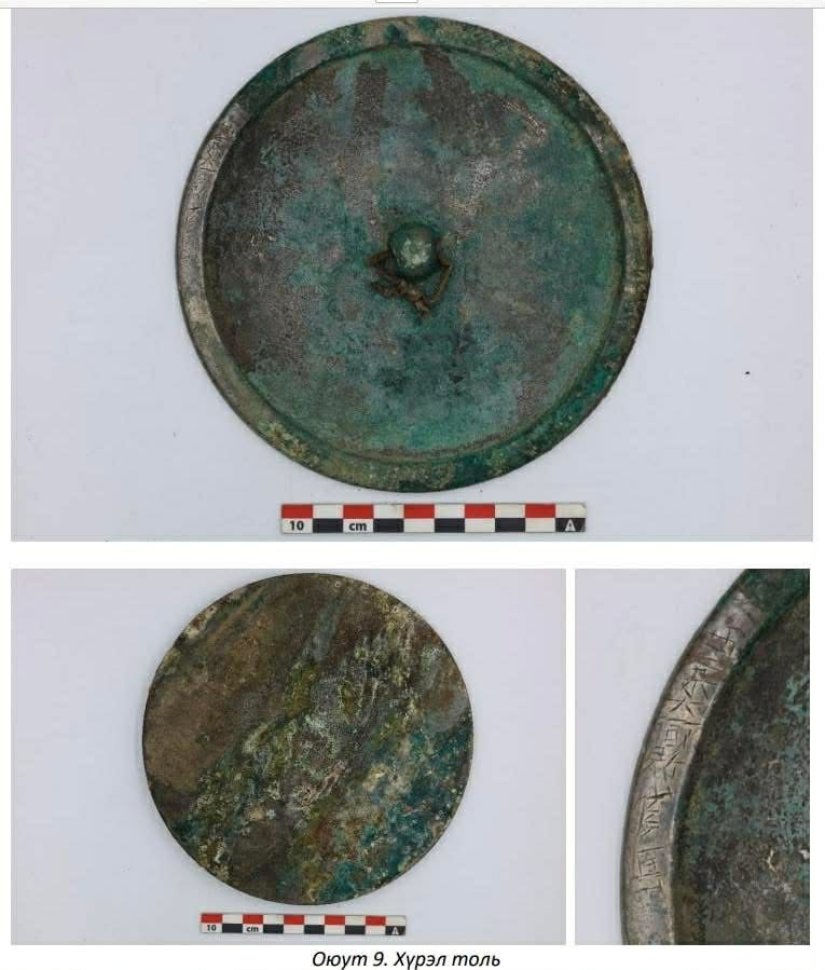
A bronze toli mirror recovered from a khirgisuur grave, reflecting personal status and ritual beliefs among ancient nomadic communities. Credit: Montsame

A Region Rich in Steppe History

The broader Orkhon Valley is already recognized as a UNESCO World Heritage Site for its role in the rise of steppe empires, including the Turkic Khaganates and later the Mongol Empire. The newly documented burial mounds add further depth to this landscape, demonstrating continuity in ritual practices from the Bronze Age through the medieval period.

Archaeological research at the Oyut Deposit covered a total area of 1,032 hectares, making it one of the more extensive heritage assessments linked to mining exploration in recent years.

As Mongolia continues to balance economic development with cultural preservation, discoveries like these underscore the importance of cooperation between industry, government authorities, and academic institutions. What began as a search for copper has instead revealed enduring traces of the people who once shaped the Eurasian steppe—long before modern borders or mines existed.

MONTSAME

Cover Image Credit: Montsame

Related Articles

Lost Medieval Swedish Heraldic Stone and Rare Dagger Unearthed in Vyborg’s Sewer System

20 November 2025

20 November 2025

Archaeologists in Vyborg, Russia have uncovered two remarkable artifacts that reshape the city’s connection to its medieval and post-medieval past....

A center on the Anatolian Mesopotamian trade route; Tavsanli Mound

24 October 2021

24 October 2021

Excavations at Tavşanlı mound, which is known to be the first settlement in Western Anatolia during the Bronze Age, continue....

Archaeologists unearth orchestra floor in Black Sea Region’s Ephesus

10 December 2021

10 December 2021

During continuing excavations in the northwestern province of Düzce, archaeologists discovered the orchestra floor of the theater area in the...

USF team discovers 2,000-year-old Roman house during excavation in Malta

8 August 2023

8 August 2023

A team of researchers and students unearthed a 2,000-year-old Roman house in Malta, complete with a waste disposal system and...

1,500-Year-Old Roman Mosaic Unearthed in Mardin: Hidden Masterpiece Rescued from Smugglers

24 October 2025

24 October 2025

A 1,500-year-old mosaic depicting vivid animal figures has been recovered during an anti-smuggling operation in southeastern Türkiye’s Mardin province. Buried...

2,700-year-old Children’s Cemetery unearthed in Turkey’s Tenedos

2 March 2024

2 March 2024

A 2700-year-old children’s cemetery was discovered during ongoing excavations in the ancient city of Tenedos in Bozcaada,  southeast of the...

Gladiators were mostly Vegetarians and they were fatter than you may think

6 August 2023

6 August 2023

What better epitomizes the ideal male physique than the Roman gladiator? Gladiators were the movie stars of the first century,...

2,500-Year-Old Archaeological Site Discovered in Eastern Afghanistan’s Laghman Province

17 December 2025

17 December 2025

Archaeologists in eastern Afghanistan have identified a previously unknown archaeological site dating back more than 2,500 years, offering rare insights...

Archaeologists find 2,000-year-old eyeshadow and blush in ancient Roman city of Aizanoi

24 September 2023

24 September 2023

Archaeologists discovered rare makeup products of 10 different colors and different sorts of hair accessories and jewelry during excavations at...

A 3800-year-old cylinder seal was discovered at Turkey’s Tepebag Mound excavations

8 July 2022

8 July 2022

In the 2022 excavations of Tepebag Mound, located around Taşköprü, the center of Adana province in Turkey’s Mediterranean Region, a...

Archaeologists Uncover Exceptional Roman Mausoleum Near Lyon, Modeled After Augustus’ Tomb

23 August 2025

23 August 2025

Archaeologists in France have unearthed a remarkably well-preserved Roman mausoleum in Saint-Romain-en-Gal, near Lyon, that was modeled on the famous...

Olmec reliefs show Ancient Olmec Leaders In Trance-Like State Roaring Like Jaguars

14 August 2022

14 August 2022

Archaeologists in Mexico have discovered two carved reliefs from the late Olmec period (900-400 B.C.) in Villahermosa, Tabasco, southeastern Mexico...

Anthropologists discovered a bone in the Grotte du Renne cave in France that could indicate the presence of a previously unknown lineage of Homo sapiens

9 August 2023

9 August 2023

A bone discovered in the Grotte du Renne cave in France may represent the existence of a previously unknown lineage...

Archaeologists Uncover Upper Part Colossal Statue of Ramses II

4 March 2024

4 March 2024

The joint Egyptian-American Archaeological Mission unearthed the upper part of the colossal statue of Ramses II (Ramesses), the lower part...

Bronze Age Wedge Tomb Discovered on the Dingle Peninsula maybe Even Older

22 April 2021

22 April 2021

A wedge tomb recently discovered on the Dingle Peninsula of Ireland was described by archaeologists as “quite unusual”. Wedge tombs...