
23 January 2026 The Future is the Product of the Past

Rare 13th-Century Coin Hoard Discovered at Berlin’s Molkenmarkt Excavations

Archaeologists have uncovered a remarkable treasure dating back to the 13th century during the ongoing excavations at Molkenmarkt, the historic heart of Berlin. A team from the Berlin State Office for the Preservation of Monuments (Landesdenkmalamt Berlin) recently unveiled a small hoard of silver coins, shedding new light on the medieval history of Germany’s capital.

A Glimpse Into Medieval Berlin: The Coin Discovery

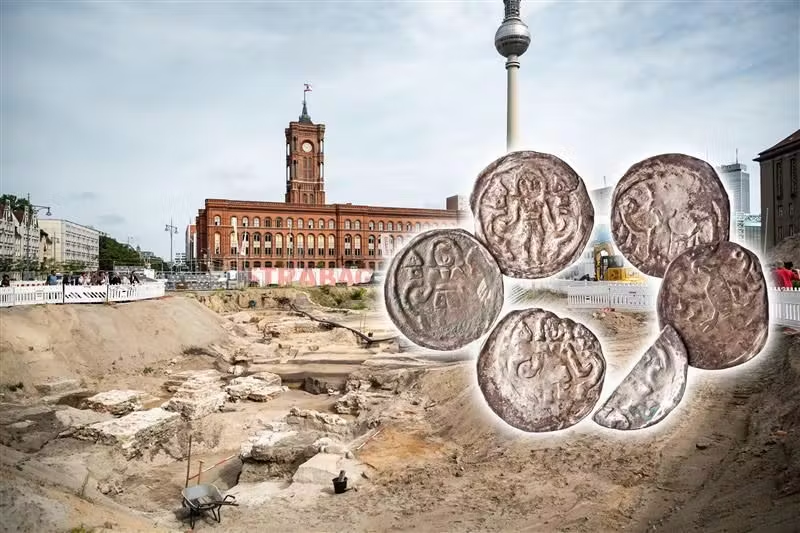
The coin hoard consists of five whole denars and one half-denar, silver coins measuring approximately 1.5 centimeters in diameter. These coins date to the latter half of the 13th century, specifically during the reign of the Ascanian margraves Otto IV and Otto V (1260/65–1293). The coins’ obverse features a standing margrave flanked by two domed towers resting on double arches, while the reverse depicts a crowned eagle—a symbol of authority and sovereignty.

Dr. Christoph Rauhut, State Conservator and Director of the Landesdenkmalamt Berlin, emphasizes the significance of the find: “These coins provide crucial evidence for the consolidation of medieval Berlin in the 13th century. For the first time, such coins have been documented at Molkenmarkt, marking an important chapter in Berlin’s urban development.”
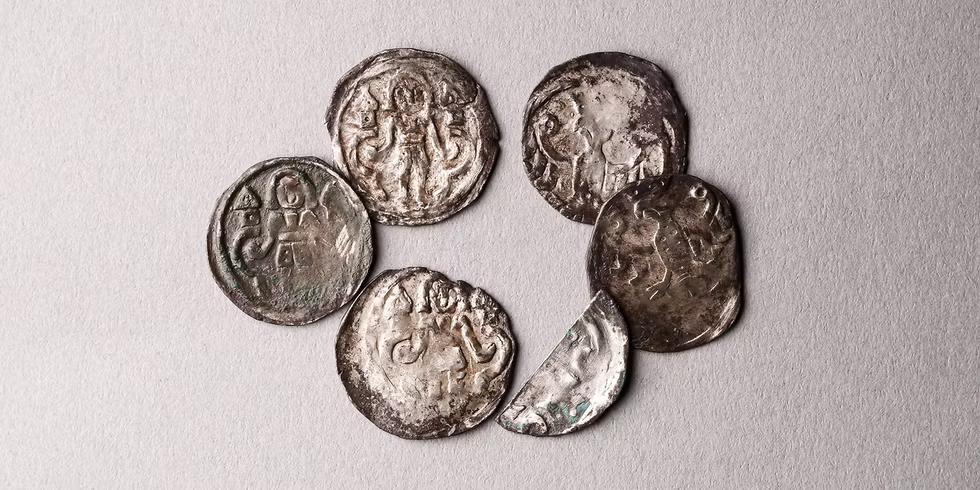
Rare 13th-Century Coin Hoard Discovered at Berlin’s Molkenmarkt Excavations. Credit: Landesdenkmalamt Berlin, Julia-Marlen Schiefelbein

Molkenmarkt Excavations: Germany’s Largest Urban Archaeological Site

The Molkenmarkt excavation spans approximately 22,000 square meters in Berlin-Mitte, making it the largest city center archaeological project in Germany. Excavations delve down to depths averaging four meters, moving over 88,000 cubic meters of historic soil, which remains exceptionally well preserved due to 20th-century surface sealing.

This extensive archaeological endeavor uncovers layers of Berlin’s development from its medieval founding through the 20th century. Key findings include a 50-meter-long and seven-meter-wide plank road dating back to around 1230, defensive ditches from the 13th century, and hundreds of wells and latrines spanning the 13th to 18th centuries. Researchers have also discovered remnants of medieval wooden cellars, houses, mud dome ovens, and smithies, along with prehistoric artifacts, particularly from the Stone Age.


📣 Our WhatsApp channel is now LIVE! Stay up-to-date with the latest news and updates, just click here to follow us on WhatsApp and never miss a thing!!


Christian Gaebler, Senator for Urban Development, Construction, and Housing, comments: “Molkenmarkt continues to surprise us with fascinating finds. Visitors can now admire many of these discoveries at the newly opened PETRI Berlin museum, offering a unique window into Berlin’s rich history.”
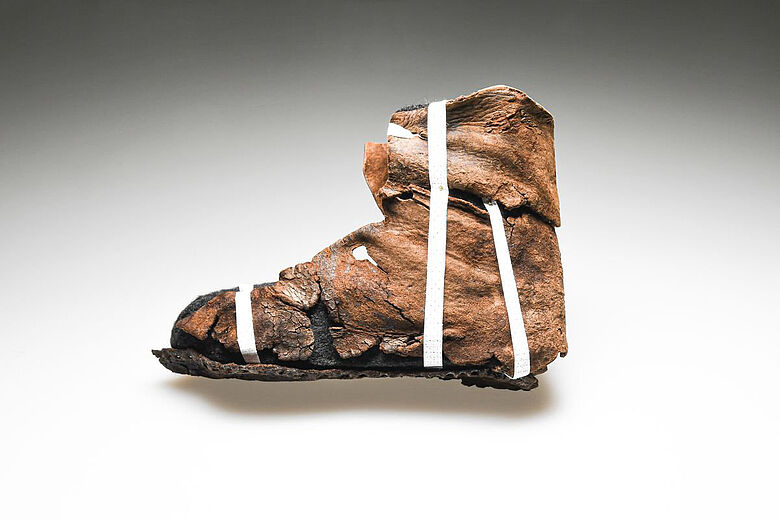
Leather shoe/boot (circa 1450), length 12 cm, equivalent to today’s shoe size 19. Credit: Berlin State Office for the Preservation of Monuments (Landesdenkmalamt Berlin), Julia-Marlen Schiefelbein

Beyond Coins: Everyday Life in Historical Berlin

The coin hoard is just one highlight among more than 700,000 artifacts uncovered at Molkenmarkt, which together paint a vivid picture of Berlin’s social and cultural history. Among these finds are a 14th-century fishing net sinker, a bone flute from the same era, a sock and leather shoes dated around 1450, a silk ribbon from the mid-15th century, 17th-century toys including marbles, and 18th-century flintstones used in flintlock firearms.

These artifacts collectively illuminate the daily life, craftsmanship, and traditions of Berlin’s past residents over several centuries. The preservation of such a diverse range of objects is exceptional, largely thanks to the protective measures taken during Berlin’s urban modernization in the mid-20th century.
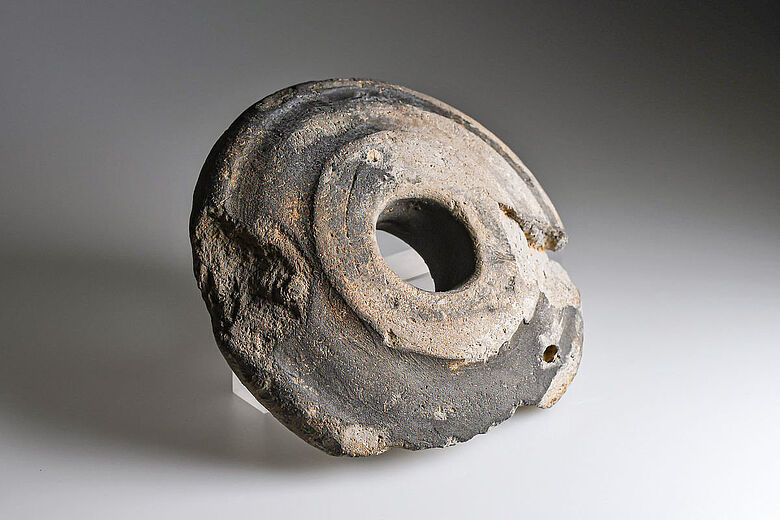
Net sinker, ceramic (14th century), diameter 12.5 cm, found at Berlin’s Molkenmarkt Excavations. Credit: Berlin State Office for the Preservation of Monuments (Landesdenkmalamt Berlin), Julia-Marlen Schiefelbein

Scientific Documentation and Future Insights

Currently, over 70% of the excavation area has been thoroughly documented and researched. Following the completion of fieldwork, a comprehensive scientific evaluation of all findings will take place, promising new insights into Berlin’s medieval and early modern urban landscape.

The Molkenmarkt site stands as a testament to the city’s layered history—from its medieval beginnings through its evolution into a modern metropolis—offering archaeologists and historians an unparalleled resource to understand Berlin’s past.
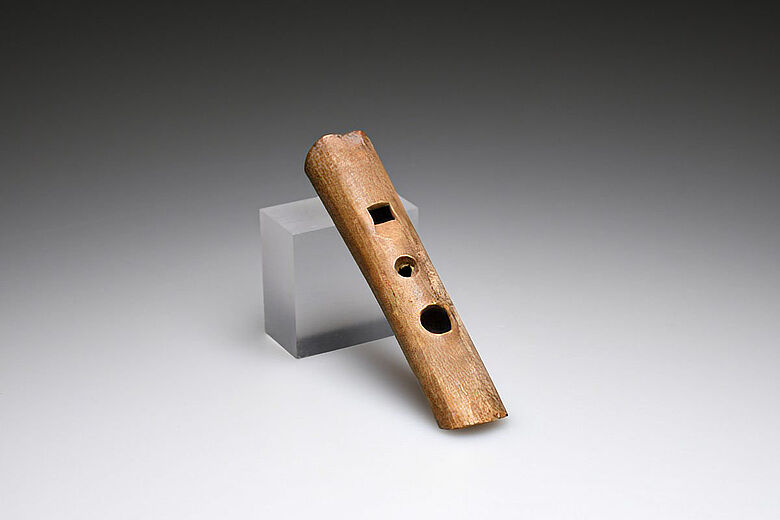
Bone flute (17th/18th century), length 7.3 cm. Credit: Berlin State Office for the Preservation of Monuments (Landesdenkmalamt Berlin), Julia-Marlen Schiefelbein

Visiting Molkenmarkt and PETRI Berlin

For those interested in exploring this history firsthand, many of the Molkenmarkt finds, including the rare coin hoard, are exhibited at PETRI Berlin, a recently opened cultural venue dedicated to showcasing the city’s archaeological treasures.

As the Molkenmarkt project progresses, it continues to deepen our understanding of Berlin’s origins and development, making it a focal point for both scholars and the public alike.

Landesdenkmalamt Berlin

Cover Image Credit: Rare 13th-Century Coin Hoard Discovered at Berlin’s Molkenmarkt Excavations. Landesdenkmalamt Berlin, Julia-Marlen Schiefelbein

Related Articles

With the withdrawal of Lake Van, the Urartian road to Çarpanak Island emerged

18 May 2022

18 May 2022

In Lake Van in eastern Turkey, the water level fell due to global warming, and a one-kilometer Urartian road connecting...

The newly discovered fossils are 200,000 years old in Denisova Cave

29 November 2021

29 November 2021

Scientists have discovered the earliest remains of a human lineage known as the Denisovans. Researchers have identified stone artifacts connected...

Dartmoor mining discovery rewrites more than 1,000 years of history

18 July 2021

18 July 2021

A new discovery at a Dartmoor mine in England dates human activity there back potentially by more than 1,000 years....

Ancient Cymbals Unearthed in Oman Reveal Shared Musical Traditions Across Bronze Age Cultures

8 April 2025

8 April 2025

Recent archaeological discoveries in Oman have unveiled significant insights into the musical practices of Bronze Age societies, suggesting a rich...

Bujeok: Korea’s Ancient Magic That Still Shapes Modern Beliefs

4 October 2025

4 October 2025

How centuries-old talismans bridge archaeology, shamanism, and digital life in one of the world’s most advanced nations. South Korea, a...

Roman Era Mosaic Unearthed in Illegal Excavation Near Zile Castle

13 May 2025

13 May 2025

A stunning mosaic has been unearthed during an illegal excavation near Zile Castle, located in the Tokat province of Türkiye,...

Name of Iranian city identified on 1800-year-old Sassanid clay seal

9 April 2024

9 April 2024

In a stunning archaeological find, the name “Shiraz” was identified on a clay sealing from the Sassanid era written in...

New study reveals unique characteristics and complex origins of late Bronze Age swords discovered in the Balearic Islands

25 November 2024

25 November 2024

A recent study uncovered a wealth of new information regarding the production, material makeup, and cultural significance of Late Bronze...

A rare Saint George seal was found during excavations near Suzdal

27 June 2023

27 June 2023

The archaeological survey of the Suzdal Opole, initiated by the Institute of Archeology of the Russian Academy of Sciences more...

Severed right hands reveal Trophy-Taking practices in Ancient Egypt

2 April 2023

2 April 2023

Twelve severed hands were found in Egypt as part of a horrifying “trophy-taking” practice that was just made revealed by...

9 Relics of Neanderthal Found in The Guattari Cave

8 May 2021

8 May 2021

Archaeologists in Italy have discovered the remains of nine Neanderthals who were reportedly killed and mauled by hyenas in their...

Roman Empire’s Emerald Mines May Have mined by Nomads as Early as the 4th Century

4 March 2022

4 March 2022

New research by archaeologists from the  Universitat Autònoma de Barcelona and the University of Warsaw suggests that Roman Empire emerald...

Archaeological settlements dating back 3000 years found in Qurayat, Oman

2 October 2022

2 October 2022

Archaeological research in Oman’s Qurayat Province has revealed numerous archaeological and historical settlements, some dating back more than 3,000 years...

Oldest found human traces on Roof of the World, Is it art?

21 October 2021

21 October 2021

Dr. David Zhang and his team’s investigations of Quesang on the Tibetan Plateau in 2018 and 2020 sparked controversy, along...

Silk Road archaeological discoveries draw attention despite the pandemic

20 June 2021

20 June 2021

A report prepared by more than 30 global experts believes that despite the COVID-19 pandemic, archaeological discoveries related to the...