
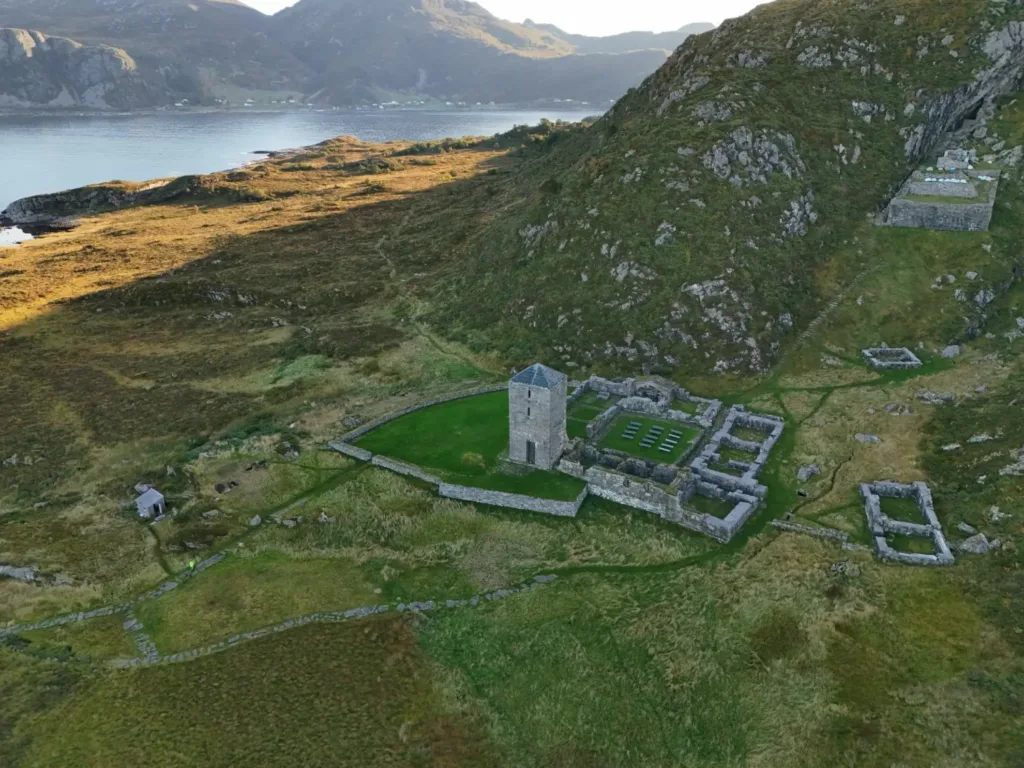
On a windswept island off Norway’s west coast, the ground keeps talking. For nearly two centuries, researchers have picked through the ruins of Selja, the country’s oldest known pilgrimage site, certain they had mapped its story in stone and legend. This month, the island proved them wrong again.
Archaeologists from the Norwegian Institute for Cultural Heritage Research (NIKU) have identified a substantial, previously unrecorded stone wall foundation lying outside the boundaries of the medieval monastery complex. It is the third major discovery on Selja in just a few years — and it is forcing historians to rethink what daily life on this sacred island actually looked like.
A Wall Too Big to Ignore
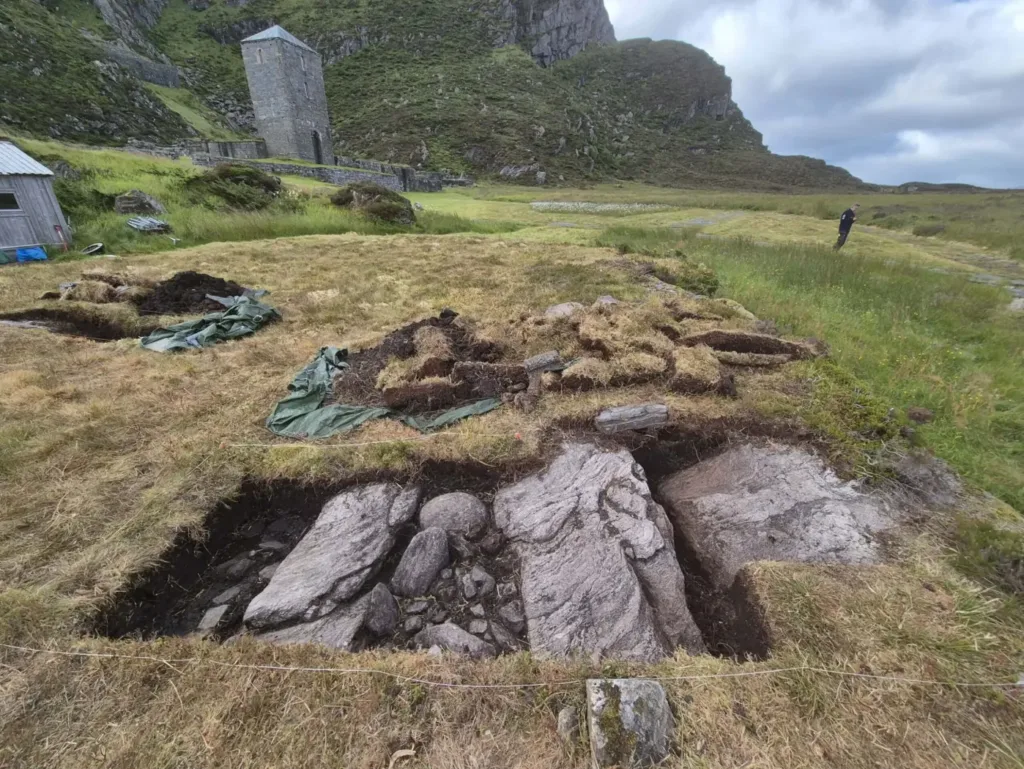
The structure was found using ground-penetrating radar, which revealed a wall foundation running from the island’s harbour area at least 13 metres southward, still trailing off underground. What has caught researchers’ attention most is its bulk: the wall measures roughly two metres thick, a scale that points to a serious, deliberate construction rather than a minor outbuilding.
Building archaeologist Regin Meyer, who has led the fieldwork alongside digital archaeology specialists, describes it as evidence of “a very substantial construction.” Yet only a portion of the wall has been examined so far — its full footprint, and what stood above it, remains buried and unknown.
What Was It For? Nobody Knows Yet
That’s the part that makes the find so tantalizing. Researchers can’t yet say whether the wall belonged to the Benedictine monastery that grew on Selja through the 12th to 14th centuries, to the bishopric founded on the island around 1068, or to an even earlier phase tied to the cult of the Selja Men — the shipwrecked martyrs whose legend put the island on the map in the first place.
To pin down a timeline, Meyer has collected soil samples and datable material from the site, hoping lab analysis will reveal not just an age but a purpose — and how the structure fits into the island’s broader development.
Rewriting Selja’s Story
Selja’s reputation has always rested on its religious weight. According to saga tradition, Sunniva and her companions were shipwrecked here in the mid-10th century and died as martyrs in a cave, sparking a saintly cult that later took her name.
King Olav Tryggvason is said to have built a church on the strength of relics found there in 996, and Olav Haraldsson — later canonized as St. Olav — passed through in 1015 as Christianity spread across Norway. By 1068, the island had Western Norway’s first bishopric.
For generations, study of Selja centered on that religious core: the churches, the monastic buildings, the pilgrim routes. But this new wall — plus two other recent finds — suggests the island supported a far busier, more varied community than the ruins alone ever let on.
“This shows that we still know only part of Selja’s story,” Meyer says. “The discoveries provide insight into activities that took place beyond the monumental buildings and raise new questions about the people who visited, lived, and worked here.”
Three Discoveries, Three Years
The wall isn’t an isolated surprise. It caps a remarkable run of finds:
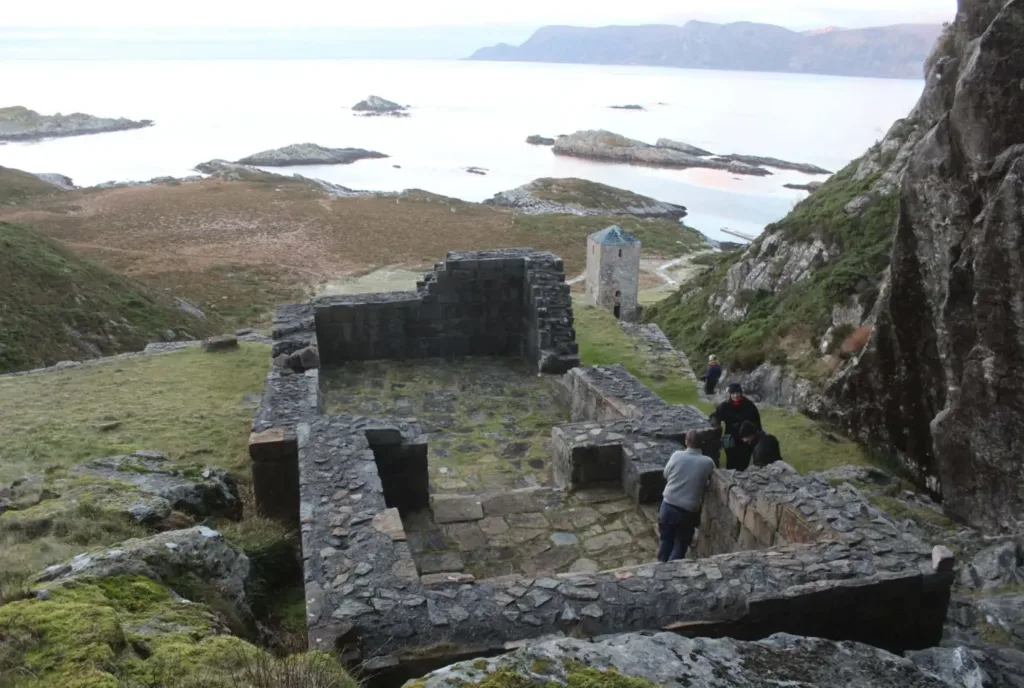
2024: Remains of an earlier stone church, showing construction features linked to the Anglo-Saxon building tradition, were found inside the ruins of St. Sunniva’s Church — possibly making it one of Norway’s very first stone churches.
2025: A previously unknown medieval building was identified northwest of the monastery, proving that undocumented settlement traces still survive across the island.
2026: The newly mapped wall outside the monastery walls, hinting at activity and construction on a scale not previously recognized.
Technology Is Rewriting Old Ground
None of this would have surfaced without a shift in method. Terrain modelling, remote sensing, and detailed digital analysis of the landscape are allowing researchers to spot traces that centuries of conventional excavation missed. It’s a reminder that even a site as thoroughly studied as Selja can still hide chapters of its own history.
“Selja is a good example of how even among Norway’s best-known medieval sites, important stories are still waiting to be discovered,” Meyer notes.
For an island long defined by martyrdom, sainthood, and stone churches, the picture emerging now is more human: a working harbour, substantial buildings, and a community whose full shape has yet to break the surface.
