
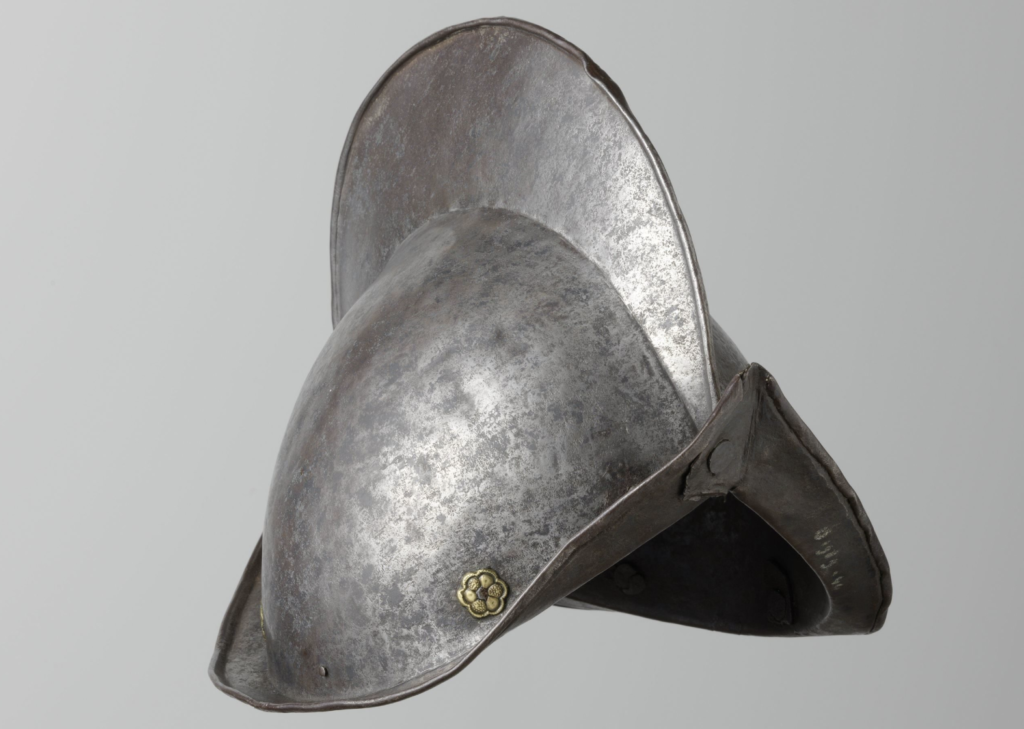
Archaeological research conducted prior to the construction of a new school in Maastricht, Netherlands, has revealed new findings regarding the military history of one of Europe’s cities that witnessed centuries of warfare. Archaeologists discovered a helmet, pieces of armor, a cemetery, and a potential siege trench that may be linked to sieges occurring in the 16th and 17th centuries.
According to an official information document from the Municipality of Maastricht dated November 12, 2026, the finds were identified in the West-Eenhoornsingel area, where the Sint-Maartenscollege and a gymnasium are to be built. These remains, located outside the city’s historical defense systems, offer a new opportunity to investigate the subterranean traces of Maastricht’s long history of war.
Military Remains at the School Site
In October, archaeologists created 11 trial pits, each approximately 100 square meters, within the construction area. During the research, a burial ground, a pit, wagon wheel tracks, a field oven, and a trench potentially associated with siege activities were documented.
The discovery of a helmet and a piece of armor is particularly noteworthy. This military equipment suggests that the area was not used solely for daily activities but may also be connected to past conflicts.
However, archaeologists have not yet announced the exact date of the weapons and armor pieces or which army they belonged to. The function of the probable siege trench will also be investigated through comprehensive excavations.
The municipality has decided to expand the research area following these new findings. The work, planned to begin in mid-November, is expected to be completed before Christmas.

Centuries of War Shaped Maastricht
To understand the significance of these new discoveries, one must look at the military history of Maastricht. Due to its strategic crossing point on the Meuse River, the city became an important fortress that Spanish, Dutch, and French armies sought to control.
According to historical records from the Maastricht Museum, the city established a permanent military garrison in 1567. Defense structures expanded in subsequent centuries, and Maastricht became one of Europe’s most significant fortified cities.
One of the most devastating sieges occurred in 1579. Spanish forces under the command of Alexander Farnese, the Duke of Parma, besieged the city for over three months. Maastricht fell on June 29, followed by violent looting and significant loss of life.
In 1632, the army of the Dutch Republic, under the command of Frederick Henry, besieged Maastricht once more. The city surrendered in August, ending Spanish rule and becoming one of the strategic fortresses on the southern border of the Dutch Republic.
The Siege Where the Famous Musketeer Died
Another pivotal event in Maastricht’s military history took place in 1673. King Louis XIV of France besieged the city with a powerful army, utilizing the attack methods developed by military engineer Sébastien Le Prestre de Vauban.
French forces managed to breach the city’s defenses in a short time. However, the siege is remembered for the death of a historical figure known to the world of literature: Charles de Batz de Castelmore, better known as d’Artagnan—who inspired Alexandre Dumas’s famous novels—lost his life in the clashes before Maastricht.
Siege records from Maastricht Vestingstad show that the city was attacked again in 1676. This attempt by Dutch forces failed, and Maastricht remained under French control for some time.
It is not yet known whether the newly found military remains are related to any of these specific sieges. Nevertheless, the discovery of a helmet, armor, wagon tracks, and a potential siege trench within the same project area provides archaeologists with a collection of finds that can be used to study the city’s activities during wartime.
