
5 December 2025 The Future is the Product of the Past

What Lies Beneath Bor Ovoo? Turkish and Mongolian Researchers Set to Unearth Ancient Nomadic Traditions

Renowned historian Prof. Dr. Kürşad Yıldırım, a leading expert in Central Asian nomadic cultures from Istanbul University, is spearheading a groundbreaking international excavation at the sacred Bor Ovoo site in the lands of Mongolia. Known for his extensive research on Turkic history and steppe archaeology, Prof. Yıldırım now leads a team of Turkish and Mongolian scientists in an ambitious quest to uncover ancient burial mounds—kurgans—that could rewrite what we know about Turkic and Mongol funerary traditions.

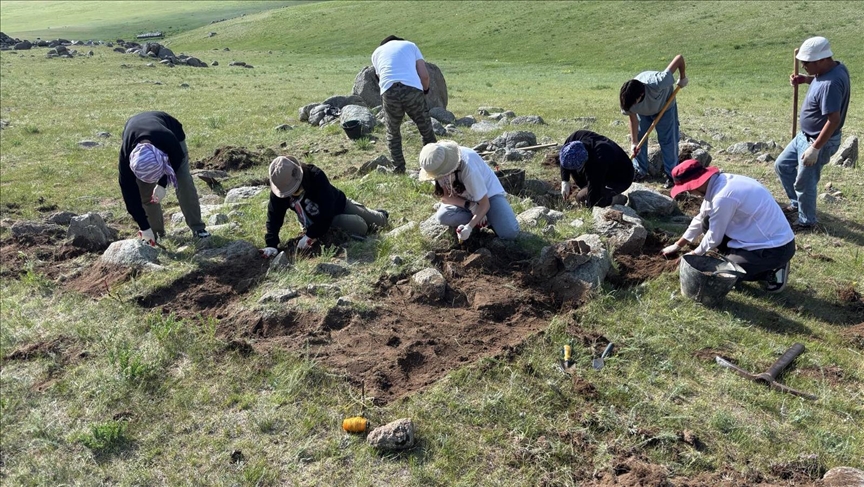
Sacred burial mounds spanning from the Bronze Age to the 13th century shed light on Turkic-Mongolian spiritual heritage and funerary practices.

An international team of archaeologists from Türkiye and Mongolia has launched the latest phase of an ambitious excavation project titled “The Culture of Horsemen”, aimed at uncovering the funerary traditions of ancient nomadic societies in Central Asia. The project is led by Prof. Dr. Kürşad Yıldırım from Istanbul University, who emphasized the spiritual and cultural significance of the findings, particularly around the Bor Ovoo hill near Arkhangai, Mongolia.

Backed by the İlteriş Foundation and industrial sponsor Kanca Forging & Steel, the excavations are being carried out at Bor Ovoo and Shovkh Uul Mountain, regions rich with archaeological layers dating from the Bronze Age through the 13th century. Among the most remarkable sites is Bor Ovoo, a sacred hill adjacent to the memorial complex of Uighur Khagan Moyen Chur (747–759 AD).
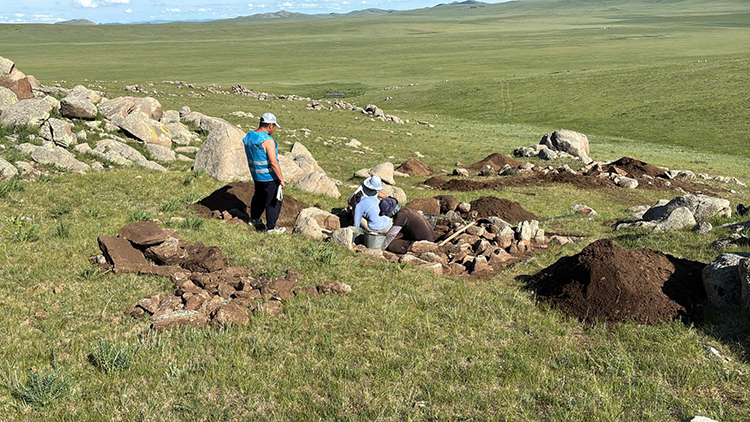

Sacred burial mounds spanning from the Bronze Age to the 13th century shed light on Turkic-Mongolian spiritual heritage and funerary practices.

Sacred burial mounds spanning from the Bronze Age to the 13th century shed light on Turkic-Mongolian spiritual heritage and funerary practices. Credit: Aişe Hümeyra Akgün – AA

“This hill has witnessed sacred rituals for over 3,200 years,” explained Prof. Yıldırım. “It was where Turkic and Mongol nomads buried their elite and conducted ceremonial rites. The continuity of these practices from prehistoric times into the medieval era demonstrates a deep-rooted cultural and spiritual lineage.”


📣 Our WhatsApp channel is now LIVE! Stay up-to-date with the latest news and updates, just click here to follow us on WhatsApp and never miss a thing!!


The term “Bor Ovoo”, meaning “brown sacred cairn” in Mongolian, reflects both the physical landscape and its revered status among locals—past and present. Despite possessing official excavation permits, Yıldırım recounted how some members of the local Mongolian community questioned the digging activity, reflecting ongoing veneration of the site.

The current phase focuses on five kurgans—artificial burial mounds—believed to contain not only human remains but also ritual objects, metal artifacts, and pottery fragments. Prof. Yıldırım noted that these materials offer more than just archaeological data:

“Through these burial customs, we gain insight into social hierarchy, ancestor worship, and cross-cultural influences between nomadic and sedentary civilizations of Inner Asia and Siberia.”
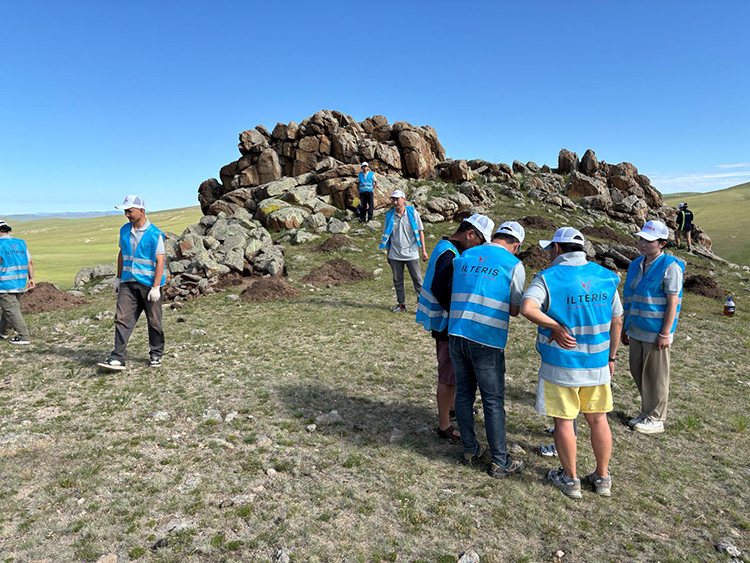
The term “Bor Ovoo”, meaning "brown sacred cairn" in Mongolian, reflects both the physical landscape and its revered status among locals—past and present. Credit: Aişe Hümeyra Akgün - AA
The term “Bor Ovoo”, meaning “brown sacred cairn” in Mongolian, reflects both the physical landscape and its revered status among locals—past and present. Credit: Aişe Hümeyra Akgün – AA

Findings from the site are expected to help scholars track cultural continuity and change across millennia. The multidisciplinary team, which includes Turkish experts such as Assoc. Prof. Elvin Yıldırım, Dr. Ferhat Çiftçi, and Şeyma Sapma, along with Mongolian archaeologists Prof. Erdene Myagmar, Assoc. Prof. Ulziibayar Sodnom, and Tsenguun Ganbold, aims to complete both the architectural mapping and laboratory analysis of bones and grave goods within the year.

Yıldırım underscored the academic and diplomatic value of the collaboration:

“Mongolian archaeologists have built a robust steppe archaeology tradition. Their field expertise, combined with our theoretical and historical insights, creates a powerful synergy. This partnership not only enriches both sides’ knowledge, but also inspires future joint ventures and publications.”

While the artifacts will remain under the custody of Mongolian authorities and may be displayed in local museums, the international team will co-publish their findings in Turkish, Mongolian, and English to reach a broad academic audience.
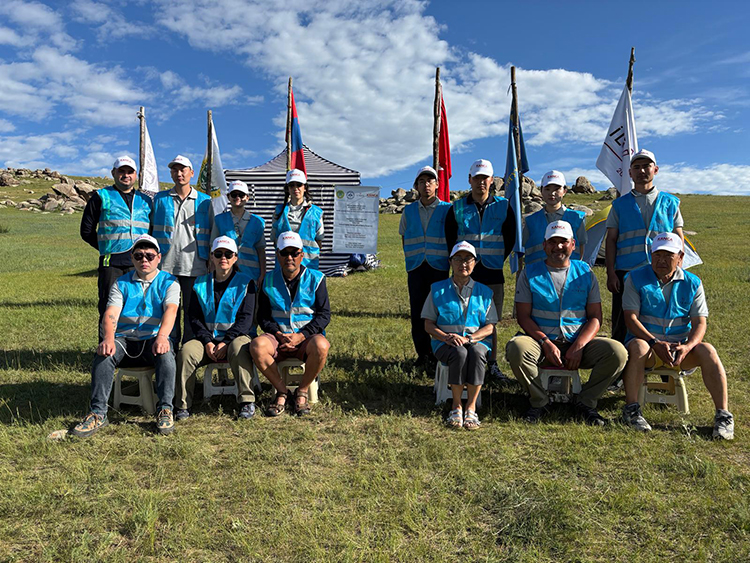
Turkish and Mongolian archaeological team members led by Prof. Dr. Kürşad Yıldırım during the ongoing excavation at the sacred Bor Ovoo site in Mongolia. Doç. Dr. Elvin Yıldırım, Dr. Ferhat Çiftçi, Şeyma Sapma, Prof. Dr. Kürşad Yıldırım, Doç. Dr. Ulziibayar Sodnom, Prof. Dr. Erdene Myagmar, and researcher Tsenguun Ganbold. Credit: Aişe Hümeyra Akgün - AA
Turkish and Mongolian archaeological team members led by Prof. Dr. Kürşad Yıldırım during the ongoing excavation at the sacred Bor Ovoo site in Mongolia. Doç. Dr. Elvin Yıldırım, Dr. Ferhat Çiftçi, Şeyma Sapma, Prof. Dr. Kürşad Yıldırım, Doç. Dr. Ulziibayar Sodnom, Prof. Dr. Erdene Myagmar, and researcher Tsenguun Ganbold. Credit: Aişe Hümeyra Akgün – AA

Looking ahead, Prof. Yıldırım confirmed plans for further excavations in the Orkhon Valley, the heartland of early Turkic empires:

“Mongolia is an unmatched landscape for exploring ancient Turkic civilizations—from the Huns to the Uighurs. With continued collaboration and sponsorship, we hope to expand these efforts and deepen our understanding of nomadic cultural heritage.”

As the team continues to unearth long-buried legacies beneath the Mongolian soil, each artifact tells a story not just of the dead—but of a shared spiritual and cultural journey across the steppes.

Cover Image Credit: Aişe Hümeyra Akgün – AA

Related Articles

From Ancient Scripts to Digital Insights: TLHdig 0.2 Breathes New Life into Hittite Cuneiform Tablets

27 March 2025

27 March 2025

The UNESCO World Heritage Site of Boğazköy-Hattuša, once the capital of the Hittite Empire during the late Bronze Age (circa...

A Connection Between Viking Knots And Quantum Vortices Discovered

14 December 2022

14 December 2022

Scientists demonstrated how three vortices can be linked in such a way that they cannot be dismantled. Although this study...

After 85 years of adventure, Globetrotting Mycenaean gold ring returns home

3 June 2022

3 June 2022

The 3,000-year-old gold Mycenaean ring, stolen from the Rhodes Archaeological Museum during World War II and later bought by a...

Millefiori Glass Plateques From the 5th Century AD Discovered in the Ancient Lycian City of Myra

9 September 2024

9 September 2024

One of the six leading cities of ancient Lycia and the birthplace of Santa Claus (or Sinterklaas in Dutch), the...

A new finding in Persepolis reveals a Royal wall

23 October 2023

23 October 2023

A new find at Persepolis, whose magnificent ruins rest at the foot of Kuh-e Rahmat (Mount of Mercy) in southwestern...

9 Synagogues in Izmir to Reopen as Museum

26 March 2022

26 March 2022

As part of a Jewish heritage project in Izmir, Turkey, nine historic synagogues will be reopened as museums. Built by...

Medieval Hub of Arts & Crafts Center discovered in Nola: The discovery could rewrite the history of early medieval Nola

23 August 2023

23 August 2023

On the outskirts of Nola, a district from the early Middle Ages has been discovered. According to the Soprintendenza Archeologia,...

Çatalhöyük Unearths New Secrets: Social Change and the “House of the Dead” in One of the World’s Oldest Cities

30 August 2025

30 August 2025

Nestled in the Konya Plain of central Türkiye, Çatalhöyük, a 9,000-year-old Neolithic settlement and UNESCO World Heritage Site, continues to...

1650-Year-Old Earthen Grills Unearthed in Assos Excavations

14 August 2021

14 August 2021

Excavations continue in Assos Ancient City, a rich settlement of the period, which is located within the borders of Behramkale...

Archaeologists Find the “Lost” House of the Last Anglo-Saxon King Depicted on the Bayeux Tapestry

28 January 2025

28 January 2025

A team from Newcastle University and the University of Exeter have uncovered evidence that a house in England is the...

A new study provides the earliest evidence of rice harvesting, dating to as early as 10,000 years ago

8 December 2022

8 December 2022

A new study of stone tools from southern China reveals the earliest evidence of rice harvesting, dating back 10,000 years....

Scientists discover 4 new Nazca Geoglyphs using AI deep learning

4 June 2023

4 June 2023

Scientists from Japan used AI deep learning to discover new geoglyphs in the Arid Peruvian coastal plain, in the northern...

The largest embalming cache ever found in Egypt unearthed at Abusir

10 February 2022

10 February 2022

Archaeologists from the Czech Institute for Egyptian Science have discovered a cache of artifacts related to the practice of Egyptian...

In the backstage of Smyrna Ancient Theater Latrina found

3 November 2021

3 November 2021

Interesting finds unearthed during the excavations of the 2400-year-old Ancient City of Smyrna in the Aegean region of Turkey continue...

Alexander the Great’s Sacred Purple Tunic Found in a 2,400-year-old Macedonian Tomb?

29 October 2024

29 October 2024

Archaeologists have found a sacred chiton (tunic) in a 2400-year-old royal tomb in the Macedonian city of Vergina in northern...