
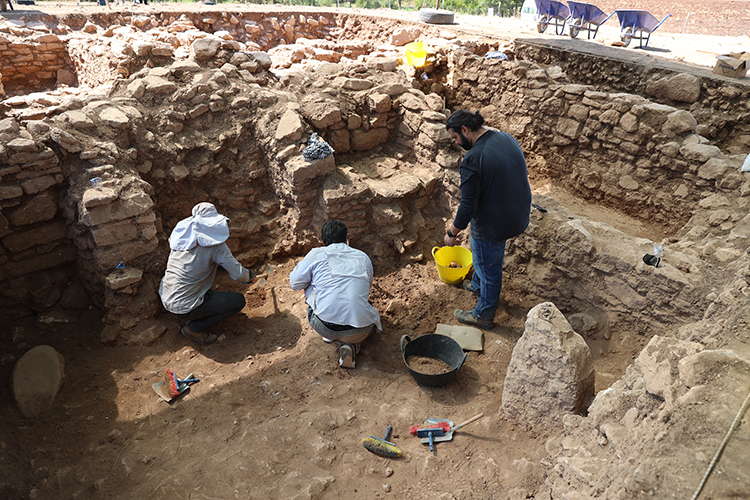
Archaeologists have uncovered 12 new human skulls during ongoing excavations at Sefertepe, one of the most important sites of the Taş Tepeler Project. The discovery, dating back more than 10,500 years, adds to the growing evidence that this Neolithic settlement played a central role in ritual practices and early cultural traditions in southeastern Türkiye.
The research is being carried out under the supervision of Assoc. Prof. Emre Güldoğan from Istanbul University’s Department of Prehistoric Archaeology, within the framework of the “Şanlıurfa Neolithic Age Research – Taş Tepeler Project” initiated by the Turkish Ministry of Culture and Tourism.
Skull Room Yields New Finds
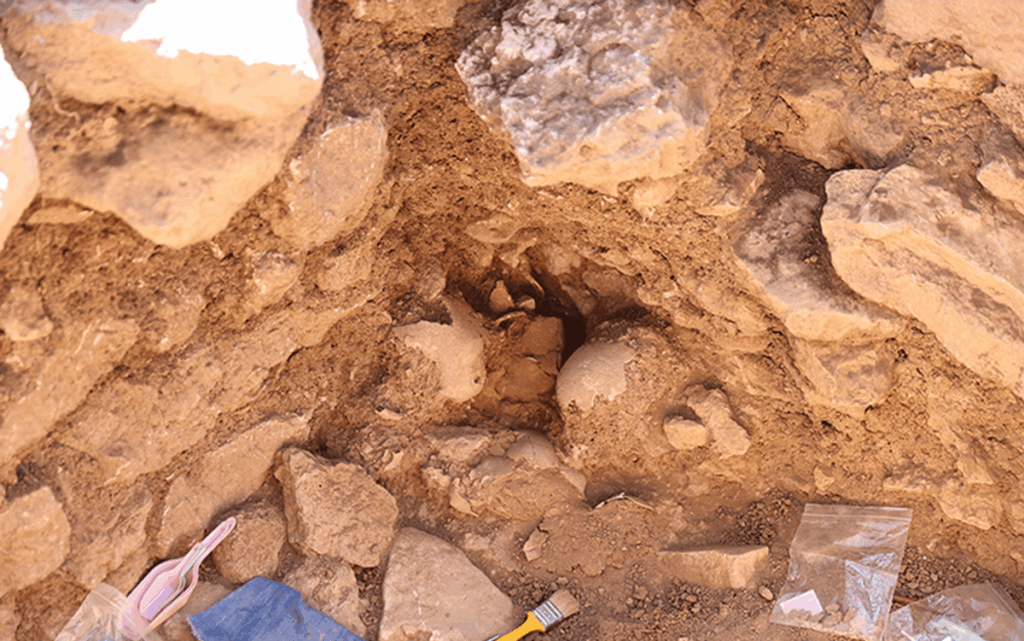
Last year, archaeologists identified a chamber at Sefertepe known as the “skull room,” where 31 skulls and fragments were unearthed. This season, the team uncovered 8 skulls within the same chamber and 4 additional skulls in another cell, raising the total number of finds significantly.
Assoc. Prof. Güldoğan explained that excavations this year involve a 39-member team of specialists, students, and workers, focusing on both previously opened areas and newly designated trenches.
“So far, we can confirm that new skull samples have emerged. While last year’s discoveries already provided remarkable insights, this year’s findings expand the evidence and hint at even more complex cultural practices,” he said.
Anthropological Analysis: From Infants to Adults
The skulls are now undergoing anthropological examination by Prof. Dr. Yılmaz Selim Erdal of Hacettepe University. Preliminary results from last year’s samples have already revealed a wide demographic range, from infants as young as six months to adults around 40 years old.
According to Erdal, the diversity of ages suggests that the skulls were not the result of a single catastrophic event, but rather part of a long-term ritual or cultural practice involving multiple generations of the community.
This discovery supports the interpretation that Sefertepe, much like its sister site Göbeklitepe, was not merely a settlement but a ritual hub where death, ancestor veneration, and symbolic practices played a significant role.
Architectural and Botanical Studies in Progress
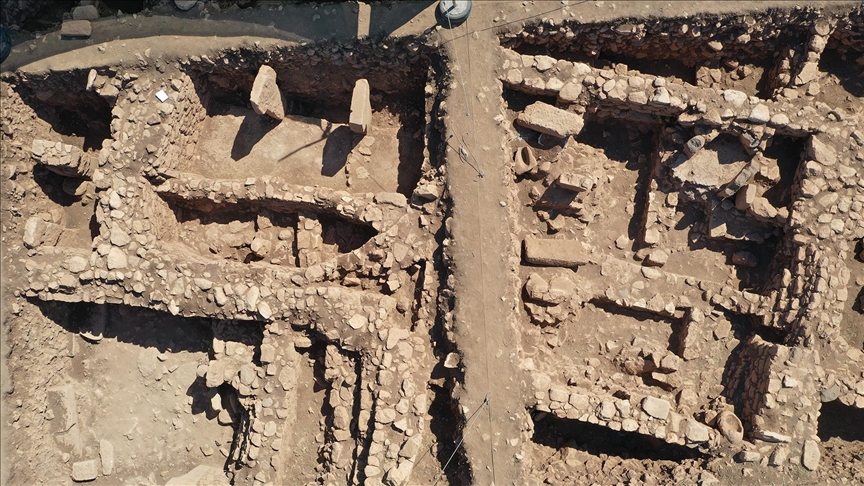
Alongside the human remains, excavations at Sefertepe are also revealing unique architectural features. Archaeologists recently reached the floor level of a special building associated with the skulls and niches. Evidence shows that the bedrock had been deliberately leveled and that carefully carved pits were created, suggesting deliberate planning and ritualistic design.
In addition, this year marks the beginning of botanical studies at Sefertepe. Researchers aim to uncover traces of early agriculture and plant use, which could provide crucial information about the transition from hunter-gatherer groups to settled farming communities in the region.
Restoration efforts are also ongoing, particularly on broken standing stones discovered in previous seasons. These pillars and carved stones may have served as focal points in ceremonies, much like the iconic T-shaped pillars of Göbeklitepe.
Sefertepe within the Taş Tepeler Network
Sefertepe is one of the 12 known sites that form the Taş Tepeler (Stone Hills) Project, a large-scale archaeological initiative covering the wider Şanlıurfa region. These sites, including the world-renowned Göbeklitepe, date from 9,000 to 12,000 years ago and represent the earliest known examples of monumental ritual architecture.
While Göbeklitepe has been hailed as the “zero point of history,” Sefertepe is emerging as a critical location that deepens our understanding of the social and ritual complexity of Neolithic communities. Its discoveries indicate that Göbeklitepe was not an isolated site but part of a broader cultural landscape where interconnected communities shared architectural styles, belief systems, and ritual practices.
A Glimpse into Early Civilization
The 12 newly unearthed skulls at Sefertepe reinforce the theory that death rituals and ancestor worship were central to Neolithic belief systems. By analyzing the remains of individuals across different age groups, archaeologists and anthropologists are piecing together how these early communities understood life, death, and the afterlife.
Assoc. Prof. Güldoğan highlighted that the ongoing work is just the beginning:
“We are continuing excavations in six different trenches this year. Each new find strengthens our understanding of the cultural and social networks of the Neolithic age. Sefertepe is proving to be a key site in understanding not only architecture but also the symbolic world of these communities.”
As research advances, Sefertepe is expected to provide even more groundbreaking discoveries, connecting the past of southeastern Anatolia and Mesopotamia to the story of human civilization itself.
Cover Image Credit: AA
