
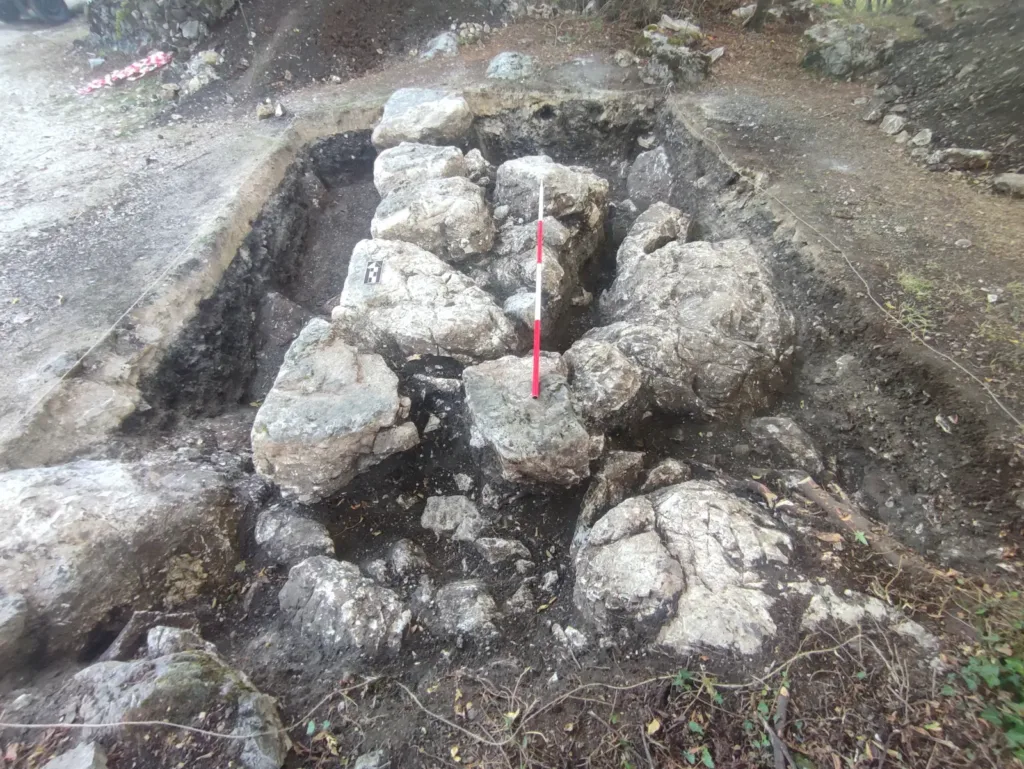
New archaeological excavations at a 2,300-year-old Illyrian settlement in Montenegro have uncovered Iron Age pottery and possible structural remains. The discoveries at Vidov Vrh, near Herceg Novi, could help archaeologists determine whether the hilltop once served as an ancient sanctuary, an idea first raised after unusual pottery fragments were found during earlier investigations.
Led by archaeologist Radmila Ćapin, the team began its latest excavations in October 2026, focusing on the settlement’s layout, chronology, and surviving structures. Previous research suggests that the hilltop may have served purposes beyond settlement and defence, including religious activities.
An Illyrian Settlement Overlooking the Adriatic
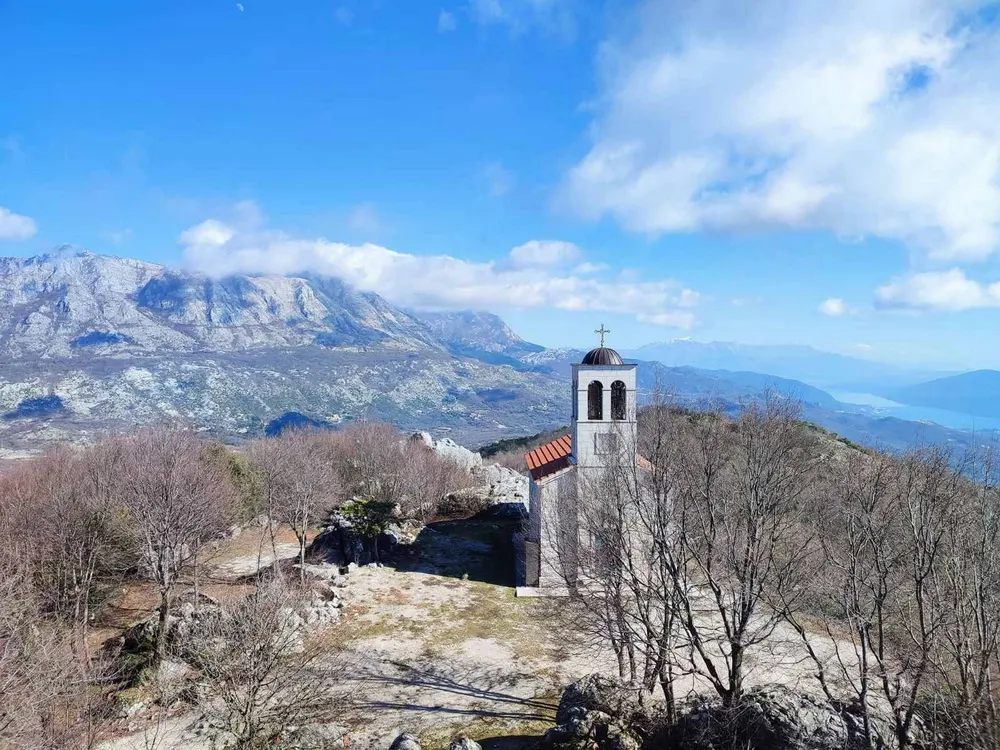
Vidov Vrh rises above the villages of Svrčuge and Mokrine, near the town of Herceg Novi. Standing at approximately 781 meters above sea level, the hill is noted for its commanding position over the Bay of Topalj and the Sutorina Plain. In antiquity, the inhabitants of this site would have had a clear view of the surrounding vast lands and the roads leading to the sea.
Archaeologists categorize the site as a gradina—a type of hillfort settlement common across the Balkans. Since prehistoric times, these settlements served various functions, including defense, shelter, and the organization of local communities. However, the natural topography of Vidov Vrh suggests it was designed more for environmental control and habitation than as a fortified defensive stronghold.
Previous research indicates that the ancient settlement at Vidov Vrh was occupied between the 4th and 1st centuries BCE. The findings exhibit characteristics associated with the Glasinac culture of the Western Balkans. Despite this, archaeologists have not yet fully determined the exact boundaries or the spatial layout of the ancient community.
Ceramics Strengthening the Possibility of a Sacred Site
The theory that Vidov Vrh housed an ancient sacred area is based on archaeological excavations conducted around the Lazarica Church in 2009.
In a 2015 study published in the journal Nova antička Duklja, Radmila Ćapin and Đorđe Ćapin focused on a distinctive group of ceramics. The archaeologists analyzed fragments of two-handled vessels known as kantharoi, featuring small protrusions on their surfaces, and compared them to examples found in other known ancient sacred sites.
The researchers drew particular attention to fragments of kantharos vessels decorated with raised knobs, comparing them with pottery found at other ancient sanctuaries. These similarities led them to consider whether the inhabitants of Vidov Vrh used part of the hilltop for religious ceremonies, although no temple structure has yet been identified.
Archaeologists have yet to identify a temple at Vidov Vrh, leaving the nature and extent of any religious activities at the site uncertain. Further archaeological evidence is required to confirm the exact purpose of the ceramics and the architectural features of the potential sacred area. Further excavations may help clarify how the inhabitants used different parts of the hilltop.
Possible Links to the Ancient Deities Vid and Tana
The relationship between Vidov Vrh and ancient beliefs extends beyond ceramic finds. In their scientific paper, Ćapin and Ćapin examined the name of the hill, suggesting it may have preserved the name of an ancient local deity.
The researchers draw a parallel with Roman-era inscriptions found in Topusko, present-day Croatia. Votive altars discovered in that region contain dedications to local deities named Vidasus and Thana. Scholars of ancient Dalmatian religious traditions associate these deities with the Roman gods Silvanus and Diana.
This connection is particularly interesting in terms of how local beliefs persisted after the onset of Roman rule. However, no inscriptions bearing the names Vid or Tana have been found at Vidov Vrh; therefore, the link between the hill’s name and these ancient gods remains a hypothesis rather than a verified archaeological fact.
For comparative purposes, another settlement in Montenegro is of significance: the Gradina hill near Risan. During the Hellenistic period, this served as the acropolis of ancient Rizon, where researchers have linked a sacred area to the local protector god, Medaurus. In later periods, the site hosted Roman religious structures and a medieval church.
The similarity between Vidov Vrh and Rizon suggests that high-altitude settlements along the Adriatic coast may have functioned as sacred sites across different eras, though no direct religious or cultural link between the two specific sites has yet been established.
A Medieval Church Built Upon Illyrian Walls
The archaeological history of Vidov Vrh does not end with the Iron Age. The Lazarica Church, situated atop the hill, blends architectural traces from different eras in a single location.
In 2009, archaeologists excavated an area of approximately 73 square meters to preserve the church. During these works, they identified the foundations of the 15th-century church, walls from an 1889 restoration, and remains of much older Illyrian structures.
One of the most significant findings was that the north and south walls of the church were built directly upon ancient Illyrian walls, bringing two architectural periods separated by centuries into direct contact.
Archaeologists also uncovered Hellenistic ceramics, a gold earring, a 9th-century bronze belt fragment, and other artifacts from various periods. These items indicate that the hill remained in use after antiquity, though the current findings do not prove a continuous tradition of settlement or worship.
New Excavations Aim to Illuminate the Past of Vidov Vrh
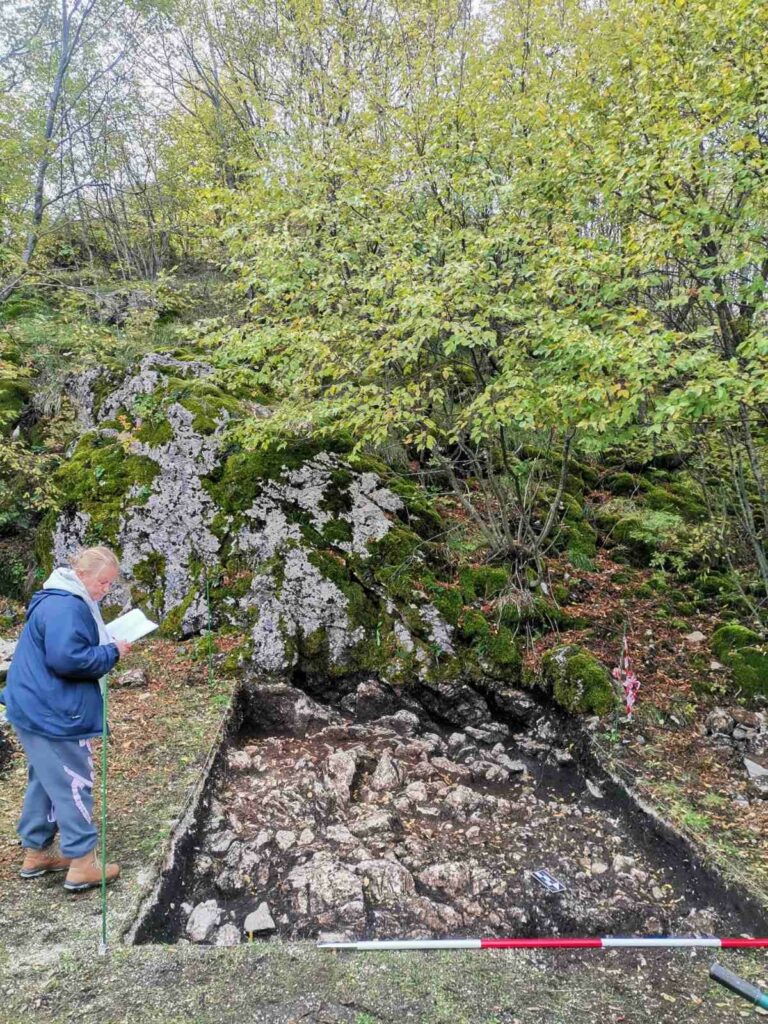
Research that began in October 2026 focuses on the questions left unanswered by previous excavations. The team is examining different strata of the settlement, architectural remains, and the duration of occupation to understand the nature of Vidov Vrh in antiquity.
The team, led by Radmila Ćapin, includes archaeologist Đorđe Ćapin and conservator-restorer Goran Skrobanović. In addition to excavations, the researchers are using LiDAR scanning and geodetic measurements to create a detailed map of the hill. The project is financially supported by the Ministry of Culture and Media of Montenegro and the Municipality of Herceg Novi.
Recent excavations have identified numerous Late Iron Age ceramic fragments and potential architectural remains. While no official statement has yet confirmed their relationship to a sacred site, these findings provide an opportunity to evaluate the ceremonial ceramics found in 2009 within a broader settlement context.
One of the primary questions facing the researchers is which part of the ancient settlement was used for religious activities. By determining the function of the newly discovered architectural remains, they hope to gain more concrete insights into the settlement and belief traditions of Illyrian communities along the Adriatic coast.
