
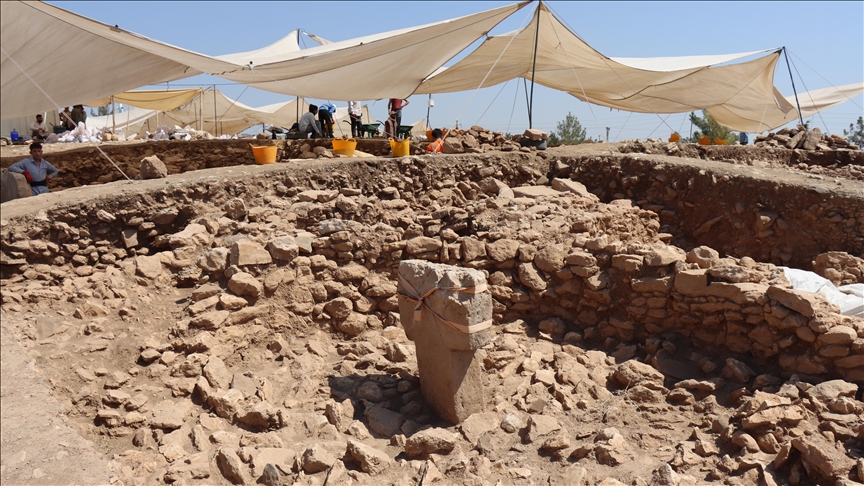
Archaeologists working in Şanlıurfa’s Sayburç settlement in southeastern Türkiye have unearthed a remarkable treasure from the deep past: over 50 Neolithic buildings, many still marked by the presence of mysterious T-shaped pillars.
This discovery not only expands the known footprint of the Taş Tepeler (Stone hills) region but also provides rare evidence of how early communities built their homes and sacred spaces side by side.
The findings, which prominently feature enigmatic T-shaped pillars, offer remarkable insights into daily life, ritual practices, and architectural evolution nearly 12,600 years ago.
Stone Guardians of a Forgotten World
Excavations at Sayburç began in 2021 under the direction of Assoc. Prof. Eylem Özdoğan from Istanbul University. Since then, the team has uncovered a dense settlement that mirrors and expands upon the cultural traditions of Göbeklitepe, the UNESCO World Heritage Site often hailed as the “world’s first temple.”
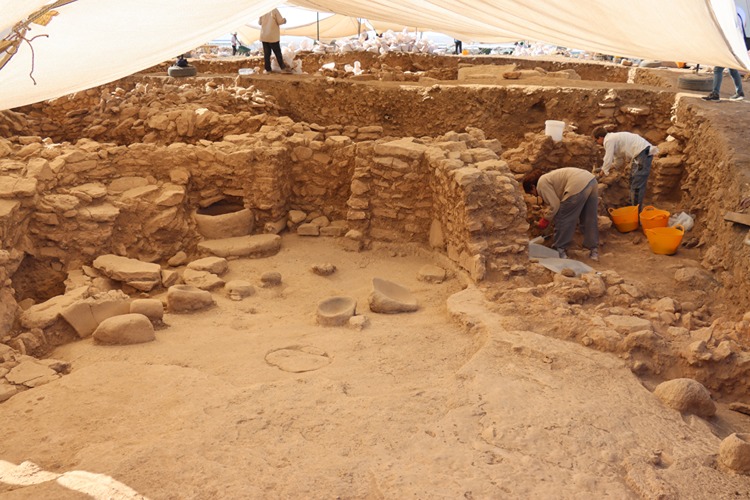
Unlike Göbeklitepe, where monumental ritual enclosures dominate, Sayburç reveals a mixed landscape of domestic and communal buildings. The discoveries include hearths, platforms, benches, and workspaces embedded within both homes and special public structures. Crucially, the T-shaped pillars—a hallmark of Neolithic belief systems in the region—appear in both contexts, suggesting their symbolic significance extended beyond ritual spaces and into daily life.
“Sayburç allows us to see both everyday activities and the ceremonial aspects of Neolithic life in one place,” explains Özdoğan. “The number and arrangement of the T-shaped pillars differ between houses and public buildings, showing how symbolism and functionality intertwined.”
The Significance of T-Shaped Pillars
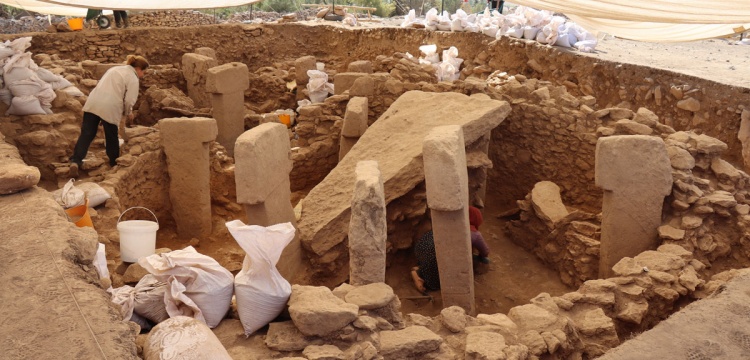
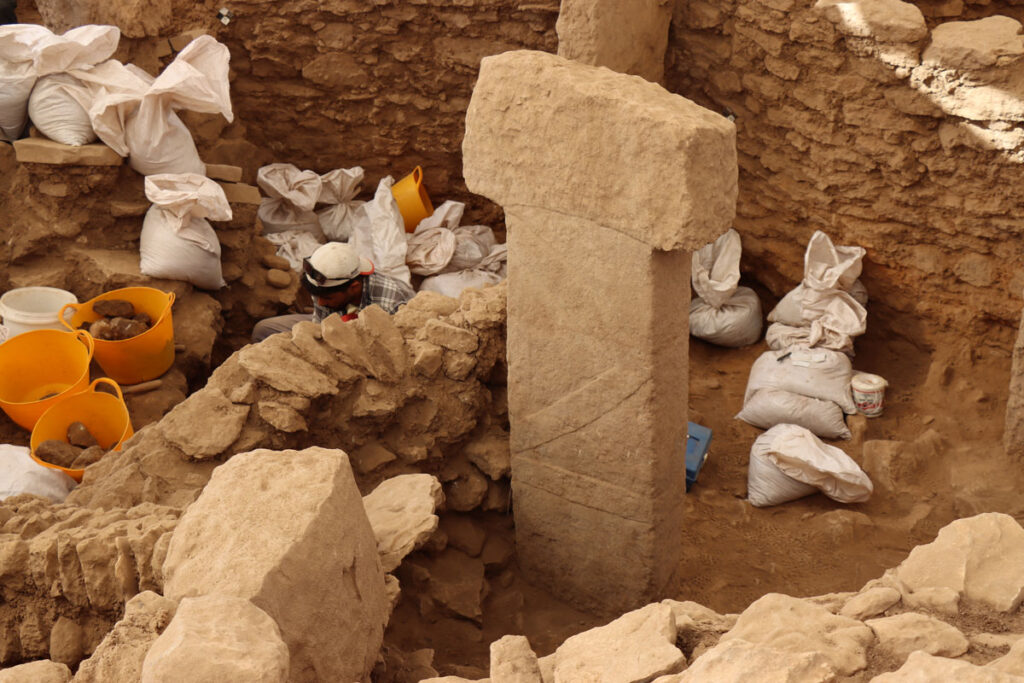
The T-shaped pillars are among the most iconic features of the Taş Tepeler sites, instantly recognizable by their stylized human-like form. Often interpreted as anthropomorphic beings or ancestral figures, these pillars blur the line between architecture and spirituality.
At Sayburç, single pillars are typically found in domestic structures, while public buildings sometimes feature multiple stones arranged along walls or standing in central positions. This variation hints at social hierarchies, shared rituals, and evolving architectural traditions within the community.
In some cases, the placement of the pillars may reflect communal gatherings, feasting, or spiritual activities, while in others, they may have symbolized protection or identity at the household level. Such versatility reinforces the idea that Neolithic symbolism was deeply woven into every layer of life.
Sayburç in the Broader Taş Tepeler Landscape
Sayburç is part of the wider Taş Tepeler Project, an ambitious archaeological initiative by the Turkish Ministry of Culture and Tourism. The project encompasses more than a dozen prehistoric sites across Şanlıurfa province, including Göbeklitepe, Karahantepe, Sefertepe, Kurt Tepesi, and Harbetsuvan Tepesi. Together, they form the densest concentration of early Neolithic settlements anywhere in the world.
While Göbeklitepe dazzled researchers with its monumental scale, Sayburç stands out for documenting a seamless 300-year occupation during a crucial transitional period. Excavations reveal the gradual shift from circular buildings to rectangular ones, highlighting an evolution in construction techniques and social organization.
This architectural transformation reflects broader technological and cultural changes—the transition from small, mobile groups to more permanent communities with complex social structures.
A Glimpse into Daily Life and Belief
One of the most compelling aspects of Sayburç is its dual identity as both a living space and a ritual landscape. Hearths and work areas point to domestic routines like cooking and food preparation, while the arrangement of T-shaped pillars in special buildings emphasizes shared ceremonies.
This combination challenges earlier interpretations that separated ritual from daily life in the Neolithic. Instead, Sayburç demonstrates that spirituality and practicality coexisted seamlessly, shaping how people built their homes, gathered as communities, and envisioned their world.
A Legacy Carved in Stone
As excavations continue, Sayburç is expected to play a central role in redefining how scholars understand the Neolithic. Its blend of domestic spaces, symbolic pillars, and architectural innovation offers a rare chance to witness humanity’s earliest experiments in community living.
For modern visitors, the site enriches the narrative of Taş Tepeler, presenting not just a story of temples and rituals but also of families, neighbors, and the everyday rhythms of a society in transformation.
In the shadow of the T-shaped pillars, carved and raised nearly 13,000 years ago, the people of Sayburç left behind more than stone. They left the blueprint of civilization itself.
Cover Image Credit: AA
