
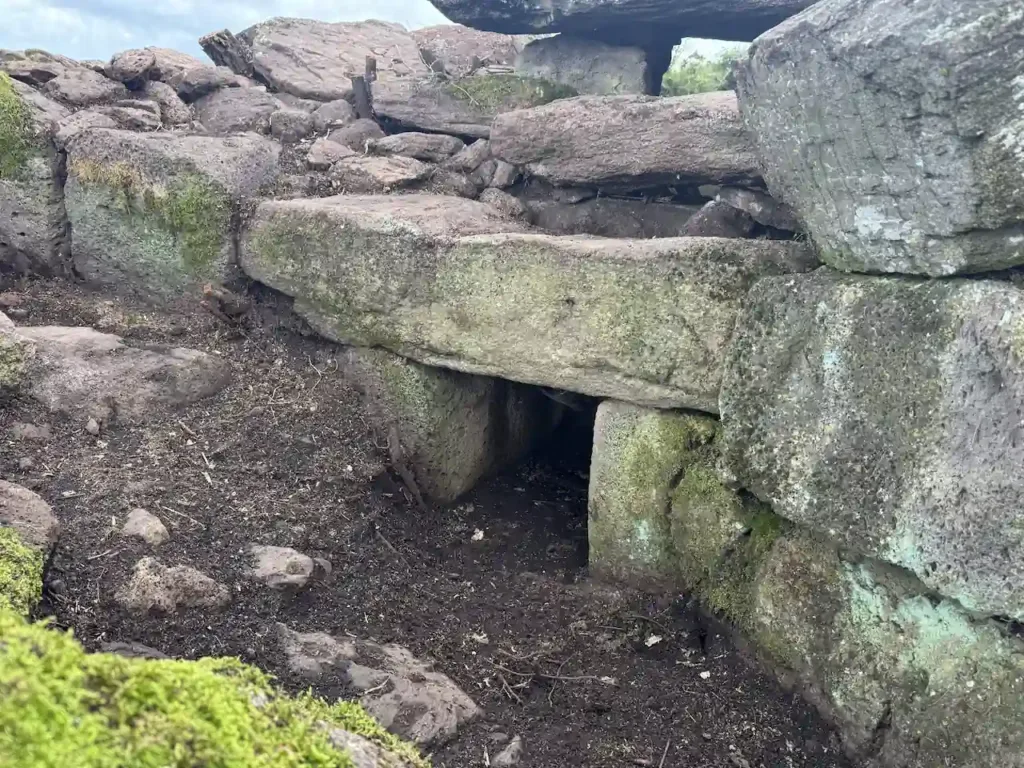
In the hills above Macomer, in Sardinia’s Nuoro province, a Tomb of the Giants has come to light after years spent buried under brush and fallen debris.
The discovery was announced by the Soprintendenza Archeologia, Belle Arti e Paesaggio per la Città Metropolitana di Cagliari e le Province di Oristano e Sud Sardegna, and it’s already being called one of the better-preserved examples of this type of Nuragic monument found in recent years.
The tomb sits within the Carrarzu Iddia archaeological site, in the municipality of Bortigali, not far from the town of Macomer. It turned up almost by extension of other work: teams were already at Carrarzu Iddia excavating and restoring a nearby nuraghe when routine survey work pointed them toward the tomb. With the landowners’ cooperation, they cleared away the vegetation and found a structure in far better shape than anyone expected.
The monument, long buried beneath thick vegetation, still retains its burial chamber and its distinctive semicircular exedra, offering fresh evidence about the funerary customs of Nuragic civilization.
A Strategic Location Overlooking the Macomer Plain
The tomb sits on the southern slope of Crastu Littu, at roughly 740 meters above sea level — a position chosen as much for its commanding views as for its ritual significance. From here, the landscape opens out across the Macomer plain, the Abbasanta and Paulilatino highlands, and extends toward the hills of the Nuoro region and the Gulf of Oristano. That sweeping panorama underscores just how central this site was within the broader network of Nuragic settlements in Sardinia.
The tomb came to light during ongoing archaeological surveys carried out by Sardinia’s two Superintendencies of Archaeology, Fine Arts, and Landscape, who were already at work excavating and restoring a nearby nuraghe at Carrarzu Iddia. Once identified, the monument was carefully cleared of dense vegetation and debris in coordination with the local landowners, revealing a structure archaeologists describe as being in exceptional condition.
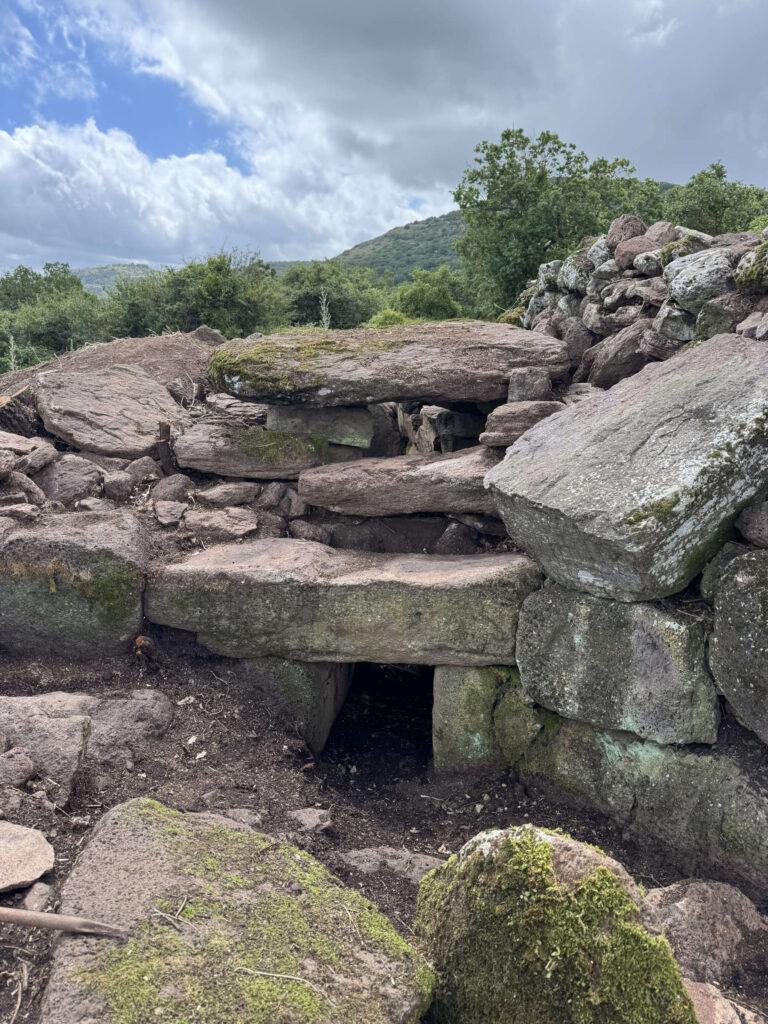
Architectural Features of the Giants’ Tomb
Built from trachyte blocks, the monument preserves the key architectural hallmarks of this type of Nuragic collective burial: a well-defined burial chamber and the monumental semicircular exedra that precedes the entrance — one of the most recognizable and symbolically important features of Sardinia’s Tombs of the Giants.
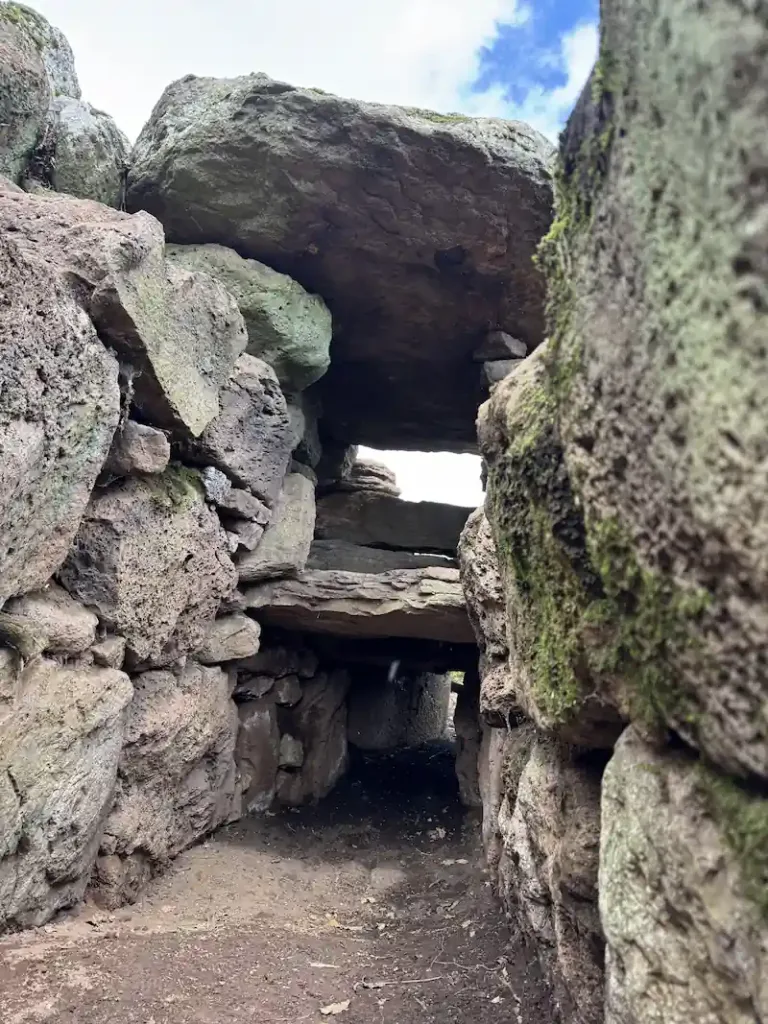
What has particularly captured researchers’ attention is an unusual internal detail: the burial chamber is divided into two levels near the entrance, a construction technique documented in only a handful of Tombs of the Giants known so far. Because of how rare this feature is, it is expected to become the focus of further study, potentially shedding new light on funerary rituals and building techniques used by Nuragic communities.
Not untouched, but not empty either
The tomb didn’t escape the past unscathed — researchers found clear signs it had been illegally excavated at some point, something that has happened at no shortage of sites across Sardinia. Even so, pottery recovered from inside the chamber survived, and it points to human activity going back to the earliest stages of Nuragic civilization. That’s a useful anchor point: it helps place the tomb’s use within a clearer timeline of how the surrounding communities developed.
Where the Tombs of the Giants come from
Tombs of the Giants are among the most recognizable structures Nuragic Sardinia left behind, generally dated to around 1800 BC, during a period of major social change that gave rise to the large stone monuments the island is known for.
They developed out of earlier dolmen tombs, but with two clear differences: a much larger burial chamber built to hold multiple burials at once, and the addition of that semicircular exedra out front — a feature that would go on to become one of the signatures of Nuragic architecture.
The bigger chamber points to a shift in how communities handled collective burial, while the exedra suggests something more: growing investment in architecture tied to ancestor worship. That space wasn’t purely decorative — it’s where ceremonies and rituals honoring the dead were carried out, practices that sat close to the center of Nuragic religious life.
What comes next
For researchers, the tomb at Carrarzu Iddia is a genuine opportunity. Between its unusually good state of preservation, the rare two-level chamber, and the pottery pulled from inside it, there’s a real chance to learn more about how these tombs were built, how funerary practices shifted over time, and where exactly this fits in the early chronology of Nuragic civilization in Sardinia.
