
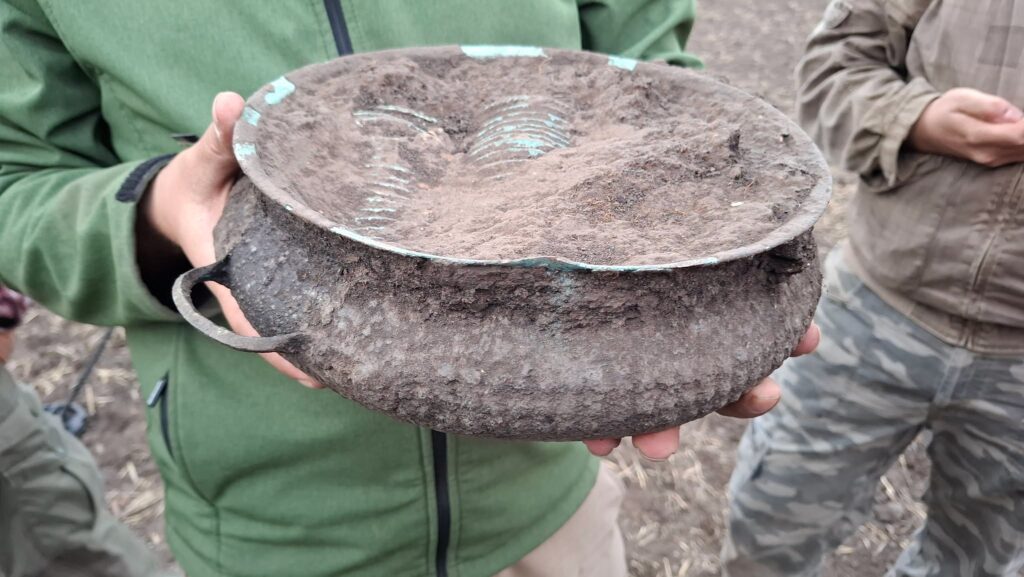
Archaeologists researching a 16th-century battlefield in Hungary have encountered a treasure approximately 2,500 years older than expected. The bronze vessel and ornaments found near Mezőkeresztes—where Ottoman and Habsburg forces clashed in 1596—date back to the Late Bronze Age. Detailed laboratory examinations have revealed that the treasure contains more artifacts than initially thought.
The research, conducted by the Hungarian National Museum and the National Archaeological Institute, first identified a large bronze vessel and two spiral-shaped bronze armlets. However, a micro-excavation performed after the artifacts were transported to the laboratory along with the surrounding soil revealed a third spiral ornament.
An Unexpected Discovery on a Battlefield
Mezőkeresztes is located in northeastern Hungary, in the region where the Battle of Keresztes took place between October 22 and 26, 1596, marking one of the significant encounters in the Ottoman-Habsburg conflicts.
The battlefield research, which the Hungarian National Museum has maintained for approximately ten years, covers an area of over 100 square kilometers identified through historical documents. While searching for traces of the war through field surveys and metal detectors, archaeologists also record findings from different periods.
The latest discovery began when volunteer Zoltán Vágó noticed a signal from his metal detector. Researchers determined that these interrelated bronze objects were not merely random scattered finds, but constituted a hoard deliberately left in the ground together.
The shapes and decorations of the artifacts date the group to approximately the 13th–11th centuries BCE. This means the treasure was placed in the ground roughly two and a half thousand years before the battle occurred.
A Third Ornament Emerges from the Bronze Vessel
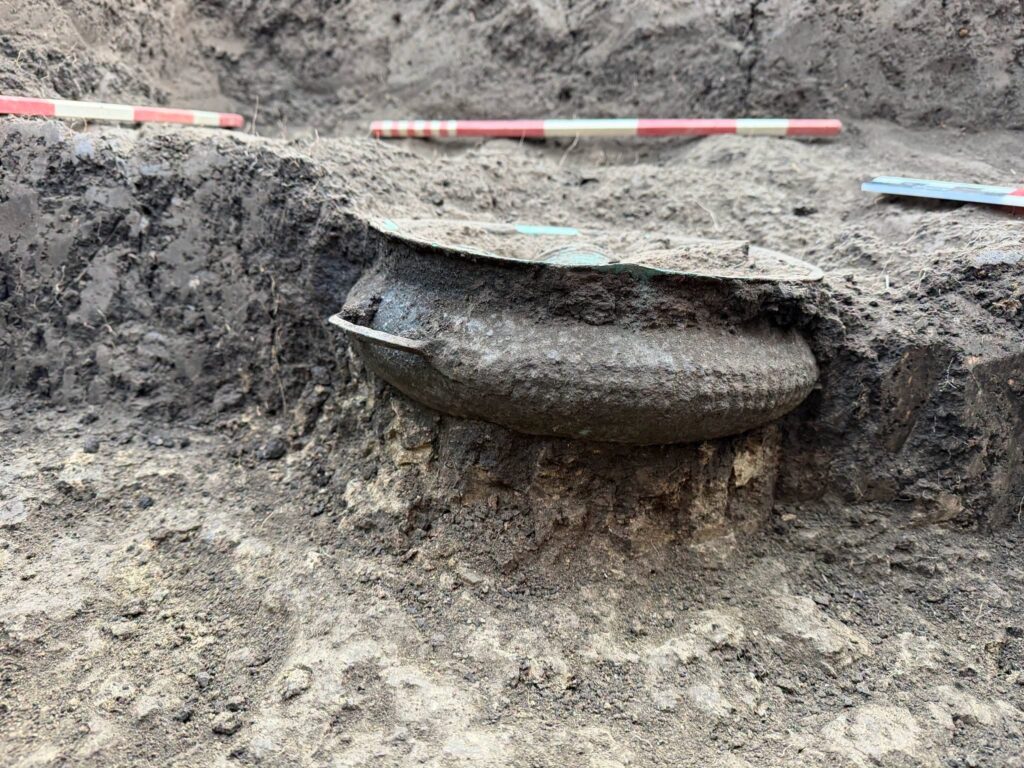
Rather than separating the artifacts in the field, the excavation team removed them as a single block of soil. This ensured that the original positions of the objects were preserved for a more controlled examination in the laboratory.
According to a statement from the Hungarian National Museum dated November 4, 2026, the micro-excavation was carried out by Dr. János Gábor Tarbay, an archaeologist from the museum’s prehistoric collection, and geographer András Gömöri. Gábor Bakos, the manager of the Mezőkeresztes battlefield research, prepared the three-dimensional documentation of the work.
Researchers cleaned the soil surrounding the objects layer by layer, recording each stage with photographs and 3D models. This method allows for a re-examination of the positions in which the objects were placed inside the vessel and their relationship to one another.
During these studies, a third example was found alongside the two spiral armlets seen during the initial field survey. There is also a possibility that smaller metal objects may emerge as restorers clean the remaining soil from inside the ornaments.
During the Late Bronze Age, it was a known practice to place precious metal objects inside vessels and leave them in the ground. However, because such find groups are often recovered without their original archaeological contexts being detailedly documented, important information regarding the arrangement of the objects is frequently lost.
One of the points that makes the Mezőkeresztes treasure significant is that the vessel and its contents could be examined under controlled conditions. According to museum officials, this is the first time a bronze find group of this quality in the Borsod region has been researched using the micro-excavation method.
Scientists now plan to investigate microscopic residues that may be preserved on the inner surface of the bronze vessel and on the spiral ornaments. Soil samples will undergo plant residue and pollen analysis, while chemical examinations may help identify traces of botanical or animal substances used in the past.
These studies may provide new information on how the vessel was used before it was buried. However, it is not yet known why the treasure was buried or whether it was related to a ceremonial practice or another purpose.
