
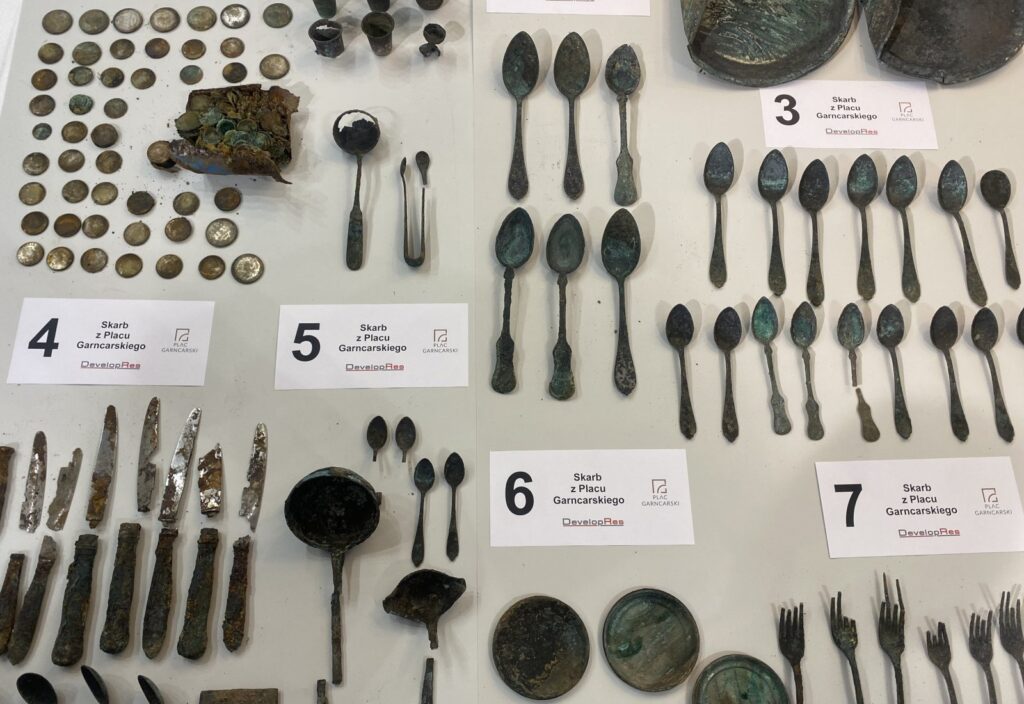
Archaeologists working in the southeastern Polish city of Rzeszów have discovered a treasure containing approximately 100 silver coins, silver goblets, cutlery, and other tableware beneath a former residential building. According to unofficial information reported by the Polish press, the valuables lay at the bottom of an old latrine.
Archaeologists believe the owners may have concealed their possessions at the beginning of the Second World War. The discovery offers a personal perspective on a turbulent period in European history, raising questions about the identities of the owners, the circumstances surrounding the concealment, and why nobody returned to recover the treasure.
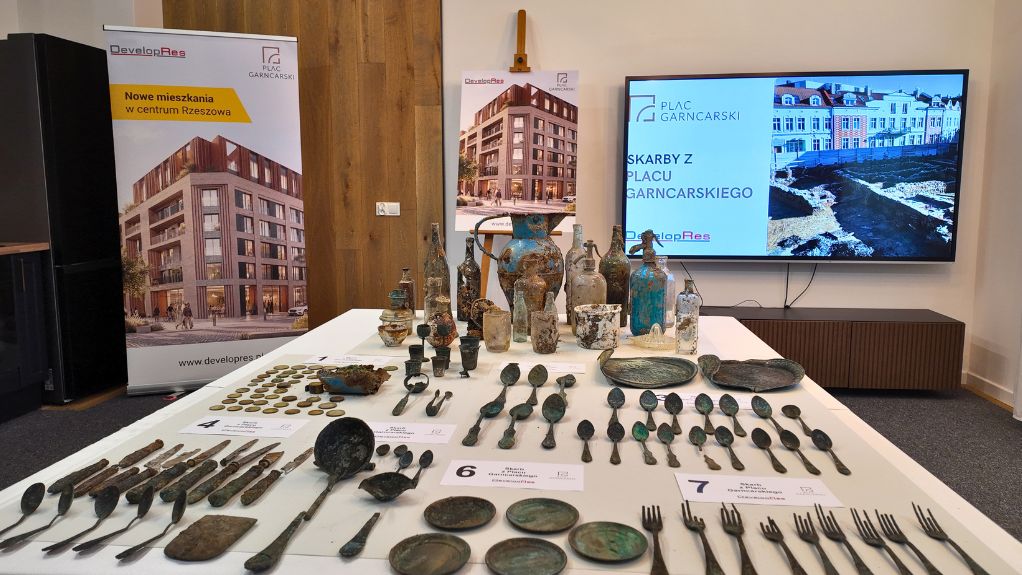
The discovery took place during archaeological investigations at Garncarski Square, where the property developer DevelopRes plans to construct a new residential complex. The company presented the finds at a press conference on November 24, 2026, alongside archaeologist Mirosław Mazurek.
A Treasure Beneath a Former Residential Building
During excavations, archaeologists uncovered the foundations of three residential buildings that stood along Szpitalna and Wierzynka streets during the interwar period. Fragments of pottery, stove tiles, and glass bottles among the architectural remains provide evidence of the everyday lives of the city’s former inhabitants.
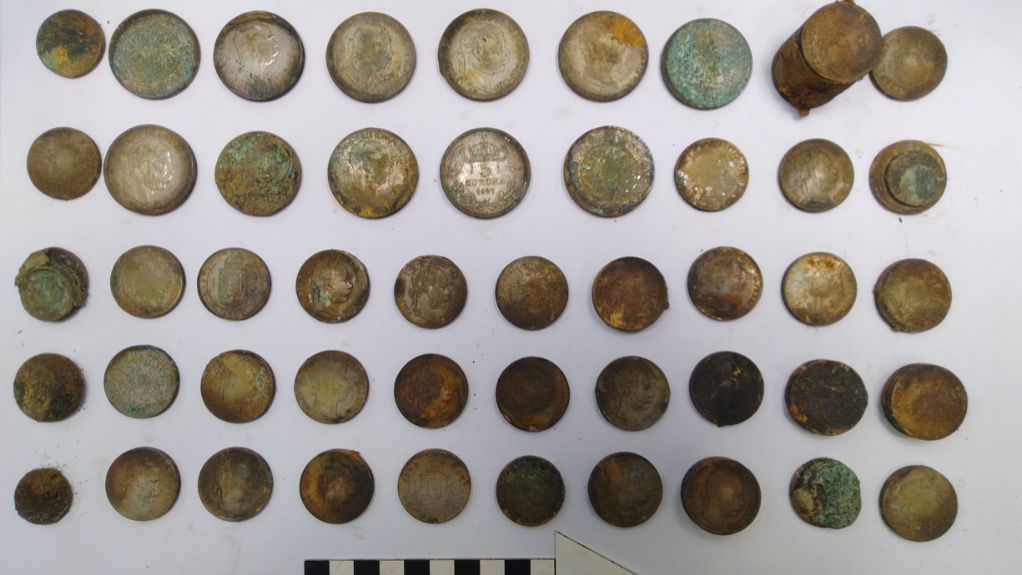
However, the most significant discovery came from the basement of a building that once stood at Wierzynka 1. Archaeologists found approximately 100 silver coins inside a small metal container, together with several pieces of tableware, including silver goblets, cutlery and two metal plates.
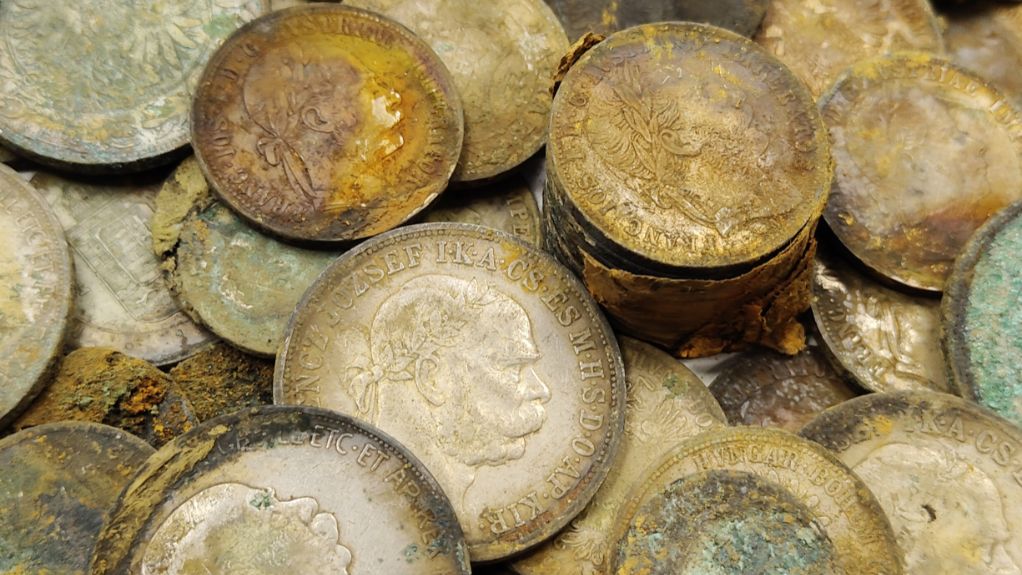
According to the official announcement by DevelopRes, Hungarian one-forint coins from the second half of the 19th century and Austrian five-crown coins dating to 1907 dominate the collection.
The coins reflect a period when Rzeszów formed part of the Habsburg territories in Galicia. Their presence alongside valuable household objects suggests that the collection brought together possessions accumulated over several decades.
Why Did Someone Hide the Treasure?
Although some of the coins date to the 19th century, archaeologists believe someone concealed the collection much later. The preliminary archaeological interpretation places the concealment around the beginning of the Second World War in 1939.
This distinction is particularly important because the dates on the coins establish when the authorities issued them, not when their owners hid them. Older silver coins could remain among household savings and personal possessions long after their original circulation.
Germany invaded Poland on September 1, 1939, bringing widespread uncertainty to communities across the country. As the conflict spread, civilians faced the prospect of displacement, property loss, and the disruption of everyday life. Concealing money and valuable household objects offered one way of protecting personal possessions during such circumstances.
The unusual hiding place adds another dimension to the discovery. According to Rzeczpospolita, unofficial information obtained by the Polish media indicates that the treasure lay at the bottom of a former latrine. The developer’s official announcement confirms the basement location but does not specify this particular feature.
Further research will be necessary to establish whether the outbreak of war directly prompted the concealment of the valuables. Archaeologists have yet to establish who owned the collection or what prevented its recovery.
Recovering the History of Garncarski Square
Beyond the treasure itself, the archaeological investigations provide an opportunity to reconstruct the history of a neighborhood that has undergone considerable urban transformation. The foundations of the three former residential buildings, together with their surviving household objects, document aspects of domestic life before the Second World War.
The pottery fragments, stove tiles and glass bottles complement the more valuable objects. While the silver coins and goblets attract immediate attention, ordinary household items help researchers understand the material culture and living conditions of the people who once occupied these buildings.
DevelopRes plans to construct 149 apartments, commercial premises and an underground garage at Garncarski Square. The archaeological investigations preceding construction have allowed researchers to document surviving traces of the neighborhood’s earlier history.
