
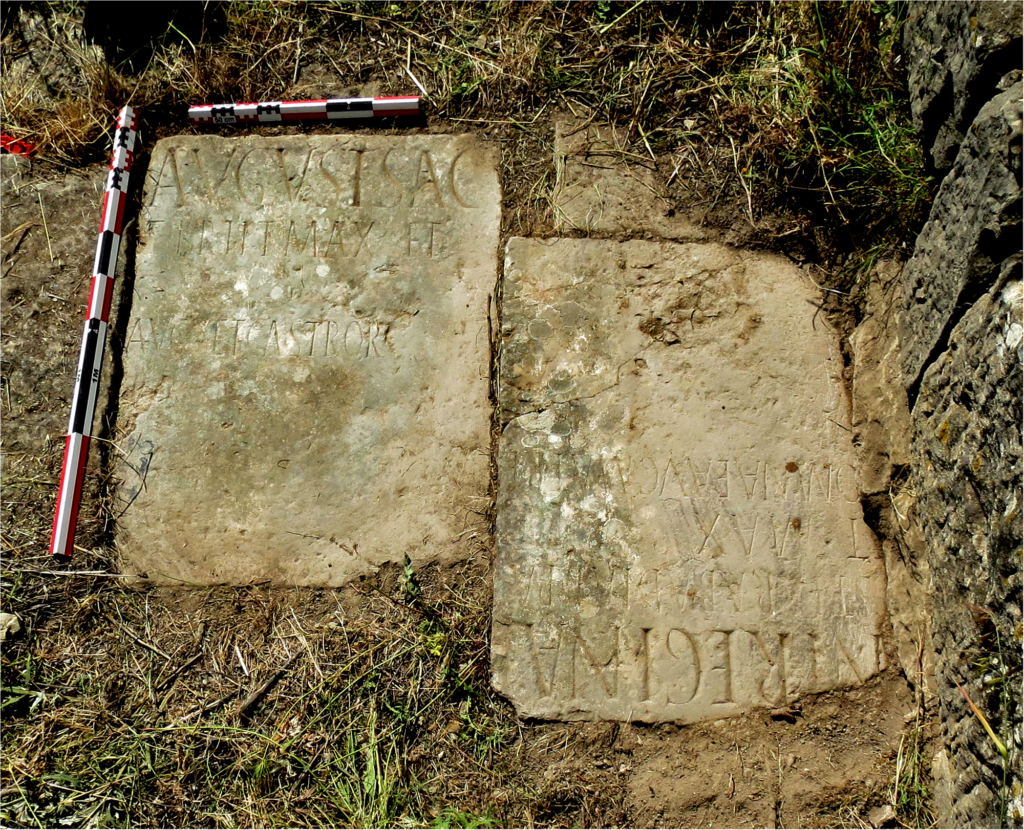
Four limestone blocks inside a sixth-century Byzantine fortress in Tunisia have provided conclusive evidence for a Roman temple dedicated to Jupiter, Juno and Minerva. The inscriptions, dating to AD 210–211, originally formed part of a monumental dedication that may have stretched more than six meters across the temple. They also preserve evidence of one of Rome’s most notorious imperial family conflicts: the deliberate erasure of Emperor Geta following his murder.
The discovery at the ancient city of Musti resolves a question that has occupied archaeologists for more than six decades. In a new study published in Libyan Studies, Polish and Tunisian researchers reconstruct much of the inscription, establish a remarkably precise date for its dedication and identify architectural clues that could help locate the original sanctuary.
Solving an Archaeological Mystery Dating Back to 1961
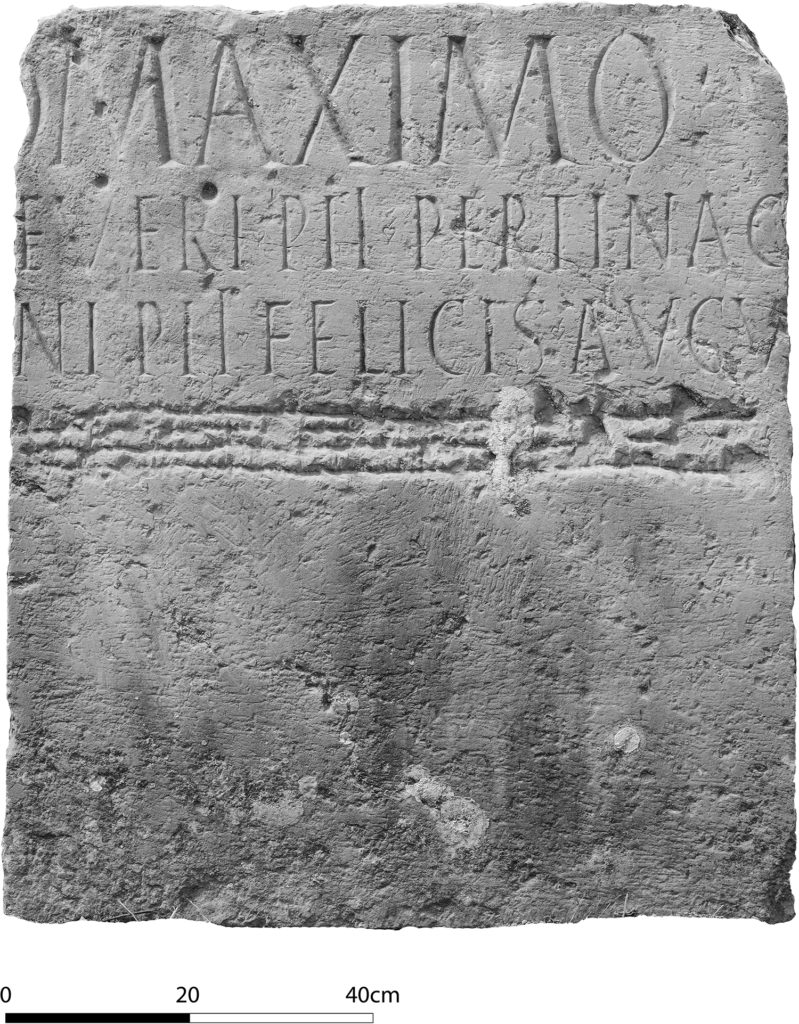
Known in Roman times as Municipium Iulium Aurelium Mustitanum, Musti was a flourishing urban center in the province of Africa Proconsularis. The first evidence of a temple dedicated to the Capitoline Triad emerged during Tunisian-French excavations in 1961, when archaeologist Claude Poinssot documented an inscribed stone block that he associated with a Capitolium. However, the surviving text offered insufficient evidence to confirm his interpretation.
On May 18, 2022, researchers Mohammed Abid and Karol Kłodziński identified three additional inscribed limestone blocks during fieldwork for the AFRIPAL project. The team documented the stones alongside the previously known fragment in the southwestern section of the Byzantine fortress, where they lay several meters apart.
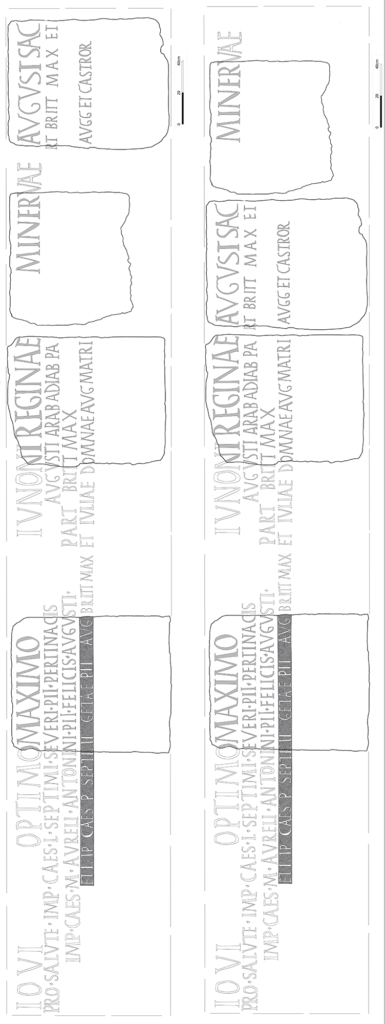
Together, the four surviving blocks measure 3.25 meters in width, although the researchers estimate that the complete inscription may have exceeded six meters. Letters in the opening line reach 15 centimeters in height, suggesting that the monumental dedication once occupied a prominent architectural position, perhaps along the temple’s façade or portico.
A Temple Dedicated to Rome’s Three Great Gods
The newly identified fragments allowed researchers to reconstruct the inscription’s opening line with considerable confidence:
IOVI OPTIMO MAXIMO IVNONI REGINAE MINERVAE AVGVST SAC
The Latin formula invokes Jupiter Optimus Maximus, Juno Regina and Minerva Augusta. Together, these deities formed the Capitoline Triad, one of the most important religious groupings in the Roman world. Their principal sanctuary stood on Rome’s Capitoline Hill, where religious ceremonies reinforced the relationship between divine authority and Roman political power.
The inscription also invokes the well-being of Emperor Septimius Severus, his sons Caracalla and Geta, and his wife Julia Domna. It identifies the empress as the mother of the emperors and the military camps, reflecting her prominent position within the Severan dynasty.
The imperial victory title Britannicus Maximus provides an unusually precise chronological marker. Septimius Severus and his sons adopted the title on March 31, AD 210, following their military campaigns in Britain. Since Septimius Severus died on February 4, AD 211, the researchers place the temple’s dedication within this narrow, ten-month period.
Geta: The Emperor Rome Tried to Erase
One of the most revealing features of the Musti inscription concerns the words that no longer survive. Someone deliberately chiseled away Geta’s name and imperial titles from the fourth line of the dedication. Nevertheless, researchers detected traces of three letters, AVG, the abbreviation for Augustus, which helped them reconstruct the missing passage.
Following their father’s death in AD 211, Caracalla and Geta inherited the Roman Empire as joint rulers. Their increasingly hostile relationship culminated in Geta’s murder later that year, leaving Caracalla in sole control of the empire.
Caracalla subsequently sought to eliminate his brother’s presence from public life. Across the Roman Empire, authorities removed Geta’s name from inscriptions, destroyed or altered his portraits, and dismantled monuments honoring him. Historians commonly refer to this practice as damnatio memoriae, the condemnation of memory.
The Musti inscription preserves the consequences of that political purge in stone. What began as a religious dedication for the welfare of an imperial family eventually became physical evidence of its violent collapse.
Jupiter’s Eagles Inside a Byzantine Fortress
Several centuries after the temple’s dedication, Byzantine builders incorporated its architectural elements into a fortress covering approximately 2,800 square meters. They reused some of the monumental inscription blocks as paving slabs, inadvertently preserving evidence of Musti’s Roman religious past.
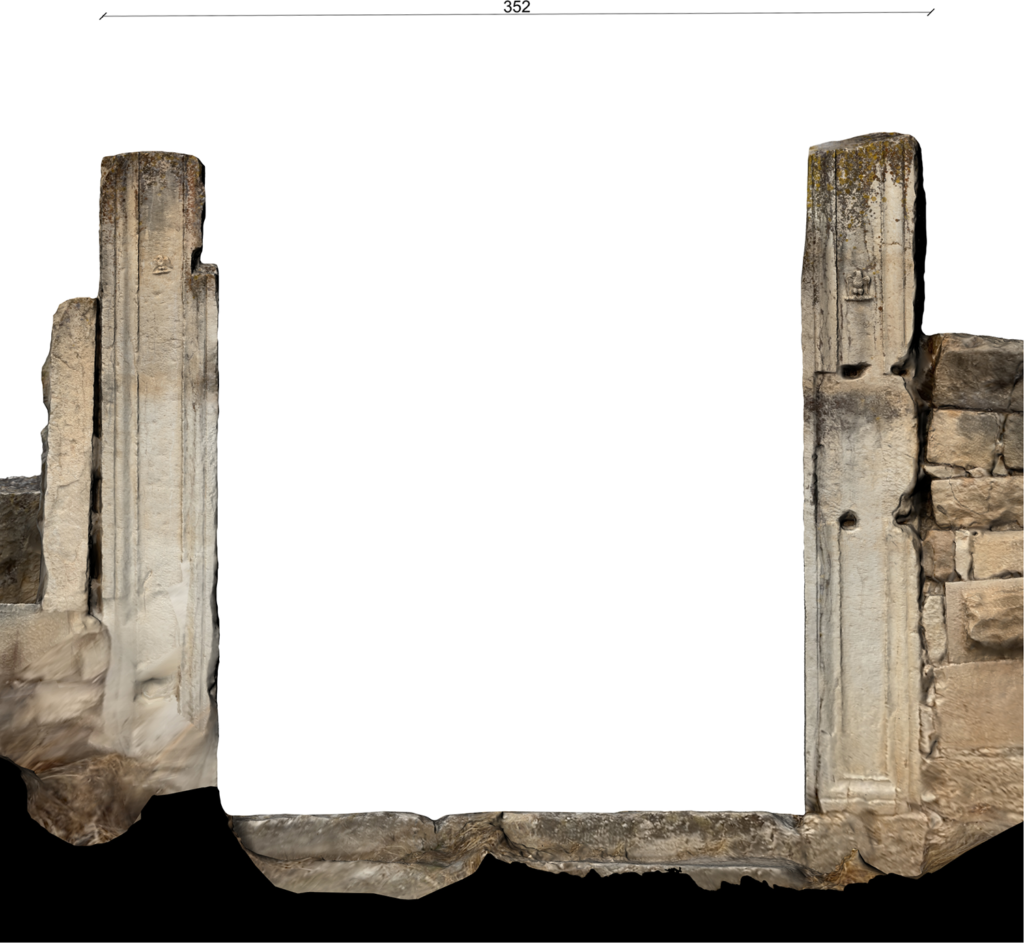
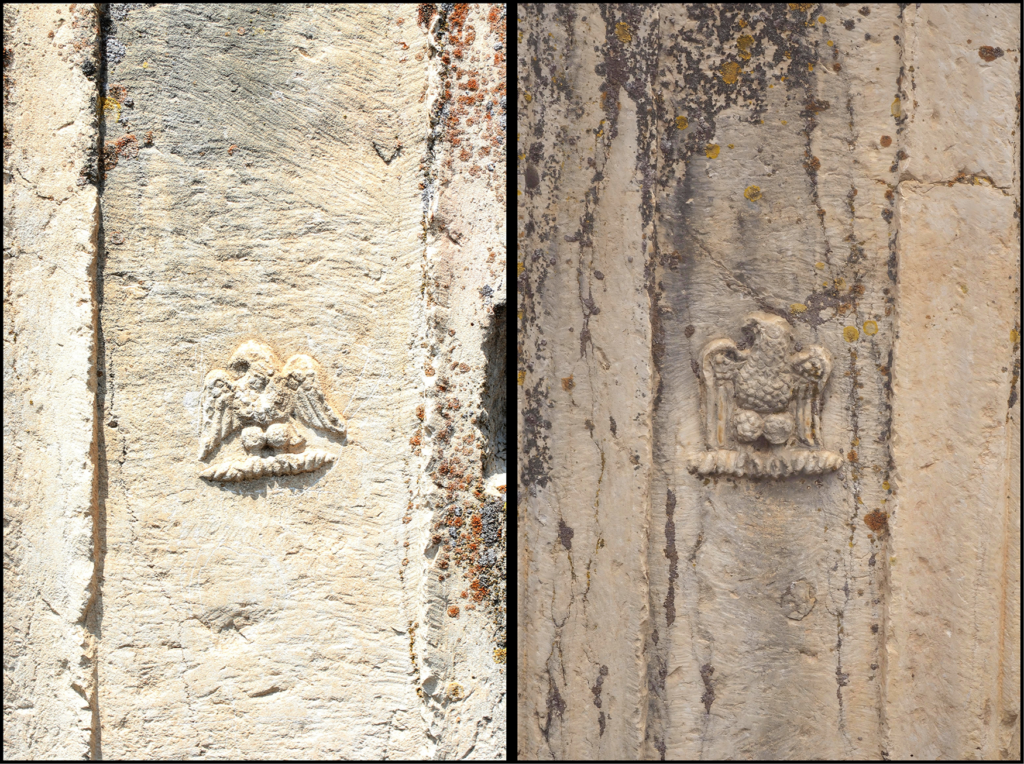
The fortress contains another striking clue. Two pillars flank a monumental doorway approximately 3.5 meters wide, preserving carved representations of eagles with lowered wings standing on thunderbolts. Both the eagle and the thunderbolt were closely associated with Jupiter, the supreme deity of the Roman pantheon.
The proximity of these carvings to the inscriptions suggests that the architectural elements probably belonged to the Capitolium. Researchers now consider it plausible that the Byzantine fortress occupies the site of the Roman temple and civic forum or stands immediately beside them.
Further archaeological and architectural investigations will need to establish the sanctuary’s precise location, original layout and subsequent history.
Redrawing the Religious Map of Roman North Africa
The findings at Musti also have implications far beyond the ancient city. Previous scholarship identified 27 securely documented Capitolia in Roman Africa, a concentration exceeding that of Italy and all other Roman provinces combined.
The new study raises that number to at least 29 by incorporating the evidence from Musti and a previously overlooked dedication from Uchi Maius, another ancient city approximately ten kilometers to the northwest.
While Musti dedicated its temple between AD 210 and 211, Uchi Maius constructed its Capitolium between AD 198 and 209. The relatively short interval separating these projects illustrates the importance of religious building activity in North Africa during the Severan period. Such investments allowed local communities to demonstrate their economic prosperity, political loyalty, and religious connections to Rome.
The identity of the individuals who financed Musti’s temple remains unknown. Another inscription may once have recorded their contributions elsewhere in the sanctuary, leaving an important question for future investigations.
For now, four limestone blocks and two carved eagles offer a compelling account of Roman religious life, imperial ambition and political erasure, preserved through centuries of architectural reuse.
Kłodziński, K., Abid, M., Waliszewski, T., & Hajji, J. (2026). Capitolium at Musti/Mustis (Tunisia) – new epigraphic evidence. Libyan Studies, 1–13. doi:10.1017/lis.2026.10053
