
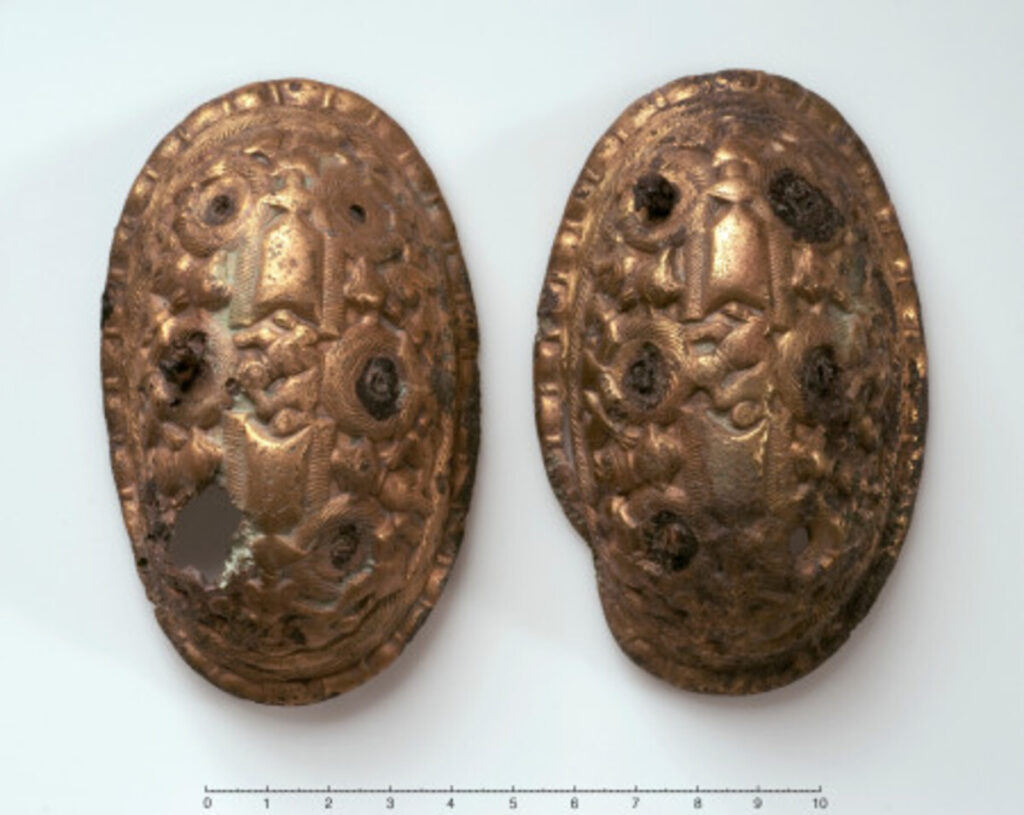
A new study of 1,200-year-old Viking jewelry has traced brooches found in Norwegian graves to metalworking workshops in Denmark, offering fresh evidence of maritime trade between the two regions. High-resolution 3D comparisons between surviving jewelry and ancient casting moulds also challenge the long-held belief that Viking craftsmen mass-produced identical ornaments on an industrial scale.
Derek Parrott, a researcher at Aarhus University’s Department of Archaeology and Heritage Studies, compared 244 casting-mould fragments from the Danish town of Ribe with 105 Viking Age oval brooches. He identified matches between seven brooches and 58 mould fragments, linking the ornaments to five distinct casting models.
The findings, published in Antiquity, suggest that individual craftsmanship, different manufacturing traditions and perhaps even customer preferences played a greater role in Viking jewelry production than previously recognised.
Ribe: A Major Trading Centre of the Viking World
Located in southwestern Jutland, Denmark, Ribe emerged as Scandinavia’s first major trading centre in the early eighth century. By the end of that century, the town had developed into a maritime hub with commercial connections reaching the Arctic, the North Sea, the Baltic and the Middle East.
More than half a century of archaeological excavations at Ribe has uncovered tens of thousands of ceramic casting-mould fragments. These remains document the activities of skilled metalworkers who produced jewelry, decorative fittings and other objects for a growing commercial network.
The mould fragments examined in the new study come from excavations conducted in 2017 and 2018 as part of the Northern Emporium project. Parrott compared them with Berdal-type oval brooches, a distinctive group of ornaments dating from the late eighth to the mid-ninth century.
Viking communities typically wore oval brooches in pairs to fasten an outer garment. Their elaborate animal motifs and distinctive shapes made them an important expression of Scandinavian identity. Archaeologists have recovered thousands of oval brooches across Scandinavia and regions where Viking communities settled.
Tiny Manufacturing Flaws Reveal the Origins of Viking Jewelry
Establishing a direct connection between surviving jewelry and ancient casting moulds has long presented difficulties for archaeologists. Viking metalworkers used ceramic moulds for individual casting operations, leaving behind broken, scorched fragments that preserve only negative impressions of the original designs.
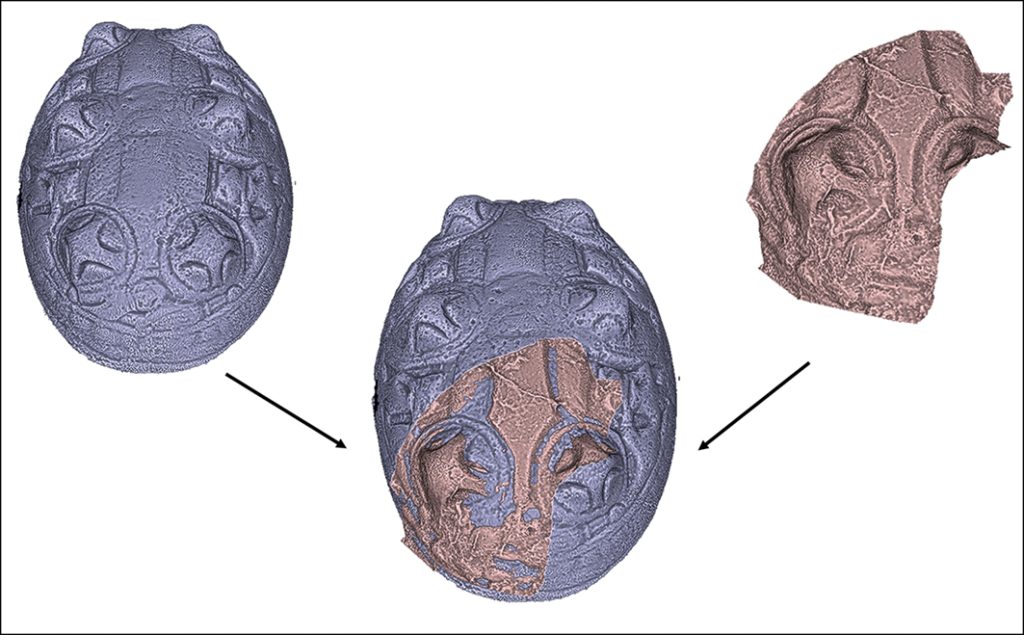
Parrott used a portable blue-light scanner with an accuracy of up to seven micrometres to create detailed digital models of the brooches and mould fragments. By superimposing these models, he could compare decorative features and manufacturing irregularities that are difficult to distinguish with the naked eye.
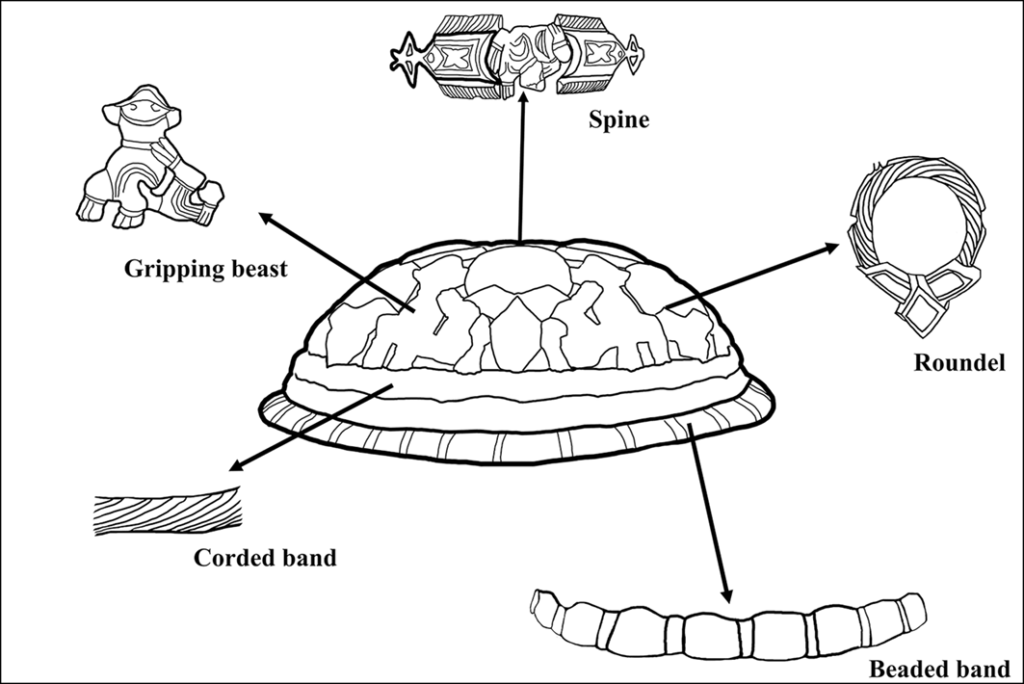
The eyes, ears and limbs of ornamental animals, the arrangement of decorative beads and even minor imperfections helped establish connections between finished ornaments and their original casting models.
One particularly convincing example involves a pair of brooches from a burial mound at Nørre Vosborg in Denmark. A small, irregular extension at the corner of a geometric ornament appears in precisely the same position on both the finished jewelry and a mould fragment from Ribe. Such an individual detail makes an accidental resemblance highly unlikely.
Viking Jewelry Travelled Between Denmark and Norway
Three of the five identified casting models correspond to jewelry found in Denmark, while the other two match brooches from cremation graves at Sogndal and Gimmeland in western Norway.
The concentration of four matches along Scandinavia’s western coastal regions supports earlier suggestions of a north–south sailing route connecting western Jutland with Norway.
Previous archaeological research has documented the movement of grinding stones, soapstone vessels, whetstones and reindeer antlers between Ribe and Norway. Parrott’s findings indicate that finished metal ornaments also formed part of these exchange networks.
Rather than travelling to Ribe to purchase jewelry, customers may have acquired these ornaments at seasonal coastal markets or settlements associated with wealthy landowners. Such places could have served as local points of exchange along the Scandinavian coastline, although further archaeological evidence will be necessary to establish the proposed trading route more securely.
Were Vikings Really Mass-Producing Their Jewelry?
Since the nineteenth century, archaeologists have regarded the abundance and similarity of Viking oval brooches as evidence of large-scale, standardised production. The numerous casting moulds recovered from trading centres such as Ribe, Birka and Hedeby reinforced this interpretation.
Yet Parrott examined 105 of the approximately 148 known Berdal-type brooches and identified matches with only five distinct casting models from the excavated workshop material. Although the incomplete archaeological record may partly explain this result, the limited number of matches raises questions about earlier assumptions concerning mass production.
Even brooches belonging to the same stylistic group displayed considerable differences. Some craftsmen incorporated all the decorative details into their original wax models, while others deliberately left sections undecorated and engraved intricate patterns directly onto the metal after casting.
These contrasting methods existed within the same workshop environment. The additional time and skill required for engraving suggest that production efficiency was not necessarily the craftsmen’s primary concern. Artistic choices, customer preferences, and established craft traditions may also have influenced their work.
Parrott raises the possibility that experienced craftsmen undertook the more demanding metal engraving, while apprentices worked with more forgiving materials such as wax and clay.
The research does not rule out mass production in the Viking world. Instead, it challenges the assumption that visually similar ornaments necessarily came from a uniform manufacturing system. The brooches preserve evidence of individual craftsmanship, specialised skills and working relationships that shaped the jewelry worn across Viking Age Scandinavia.
Parrott, D. (2026). Casting connections: rethinking Viking Age oval brooch production through high-resolution 3D modelling. Antiquity, 1–19. doi:10.15184/aqy.2026.10486
