
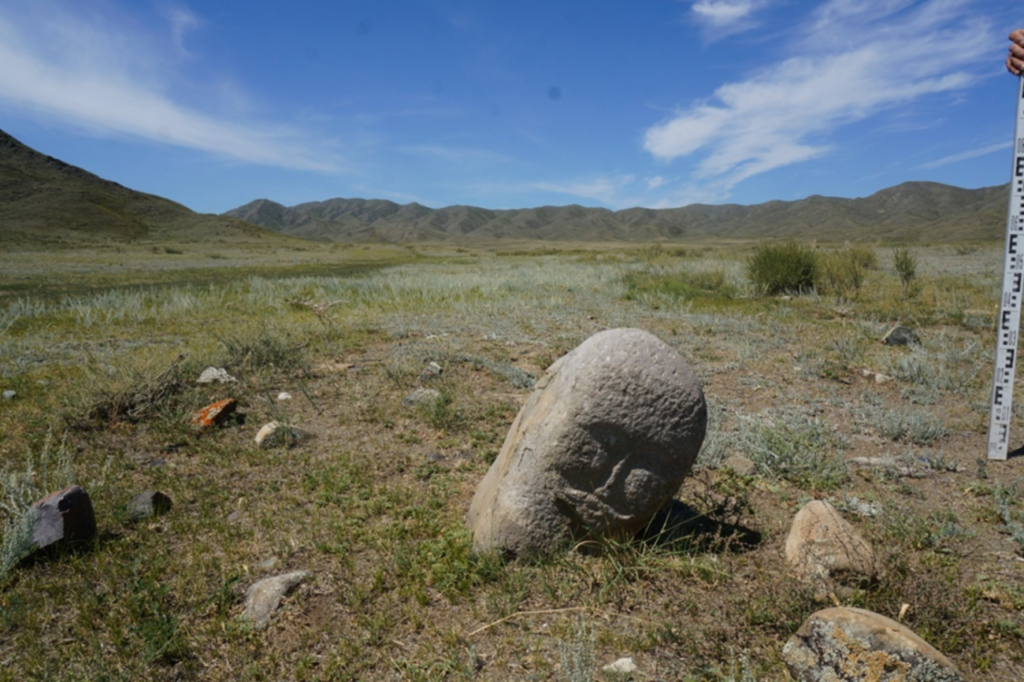
Archaeologists have discovered previously undocumented ancient Turkic ritual and memorial complexes in the Republic of Tuva, southern Siberia. Dating to the sixth through eighth centuries CE, the monuments feature rectangular stone enclosures, human-shaped statues, and rows of standing stones known as balbals, some stretching for up to 600 meters. Researchers associate these ceremonial sites with traditions of honoring ancestors and venerating the sky during the age of the Turkic khaganates.
The Institute for the History of Material Culture of the Russian Academy of Sciences announced the findings on November 23, 2026. Archaeologists surveyed the Mongun-Taiga, Ovyur, Chaa-Khol and Ulug-Khem districts of Tuva and registered the newly documented monuments for state protection.
Senior researcher Marina Kilunovskaya had previously presented some of the fieldwork results at an international archaeological conference in October. Speaking at the conference, she reported the discovery of seven stone statues and memorial complexes accompanied by exceptionally long rows of standing stones.
Sacred Landscapes of the Ancient Turkic World
The Sayan-Altai region, which encompasses modern Tuva, played an important role in the development of early Turkic culture. The emergence of the Turkic Khaganate in the sixth century CE transformed the political landscape of Eurasia, bringing extensive territories and numerous nomadic communities under Turkic rule.
Across the Central Asian steppes, communities erected stone monuments to commemorate individuals and maintain their connections with previous generations. Many of these monuments formed part of larger ceremonial complexes rather than standing alone.
Archaeologists began systematically studying Tuva’s ancient Turkic monuments in the 1950s under the direction of Alexander Grach. While earlier investigations often concentrated on individual sculptures, the current research examines the relationship between statues, stone enclosures, and their surrounding landscape.
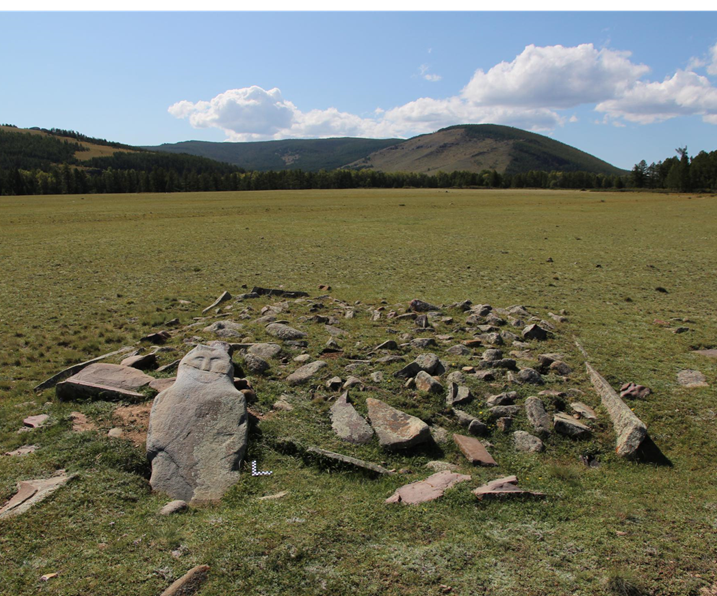
Kilunovskaya interprets these complexes as sacred spaces where ancient Turkic communities honored their ancestors and expressed reverence for the sky. Their architectural arrangement suggests that the orientation and placement of individual monuments held particular significance.
Why Did Ancient Turks Erect Rows of Standing Stones?
One of the most distinctive features of the newly documented complexes is the presence of balbals. These upright stones formed long lines extending eastward from the memorial structures, with some rows reaching 600 meters in length.
The complexes generally consisted of rectangular stone enclosures arranged along a north–south axis. Ancient builders placed human-shaped statues on the eastern side of the enclosures and erected rows of balbals extending toward the rising sun.
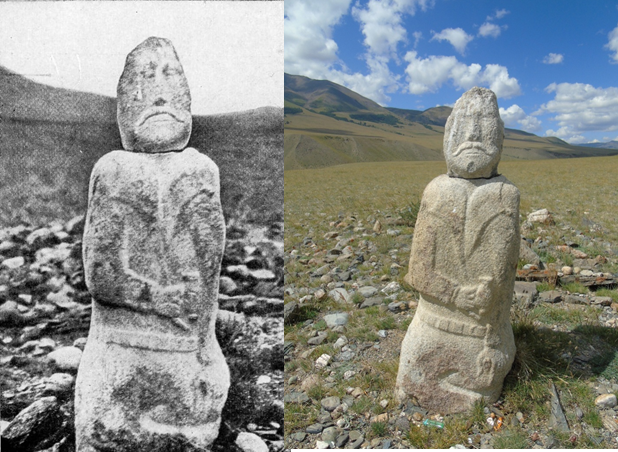
Although both types of monuments belonged to the same ceremonial setting, they differed considerably in appearance. Sculptors carved human figures with recognizable facial features, clothing, and personal possessions, while balbals generally consisted of simpler, roughly shaped standing stones.
One longstanding interpretation, partly supported by ancient Turkic written sources, associates balbals with enemies a warrior defeated during his lifetime. According to this interpretation, the stones represented defeated enemies who would serve the deceased in the afterlife. Scholars, however, continue to debate whether this explanation applies to every balbal arrangement.
The precise meaning of the stone rows in Tuva remains uncertain, but their consistent eastward orientation and association with memorial enclosures suggest that they formed an integral part of commemorative ceremonies.
Clothing, Weapons and Faces Carved in Stone
The human-shaped statues preserve details of early Turkic life that rarely survive in archaeological deposits. Ancient sculptors depicted distinctive facial features, mustaches, headwear, garments, decorated belts, sabers, daggers, and vessels held in the hands of the figures.
These carvings help researchers reconstruct the appearance and material culture of the people who inhabited southern Siberia more than a millennium ago. Kilunovskaya also notes similarities between certain objects represented on the statues and elements of traditional Tuvan culture.
The research team observed considerable differences in craftsmanship within individual complexes. Some statues display carefully executed details and sophisticated carving techniques, while others feature considerably simpler representations.
Researchers suggest that skilled stoneworkers produced the more elaborate sculptures, while other members of the community may have created simpler monuments. Such differences raise the possibility that people from various sections of society participated in commemorating their ancestors.
Honoring Ancestors Across Generations
Ancient Turkic communities may have returned to these ceremonial sites over successive generations, adding new monuments to commemorate respected ancestors or clan founders. The presence of multiple stone structures within individual complexes supports the interpretation that these places retained their importance over extended periods.
Previous excavations at comparable sites have uncovered animal bones and pottery fragments, which archaeologists associate with commemorative feasts. Such gatherings may have brought communities together to honor the dead, maintain family traditions and reinforce social ties.
The latest investigations in Tuva involved archaeological surveys rather than excavations. Researchers have therefore concentrated on documenting the monuments, their architectural arrangements and their relationship with the surrounding terrain.
Future excavations could establish how long individual complexes remained in use and what ceremonies took place within them. For now, the newly recorded monuments expand the archaeological record of early Turkic communities in southern Siberia, preserving evidence of traditions that once connected the living, their ancestors, and the sacred landscape they inhabited.
Institute for the History of Material Culture of the Russian Academy of Sciences (IHMC RAS)
