
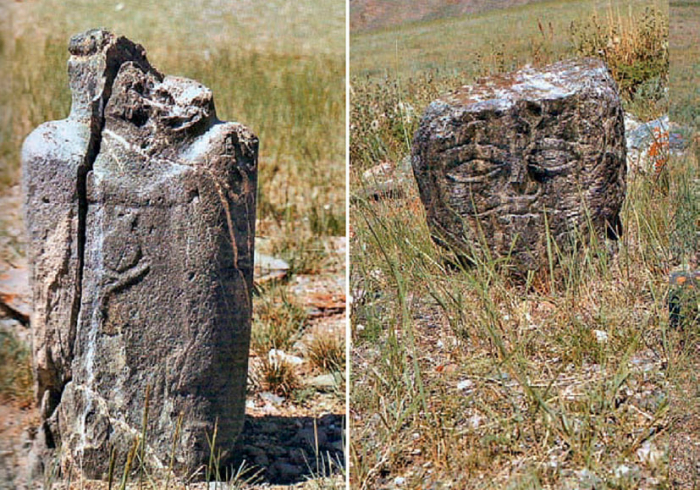
Researchers studying the cultural heritage of the Turkic world have expanded the known record of early medieval monuments in the Altai Mountains. A new scientific publication documents additional archaeological sites from the Turkic period, offering fresh insights into the early history and settlement patterns of Turkic-speaking peoples in Central Asia.
Scholars from Altai State University have released the fourth edition of the catalog titled Early Medieval Monuments of the Turks of Altai. The publication includes detailed information about 11 archaeological sites discovered and examined in November last year in the Kosh-Agachsky District.
The fieldwork was carried out as part of international archaeological expeditions organized by the research and educational center Great Altai Research and Education Center for Altaistics and Turkology. The project focuses on identifying and documenting material evidence related to the formation and early development of Turkic cultures across the Altai region.
New Archaeological Findings from the Turkic Period
The catalog was prepared by a team of specialists including archaeologist Yaroslav Frolov, director of the Altai Archaeology and Ethnography Museum, alongside professor Sergey Grushin and associate professor Violetta Saibert. The cartographic component of the publication was also developed by Grushin and Frolov.
One distinctive feature of the new edition is that all the sites included in the catalog were personally examined by the authors during field expeditions. The publication provides detailed descriptions of the current condition of early medieval archaeological monuments found across the mountainous Altai region, accompanied by photographic documentation and geographic mapping.
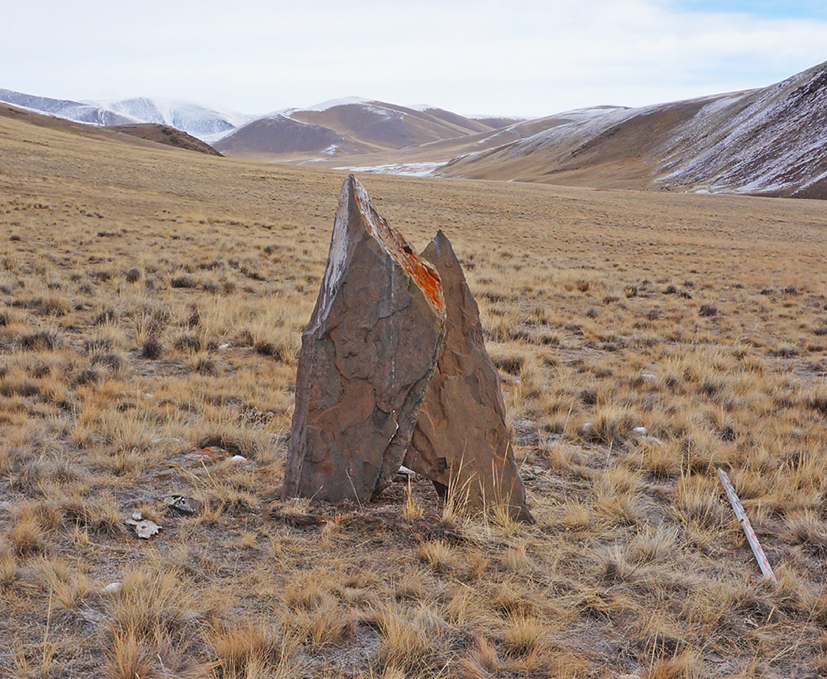
Among the recorded archaeological objects are burial mounds (kurgans), stone enclosures, steles, balbals (stone statues often associated with Turkic memorial traditions), ritual stone alignments, sculpted figures, petroglyphs, and runic inscriptions. These monuments represent important cultural markers of early Turkic societies that inhabited the Altai Mountains between the second half of the 5th century and the 10th century.
Advanced Documentation and 3D Modeling
During the expeditions, archaeologists carefully documented the sites’ conditions, took detailed photographs, created panoramic images, and captured data for future three-dimensional models. These modern digital techniques allow researchers to preserve accurate records of the monuments and make them accessible for further scientific analysis.
However, some archaeological features discovered during the expeditions could not yet be fully identified or classified. These sites were not included in the latest catalog edition. Researchers plan to continue studying them through archival research, published materials, and additional field observations in order to determine their historical attribution.
Evidence of Multi-Layered Cultural Landscapes
According to Professor Sergey Grushin, one of the most intriguing aspects of the newly documented monuments is their placement within landscapes that were already used by earlier cultures.
Many Turkic-era archaeological structures appear to have been built adjacent to or integrated with burial sites from earlier historical periods. These include graves associated with the Pazyryk culture, as well as burial sites from the Afanasievo culture and other Bronze Age civilizations that once inhabited the region.
This layered archaeological landscape suggests that the Altai Mountains served as an important cultural crossroads for thousands of years, with successive civilizations leaving traces of their presence in the same geographic areas.
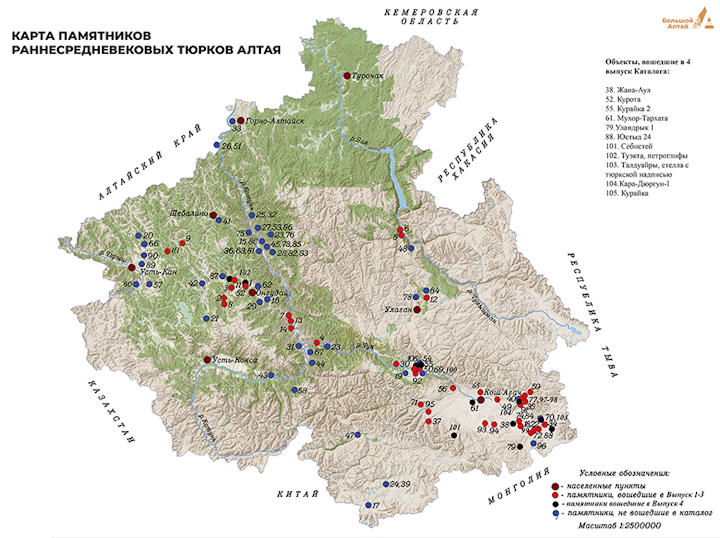
Mapping the Early Turkic Heritage of the Altai
Today, researchers have identified approximately 105 archaeological complexes linked to early medieval Turkic populations across the mountainous Altai region. Information about 57 of these sites has already been published in the first four catalog editions, while the remaining monuments are currently listed in preliminary records awaiting further study.
Experts emphasize that the project to map and classify Turkic archaeological heritage in the Altai Mountains is ongoing. These monuments are recognized as part of the historical and archaeological heritage of Russia and provide crucial evidence for understanding the origins, cultural development, and historical expansion of Turkic-speaking peoples during the early Middle Ages.
Earlier Expeditions and Publications
The first three editions of the catalog were based on materials gathered during international archaeological expeditions conducted between 2022 and 2024 in the Altai Republic. The initial publication appeared in 2022 following the “Ulagan-2022” expedition and documented 14 monuments across several districts of the region.
Subsequent expeditions expanded the dataset significantly, with the second edition describing 22 sites and the third presenting 10 additional monuments discovered in the Kosh-Agach area.
As researchers continue to explore the Altai Mountains, archaeologists expect that further discoveries will deepen our understanding of the early Turkic world and its connections to ancient Eurasian civilizations.
Readers can access the full version of the catalog via the following link: Bolshoy – Altay
Cover Image Credit: Ancient stone sculpture “Balbal.” Credit: Information Center of the Great Altai Research and Education Center for Altaistics and Turkology.
