
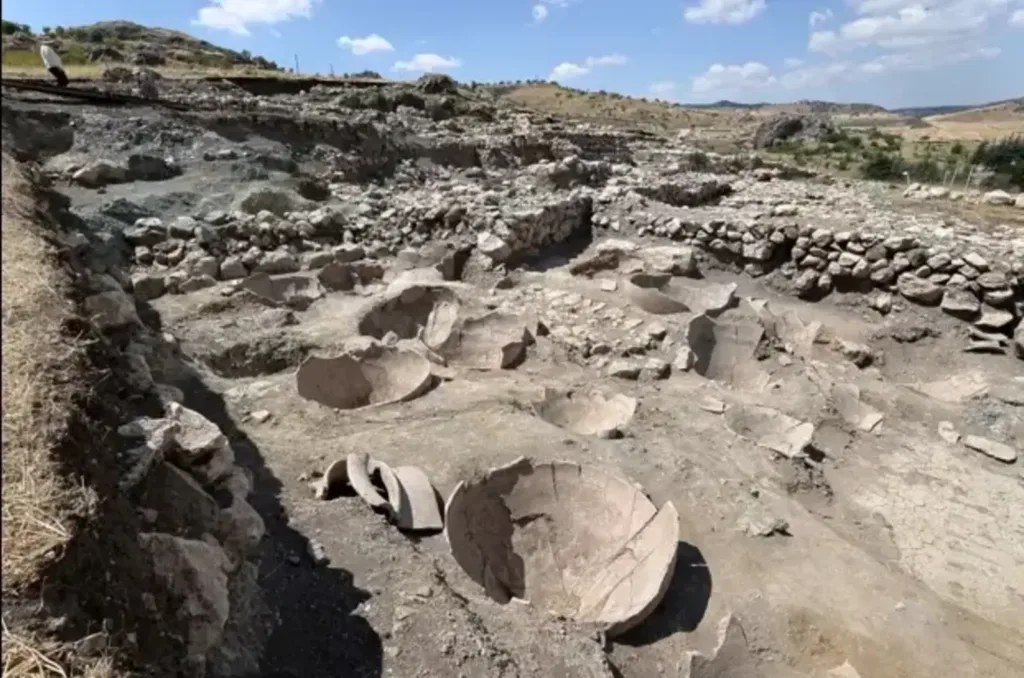
Archaeologists excavating Hattusa in central Türkiye have uncovered a large storage complex dating back roughly 3,800 years to the Assyrian Trade Colonies Period, revealing new evidence about the economic life of the settlement before it became the capital of the Hittite Empire.
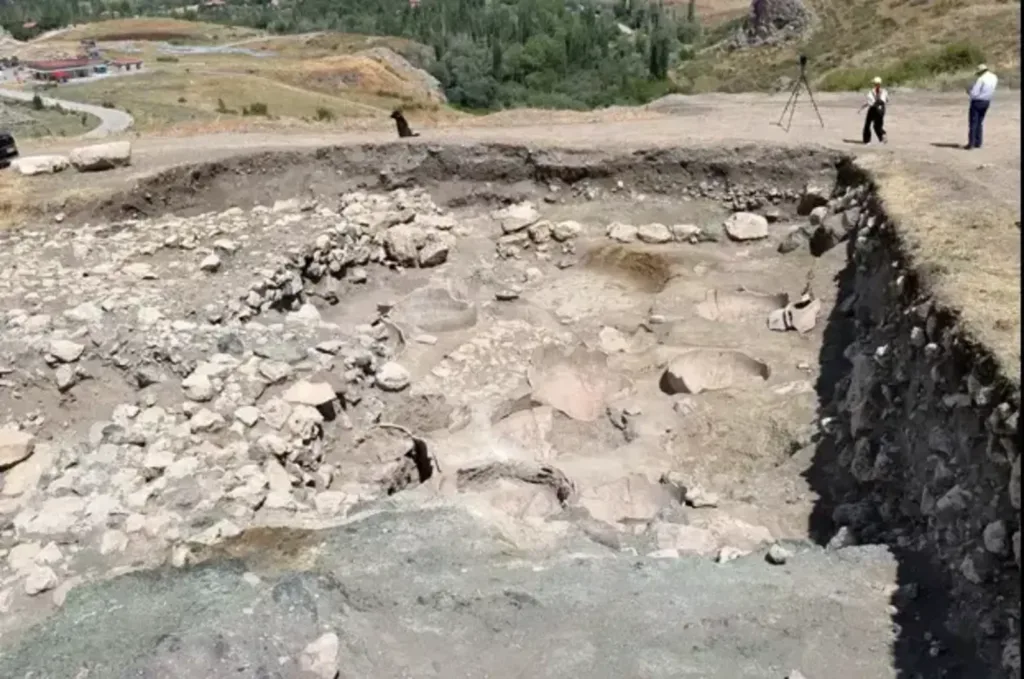
The structure was discovered on the northwestern slope of Büyükkale, between the later Hittite royal palace and the Great Temple. Excavations have so far exposed 16 large storage jars set into a steep hillside that had been carefully terraced to accommodate the building.
According to excavation director Prof. Dr. Andreas Schachner, the complex likely dates to around 1800–1750 BC, placing it in the Middle Bronze Age and decades before Hattusa emerged as the political center of the Hittite state.
At that time, the settlement was known as Hattush, and its inhabitants were part of the commercial world created by Assyrian merchants operating across central Anatolia.
Sixteen large jars built into the hillside
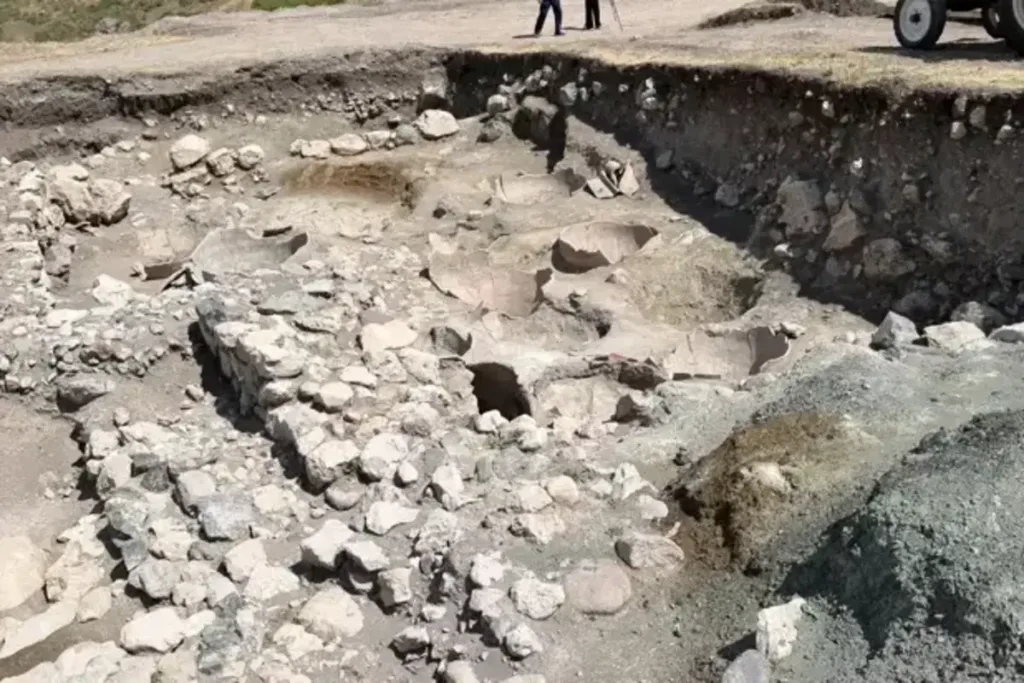
The newly uncovered structure appears to have been constructed by cutting and terracing the steep slope. Archaeologists have identified the western section of what seems to have been a substantial storage building, with large jars sunk into or positioned within the stepped architecture.
Schachner said the vessels were probably used to store provisions and agricultural produce brought in from the surrounding countryside during what archaeologists call the Karum Period.
The full capacity of the jars remains unknown because a major landslide damaged the building and destroyed their upper sections. Only the lower portions of many vessels survive.
Even so, the scale of the remains suggests that the structure was considerable. Excavations indicate that the building continues farther west, where archaeologists are now removing later layers in an attempt to determine its original extent.
The discovery may also be part of a much larger storage and commercial district.
Around 30 meters northeast of the new excavation area, archaeologists working at Hattusa in the 1960s uncovered another structure with similar characteristics. Taken together, Schachner believes the two areas may represent elements of a broader commercial and storage center belonging to pre-Hittite Hattush.
Hattush before the Hittites
The discovery opens a window onto a period of Hattusa’s history that is often overshadowed by its later role as the capital of one of the great powers of the Late Bronze Age.
Before the rise of the Hittites, Hattush belonged to a network of Anatolian settlements connected to merchants from the northern Mesopotamian city of Ashur.
During the early second millennium BC, Assyrian merchants established an extensive trading system across Anatolia. Its best-known center was Kanesh, at modern Kültepe near Kayseri, where thousands of clay tablets have documented commercial transactions, loans, partnerships, marriages and disputes in remarkable detail.
From Kanesh, merchants operated through a network of trading settlements conventionally known as karums and smaller stations called wabartums. Hattush was one of the Anatolian cities connected to this commercial system.
Assyrian merchants transported commodities over long distances by donkey caravan. Among the most important goods brought into Anatolia were tin and high-quality textiles, while silver and other valuable commodities moved in the opposite direction.
Tin was particularly significant because, when alloyed with copper, it produced bronze—the essential metal of the Bronze Age.
The network was therefore more than a simple exchange of luxury objects. It linked households, merchants, local rulers, agricultural producers and urban centers across hundreds of kilometers.
The newly identified storage complex at Hattush provides archaeological evidence for the physical infrastructure that supported such an economy.
What was stored inside the jars?
For now, archaeologists cannot say exactly what the 16 vessels contained.
Because the building was heavily damaged by a landslide, the jars were later filled with mud, sand, stones, and debris washed down from higher levels of the slope. No preserved deposits have yet been identified that can be directly associated with their original contents.
Researchers are nevertheless collecting soil from the bottoms of the vessels for archaeobotanical analysis.
The samples will be washed and examined for surviving seeds or other microscopic plant remains. If such material is recovered, it could help determine whether the jars once held cereals, pulses or other agricultural products.
The results could provide unusually direct evidence for food storage and economic organization in Hattush during the Assyrian Trade Colonies Period.
A commercial center destroyed by a landslide
The excavation is also revealing how the landscape repeatedly shaped the history of this part of the city.
According to Schachner, the Middle Bronze Age storage structure was eventually destroyed by a major landslide. Centuries later, the Hittites constructed new buildings over the same area, but those structures were also affected by slope instability.
The sequence preserves evidence of generations repeatedly building on—and struggling against—the same difficult terrain.
Hattusa would later become the capital of the Hittite Empire, which dominated much of Anatolia during the second millennium BC. Today, the archaeological site is included on UNESCO’s World Heritage List, while the Hittite cuneiform tablets discovered at Boğazköy-Hattusa are separately inscribed on UNESCO’s Memory of the World Register.
The 16 jars, however, belong to an earlier chapter.
As excavation continues westward, archaeologists hope to determine how large the storage complex originally was and whether it formed part of a much broader commercial quarter. The discovery is beginning to reveal the economic landscape of Hattush before it became Hattusa—the imperial capital of the Hittites.
