
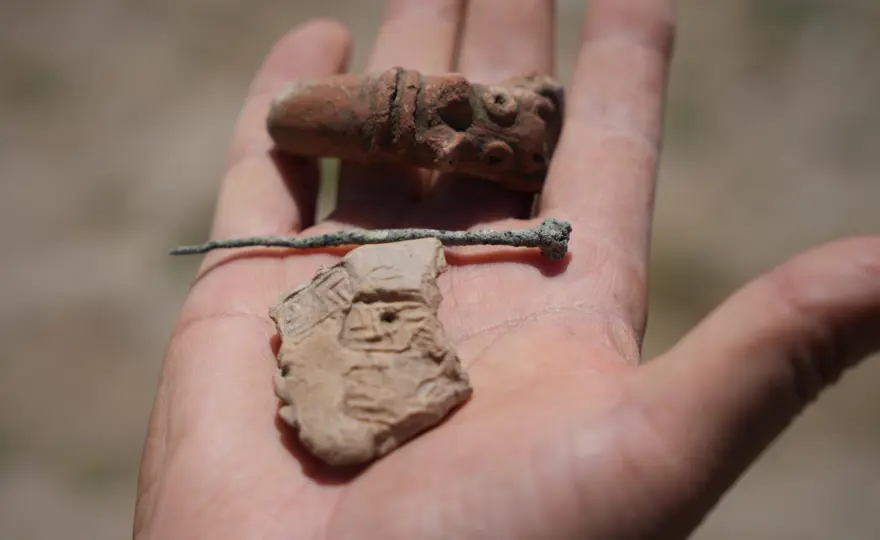
Archaeologists working at Büklükale in central Türkiye have uncovered a stamp seal decorated with two animal figures, a small but potentially important find that may belong to the late Karum period or the Early Hittite period.
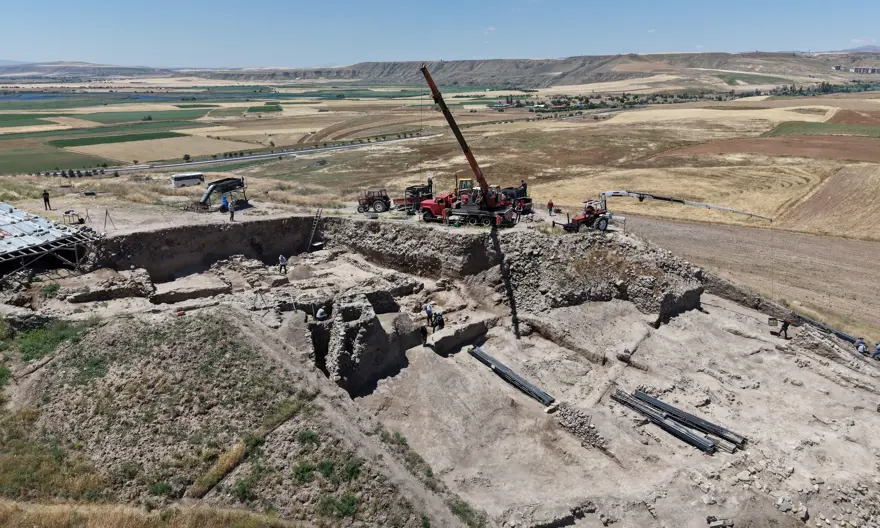
The discovery was made during ongoing excavations at Büklükale, an ancient settlement in the Karakeçili district of Kırıkkale, about 60 kilometers southeast of Ankara. The site lies beside the Kızılırmak River, a natural corridor that helped shape movement, trade, and political control in central Anatolia for thousands of years.
Excavations have been carried out for 17 years by a team from the Japanese Institute of Anatolian Archaeology under the direction of Assoc. Prof. Dr. Kimiyoshi Matsumura. Work continues in two main areas known as the “Lower City” and the “Upper City.”
A small seal with two animal figures
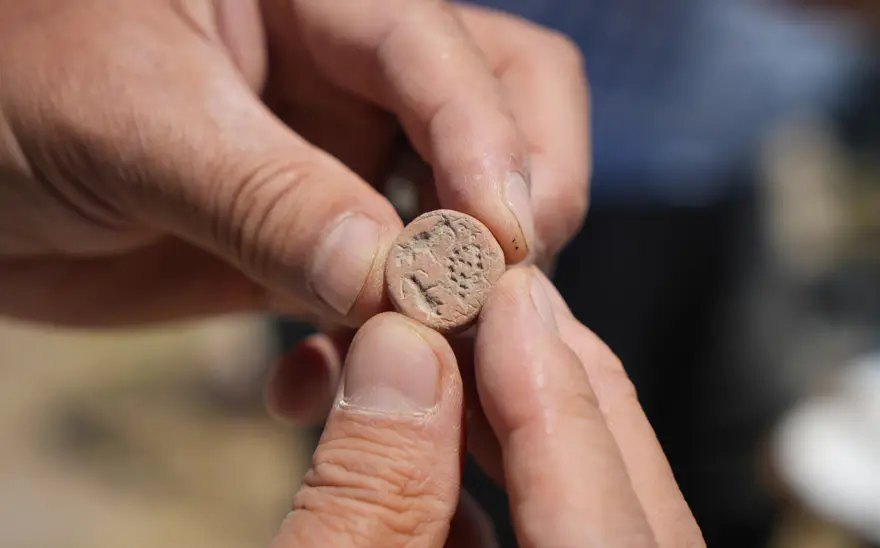
Among the latest finds, the most striking object is a handled stamp seal. According to Matsumura, the seal carries two animal figures as its main motif. Beneath them is another design with very small perforations or holes, though its exact meaning has not yet been determined.
The seal has not been assigned to a final date. Matsumura noted, however, that this type of stamp seal is generally known from a period stretching from the end of the Karum period into the Old Hittite period.
That cautious dating is important. At this stage, the find should not be treated as direct proof of an Early Hittite administrative center. But its form and imagery place it within a cultural horizon closely linked to the transition from the Assyrian trade-colony world of Anatolia to the rise of Hittite political power.
Seals as tools of control and identity
Seals were not decorative objects alone. In Bronze Age Anatolia, they were tools of control, identity, and administration. A seal could be pressed into clay to mark ownership, secure a container, authorize a transaction, or close off a storage room or doorway.
In Anatolia, stamp seals had a long local tradition. During the Old Assyrian Colony period, cylinder seals were also used, especially in commercial contexts linked to Assyrian merchants. By the Old Hittite period, stamp seals became a major feature of Hittite administrative practice.
Animal motifs are common in many ancient Near Eastern and Anatolian seal traditions, but their meaning depends heavily on date, style, context, and comparison with other finds. For that reason, the Büklükale seal will need closer study before firm conclusions can be drawn.
Still, its discovery adds another piece to the growing picture of Büklükale as a settlement with strong Bronze Age connections.
A strategic settlement beside the Kızılırmak
Büklükale’s position was one of its main advantages. The site stands near a crossing point of the Kızılırmak, the longest river in Türkiye and one of the major geographical features of ancient Anatolia.
Matsumura said the river crossing made Büklükale strategically important in every period. That importance is visible in the site’s long sequence of occupation.
The upper layers include remains from the Ottoman period, possibly connected with soldiers who lived at the site. Beneath them, archaeologists identified traces of settlement from the Hellenistic period, broadly associated with the age that followed Alexander the Great’s campaigns.
Lower levels preserve evidence from the Iron Age and earlier periods. Matsumura said traces associated with the Achaemenid Persians, Lydians, Cimmerians, and Phrygians have also been identified or considered at the site. A visible fortification wall may belong to one of these earlier phases, though further study is needed.
Büklükale and the Hittite world
Büklükale has already attracted attention because of earlier discoveries linked to the Hittite period. Excavations have revealed architectural remains interpreted as part of the entrance area of a palace complex.
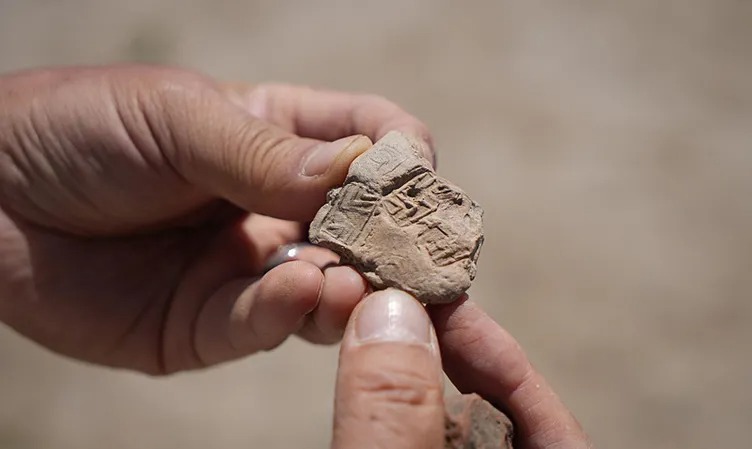
The site is also known for Hittite cuneiform tablets found farther west than such tablets are usually expected in Anatolia. Since 2019, Hurrian tablets have also been recovered at Büklükale.
That is significant because Hurrian tablets in Anatolia had previously been known from only a small number of major Hittite-related centers, including Hattusa, Ortaköy, and Kayalıpınar. These places were closely connected with the Hittite royal sphere.
The presence of Hurrian texts at Büklükale does not automatically define the site’s political status. But it does suggest that the settlement was involved in high-level cultural, religious, or administrative networks during the Hittite period.
The newly found animal-figured stamp seal now adds another object to that discussion. If future analysis confirms an Early Hittite or late Karum-period date, it may help researchers understand how Büklükale developed before and during the formation of Hittite power in central Anatolia.
For now, the seal is best understood as a promising find rather than a settled answer. Its importance lies not in a single dramatic claim, but in the way it fits into a wider pattern: Büklükale was not a marginal settlement on the edge of the ancient world. It stood at a river crossing where different political powers, languages, and administrative traditions passed through central Anatolia over many centuries.
Cover Image Credit: IHA
