
16 April 2026 The Future is the Product of the Past

Before Rome, Before Greece: Anatolia’s Oldest Glass Revealed in Hittite Büklükale

Nestled along the western bank of the Kızılırmak River in central Turkey, the archaeological site of Büklükale continues to astonish researchers with its wealth of ancient artifacts. Among the most remarkable finds from this mid-second-millennium BCE settlement are some of the earliest known examples of glass craftsmanship in Anatolia—revealing the Hittites’ sophisticated material culture and cross-regional influences.

Early Glass Technology in the Heart of Anatolia

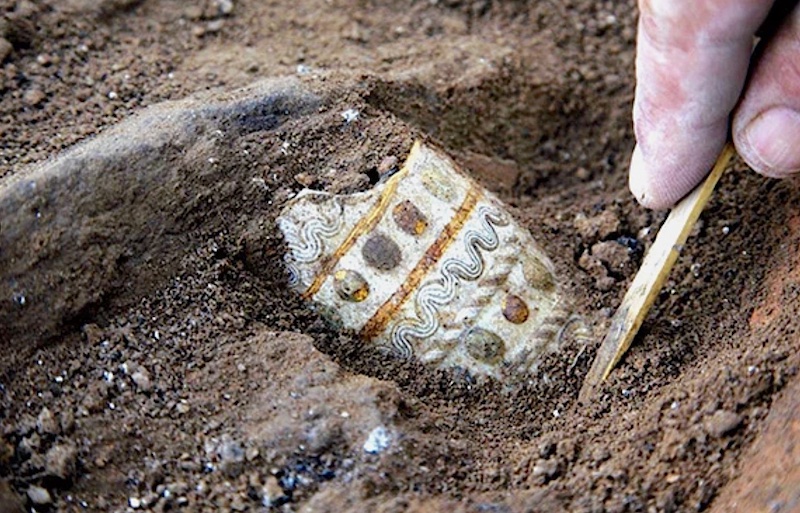
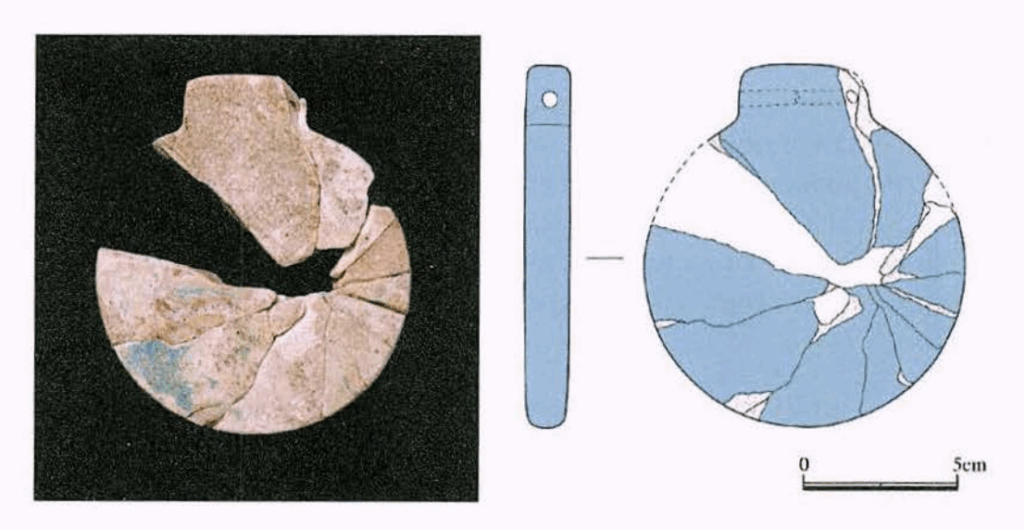
In the ruins of Room R14 of the citadel area, archaeologists uncovered a rare, pear-shaped glass bottle and a cobalt-blue disk-shaped pendant. These discoveries date back to the late Karum period or early Old Hittite era (ca. 17th–16th century BCE), representing some of the oldest glass objects ever found in Central Anatolia.

The bottle displays intricate decorative motifs—zigzags and fishbone patterns—consistent with Mesopotamian glass traditions from Nuzi, Assur, and Tell al-Rimah. Such craftsmanship reflects a highly advanced production technique known as core-forming, where molten glass was wrapped around a removable clay core. What’s striking is that isotope analysis suggests this bottle may not have been imported from Syria or Mesopotamia, but rather produced locally—implying the existence of a yet-undiscovered glass workshop in or near Central Anatolia.
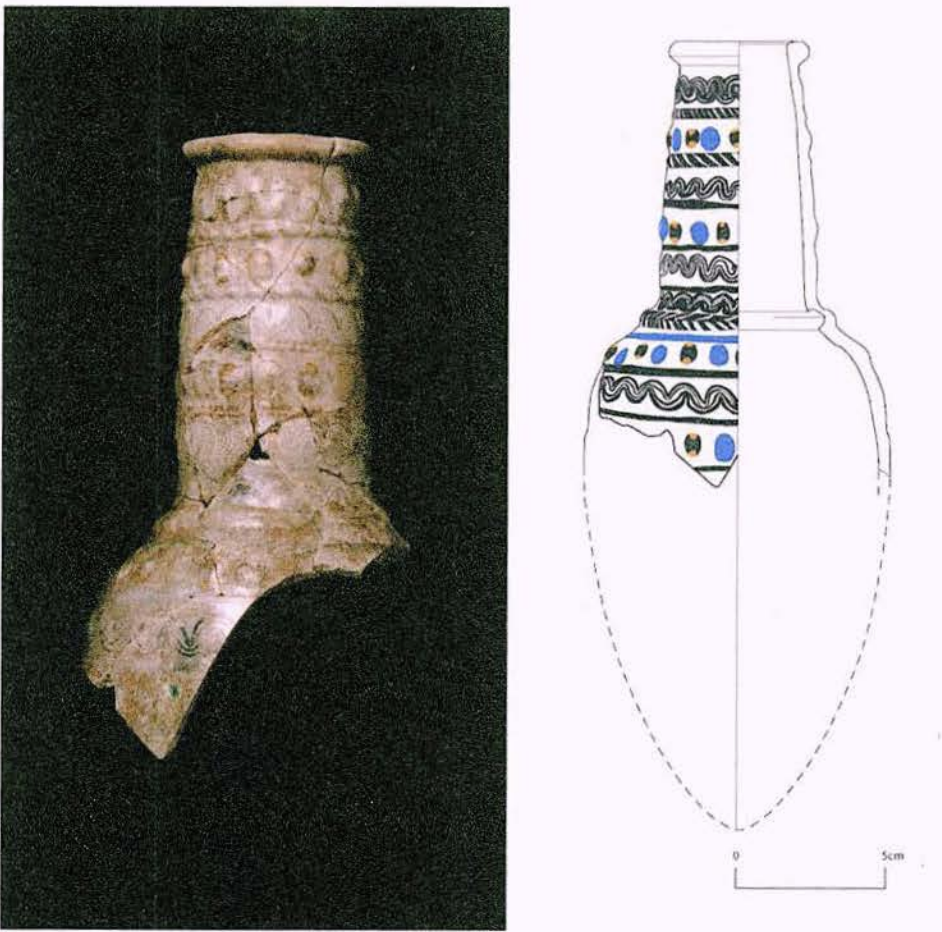
The only recovered fragment of the pear-shaped bottle — its 146 mm upper section — features an opaque white base adorned with embedded colored glass pieces and decorative patterns. Credit: Japanese Institute of Anatolian Archaeology.

The Hurrian Influence and the Goddess Ishtar

Even more intriguing is the disk pendant, which shows stylistic parallels with offerings to the Mesopotamian goddess Ishtar. Similar items were discovered in temples at Nuzi and Assur, typically hung on wall pegs as ritual decorations. Their presence in Büklükale suggests not only cultural exchange but possibly direct religious or ceremonial practices linked to Hurrian-Ishtar worship. This supports broader evidence of Hurrian cultural penetration into Central Anatolia during this period, influencing local beliefs and elite identity.

A Multicultural Urban Center

The broader excavation of Büklükale has revealed a settlement with a rich, multi-ethnic character. Artifacts from the Karum trade network period (ca. 20th–18th centuries BCE) overlap with early Hittite imperial layers. Archaeologists have identified both Hittite and Hurrian cuneiform tablets, including a diplomatically charged letter possibly sent to a Hittite king, and sealings bearing royal insignia like the Tabarna bullae. Such findings indicate that Büklükale served not just as a provincial town but as a political and administrative node with close ties to the Hittite royal family.


📣 Our WhatsApp channel is now LIVE! Stay up-to-date with the latest news and updates, just click here to follow us on WhatsApp and never miss a thing!!


Glass pendant from Room R14. The disk-shaped design bears stylistic parallels to votive offerings associated with the Mesopotamian goddess Ishtar. Credit: Japanese Institute of Anatolian Archaeology.

Rituals, Feasting, and Symbolic Architecture

Adding to the site’s significance are two underground storerooms (R54 and R62) containing over 6,000 miniature bowls, elaborate bullae, and exotic items like ostrich eggshells and panther-head sculptures made of marble and lapis lazuli. Burn marks on the walls and an unexplained external stone channel suggest these rooms were used in elaborate ceremonial feasts—possibly Hattian-origin building consecration rituals.

Archaeobotanical studies of these rooms uncovered a surprising variety of imported and symbolic plants, including sesame and cucumis (melons), pointing to intentional, possibly ritualistic consumption. Researchers estimate that over 3,000 people may have participated in the events commemorated here.
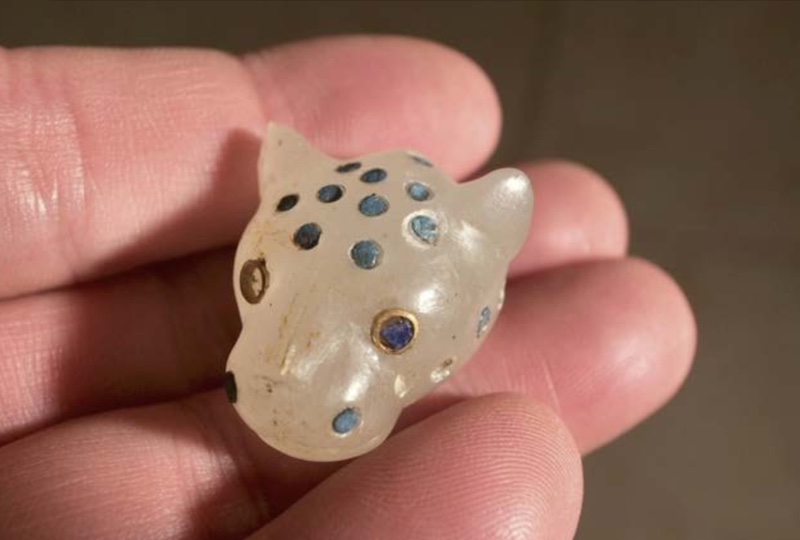
A finely crafted panther head made of white lapis lazuli, with inlaid eyes of gold and other precious materials — possibly used in ritual or ceremonial contexts. Credit: Japanese Institute of Anatolian Archaeology.

Why Büklükale Matters

These discoveries place Büklükale at the center of key historical transitions in Anatolia—from the trade-rich Karum period to the militarized rise of the Hittite Empire. Unlike more famous sites such as Boğazköy-Hattusa, Büklükale provides a rare glimpse into cultural synthesis and urban development in a frontier setting.

Moreover, the early appearance of glass technology, typically assumed to be Mesopotamian in origin, challenges existing narratives and raises new questions: Could Central Anatolia have played a more active role in technological innovation during the Bronze Age? Were Hittite elites consumers—or even producers—of high-value luxury goods?

As excavations continue, Büklükale promises to reshape our understanding of Hittite-era multiculturalism and the technological capabilities of Bronze Age Anatolia.

Matsumura, K. (2023). Büklükale: M.Ö. İkinci Binyıl Ortasında Multikültürel Görünüm. “Orta Anadolu Arkeoloji, Antropoloji ve Sanat Tarihi Araştırmaları”, In C. Atila, Y. Alkan, A. T. Uzunel, & G. Koyun (Eds.), Japanese Institute of Anatolian Archaeology.

Related Articles

Archaeologists discovered the secret ingredient that made Mayan plaster durable

20 April 2023

20 April 2023

Ancient Mayan masons had their own secrets for making lime plasters, mortars, and plasters, which they used to build their...

Visit Baalbek’s Famous Temples with a Free 3d Virtual Tour

10 April 2021

10 April 2021

Baalbek, which has traces of settlement since 9000 BC, was one of the cornerstones of ancient civilizations. The famous Baalbek temple...

Gruesome Evidence of Prehistoric Cannibalism: Child Decapitated 850,000 Years Ago at Atapuerca

28 July 2025

28 July 2025

In a chilling archaeological discovery, researchers have uncovered direct evidence that a child was decapitated and cannibalized approximately 850,000 years...

Archaeologists identified the first known tomb of a Warrior Woman with weapons in Hungary

5 January 2025

5 January 2025

A team of archaeologists led by Balázs Tihanyi of the Department of Biological Anthropology and the Department of Archaeology at...

Oldest Evidence of Head Shaping in Europe Discovered in Italian Cave

11 August 2025

11 August 2025

Archaeologists have uncovered the earliest known case of artificial cranial modification (ACM – deliberate head shaping) on the continent, dating...

Two Infant burials found under prehistoric “Dragon Stone” in Armenia

4 June 2024

4 June 2024

An international team of researchers has unearthed the remains of an adult woman and two infants buried under a basalt...

Archaeologists find a Roman military watchtower in Morocco for the first time

7 November 2022

7 November 2022

A Roman military watchtower the first of its kind was discovered by a team of Polish and Moroccan archaeologists in...

Buried at a Doorway for 5,000 Years: Ancient Bread Reveals a Lost Recipe—and a Ritual

6 April 2026

6 April 2026

A charred piece of bread, buried for five millennia beneath the soil of central Anatolia, is now rewriting what we...

“Let the Envious Burst!”: 1,500-Year-Old Mosaic with Surprising Message Discovered in Türkiye’s Syedra

14 March 2026

14 March 2026

Archaeologists working in the ancient city of Syedra, located near Alanya on Türkiye’s Mediterranean coast, have uncovered a remarkably well-preserved...

New rune discovery in Oslo

16 February 2022

16 February 2022

For the third time in a month and a half, archaeologists have found a new rune in Oslo. The artifact...

A First in Denmark: Rare 4th Century Roman Helmet and Chainmail Found

3 February 2025

3 February 2025

Archaeologists have recently unearthed a massive stockpile of weapons near Hedensted, Denmark, buried 1,500 years ago by an ancient chief....

Montenegro’s Unique Church With Two Altars is Disappearing

11 December 2023

11 December 2023

In the Spich plain, where the modern town of Sutomore in Bar, Montenegro is located, there were churches that served...

Lost Children’s Circle: Seven Infant Remains Unearthed in Mysterious Hittite Ritual Structure at Uşaklı Höyük

8 August 2025

8 August 2025

At the heart of Uşaklı Höyük (Uşaklı Mound), archaeologists have uncovered the “Lost Children’s Circle” — a mysterious Hittite-era ritual...

The history of Kültepe Mound in central Turkey goes back another 300 years

12 December 2021

12 December 2021

In Kültepe, where the first written documents of Anatolia were unearthed, the date based on 5 thousand years was updated...

Karahantepe; It will radically change the way we look at the Neolithic Age

1 June 2022

1 June 2022

Findings on settled village life in the ongoing excavations in Karahantepe will profoundly change our knowledge of the Neolithic Age....