
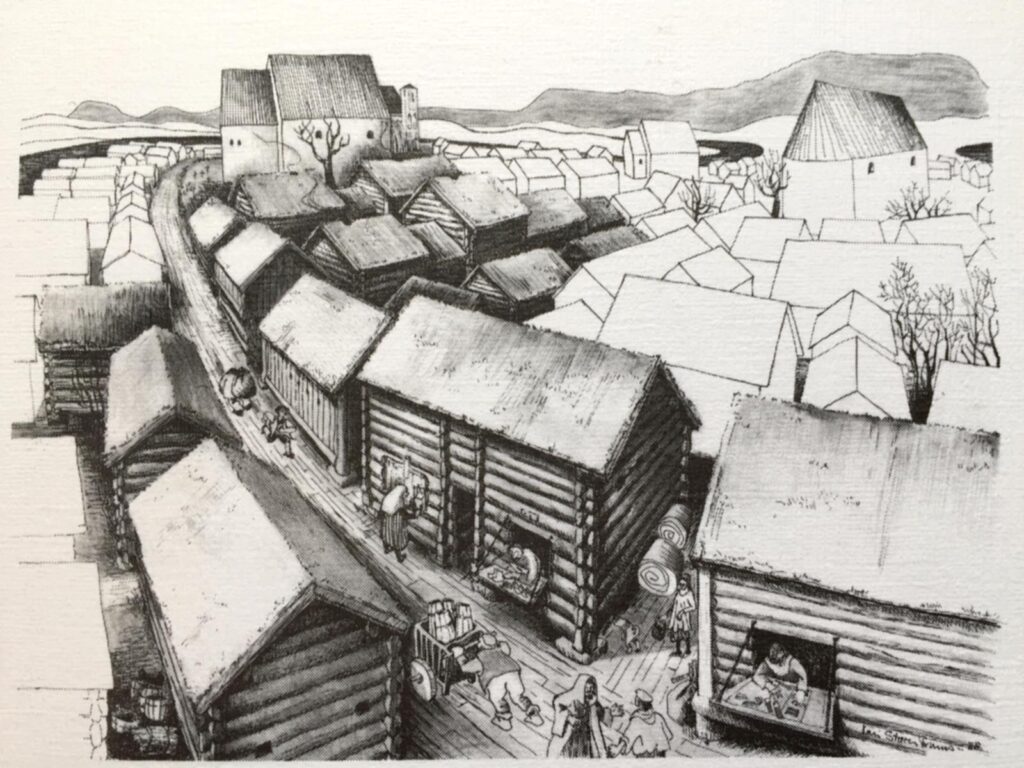
As Europe’s population grew during the Middle Ages, expanding towns faced an increasingly difficult problem: what to do with the waste produced by thousands of people living close together. Across the continent, urban communities developed ways to keep streets cleaner, remove foul-smelling refuse, and protect their surroundings. Yet some of these well-intentioned efforts may have created health risks that medieval residents could not have anticipated.
A new study of medieval Trondheim in Norway reveals one particularly troubling example. Residents removed human waste from crowded neighborhoods and transported it outside the city, where farmers mixed it with manure and spread it on agricultural fields. Although the practice helped keep urban areas cleaner, it may also have allowed intestinal parasites to return through contaminated food, exposing the same population the system was intended to protect.
The findings come from a multidisciplinary research project led by the Norwegian University of Science and Technology (NTNU), which examined health, sanitation, and everyday life in medieval Trondheim, then known as Nidaros. Drawing on archaeological remains, historical documents, and biological analyses, researchers have reconstructed how the city managed waste between AD 1000 and 1600—and why some well-intentioned measures may have made disease transmission worse.
How Medieval Waste Management Created a Health Problem
Medieval Trondheim was not simply a town where residents discarded rubbish wherever they pleased. Archaeological excavations show that people maintained separate pits for household refuse and human waste, suggesting an organized approach to sanitation long before modern sewage systems existed.
As the city’s population grew during the High Middle Ages, between 1130 and 1350, overcrowding brought increasing problems with waste and unpleasant smells. According to Elisabeth Forrestad Swensen, who studied medieval water and waste management as part of the NTNU project, authorities eventually arranged for latrine waste to be transported outside the urban center.
The decision reflected contemporary medical beliefs. Under the widely accepted theory of miasma, people associated foul odors with disease and regarded the removal of bad smells as an important protective measure.
Yet the waste did not simply disappear. Farmers mixed it with manure and used it to fertilize agricultural land, supplying food to the town.
This created an unexpected problem. Roundworm parasites, particularly those belonging to the genus Ascaris, can spread when people ingest microscopic eggs from contaminated food or soil. Using untreated human waste as fertilizer gave the parasites another opportunity to enter the human body.
Swensen reports that analyses of medieval latrine deposits indicate extremely widespread roundworm infection, potentially affecting almost the entire population. The researchers argue that transporting sewage to farmland may have helped sustain the cycle of infection rather than interrupting it.
The archaeological evidence does not establish precisely how many additional infections resulted from this practice. Nevertheless, it identifies a plausible connection between urban waste disposal, agricultural production, and the persistence of intestinal parasites.
Archaeological Evidence Reveals an Organized Medieval City
Other discoveries from Trondheim challenge the familiar image of medieval European towns as places where little attention was paid to sanitation. Archaeological evidence suggests that residents developed practical ways to manage waste and maintain cleaner urban environments, even without understanding how infectious diseases spread.
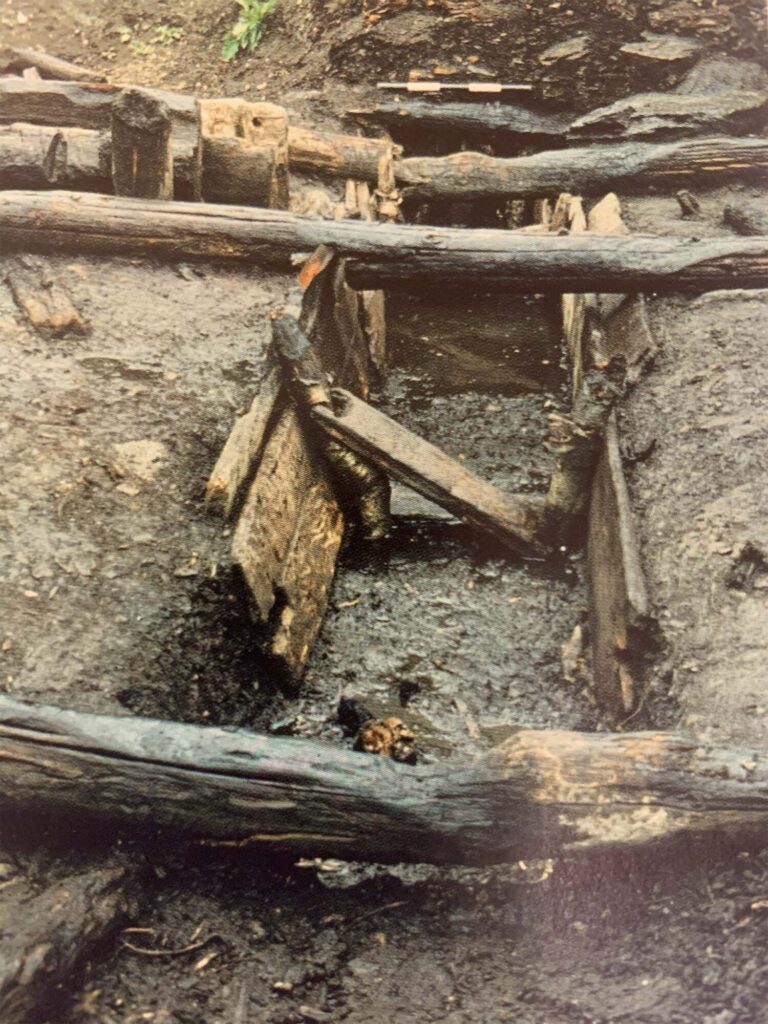
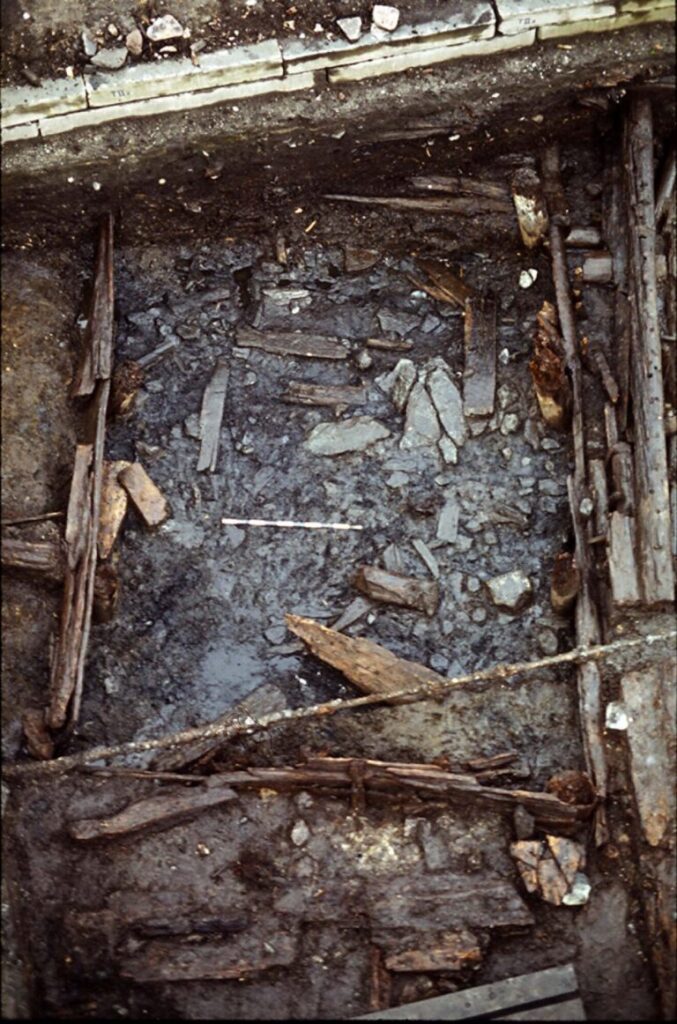
Excavations have uncovered wooden waste containers, drainage channels, and latrines dating to the 12th and 13th centuries. Some waste facilities occupied spaces between buildings or stood along narrow streets, demonstrating how residents incorporated sanitation arrangements into the crowded urban landscape.
Wood shavings and chips also played a practical role. Residents mixed them with organic refuse to reduce unpleasant odors, but this material became less abundant toward the end of the 13th century as construction activity declined.
The resulting changes in waste management did not all have harmful consequences. Moving certain forms of organic rubbish away from residential areas helped reduce exposure to potentially infectious material, even as the reuse of human waste on farmland created another risk.
The research also shows that collective responsibility for urban health emerged earlier than conventional historical narratives sometimes suggest.
Historian Erik Opsahl points to Norwegian legislation introduced under King Magnus the Lawmender, including the Code of the Realm of 1274 and the Town Law of 1276. These laws reflected arrangements in which local communities handled shared obligations while royal officials supervised their implementation.
Medieval Health Was Also Shaped by Social Inequality
Sanitation was only one factor affecting the inhabitants of Nidaros. Researchers also examined human remains from medieval cemeteries to understand how nutrition, disease, and social conditions influenced everyday life.
The skeletal evidence revealed striking differences between communities living in different parts of the city. People buried near the commercial center, where wealthy merchants occupied substantial townhouses, generally enjoyed more varied diets that included seafood.
Conditions were considerably worse in the poorer districts, where many craftspeople and their families lived. Researchers identified higher child mortality and poorer overall health among individuals buried in a cemetery associated with one of these neighborhoods.
Across the studied population, skeletal evidence indicates that more than half experienced physiological stress during childhood or adolescence, associated with insufficient or nutritionally inadequate food.
These findings place the sanitation research within a broader picture of medieval urban life. People faced disease, food insecurity, and difficult living conditions, but their experiences varied considerably according to wealth and social position.
The findings appear in Health in Medieval Urban Trondheim: From Individual to Communal Responsibility AD 1000–1600, edited by Axel Christophersen, Erik Opsahl, and James Barrett, and published in August 2026.
