
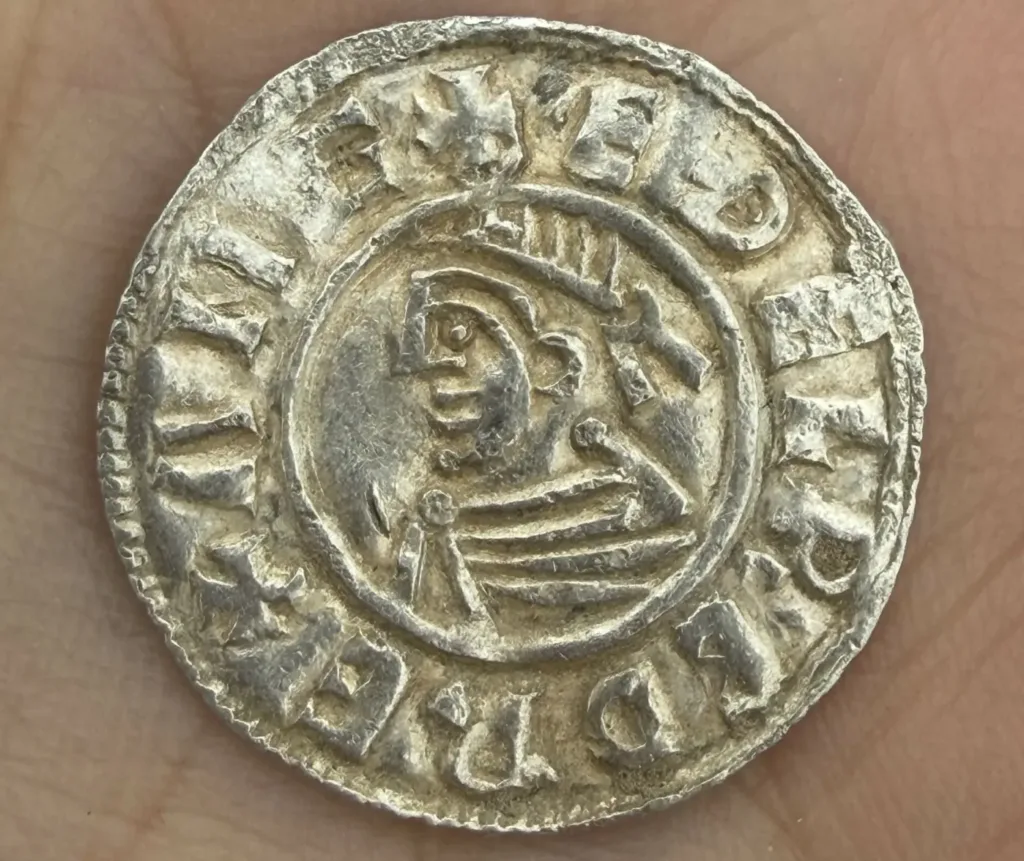
Norway’s largest known Viking Age coin hoard has crossed the 5,000-coin mark, months after archaeologists believed the main concentration had already been recovered. The Mørstad Hoard in eastern Norway has now yielded around 5,200 coins, and metal detectors are still picking up signals from deeper layers of the field.
The new finds appeared only after the summer harvest allowed archaeologists and detectorists to return to the site. Last weekend, metal detectorists Rune Sætre and Vegard Sørlie joined farmer and landowner Ole Erik Hørstad in recovering coin number 5,000, an Otto-Adelheid penny of a type already well represented in the hoard.
What makes the latest development especially striking is that the search had effectively paused at 4,886 coins before summer. Excavation and ground-penetrating radar had failed to reveal any obvious continuation, the field was returned to agricultural use, and grain was sown over the site. Once the crop was harvested, however, the ground began producing coins again.
The hoard was not finished after all
The Mørstad Hoard was first discovered in April, when Sætre and Sørlie began what they expected would be an ordinary metal-detecting season. Instead, their finds quickly developed into the largest Viking Age coin hoard ever documented in Norway.
County archaeologist May-Tove Smiseth initially thought the discovery might amount to a few hundred coins. As the total climbed into the thousands, expectations changed, and by the time the count passed 4,000 she began to consider whether the hoard might eventually reach 5,000.
That possibility has now become reality. According to Smiseth, the latest count stands at approximately 5,200 coins, with archaeologists from Innlandet County continuing to search the field alongside the detectorists.
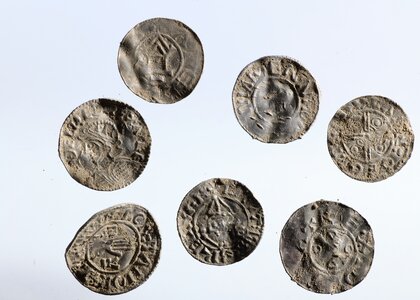
The remaining coins appear to lie deeper
The renewed search is also revealing something about how the surviving coins are distributed below the surface. Smiseth said that the detectors are still producing signals, although they are becoming less frequent and appear to come from greater depths.
Archaeologists are now removing layers of soil so the detectorists can reach those deeper targets more effectively. The work suggests that the original recovery may have captured most of the shallow material while leaving part of the deposit, or scattered coins from it, farther below.
The slowing rate of discovery may indicate that the search is approaching the outer limits of the hoard, but the field has not yet fallen silent. For now, the final number remains uncertain, and each new signal has the potential to extend a total that already far exceeds expectations from the beginning of the excavation.
A hoard buried near the end of the Viking Age
The coins also provide a narrow chronological window for when the treasure was buried. Among the most important pieces are four Norwegian coins issued under Harald Hardrada, placing the deposit around 1046–1047, near the closing decades of the Viking Age.
Most of the hoard still requires detailed study. Specialists at the Museum of Cultural History are cataloguing thousands of coins, a process expected to take at least a year, and the material includes both Scandinavian and foreign issues.
Some of the English coins have already produced an intriguing detail. Coin specialist Anne Skogsfjord has identified moneyers with names such as Beorn, Aslac, and Cetil, names that sound distinctly Scandinavian and raise questions about Viking participation in English coin production.
The evidence does not yet establish who these men were or how they became involved in minting. Even so, their names add another layer to a hoard that already reflects the movement of silver, people, and political power across the North Sea world.

Why was so much silver buried here?
The largest unanswered question remains why someone placed thousands of silver coins in this particular field and never returned for them. Archaeologists have not identified a clear structure, grave, or other feature that explains the location, while the sheer scale of the deposit makes accidental loss almost impossible.
Archaeologist Kjetil Loftsgarden previously noted that a person would hardly forget where nearly 5,000 silver coins had been buried. The latest discoveries only sharpen that mystery, because the total is now well above that figure and may continue to rise.
Whatever prompted the burial, the owner never came back to recover the silver. Nearly a thousand years later, the field is still giving it back one coin at a time.
