
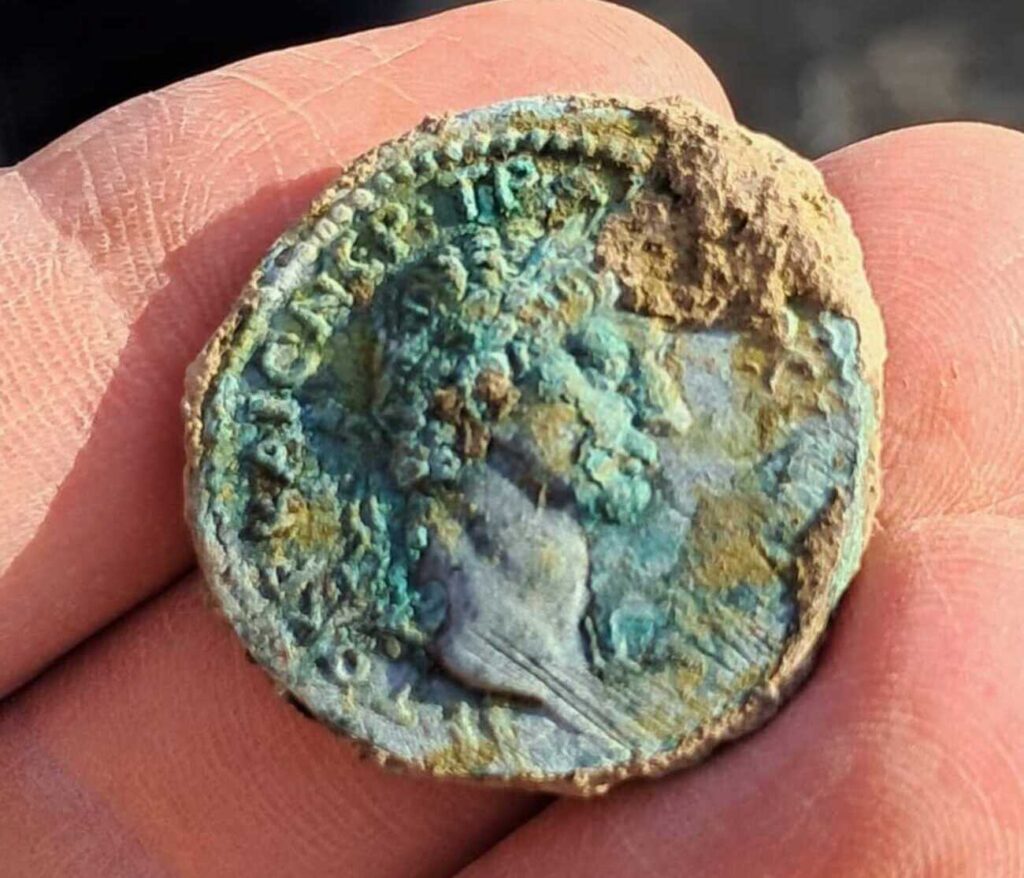
Archaeologists investigating the possible location of biblical Bethsaida, the ancient fishing settlement associated with Jesus and his disciples, discovered more than 400 coins during excavations at El-Araj. The discovery adds new material evidence to a long-running archaeological investigation on the northeastern shore of the Sea of Galilee.
Earlier excavations uncovered Roman buildings, Jewish ritual vessels and a Byzantine church containing a mosaic inscription associated with the apostle Simon Peter. Together with recent technological documentation of the inscription, the new coin finds offer further opportunities to reconstruct the history of a settlement that occupies an important place in the New Testament.
Professor Mordechai Aviam announced the discovery on November 7 during a joint presentation with Professor R. Steven Notley at the European Hebrew Journal International Online Conference. Their presentation brought together the latest archaeological discoveries and historical-geographical evidence concerning the identification of El-Araj with ancient Bethsaida-Julias.
Hundreds of Coins and Evidence of Roman Occupation
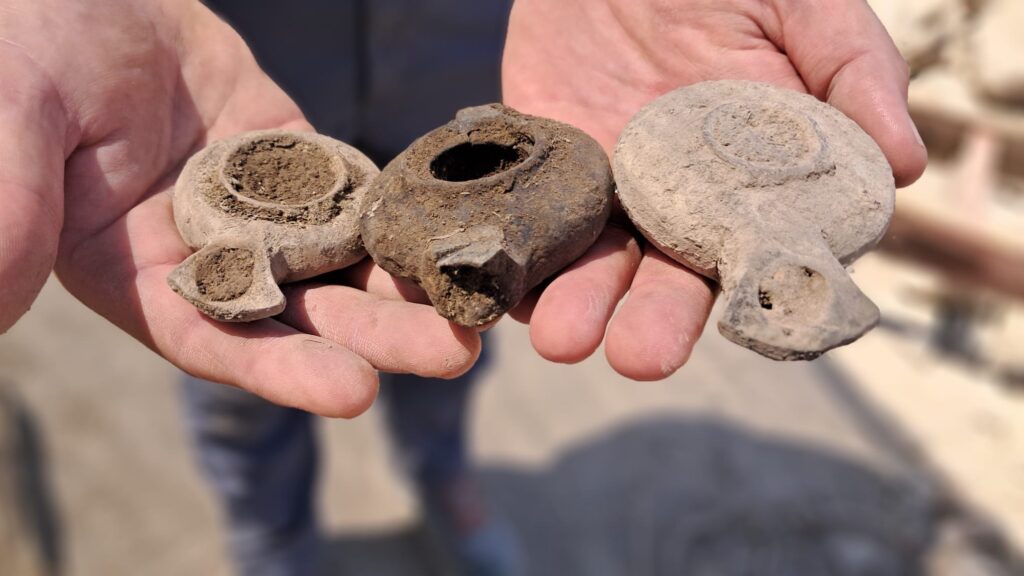
The October announcement follows a productive summer excavation campaign that documented more than 150 coins alongside Herodian oil lamps, limestone vessels associated with Jewish religious practices, Roman architectural remains and objects connected with fishing.
Researchers have yet to clarify whether the October figure represents an entirely separate group of coins or a cumulative total. Detailed information about their dates, denominations and archaeological contexts also remains unavailable.
Nevertheless, coins can help archaeologists establish the chronology of buildings and occupation layers, investigate commercial activity and trace changes in the economic life of ancient settlements.
Previous excavations at El-Araj also produced an unusual hoard of 70 gold, silver and bronze coins, which researchers examined in a study published in Israel Numismatic Research in February 2025. That earlier discovery provided insights into coin circulation in eastern Galilee during the second century AD and represents a separate group from the newly announced finds.
Bethsaida in the New Testament
Bethsaida occupies a distinctive place in the Gospel narratives. The Gospel of John identifies it as the hometown of the apostles Peter, Andrew and Philip (John 1:44), while the Gospel of Mark describes Jesus restoring the sight of a blind man there (Mark 8:22–26). Luke also associates the surrounding area with the feeding of the five thousand.
Beyond these religious accounts, historical sources describe Bethsaida’s transformation from a Jewish fishing settlement into a Roman-period city. The Jewish historian Flavius Josephus records that Herod Philip elevated the settlement to urban status and renamed it Julias in the early first century AD.
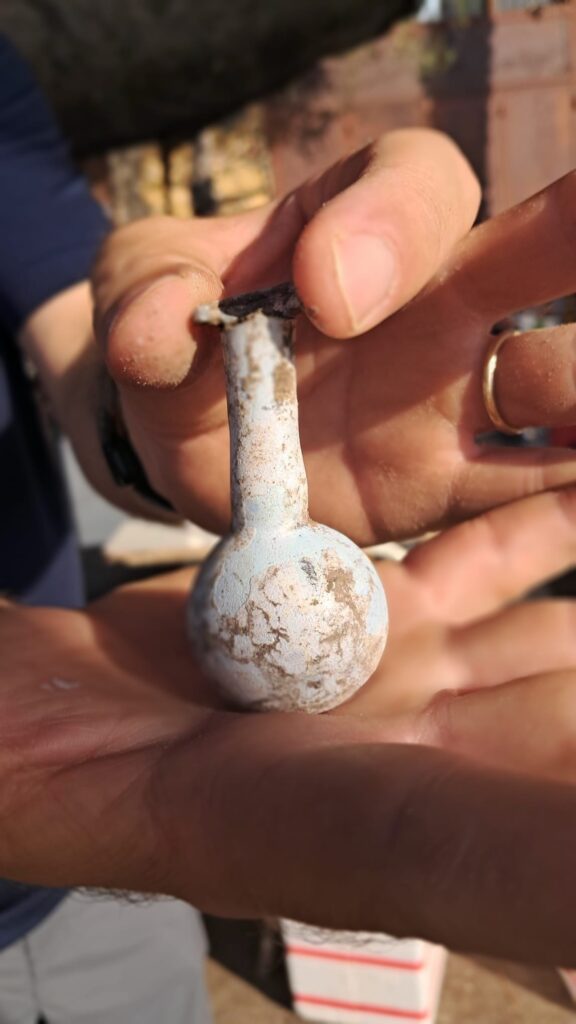
The 2026 summer excavation report suggests that the inhabitants retained their Jewish cultural identity despite this transformation. Fishing weights appeared across several excavation areas, while painted wall fragments and fine glassware challenge conventional assumptions about the poverty of Galilean fishing communities.
A Mosaic Inscription Linked to the Apostle Peter
Among the most significant discoveries at El-Araj is a Greek mosaic inscription that archaeologists uncovered in 2022 within the sacristy of a Byzantine basilica. The inscription commemorates a benefactor named Constantine and invokes Peter through a title recognizing his leadership among the apostles.
The discovery carries particular significance because the eighth-century bishop Willibald described visiting a church at Bethsaida that Christian tradition associated with the former home of Peter and Andrew. Researchers believe the basilica at El-Araj may correspond to the church mentioned in his account.
In May 2026, Notley presented the religious and historical significance of the inscription at the Museum of the Bible in Washington, DC. The museum describes the mosaic as the earliest archaeological evidence for the Christian tradition recognizing Peter’s primacy among the apostles.
The inscription also became a focus of technological documentation during the 2026 excavation season. According to a September report by the Lanier Center for Archaeology, the team employed daily three-dimensional photogrammetric modeling and LiDAR scanning to record archaeological remains, including the mosaic inscription associated with Simon Peter.
These methods allow researchers to preserve detailed digital records of archaeological surfaces and architectural contexts. The team has not announced a new reading of the inscription resulting from the scans.
The Continuing Search for Biblical Bethsaida
Despite the growing body of archaeological evidence from El-Araj, the precise location of biblical Bethsaida remains a subject of scholarly debate. The nearby archaeological site of et-Tell represents another longstanding candidate for the ancient settlement.
The evidence from El-Araj is particularly important because it brings together traces of Roman-period Jewish occupation and a later Christian tradition connecting the location with the apostles. However, the Byzantine inscription documents religious beliefs centuries after the lifetime of Jesus rather than providing direct evidence of Peter’s residence.
The discovery of more than 400 coins introduces another significant body of material into this investigation. Their eventual identification and analysis could help researchers refine the chronology of El-Araj and better understand its development from a lakeside settlement into a Roman city and, centuries later, a place of Christian worship.
