
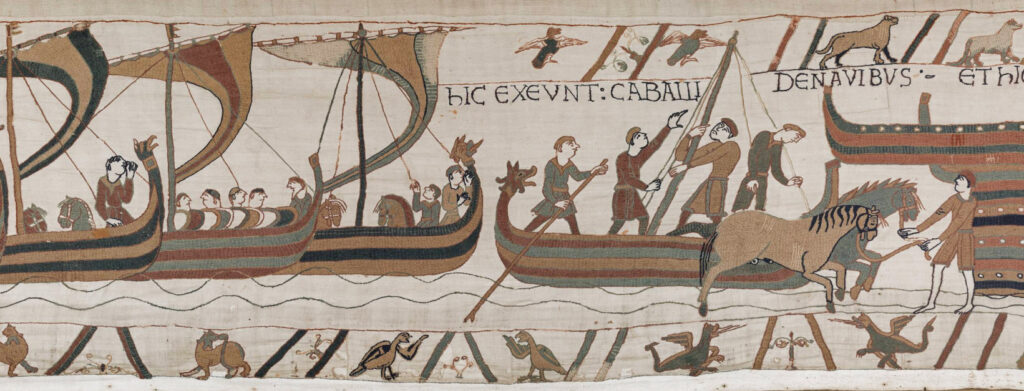
A lost papal letter suggests the Norman Conquest of 1066 was shaped by a bitter papal conflict, casting William’s invasion as a holy war against “followers of Satan.”
A lost papal letter linked to the Norman Conquest of 1066 is challenging the traditional story of how William of Normandy secured Rome’s support for his invasion of England. New research suggests that King Harold II may have become entangled in a bitter conflict between rival popes, allowing William’s campaign to be presented not simply as a fight for a crown, but as part of a wider religious and political struggle.
The evidence comes from fragments of a letter written by Pope Alexander II after William’s victory. Although the original document and the pope’s complete register of correspondence have disappeared, excerpts survive in medieval collections of papal rulings preserved in the Vatican.
Historian Prof Tom Licence of the University of East Anglia argues that the wording of those fragments has been misunderstood because historians have largely separated the events of 1066 from the crisis unfolding in Rome at the same time.
“1066 was not simply decided on the battlefield at Hastings,” Licence said. “The outcome may also have been shaped by decisions taken almost a thousand miles away in Rome.”
His findings are presented in Harold: Warrior King, published by Yale University Press.
A struggle between two popes
The Norman Conquest is usually framed around the succession crisis that followed the death of Edward the Confessor in January 1066.
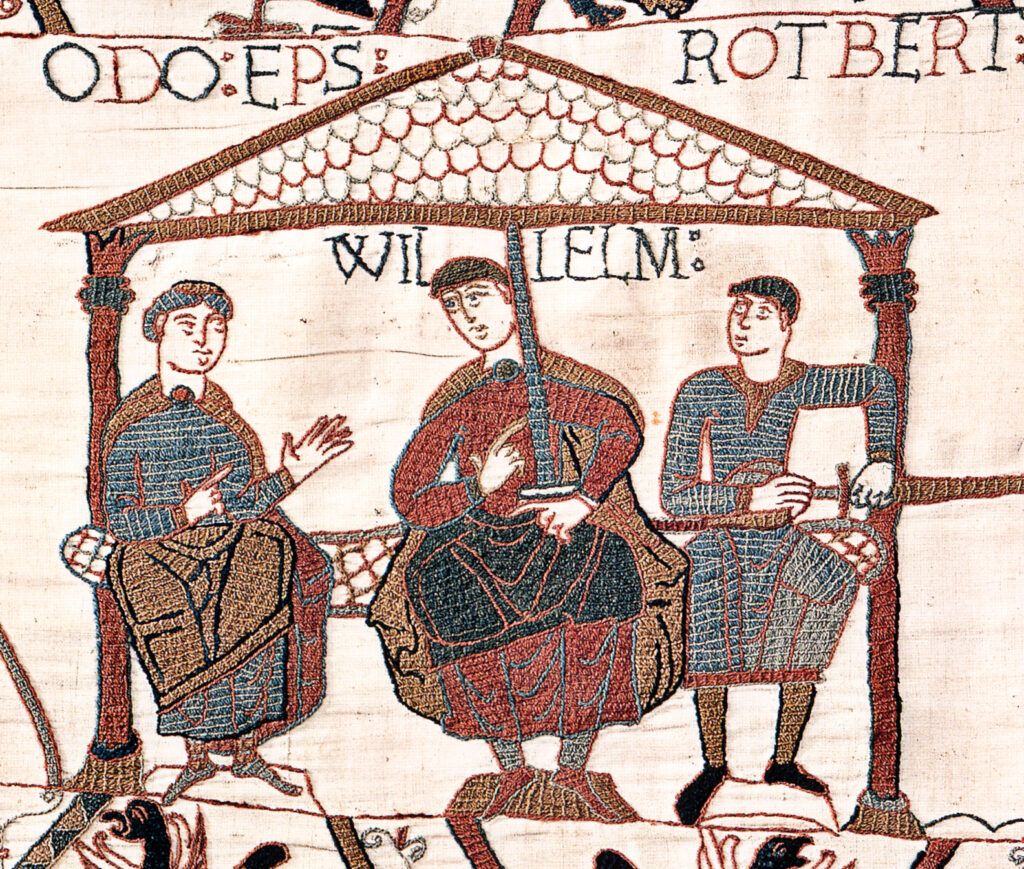
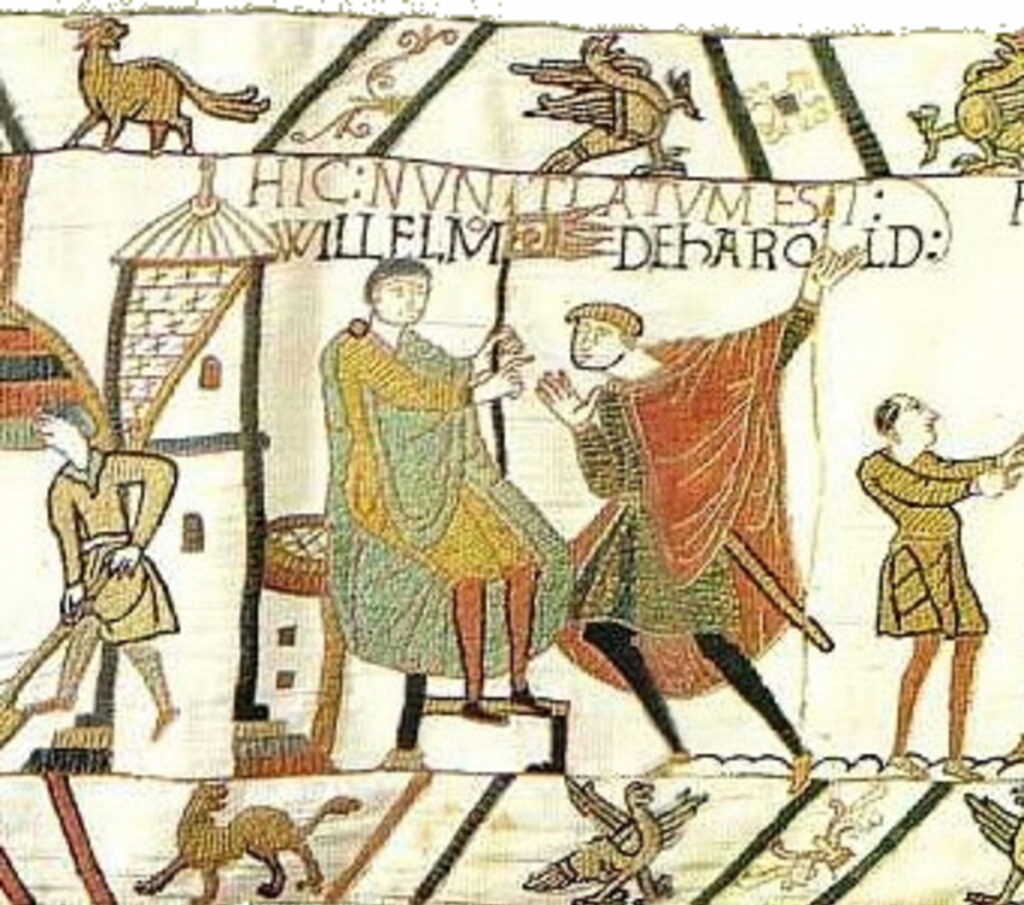
Harold Godwinson became king, while William, Duke of Normandy, claimed that Edward had promised him the English throne and that Harold had previously sworn to support his succession. William invaded England later that year, defeating Harold at the Battle of Hastings on October 14, 1066.
But one enduring question has remained: why did the papacy support the overthrow of a crowned Christian king?
Licence believes part of the answer may lie in a major schism that had divided the Western Church since 1061.
That year, rival factions backed two different candidates for the papacy. Alexander II was elected in Rome, while Bishop Cadalus of Parma, supported by powerful interests within the Holy Roman Empire, took the name Honorius II and also claimed the papal throne.
The dispute extended far beyond Rome. Political leaders and churchmen across Europe were forced to navigate competing loyalties as supporters of Alexander and Honorius struggled for influence.
According to Licence, England may have ended up on the wrong side of that conflict.
A reference to the “followers of Satan”
The crucial evidence appears in surviving excerpts from Alexander’s lost letter.
In one passage, the pope stated that England had previously enjoyed the protection of St Peter until individuals “fired with the pride of their father Satan” led the English away from “the path of truth.”
The language has been noticed before, but its precise meaning has remained unclear.
Licence argues that it closely resembles rhetoric used by Alexander’s supporters against Honorius and his faction during the papal schism.
If that interpretation is correct, the pope may not simply have been condemning Harold over the disputed English succession or an alleged broken oath to William. He may have regarded Harold’s government as politically aligned with his own enemies.
“In the eyes of Pope Alexander’s supporters, it was no longer simply a battle for a crown, but a struggle against those they regarded as followers of Satan,” Licence said.
That distinction could help explain one of the most consequential decisions surrounding the Norman invasion.
Why Rome backed William
Papal support gave William’s expedition a powerful layer of religious legitimacy.
Medieval sources associate Alexander II with approval of William’s campaign, including the sending of a papal banner. For William, such backing helped transform an invasion driven by a disputed royal claim into a cause that could be portrayed as legitimate in the eyes of the Church.
Licence argues that Harold’s position toward the rival papal factions may therefore have worked directly to William’s advantage.
“Harold’s policy on the papacy may ultimately have played into the hands of his enemies, giving William’s opportunistic invasion the legitimacy of a just war,” he said.
The argument does not mean that the succession dispute, Harold’s alleged oath or William’s ambitions were unimportant. Instead, it places them inside a much larger European contest involving the papacy, the Holy Roman Empire and competing political networks.
From Rome’s perspective, Licence suggests, England’s political alignment may have mattered almost as much as the question of who had the strongest claim to Edward the Confessor’s throne.
A different way of seeing 1066
The interpretation adds a European dimension to a story often told primarily as a confrontation between England and Normandy.
Prof Rory Naismith, Professor of Early Medieval English History at the University of Cambridge, said the research demonstrates how strongly the conquest was connected to developments elsewhere in Europe.
“Rome in particular had long been central to England’s religious identity,” he said, describing the recovery of the Roman dimension of 1066 as a significant contribution.
Prof David Fergusson, Regius Professor of Divinity at Cambridge, likewise said the research highlights the complicated relationship between monarchy and the medieval Church, particularly the role the papacy could play in legitimising warfare and regime change.
The lost letter forms part of Licence’s broader reassessment of Harold II, whose reign lasted only from January until October 1066.
His earlier research has questioned whether post-Conquest versions of the Anglo-Saxon Chronicle concealed politically sensitive events before Harold’s accession, while another study challenged the traditional account of Harold’s rapid march south to confront William after defeating a Norwegian invasion at Stamford Bridge.
Together, the findings present 1066 as something more complicated than a single battle that decided England’s future.
The Norman Conquest was fought at Hastings, but the political conditions that helped make William’s invasion possible may have been shaped hundreds of miles away — amid a papal crisis in Rome that divided medieval Europe.
