
Archaeologists working in northern England believe they may have uncovered one of the last monumental traces of the Anglo-Saxon elite: a high-status hall potentially linked to Harold Godwinson, the final Anglo-Saxon king of England. If confirmed, the discovery would offer rare physical evidence of royal life just before the Norman Conquest erased much of England’s earlier ruling culture.
Harold Godwinson’s death at the Battle of Hastings in 1066 marked the abrupt end of nearly four centuries of Anglo-Saxon rule. His defeat by William the Conqueror not only reshaped political power but also initiated a systematic effort to dismantle the material and symbolic legacy of the previous dynasty. Buildings were destroyed, estates reassigned, and Anglo-Saxon centers of authority largely disappeared from the archaeological record.
That context makes the recent discoveries near Skipsea Castle particularly striking. Although the visible remains of the Norman motte-and-bailey castle have long vanished, excavations beneath the site have revealed evidence of earlier structures that suggest the area functioned as a wealthy and influential center well before Norman construction began around 1086.
The excavation is being led by researchers from the University of York as part of a long-term, six-year research project. According to the team, the earliest unexpected find was the remains of a malthouse, identified through a large oven whose intense heat had reddened the surrounding soil. Charred seeds recovered from the area point to large-scale beer production, a feature rarely associated with ordinary settlements in early medieval England.
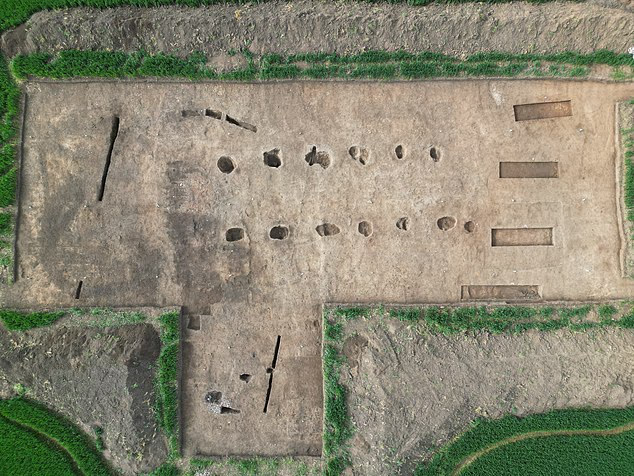
Further investigation revealed that the malthouse dated back to between the eighth and mid-ninth centuries, significantly earlier than the Norman castle. Above and around it, archaeologists uncovered postholes, a cellar, and the base of a tower that had gradually sunk into the ground over time. Such sunken tower structures are exceptionally rare in England and are widely regarded as markers of elite or lordly residences.
Dr Jim Leary, one of the project’s co-directors, has emphasized that the combination of a tower and a malthouse is highly unusual. Together, they suggest a site of sustained power and wealth rather than a temporary or purely agricultural settlement. Historical records indicate that the land belonged to Harold Godwinson, although there is no definitive proof that the king himself ever resided there.
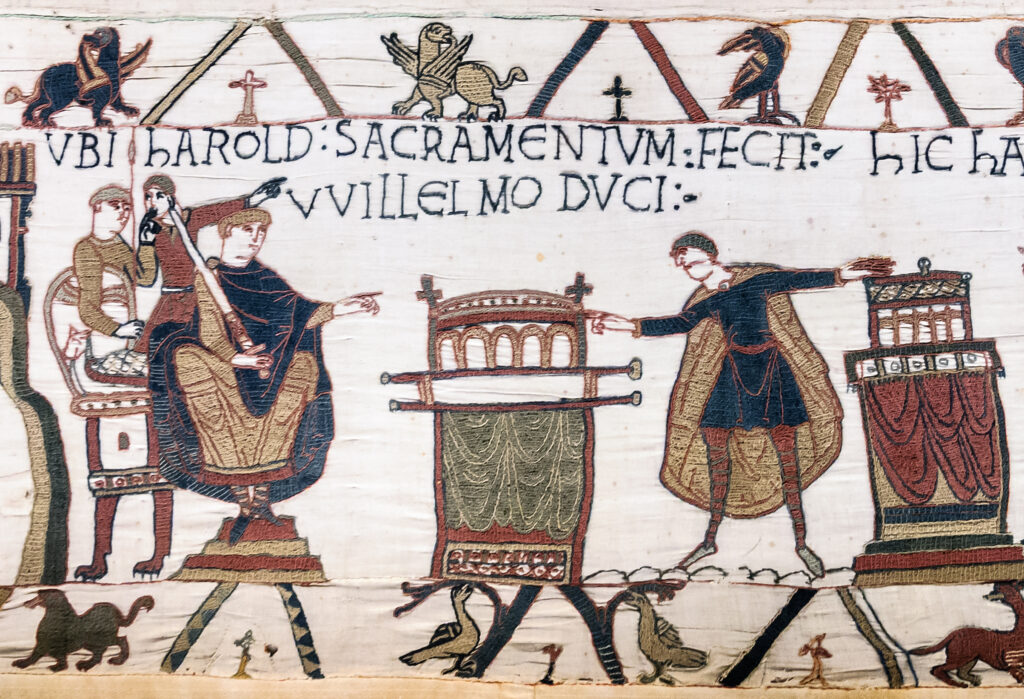
The possibility of a direct royal connection is reinforced by parallels elsewhere. Harold is known to have maintained a tower at Bosham in Sussex, famously depicted in the Bayeux Tapestry. While the Skipsea structure cannot yet be directly linked to the king, its form and status fit what is known of elite Anglo-Saxon residences during the late pre-Conquest period.
Perhaps the most evocative discovery came later, when archaeologists identified traces of a large timber hall constructed above the earlier malthouse. Such halls were the political and cultural heart of Anglo-Saxon lordship, hosting feasts, poetry, legal gatherings, and the negotiation of power. Although the hall has not yet been precisely dated, its scale and placement further strengthen the interpretation of the site as a high-status center.
Among the smaller finds, one object stood out: a piece of worked amber that appeared to be in the process of being shaped into jewelry. Amber was a luxury material in early medieval England, often associated with long-distance trade networks and elite consumption. Its presence supports the idea that the site was not merely functional but also a place where wealth and prestige were actively displayed.
Historical documentation adds another layer to the story. After seizing the English throne, William ordered the compilation of the Domesday Book, which meticulously recorded land ownership across the kingdom. The survey confirms that the area around Skipsea had previously belonged to Harold Godwinson, raising the possibility that the hall was part of his wider estate network. Some researchers have even suggested the site may correspond to the lost settlement of Cleeton, mentioned in Domesday records but never securely located.
The excavation has also revealed traces of Iron Age ritual activity and prehistoric occupation, showing that the site held significance long before the Anglo-Saxon period. Today, it continues to shape new generations of archaeologists, serving as a primary field school for students involved in the dig.
The discoveries will be featured in an upcoming series of the BBC program Digging for Britain, bringing wider public attention to a site that may represent one of the last surviving footprints of England’s pre-Norman royal world. While firm proof of a royal palace remains elusive, the evidence uncovered so far has reopened a chapter of English history long thought to be archaeologically silent.
Cover Image credit: HAROLD SACRAMENTUM FECIT VVILLELMO DUCI (“Harold made an oath to Duke William”): the Bayeux Tapestry shows Harold touching two altars at Bayeux as the duke watches. Public Domain
