
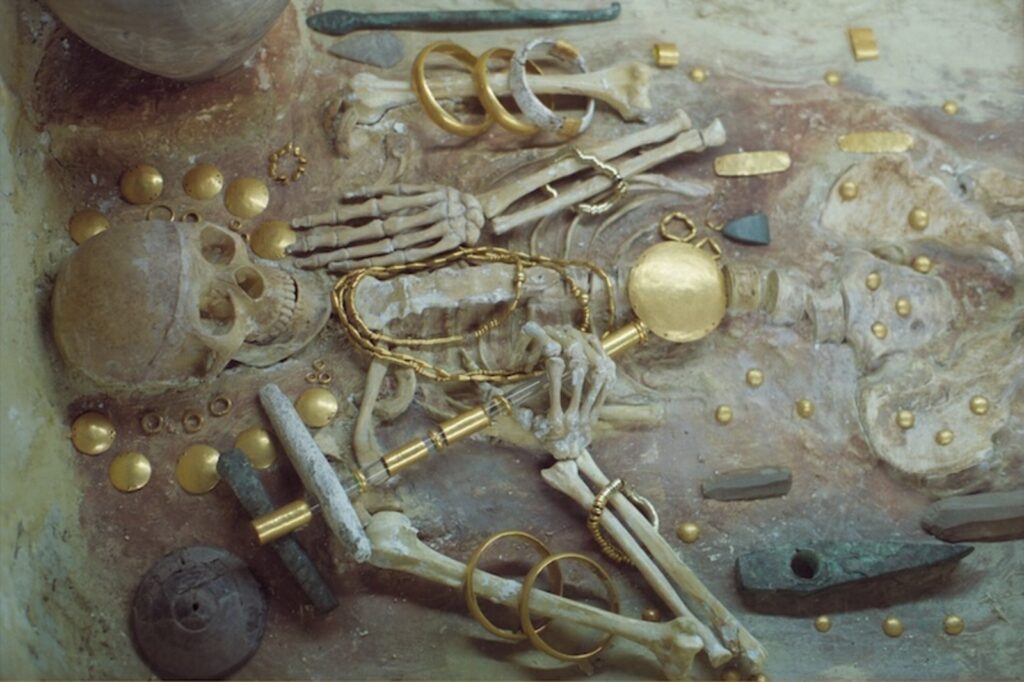
Thousands of years before the Egyptian pyramids, people living along Europe’s Black Sea coast were burying extraordinary quantities of gold with their dead. One man went to his grave surrounded by hundreds of precious objects, while other graves contained elaborate golden offerings without any human remains. These remarkable discoveries come from a 6,500-year-old cemetery in Bulgaria, home to one of the world’s earliest known major collections of worked gold.
The treasure emerged from an unexpected discovery in 1972, when excavator operator Raycho Marinov encountered ancient objects during construction work in Varna’s industrial district. Archaeological investigations revealed an extensive Copper Age cemetery dating to approximately 4600–4350 BCE. Over the following years, researchers uncovered thousands of objects that transformed our understanding of prehistoric wealth and social organization.
A Prehistoric Cemetery Filled with Gold
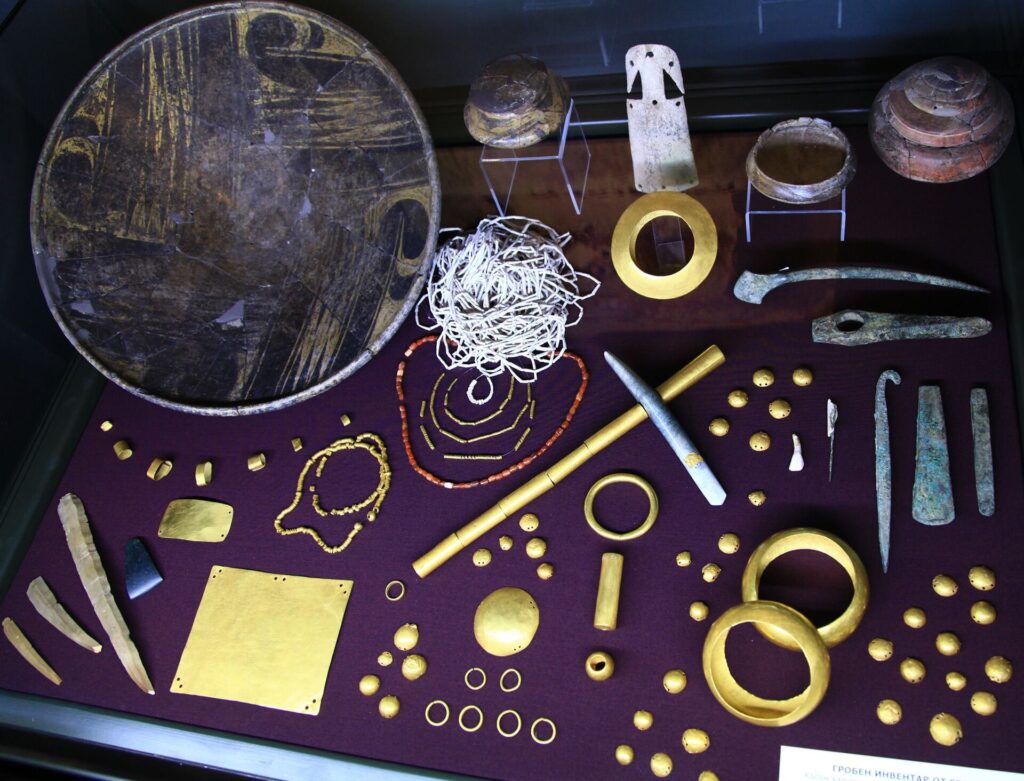
The Varna Necropolis contained more than 3,000 gold artifacts weighing over six kilograms. Archaeologists recovered bracelets, beads, decorative appliqués, pendants, and ornaments alongside copper tools, pottery, flint blades, and objects made from marine shells.
Yet the gold was distributed remarkably unevenly. According to the Varna Regional History Museum, only 62 burial complexes contained gold, and four of them—Graves 1, 4, 36, and 43—accounted for more than five kilograms of the precious metal.
Grave 43 remains the cemetery’s most spectacular burial containing human remains. Archaeologists discovered the skeleton of an adult man accompanied by approximately 1.5 kilograms of gold objects, including elaborate ornaments and prestigious ceremonial items. The extraordinary concentration of valuables suggests that he occupied an exceptional position within his community.
His identity remains unknown. Whether he exercised political leadership, religious authority, or another form of social power is still debated, but his burial demonstrates that distinctions in status had become strikingly visible.
The Mystery of Graves Without Bodies
Some of Varna’s richest graves contained no human skeletons. Instead, archaeologists encountered carefully arranged offerings, including gold ornaments and objects associated with symbolic representations of the human body.
Researchers interpret these unusual deposits as symbolic burials, sometimes called cenotaphs. Their precise purpose remains uncertain, although they may have served ritual functions or commemorated individuals who were buried elsewhere.
The contrast between lavishly furnished graves and burials containing few possessions reveals a society in which wealth and prestige were far from equally distributed. Gold was more than decoration; its placement in graves communicated social distinctions and possibly religious beliefs.
Gold, Trade, and Power Before the First Pyramids
The people of Varna were also connected to exchange networks extending beyond their immediate surroundings. Mediterranean Spondylus shells discovered in the cemetery indicate access to materials from distant regions, while copper artifacts demonstrate sophisticated metalworking traditions.
These connections suggest that the community belonged to a complex economic and cultural world centuries before the earliest Egyptian pyramids appeared.
Although isolated gold objects elsewhere have been proposed as older, Varna preserves one of the earliest securely dated large assemblages of worked gold. Its importance lies not only in the treasure itself, but also in what the graves reveal about the emergence of social hierarchy in prehistoric Europe.
Today, many of these extraordinary objects are displayed at the Varna Archaeological Museum, preserving evidence of a society in which gold had already become a powerful symbol of status, thousands of years before Europe’s first kingdoms.
