
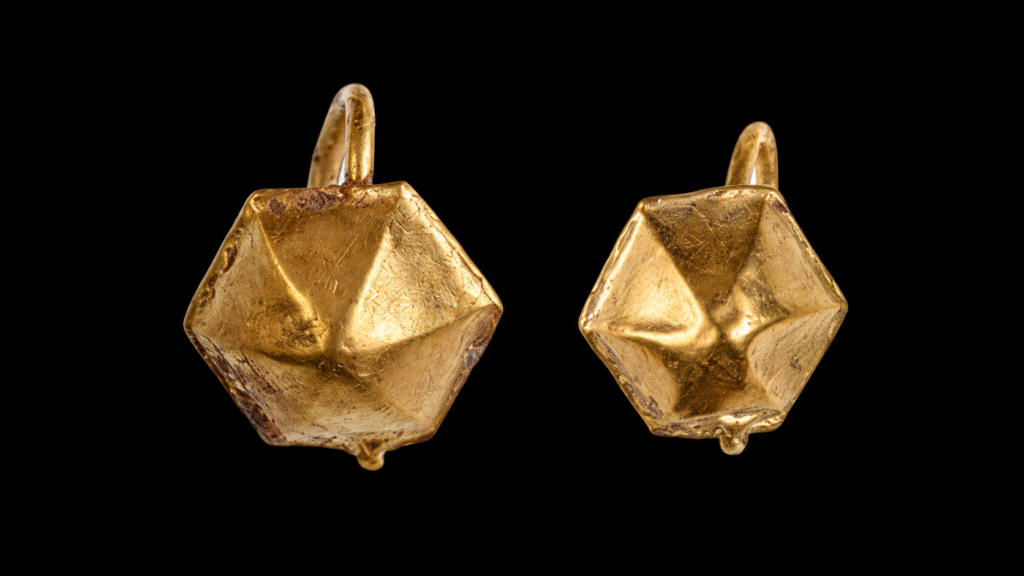
A child’s grave containing two gold earrings and a coin minted under Roman Emperor Aurelian has been uncovered in the Bulgarian city of Stara Zagora, offering a personal glimpse into life and death in one of the most important urban centers of Roman Thrace.
The burial was discovered during rescue excavations conducted by the Regional History Museum of Stara Zagora on land designated for a new residential building and garages. Beneath the modern city, archaeologists uncovered an extensive Roman cemetery containing 135 graves dating from the late second to the fifth century AD.
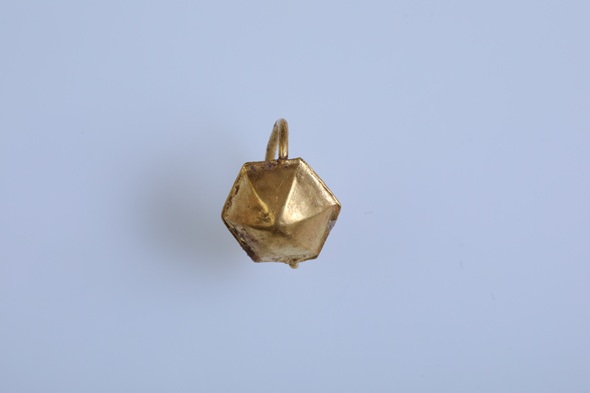
The most striking discovery came from a child’s burial, where two gold earrings were found alongside an antoninianus issued under Emperor Aurelian. Minted in Serdica, modern-day Sofia, between AD 274 and 275, the coin provides an important chronological clue. Archaeologists date the grave to approximately the same period.
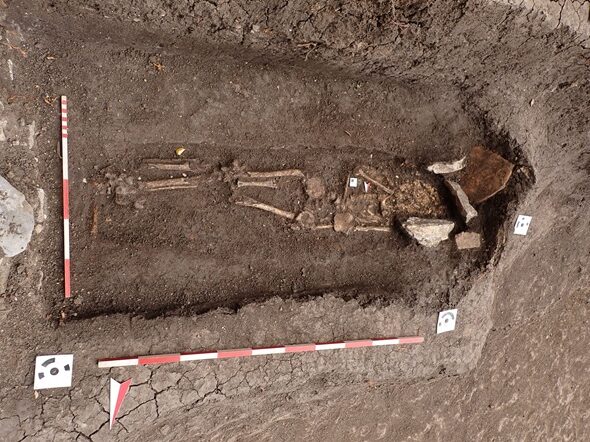
A Child’s Burial Outside the Walls of Augusta Traiana
The cemetery was uncovered beyond the southwestern walls of Augusta Traiana, the ancient Roman city that lies beneath present-day Stara Zagora.
The child had been buried with the head pointing west and the feet toward the east. Alongside the remains, archaeologists discovered two gold earrings and a Roman coin, objects that survived for nearly 1,750 years.
The child’s identity and circumstances of death remain unknown. The presence of gold jewelry suggests that valuable personal possessions accompanied the burial, although it is not enough to establish the family’s social standing.
The coin raises another interesting possibility. The coin may also have held a meaning beyond its monetary value. In ancient Greek and Roman funerary traditions, coins were sometimes placed with the deceased as payment to Charon, the mythical ferryman who carried souls to the underworld. Although its purpose in this particular burial remains unknown, the coin may reflect beliefs surrounding death and the journey into the afterlife.
The broader cemetery also reveals different approaches to burial. Of the 135 graves documented, only four contained cremated remains, while the others involved the burial of bodies. Some graves were covered with Roman roof tiles, bricks or stone slabs, while others were simple uncovered burial pits.
Augusta Traiana: A Prosperous City of Roman Thrace
The child’s burial dates to a period when Augusta Traiana was one of the major cities of the Roman province of Thrace.
The city developed under Emperor Trajan in the early second century AD and flourished during the following centuries. Located in the fertile Thracian plain, it became an important administrative and economic center, traditionally ranked second in prominence to Philippopolis, modern-day Plovdiv.
Its urban landscape included imposing fortifications, public baths, stone-paved streets and monumental civic buildings. Under Marcus Aurelius, Augusta Traiana gained the right to issue its own bronze coinage, an indication of its established position within the Roman provincial system.
Parts of the ancient city are still visible in Stara Zagora today, including the archaeological forum, sections of the Roman street network and the remains of public buildings.
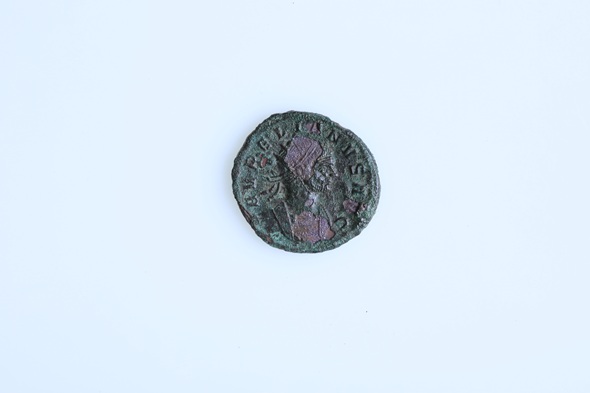
A Coin From the Reign of Emperor Aurelian
The coin recovered from the child’s grave belongs to the reign of Aurelian, who ruled the Roman Empire from AD 270 to 275.
His reign followed decades of political instability and military conflict known as the Crisis of the Third Century. Aurelian became renowned for restoring imperial control over territories that had broken away from Rome.
The antoninianus discovered at Stara Zagora was minted in Serdica, another important Roman city in the Balkans, during the final years of his reign.
Its presence in the grave establishes that the burial could not have taken place before the coin was produced, although the precise date of interment remains uncertain.
The discovery is part of a much larger Roman cemetery used for nearly three centuries, where the graves of Augusta Traiana’s inhabitants continue to reveal details of burial practices in one of ancient Thrace’s major cities.
