
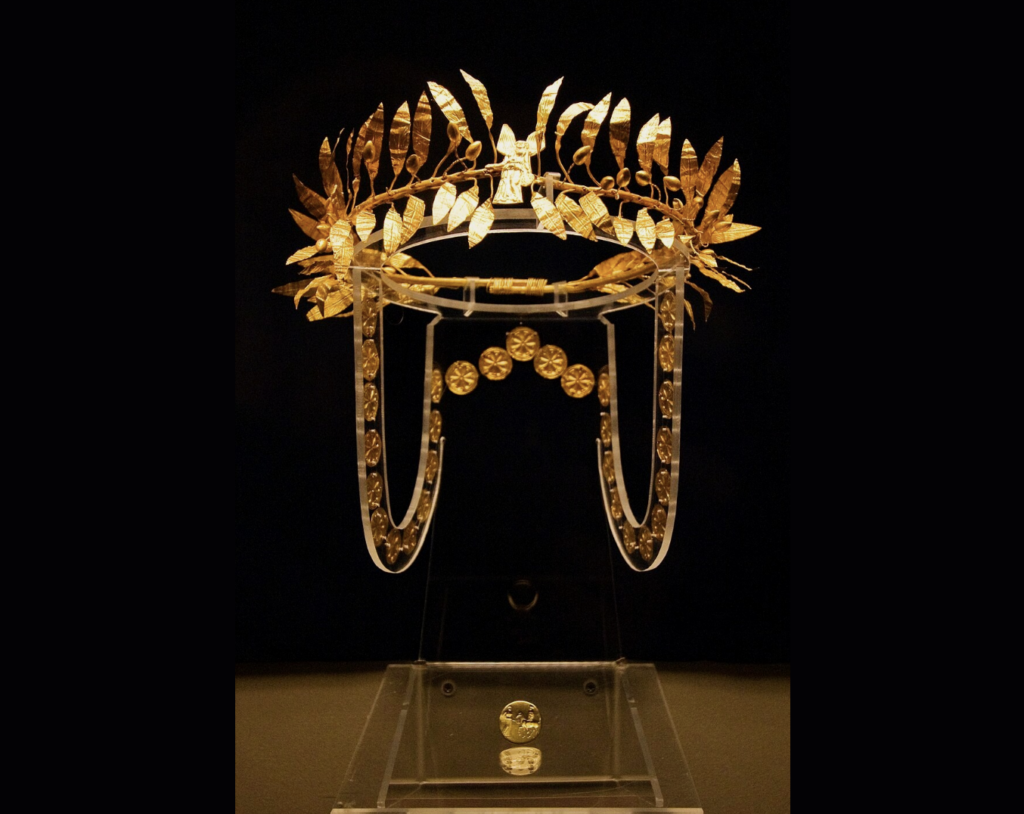
The Sofia – Odrysian Wreath from Golyamata Mogila is one of the most remarkable archaeological discoveries in Southeast Europe, offering a fascinating glimpse into the wealth and symbolism of ancient Thracian culture. This extraordinary artifact, crafted from solid gold, represents both artistic excellence and the political authority of the Odrysian Kingdom during the Classical era.
The wreath was uncovered in the Golyamata Mogila burial mound, situated near Shipka in central Bulgaria, within the renowned “Valley of the Thracian Kings.” This region is famous for its numerous royal tombs dating back to the 4th century BCE, a period when the Odrysian Kingdom dominated much of Thrace. Archaeologists believe the tomb belonged to a high-ranking noble or ruler, possibly connected to King Seuthes III, one of the most prominent Thracian leaders.
The Odrysian wreath is crafted from solid gold and designed to resemble a laurel wreath, a symbol commonly linked to victory, power, and divine favor in ancient cultures. The artifact symbolizes victory, honor, and divine connection—concepts widely recognized in both Thracian and ancient Greek cultures. Its delicate leaves and intricate workmanship demonstrate the advanced metalworking skills of Thracian artisans. Such wreaths were not everyday ornaments; instead, they were used in ceremonial rituals, religious practices, and elite burials, marking the social status and power of the individual.
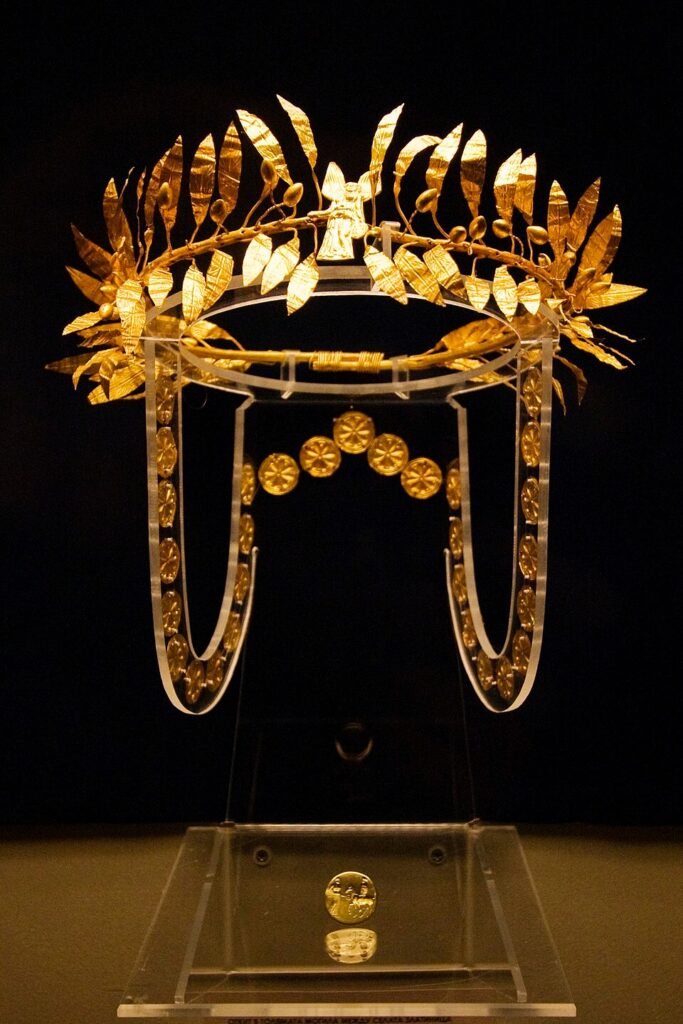
Today, the wreath is housed in the National Archaeological Museum in Sofia, Bulgaria’s capital, where it is displayed as part of a broader collection of Thracian treasures. The museum serves as a key cultural institution, preserving artifacts that illustrate the complexity and richness of ancient civilizations in the Balkans.
From an archaeological perspective, the Golyamata Mogila discovery is significant not only for its artistic value but also for what it reveals about Thracian burial customs, political hierarchy, and cross-cultural influences. The design of the wreath shows connections with Greek traditions, highlighting the interaction between the Thracians and neighboring civilizations during the Classical period.
In summary, the Sofia Odrysian Wreath from Golyamata Mogila is more than a decorative object—it is a powerful emblem of royal identity, religious belief, and cultural exchange. As one of the finest examples of Thracian goldwork, it continues to play a crucial role in understanding the history and legacy of Southeastern Europe.
Cover Image Credit: Public Domain
