
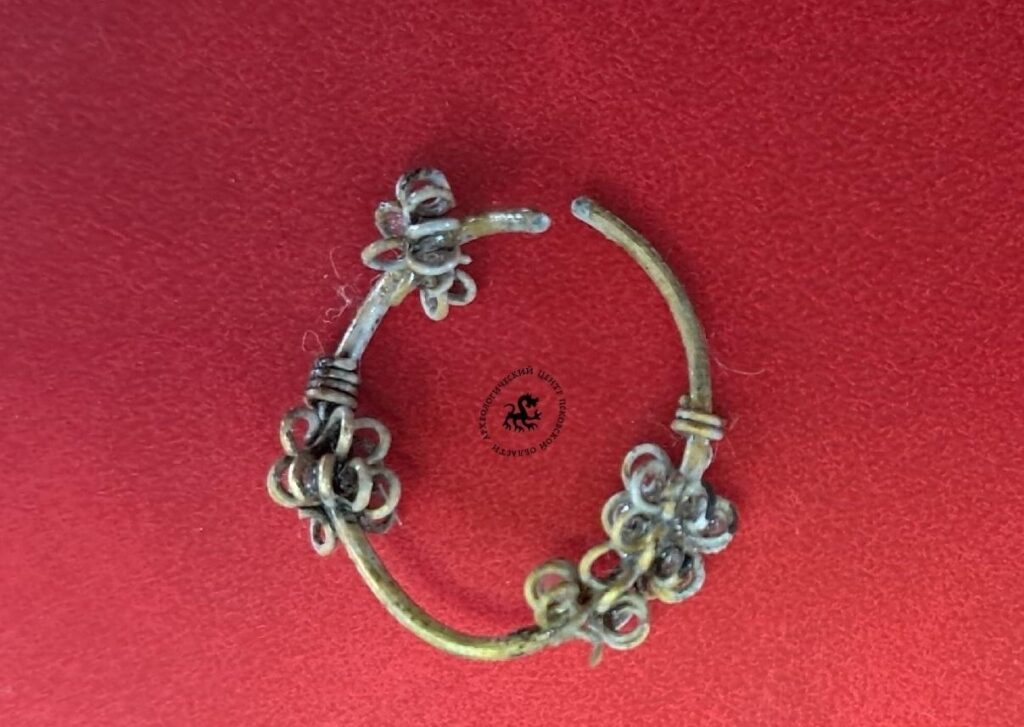
Archaeologists in the northwestern Russian city of Pskov have discovered a rare medieval temple ring decorated with spirally twisted wire, a jewellery tradition concentrated mainly in the Danube and Balkan regions.
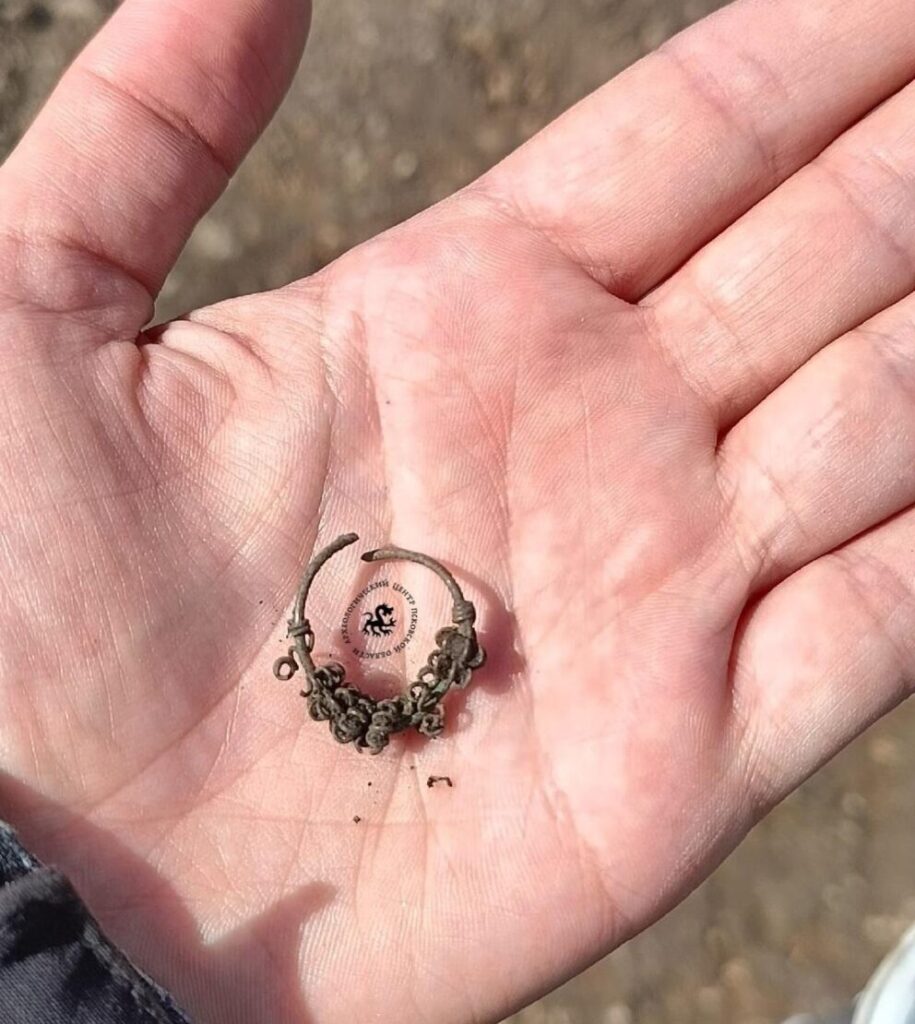
The ornament was unearthed at the Olginsky-10 excavation in Zavelychye, a historic district on the opposite bank of the Velikaya River from Pskov’s central area. According to the Archaeological Center of the Pskov Region, conservators have cleaned and restored the object, revealing the original form of its intricate spiral decoration.
It is only the third ring of this type found in Pskov. All three were recovered from the Olginsky excavations in archaeological layers dating between the 11th and 13th centuries.
A rare ornament far from its main distribution
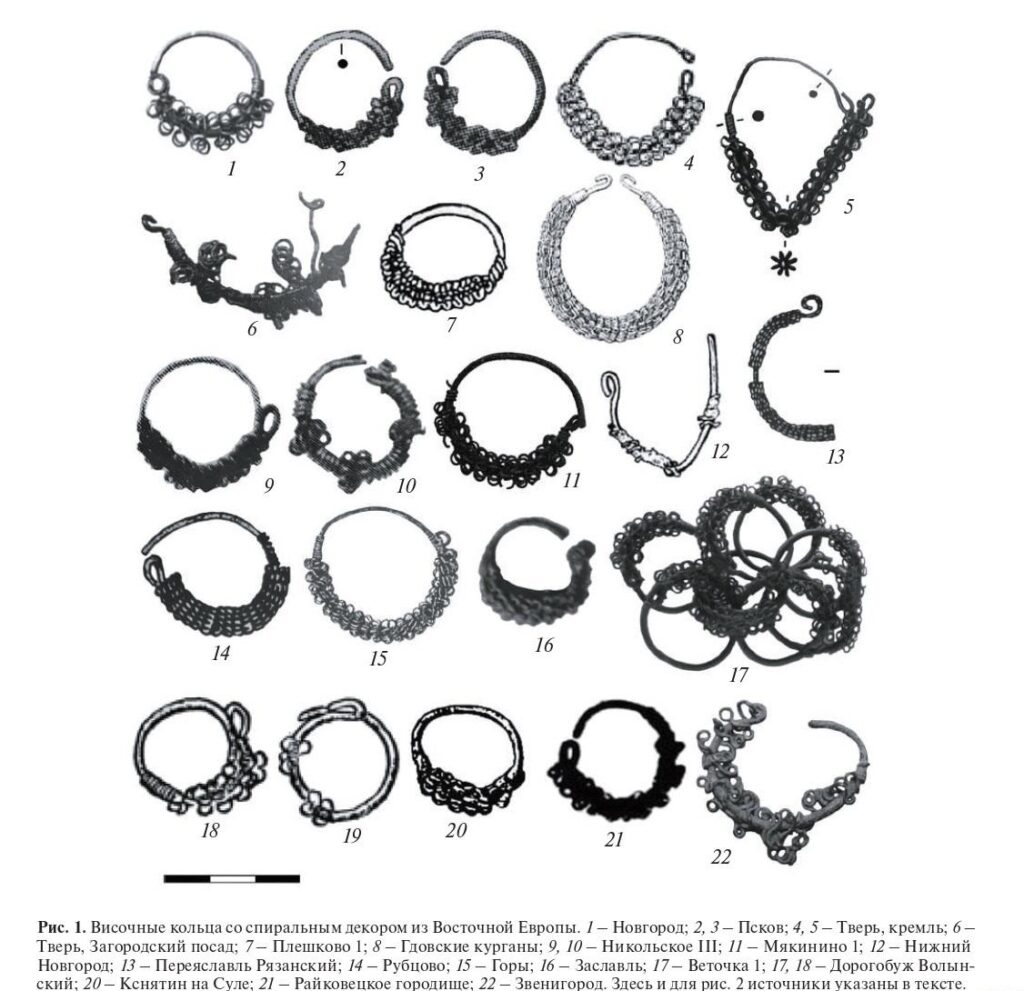
Temple rings with spiral wire decoration are concentrated mainly in the Danube-Balkan region, particularly in present-day Serbia, Bulgaria and southeastern Romania.
According to the Pskov Archaeological Center, slightly more than 30 examples have been documented across Eastern Europe outside their principal distribution area. Their scarcity suggests that the ornaments were not widely manufactured in northern and eastern regions.
A detailed study published by archaeologist Yulia Stepanova in the journal Russian Archaeology linked this jewellery tradition to Byzantine-influenced metalworking. The ornaments were generally made by winding a thin, spirally twisted wire around the main metal hoop, creating an open and textured decorative surface.
The type appeared between the 10th and 14th centuries, although most securely dated examples belong to the second half of the 11th through the 13th century. Finds are distributed across a wide area stretching from the Balkans and Central Europe to northern Rus, but they remain highly uneven in number.
What was a temple ring?
Despite its name, a temple ring was not necessarily worn through the ear. These ornaments formed part of medieval female dress and were commonly suspended from a headdress, attached to a band or woven into the hair so that they hung beside the temples.
Some spiral-decorated examples are relatively small, however, and researchers have suggested that they may also have been worn as earrings. Their precise use may therefore have varied according to regional fashion, size and construction.
Temple rings were more than simple accessories. Their shapes, manufacturing techniques and regional distribution can help archaeologists reconstruct patterns of dress, craftsmanship, trade and population movement across medieval Europe.
Medieval life in Pskov’s Zavelychye district
Zavelychye was once considered a peripheral settlement outside Pskov’s principal urban centre. Archaeological investigations conducted since the early 2000s have substantially changed that picture.
Excavations have shown that urban-style neighbourhoods existed in the district by the 12th century. Archaeologists working at the Olginsky sites have uncovered the remains of 11th- and 12th-century residential estates, a stone-paved road and objects suggesting that at least some inhabitants enjoyed considerable wealth and social standing.
Parts of the neighbourhood appear to have been destroyed during attacks by German crusading forces in the first half of the 13th century. Damaged weapons and arrowheads found along the excavated road preserve evidence of the violence that affected the district.
The newly restored temple ring therefore comes from a part of Pskov that was closely connected with the city’s medieval economic and social life rather than an isolated rural settlement.
Trade object or personal possession?
Researchers have proposed two main explanations for how spiral-decorated temple rings reached northern Rus.
Some may have arrived as rare imported goods exchanged through long-distance commercial networks. Others could have been carried north as personal possessions by people moving from southern Rus or regions influenced by Balkan and Byzantine jewellery traditions.
The evidence does not yet establish which explanation applies to the newly discovered ring. Its importance lies instead in its archaeological context: all three Pskov examples were recovered from the same broad area and date to the 11th–13th centuries.
That concentration raises questions about the people living in medieval Zavelychye and their connections with communities far beyond northwestern Rus. Further analysis of the metal, manufacturing technique, and precise excavation layer may help determine whether the ornament was imported as a finished object or produced by a craftsperson familiar with southern designs.
Pskov Region Archaeological Center
Yulia V. Stepanova, “Temporal Rings with Spiral Ornamentation: The Spreading Area and Chronology,” Russian Archaeology, No. 4, 2021, pp. 119–131. DOI: 10.31857/S086960630010200-9.
