
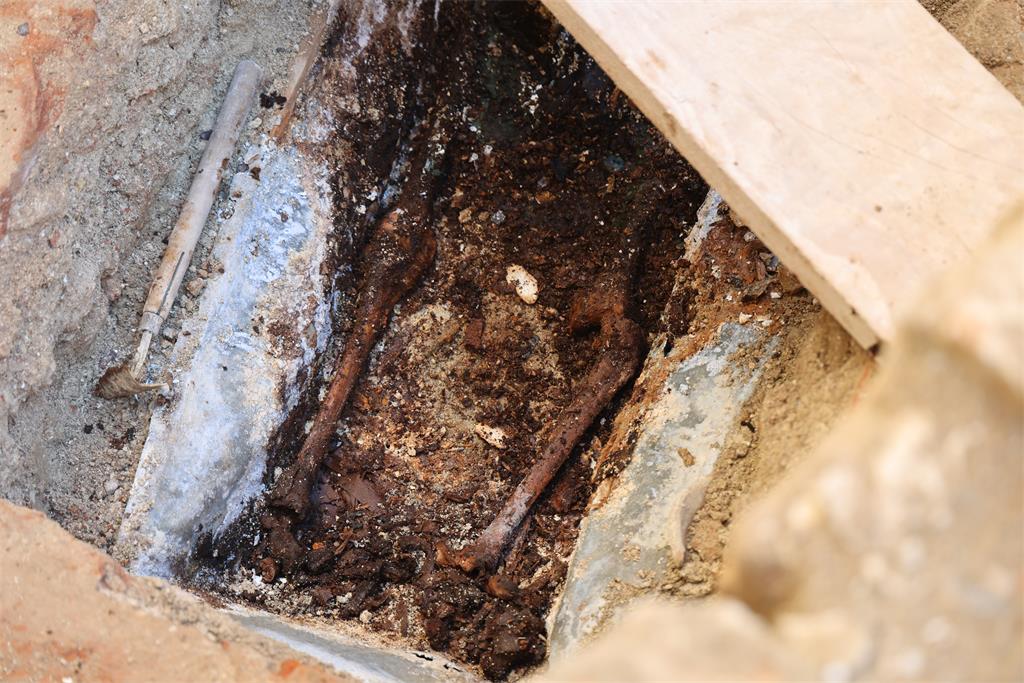
Archaeologists working at Zagreb Cathedral in Croatia have discovered a sealed lead coffin containing the remarkably well-preserved remains of Ivan Zakmardi, a prominent 17th-century Croatian statesman. Inside the coffin, researchers found an iron vessel that may have served as a heart urn, also known as a cardiotaph, a specialized funerary container used to preserve and bury the heart separately from the body.
The discovery, accompanied by evidence of postmortem surgical procedures, silver-buckled leather shoes, a gilded cross, religious objects and traces of elaborate burial clothing, offers new insight into the funerary practices of Europe’s early modern aristocracy.
A burial chapel lost to an earthquake
The discovery came during archaeological excavations accompanying the restoration of Zagreb Cathedral following the devastating earthquake of 2020. Investigations began in July 2026 along the cathedral’s southern buttresses, where archaeologists uncovered the remains of the Chapel of St. John the Baptist, which Zakmardi had commissioned as his own burial place.
The chapel, later dedicated to the Exaltation of the Holy Cross, suffered extensive damage during the Zagreb earthquake of 1880 and was never rebuilt. On September 14, archaeologists uncovered a lead coffin encased in fir wood within the chapel’s floor.
According to the announcement released by the Archdiocese of Zagreb on November 20, excavation director Ana Azinović Bebek said that archival records, historical accounts, and scientific examinations had allowed researchers to identify the remains as Zakmardi’s with 99 percent certainty.
An iron vessel and the removal of internal organs
Zakmardi died on April 25, 1667, in Banská Bystrica, in present-day Slovakia. As he had died away from home, contemporary sanitary regulations required special preparation of his body before it could be transported back to Croatia.
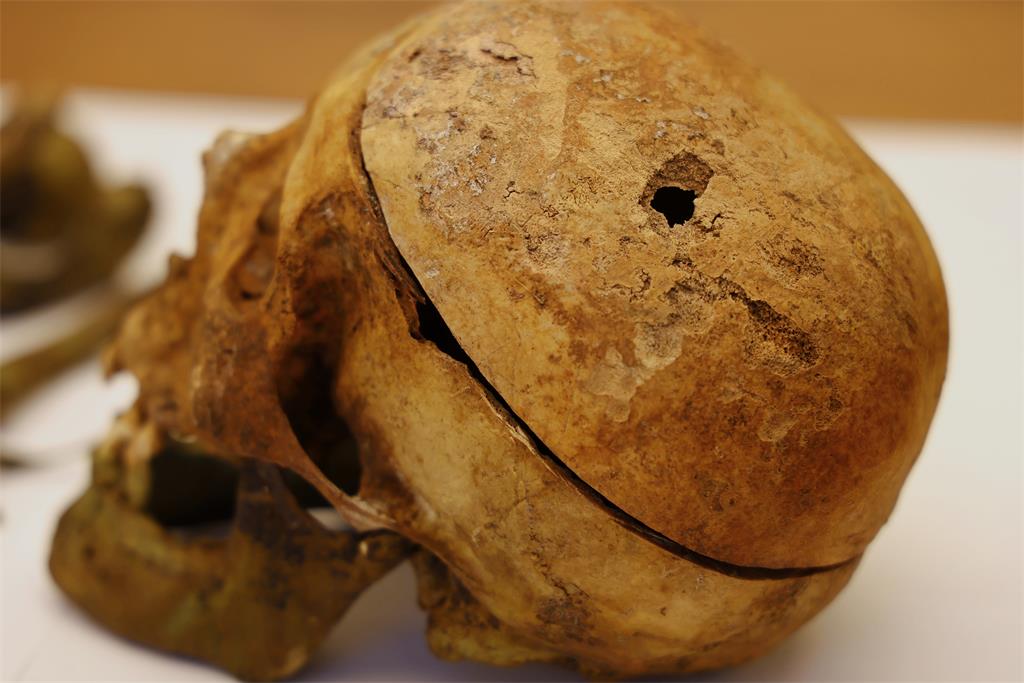
Vlasta Vyroubal, a senior researcher at the Anthropology Center of the Croatian Academy of Sciences and Arts, identified cuts in the skull and sternum consistent with postmortem surgical intervention. The removal of internal organs would have helped delay decomposition during transportation.
Among the most unusual discoveries was an iron vessel positioned between the deceased man’s legs. Azinović Bebek believes it may have contained his heart or another internal organ, in accordance with funerary practices of the period. Its original contents, however, have yet to be established.
The European tradition of heart burial
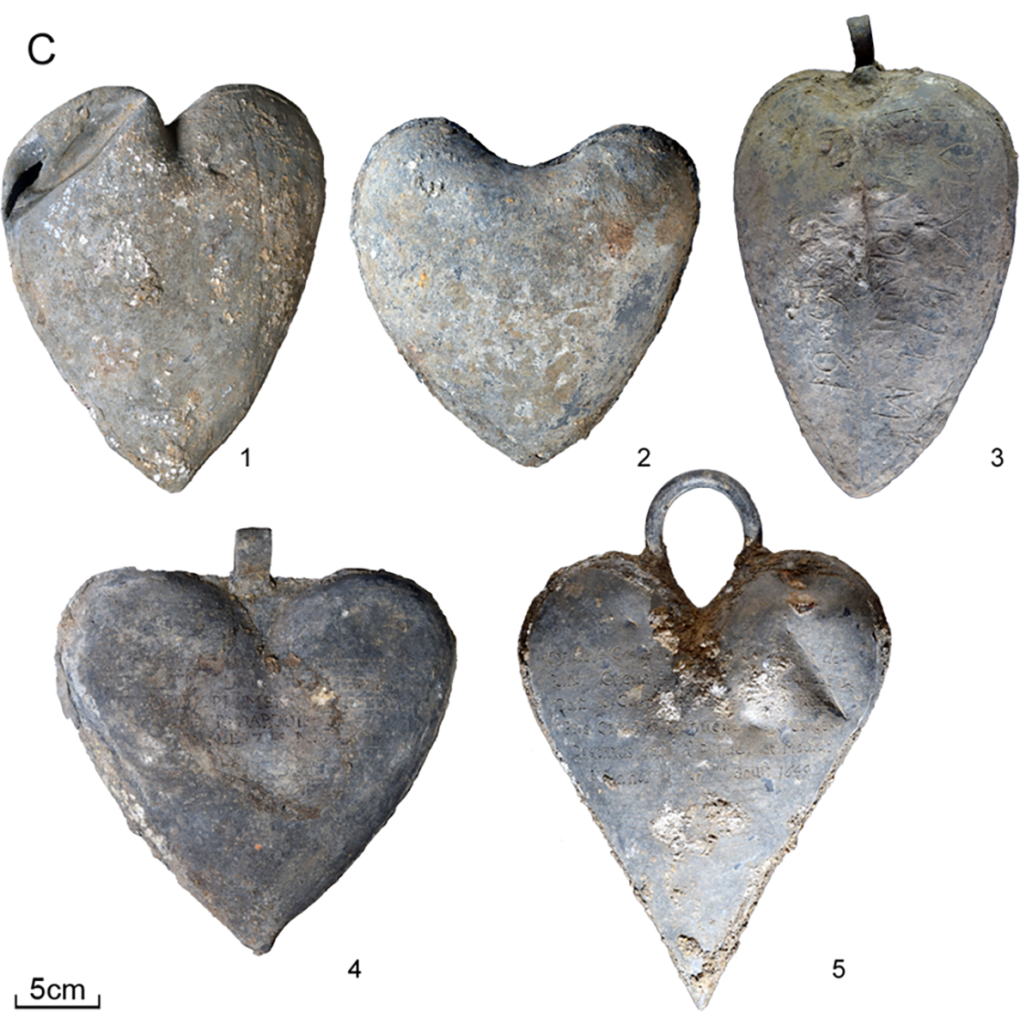
Heart urns, also known in archaeological literature as cardiotaphs, were specialized funerary containers associated with the practice of removing and burying the heart separately from the rest of the body. Established during the Middle Ages, the custom persisted among European royalty and aristocratic families well into the modern era.
Beyond the practical requirements of preserving a body, heart burial could express religious devotion, dynastic identity or personal affection. Individuals sometimes requested that their hearts be buried in churches or monasteries with which they had particularly close ties.
One of the most striking archaeological examples comes from the Jacobin convent in Rennes, France. A 2016 study published in PLOS ONE examined five lead heart urns discovered at the site. Among them was a container holding the heart of the husband of Louise de Quengo, a noblewoman who died in 1656, seven years after her spouse. His heart had been placed with her coffin, reuniting the couple in death.
The custom was particularly prominent among the Habsburg dynasty. Vienna’s Augustinian Church houses the Heart Crypt, or Herzgruft, where the hearts of 54 members of the imperial family were deposited between 1654 and 1878.
If the iron vessel from Zagreb proves to have held Zakmardi’s heart, his burial would provide another archaeological example of this centuries-old European tradition.
Silver buckles and elaborate burial clothing
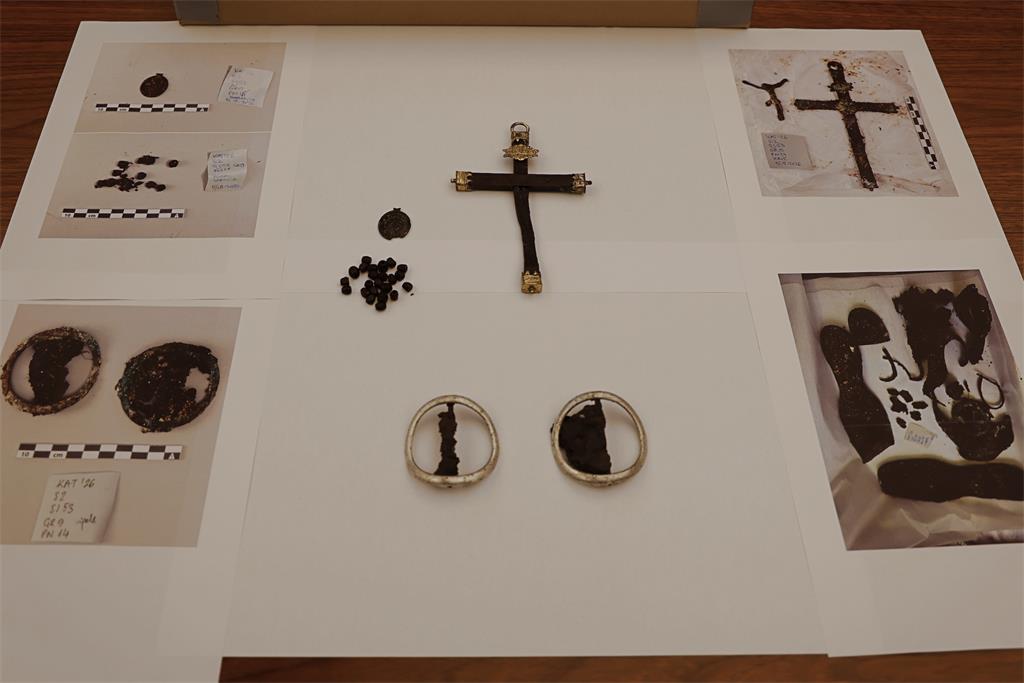
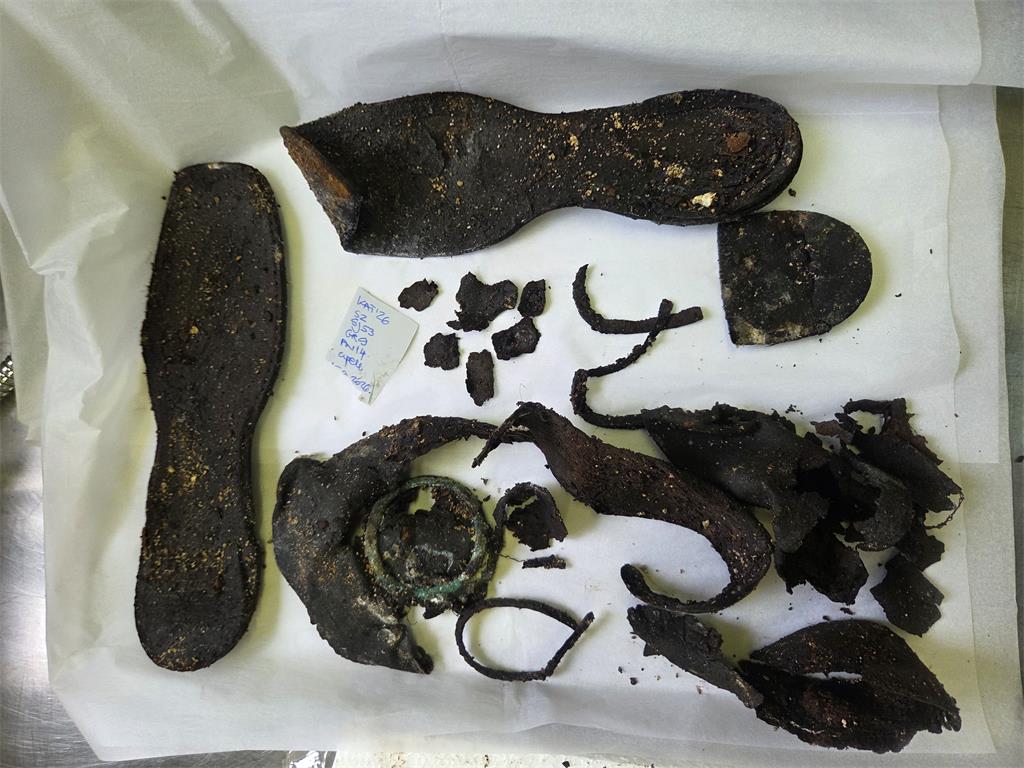
The objects accompanying Zakmardi reflect his elevated social position. Conservators recovered leather shoes with silver buckles, a wooden funerary cross decorated with gilded bronze fittings, jet rosary beads, and a bronze devotional medal depicting Christ and the Virgin Mary.
Cleaning the silver buckles revealed marks indicating the quality of the metal, along with a workshop stamp that could help establish where they were manufactured.
Researchers also noticed an unusual green discoloration on the bones of the upper body. Preliminary textile examinations suggest that Zakmardi may have been buried in garments made of silk and wool incorporating metallic threads. The oxidation of these threads could explain the distinctive staining.
Reconstructing the life behind the burial
Anthropological analysis determined that the deceased was a man over the age of 65. His spine showed evidence of diffuse idiopathic skeletal hyperostosis (DISH), a condition that causes excessive bone formation and can restrict mobility. Changes in his pelvis and spine suggest that he experienced difficulty moving during his later years.
Researchers also identified a skull lesion resembling metastatic cancer, although further examination is necessary before a diagnosis can be established. No skeletal evidence of a violent death has been identified.
Zakmardi’s prominent lower jaw closely resembles features visible in surviving historical portraits. Researchers have performed CT scans of the skull and intend to use the resulting images to reconstruct his facial appearance.
The man who preserved Croatia’s historical records
Born around 1600, Ivan Zakmardi served as a lawyer, royal protonotary, and representative of the Kingdom of Croatia. His most enduring achievement came in 1643, when he assembled the kingdom’s legal documents and privileges in a specially commissioned wooden chest known as the Cista Privilegiorum Regni.
Decorated with the coats of arms of Croatia and Slavonia, the chest was secured with three keys entrusted to separate officials. It remained in the cathedral’s sacristy until the 18th century and is now regarded as the foundation of the Croatian State Archives.
Nearly four centuries after Zakmardi helped preserve Croatia’s documentary heritage, his sealed coffin has provided a different kind of historical record. Researchers are continuing radiocarbon analysis, CT examinations, and dietary studies, while conservators work to preserve the objects that accompanied him to his grave.
