
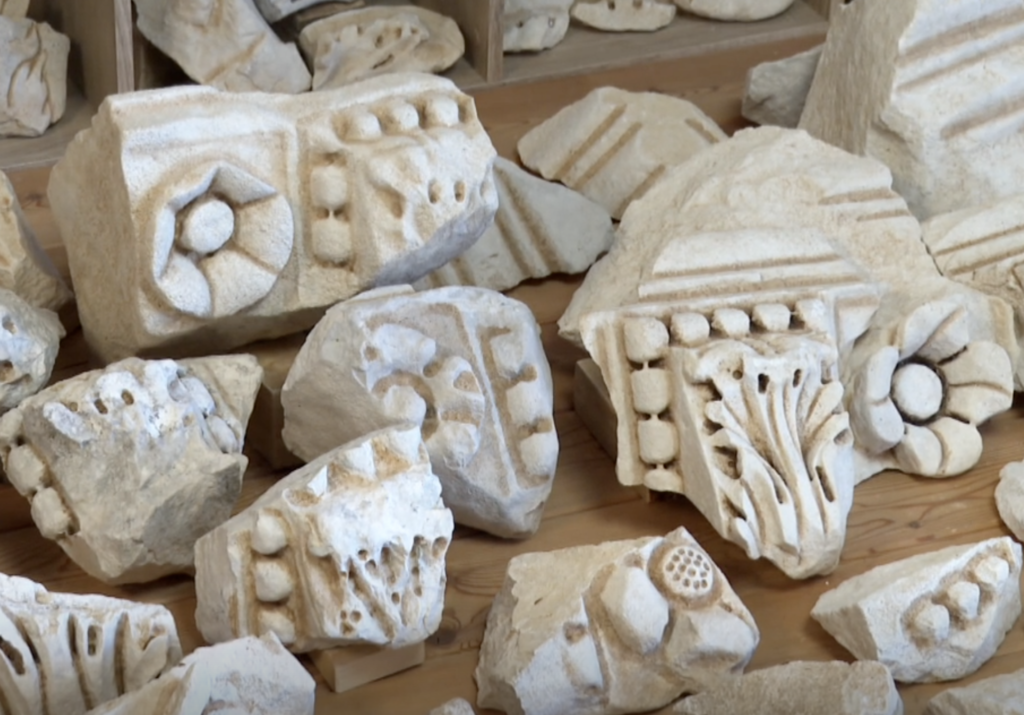
New stone reliefs have been discovered in a monumental triumphal arch, believed to have been built in honor of Roman Emperor Trajan approximately 1,900 years ago, in the Dalmatia region of Croatia. The fragments unearthed by archaeologists include the wing and claw of a Roman imperial eagle, depictions of Victoria, the goddess of victory, and figures of Eros.
The excavations, led by archaeologist Dražen Maršić from the University of Zadar, are ongoing in the Vratnica area of the Dicmo settlement near Split. During the 2026 excavations, the research team obtained significantly more architectural and sculptural pieces than in the previous season. These new discoveries provide insight into how the Roman administration expressed its presence in the hinterlands of Dalmatia through monumental architecture.
A Roman Monument Preserved on a Family’s Land
The story of the discovery dates back long before professional excavations began. Božo Kokan, a retired architect from Dicmo, collected and preserved worked stone fragments found on his family’s land for nearly 50 years. Some of these pieces had been used in the past to construct houses, barns, and stone walls.
Kokan’s decision to share these artifacts with researchers prompted an archaeological re-evaluation of the region. A scientific study published in 2024 in the journal Arheološki radovi i rasprave by Nikola Cesarik, Dražen Maršić, and Božo Kokan examined over 1,000 pieces of white limestone identified in the area.
Researchers initially examined the architectural features and inscriptions of the remains, which they thought might belong to a temple. However, curved structural elements, ornate stones, and fragments of a monumental inscription supported the interpretation that the structure was an independent Roman triumphal arch.
The titles Imperator and Germanicus found in the inscriptions were particularly decisive. By comparing the style of the lettering with other Roman inscriptions from the same period, researchers concluded that the monument was erected in honor of Emperor Trajan, who reigned between 98 and 117 AD.
The Roman Eagle and Victoria Figures
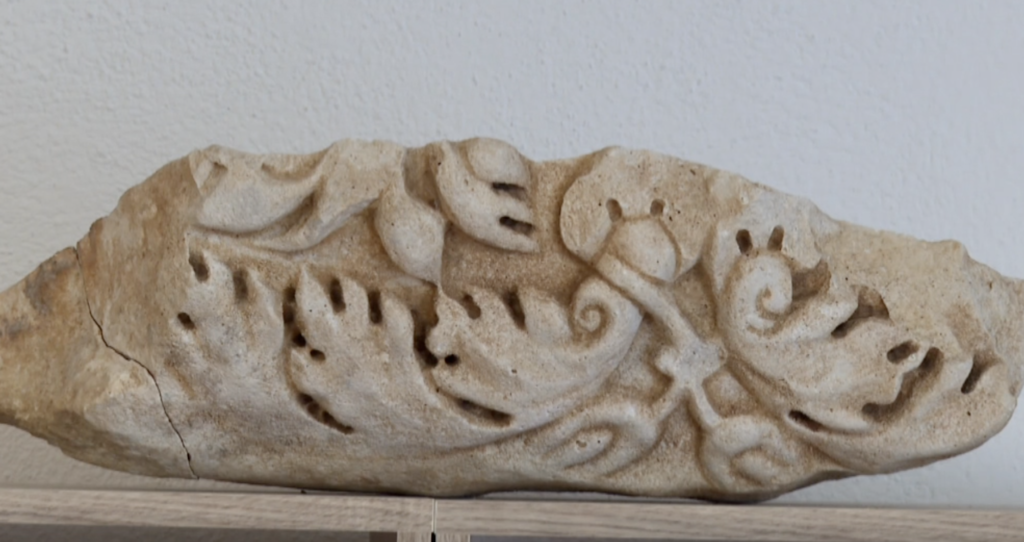
The 2026 excavations provided new evidence regarding the monument’s decorative program, not just its architecture. According to Boris Rožić Vašiček, deputy head of the excavations, in a statement to the Croatian national broadcaster HRT, the most concentrated group of finds consists of ornate pilaster fragments. These are accompanied by figurative reliefs and imperial symbols.
Among these, the eagle’s wing and claw are especially noteworthy. The eagle, known as the aquila in the Roman world, was a vital symbol used in the military standards of the legions and was closely associated with imperial authority. However, the original position of these fragments on the monument has not yet been determined.
Depictions of Victoria, the goddess of victory, further strengthen the political and ceremonial significance of the monument. In Roman art, Victoria served as the personification of military success and imperial triumph. The presence of Eros figures indicates that the monument possessed a more extensive sculptural decoration.
When evaluated together, these elements suggest that the structure in Dicmo was more than just an architectural marker for a road junction. The monument likely served as a public structure designed to visually communicate the authority and achievements of the Roman emperor to the provincial population.
A Junction of Important Roman Roads in Dalmatia
During the Roman period, Dicmo was known as Decimin. The settlement was located at a strategic point where the road between the provincial capital, Salona, and Aequum intersected with the route connecting military centers such as Andetrium and Tilurium.
This location explains why the monument may have been built here. Researchers believe the triumphal arch may be related to military mobility and imperial propaganda during the Trajanic era. Specifically, its possible connection to Trajan’s Dacian campaigns is a subject of scientific debate, although it has not yet been confirmed that the monument was built to commemorate a specific campaign.
The 2026 research also revealed the remains of another Roman structure approximately 100 meters away from the triumphal arch. Archaeologists found roof tiles, ceramic fragments, and a coin dating to the era of Emperor Diocletian. Maršić dates this second structure to the late 3rd century AD, the early 4th century, and beyond.
Thus, the excavations in Dicmo provide evidence of the region’s use in subsequent centuries, beyond the monumental structure of the Trajanic period. One of the primary goals of future research will be to determine the original positions of the scattered architectural fragments to reconstruct the structure of the triumphal arch in greater detail.
