
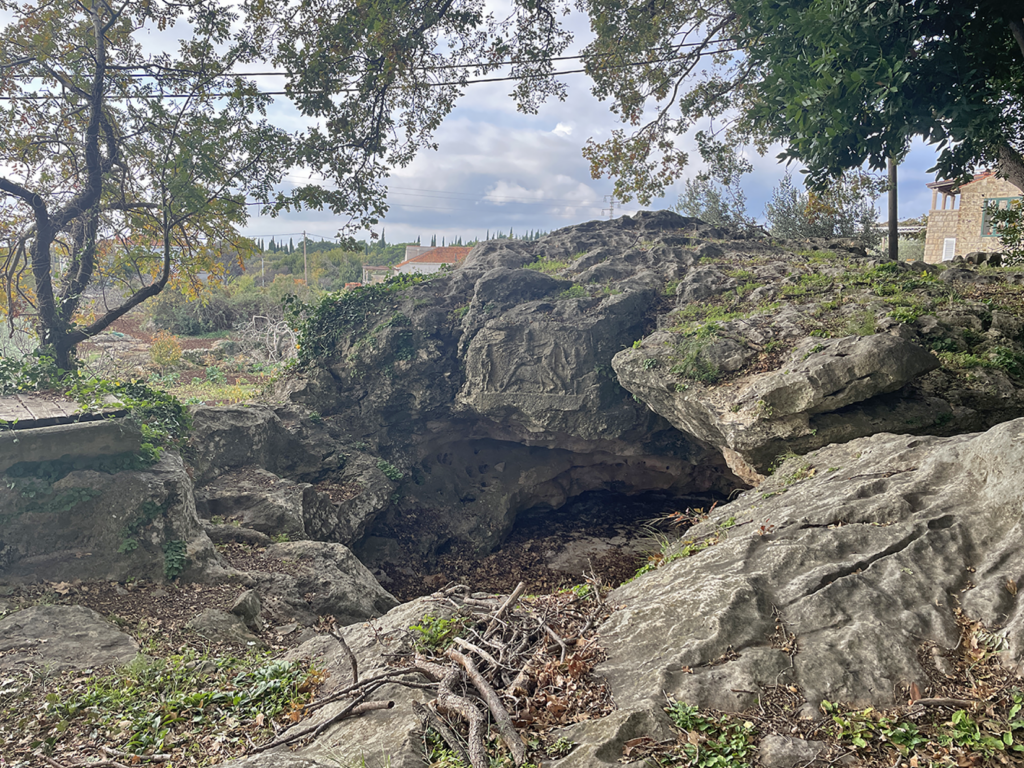
A Mithras sanctuary in Croatia may force scholars to rethink one of the Roman Empire’s most distinctive mystery cults, after a new study found that worshippers at Močići likely gathered not in a dark, enclosed temple, but in an open-air rocky clearing shaped by a cave, a spring, and the local Dalmatian landscape.
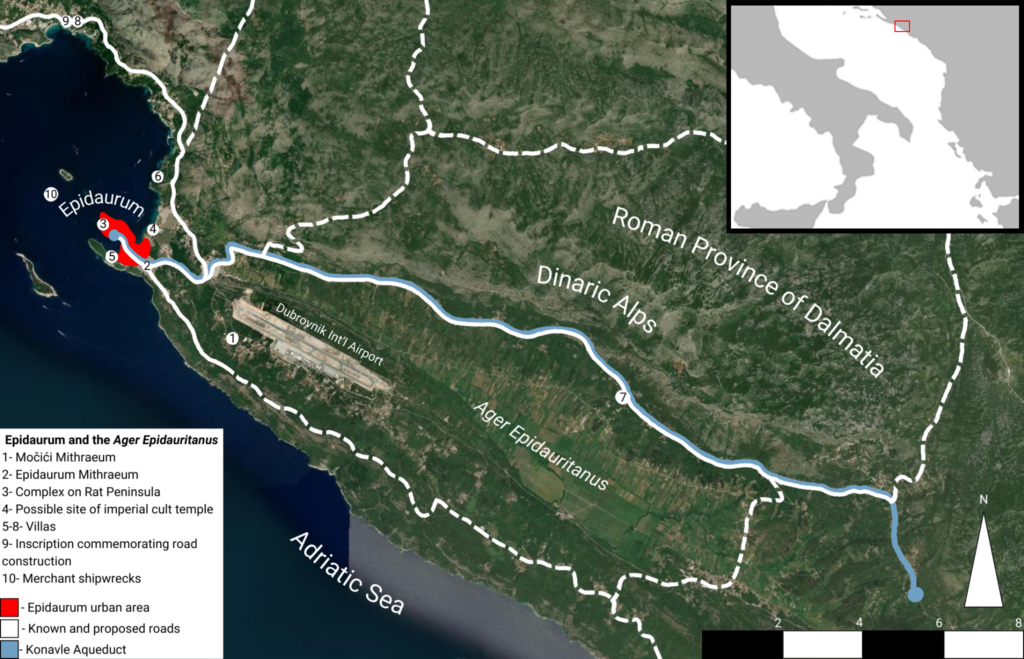
The study, published in the Journal of Roman Archaeology by Ian S. Wilson of Harvard University and Matthew McCarty of the University of British Columbia, reexamines a little-studied Mithraic site in the hills above ancient Epidaurum, near modern Cavtat on Croatia’s Adriatic coast. Their findings suggest that the sanctuary does not fit the standard model of a mithraeum, the distinctive temple space associated with the worship of Mithras across the Roman world.
For more than a century, Mithraic sanctuaries have usually been understood as enclosed, elongated halls. They typically had benches or raised podia along the sides, a central passage, and a cult image of Mithras slaying the bull placed at the far end of the room. These spaces were often interpreted as controlled ritual environments where small groups reclined, shared meals, and performed mystery rites.
Močići does something different.
A Roman cult site without the usual temple
The site was first described in 1883 by archaeologist Arthur Evans, who noted a rock-cut relief of Mithras above the mouth of a limestone grotto containing a natural spring. Despite that early notice, the sanctuary had never been fully excavated, planned, or studied in three dimensions.
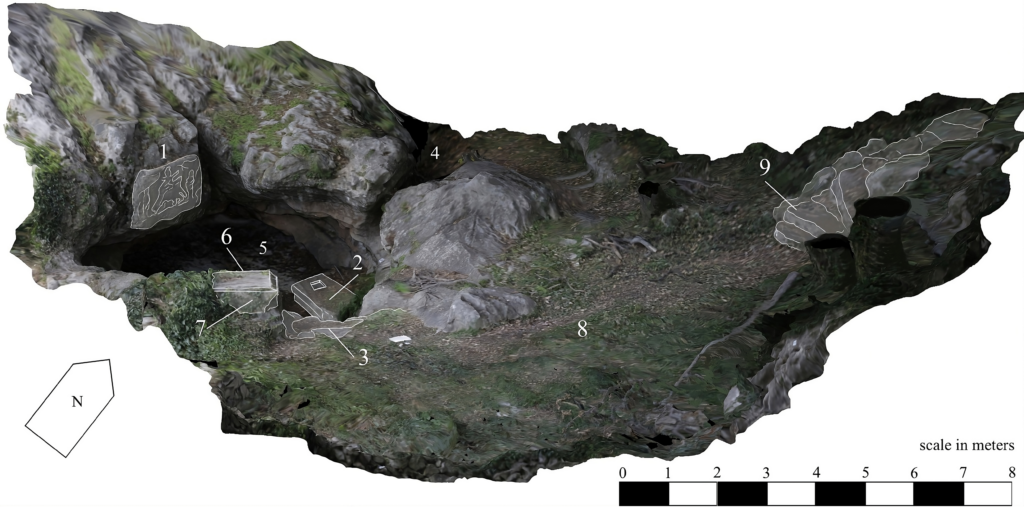
Wilson and McCarty returned to the site with modern documentation methods, including Structure-from-Motion photogrammetry. By creating a three-dimensional model from photographs and measurements, they were able to examine how the carved relief, cave, spring, and surrounding clearing worked together as a ritual space.
What they found is striking. There is no evidence for a built temple. No walls, no roof cuts, no postholes, no Roman roof tiles, and no carved dining benches were identified around the main space. The cave itself is also too small to function like a conventional mithraeum. Its usable area is about 17.7 square meters, far below the average main cult room of a Mithraic sanctuary, and too cramped for the reclining communal meals usually associated with the cult.
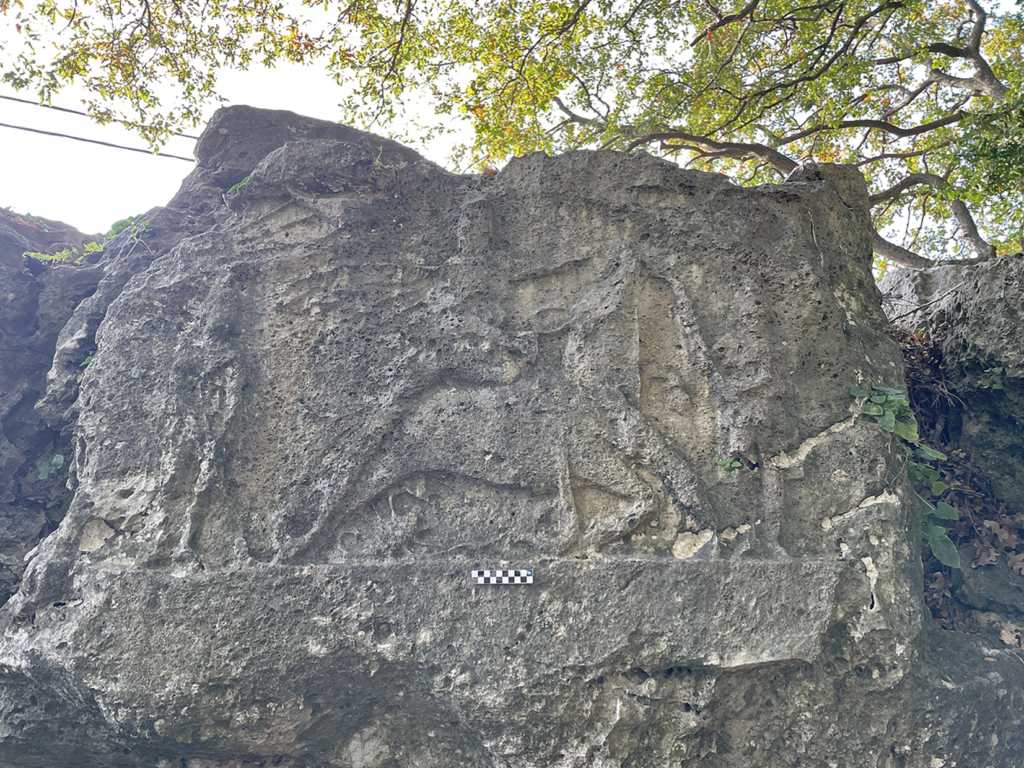
The relief of Mithras, measuring about 75 centimeters high and 110 centimeters wide, is carved directly into the rock at the highest point of the cave overhang. Its imagery is familiar: Mithras kills the bull, accompanied by the dog, snake, scorpion, torchbearers Cautes and Cautopates, Sol and Luna, and the raven. In iconography, the sanctuary follows the shared Mithraic language. In architecture, it breaks away from it.
The ritual space may have been outside
The position of the relief is one of the key clues. From inside the cave, the image is awkward to view. From the open clearing outside, however, it becomes the natural focal point of the whole space.
The clearing forms a shallow, roughly circular depression about 14 meters across, almost like a small natural amphitheater. It offers around 120 square meters of possible gathering space, enough for a group to assemble. From this outdoor area, the tauroctony, the bull-slaying scene, would have presided over the sanctuary in the same way that Mithras images did inside built mithraea elsewhere.
If the interpretation is correct, Močići may represent a rare, perhaps nearly unique, open-air Mithras sanctuary. Other Mithraic sites used natural rock, cliffs, or caves, especially in the broader region, but they usually added built structures: walls, thresholds, roofs, or enclosed rooms. At Močići, the researchers found no such architectural frame.
This matters because the usual model of Mithraism has often emphasized portability and repetition. A community could build a symbolic cave-like room almost anywhere, insert the correct image and ritual layout, and create a recognizable place for Mithras. Močići suggests another possibility. Here, worshippers did not impose a standard temple onto the landscape. They used the landscape itself.
Cave, spring, and the “rock-born” god
The choice of Močići was probably not accidental. Mithras was closely associated with caves, rocks, and water in Roman religious imagination. Literary and archaeological evidence shows that many Mithraic groups tried to recreate cave-like settings inside man-made sanctuaries. Some even used stone textures, vaulted interiors, or symbolic language to evoke a grotto.
At Močići, no imitation was needed. The cave was real. The limestone was part of the karstic geology of the region. The spring flowed naturally from the ground.
That spring may have carried particular meaning. Mithraic iconography often includes a scene known as the “water miracle,” in which Mithras draws water from rock with an arrow. Several sanctuaries also contain basins, pipes, streams, or dedications to Fons Perennis, the “Year-Round Spring.” In many places, water was symbolic or artificially incorporated. At Močići, the water was literal, permanent, and central to the site.
The sanctuary’s meaning therefore seems to have grown from the meeting point between shared Mithraic symbols and a specific Dalmatian landscape. It was not merely a cave representing the cosmos. It was a real cave, with a real spring, in a rural world where water, stone, herding, and movement through the hills mattered.
Silvanus adds a local Dalmatian layer
Inside the cave is another damaged relief, usually interpreted as Silvanus, the Roman god associated with woods, fields, animals, and rural life. Only the lower part of the figure survives, including legs that appear goat-like, recalling the regional Dalmatian form of Silvanus with Pan-like features.
This detail is important. Silvanus was widely worshipped in Dalmatia, often in rural and rocky settings. His presence at Močići suggests that the sanctuary was not a closed religious system devoted only to Mithras. Instead, the two gods may have shared the same place, as Roman sanctuaries often accommodated multiple divine figures.
The pairing makes sense in the hills above Epidaurum. The surrounding landscape was shaped by agriculture, animal husbandry, quarrying, and rural estate life. The spring may have served herds in later periods, and perhaps in antiquity as well, though that cannot be proven. Even so, the connection between a cave spring, a goat-legged Silvanus, and a Mithras relief carved into living rock gives the sanctuary a strongly local character.
A destination sanctuary in the hills
Močići was not a convenient neighborhood shrine. It stood just under four kilometers from modern Cavtat, near the ancient port city of Epidaurum, but reaching it required a deliberate climb into the hills. The researchers describe it as a destination sanctuary, a place that demanded effort from those who visited.
That effort changes how we imagine the rites. Worshippers may have carried food, vessels, and ritual equipment with them. Without benches, they may have sat or reclined on the ground. Without a storeroom or antechamber, each gathering would have required preparation. If meals formed part of the rites, as they did in many Mithraic contexts, the experience at Močići would have been physically different from dining inside a dark, bench-lined mithraeum in Rome, Ostia, or a frontier town.
The date of the sanctuary remains uncertain. Without excavation, inscriptions, or datable artefacts, the researchers can only place its use broadly within the main period of Mithras worship in the Roman Empire, from the 2nd to the mid-4th century CE.
Rethinking Mithraism from one Croatian cave
The Močići sanctuary does not overturn everything known about Mithras worship. Its tauroctony shows that the community still used the central visual language of the cult. But the site complicates the idea that Mithraism was always practiced in the same type of architectural setting.
Instead, it points to a more flexible religion, one that could adapt to local geology, rural lifeways, existing sacred places, and regional gods. At Močići, Mithras was not simply inserted into a standard Roman cult room. He was placed into a living landscape of limestone, water, pasture, and memory.
That is why this small Croatian sanctuary matters. It suggests that Roman mystery cults were not only systems of symbols carried across the empire. They were also local practices, shaped by the ground beneath worshippers’ feet.
Wilson, I. S., & McCarty, M. (2026). Situating a rock-born god: place, practice, and geologies of Mithras-worship at Močići (Croatia). Journal of Roman Archaeology, 1–29. doi:10.1017/S1047759426100774
Cover Image Credit: Ian Wilson and Matthew McCarty, 2026
