
A skull shaped by disease, a temple built to face the sunrise, and a 2,000-year-old mystery about a child who may have been sacrificed or simply mourned.
On the windswept steppe of eastern Crimea, where the ruins of the ancient fortress-city of Artezian have slept beneath the earth for over two millennia, archaeologists have just uncovered something that has never been documented at the site before: the remains of an infant, buried directly beneath the foundation of a sacred temple, in what may be evidence of a ritual sacrifice dating back roughly 2,100 years.
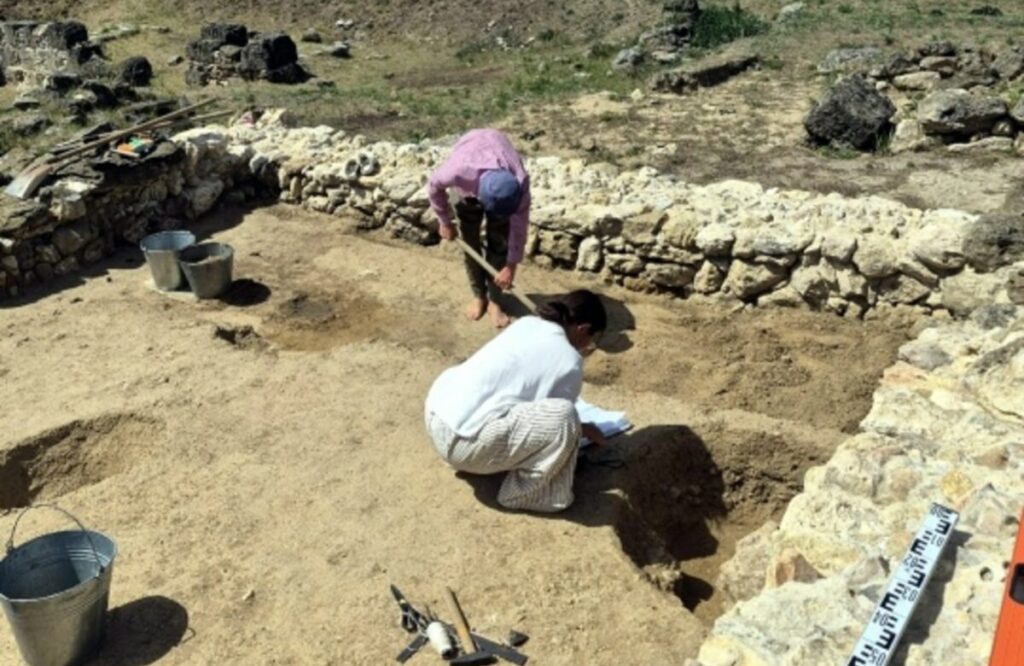
The find comes from the 40th field season of the Artezian Archaeological Expedition (AAE), and researchers are calling it the first discovery of its kind for the classical period anywhere on this stretch of the Crimean Azov coast.
A Burial Hidden in the Foundation
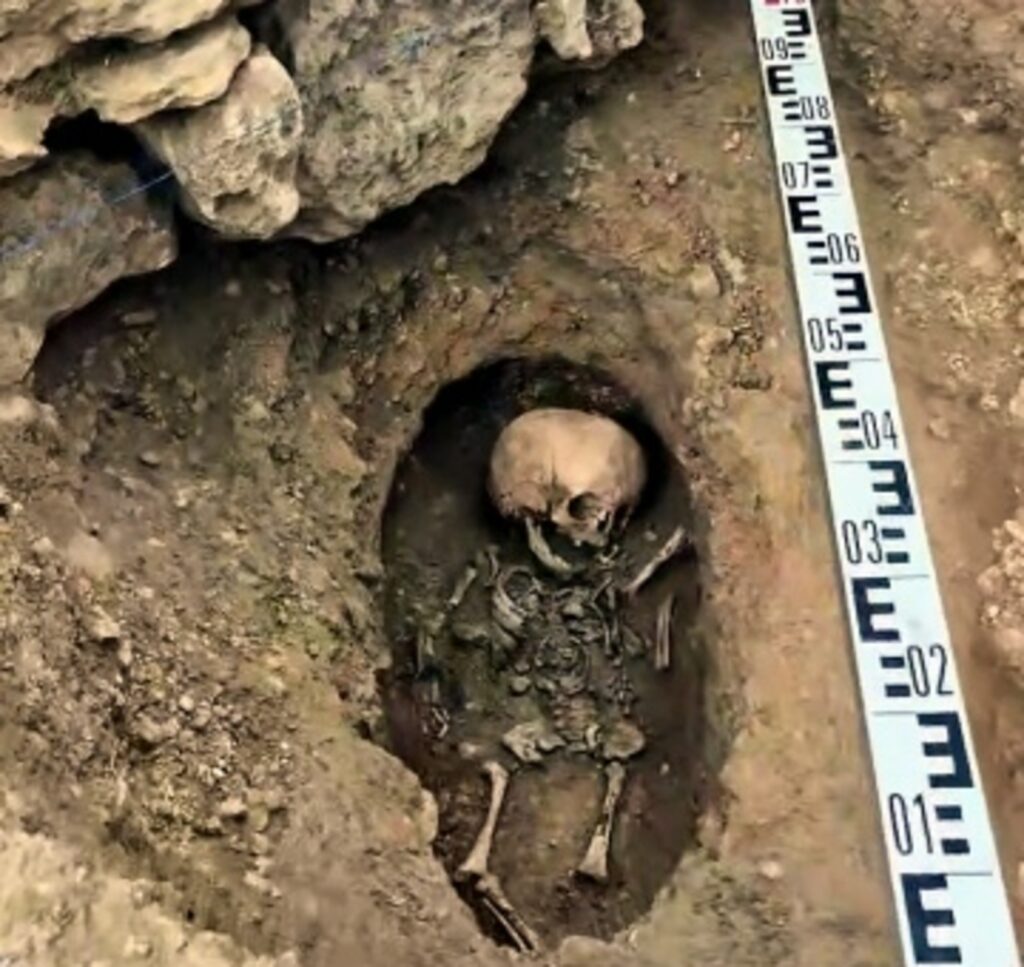
The tiny skeleton was found tucked beneath an altar table, right at the base of the north wall of the Temple of Zeus Genarchos and Soter — a name that roughly translates to “Zeus the Progenitor and Savior.” Archaeologists date the burial to somewhere between 80 and 70 BCE, which places it before construction of the temple itself even began. In other words, whoever buried this child did so as part of laying the very groundwork the temple would later rise upon.
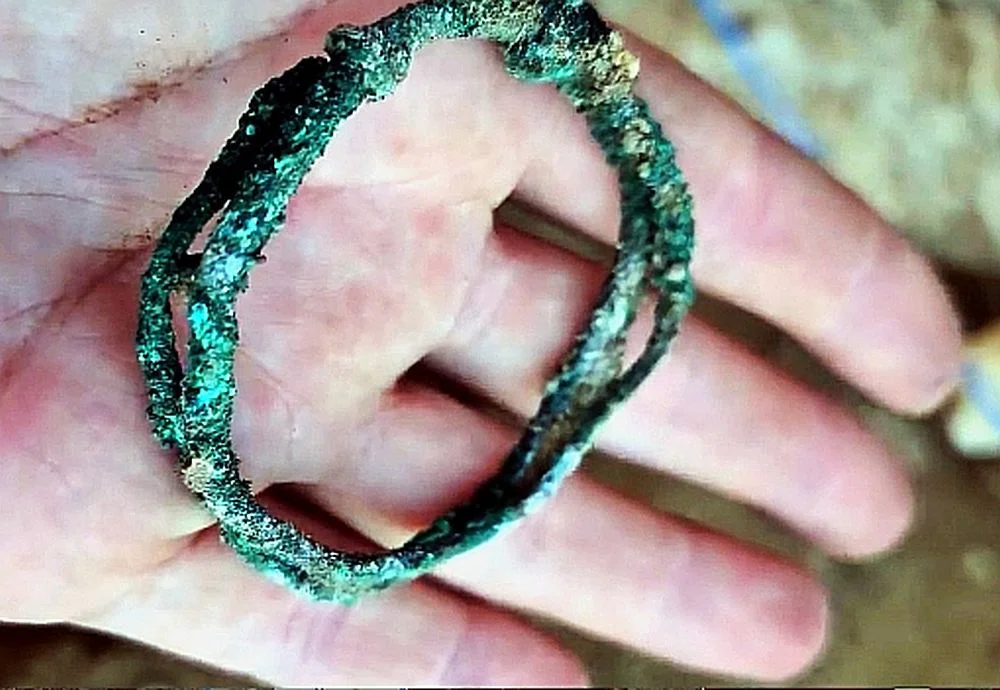
Alongside the small remains, excavators recovered a bronze bracelet and a necklace strung with tiny beads — modest grave goods, but enough to suggest the child was buried with some degree of ceremony rather than simply discarded.
Time has not been kind to the site. Rodents had burrowed extensively through the burial over the centuries, disturbing the bones and scattering the contents of the grave, and, in something of a grim irony, a number of the rodents themselves appear to have died in the process, their remains now mixed in with the ancient burial.
Sacrifice, Tragedy, or Something in Between?
What makes this discovery so compelling is exactly what makes it so difficult to interpret. Archaeologists are weighing at least two very different explanations.
The first is a foundation sacrifice — an ancient and widespread practice in which a burial was placed directly beneath a new structure’s cornerstone to symbolically anchor the building and secure divine protection over it. Positioning the child’s remains at the very base of the temple’s sacred space fits this pattern closely. Some researchers also raise the possibility of an atonement or scapegoat ritual, in which the sacrifice was meant to ward off misfortune from the community or answer for some collective wrongdoing.
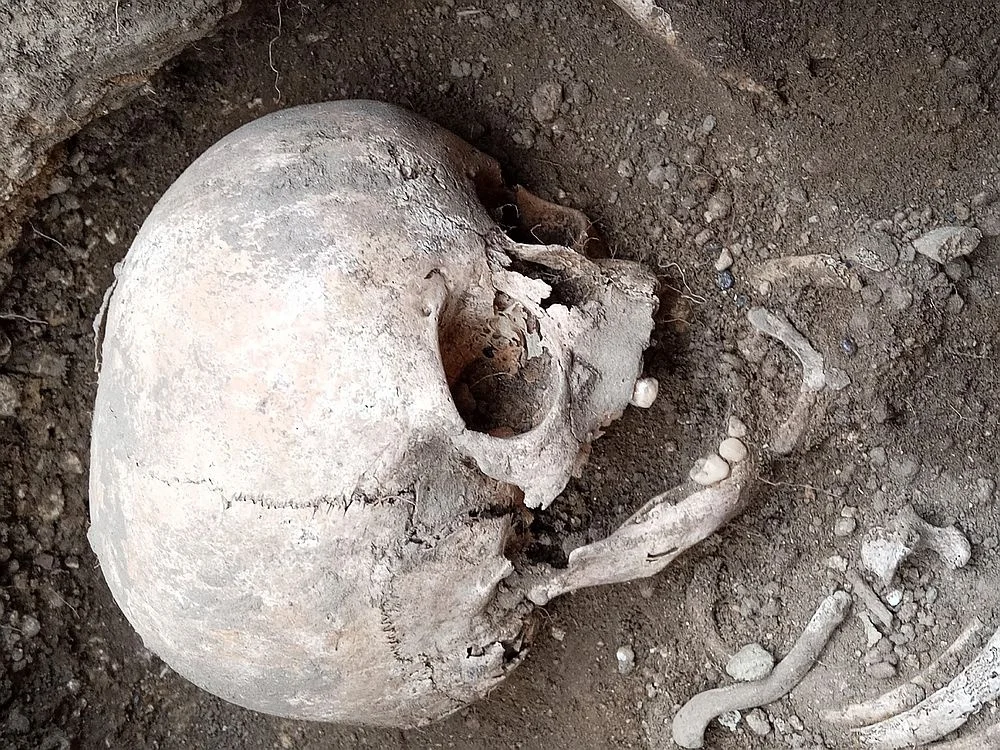
But there’s a second, more sobering possibility. The shape of the infant’s skull has led researchers to suspect the child may have suffered from hydrocephalus — a buildup of fluid in the brain that, in antiquity, would very often have been fatal. If that’s the case, the burial may not have been a sacrifice at all, but a sacred burial: a child who died of natural causes yet was still laid to rest in an unusually significant location, perhaps as a mark of some special status.
Adding another layer to the puzzle, excavators suspect the burial pit may actually contain the remains of a second infant — so far, only leg bones belonging to another child have come to light.
“It’s a rare case where archaeology is balanced almost perfectly between tragedy and ritual,” one researcher involved in the dig noted, reflecting on just how finely poised the evidence is between the two explanations.
One detail stands out regardless of which theory holds: the upper skeleton was deliberately positioned facing southeast, lying on its left side — an orientation that strongly suggests intentional ritual placement, whatever the circumstances of the child’s death.
A Temple Built to Track the Sun
The Temple of Zeus Genarchos and Soter wasn’t an ordinary sanctuary. Its altars were laid out with remarkable astronomical precision, aligned along the equinox axis to mark the points where the sun rises and sets — a level of planning that speaks to how central this temple was to the religious life of the community that built it.
That community lived at Artezian, one of the major ancient fortress settlements guarding the Sea of Azov coast of Crimea. Strategically, the site controlled what’s often referred to as the “royal road,” the overland route linking the Sea of Azov to Panticapaeum, the great capital of the Bosporan Kingdom. Its defensive walls and commanding position made it a key link in the kingdom’s network of fortified settlements during the turbulent centuries of the late Hellenistic and early Roman periods.
Artezian was first identified as an archaeological site in 1986 by Viktor Zubarev, a researcher with the East Crimean Archaeological Expedition. Systematic excavations began two years later, in 1988, and have continued ever since — through the 40th season, and this remarkable new discovery.
Racing Against Time
According to the expedition’s own updates, the dig has continued at full pace despite this emotionally heavy find. Archaeologists are currently tracing the trenches of the fortress’s later citadel walls and a leveling layer north of the southern defensive wall. They’re also working through a storage area lined with large ceramic pithoi jars inside what were once barracks, alongside an early terrace layer tied to the citadel of Pharnaces, marked by thick deposits of burnt material from a nearby pottery kiln. A layer linked to a fire from the autumn of 46 CE — during the turbulent Bosporan-Roman conflicts of that era — sits above these deposits, though it proved thinner than researchers had hoped. More intriguing is a layer of discarded horse and cattle bones, including skulls, shoulder blades, and pelvic bones, likely connected to a rectangular altar that once stood outside the southern wall and was transferred to a heritage preservation authority back in 2013–2014.
Meanwhile, conservation work continues on the walls of the palace of Mithridates Eupator, under the direction of restoration specialist A.M. Tumanov. Portions of the citadel’s residential quarters and the Temple of Zeus Genarchos and Soter itself are considered nearly ready for public display, as part of a planned historical-archaeological park at the site.
The expedition team has also raised concerns about nearby quarrying activity, which they say has begun encroaching on the protected archaeological zone and, in one incident, damaged water infrastructure the excavation depends on — an added complication for a team already balancing delicate fieldwork with the practical challenges of working in a remote, historically rich landscape.
For now, the infant’s story — sacrifice or sorrow, ritual or accident of nature — remains an open question. But it’s exactly this kind of ambiguity that makes Artezian’s latest find one of the most talked-about archaeological discoveries to come out of Crimea in recent memory.
