
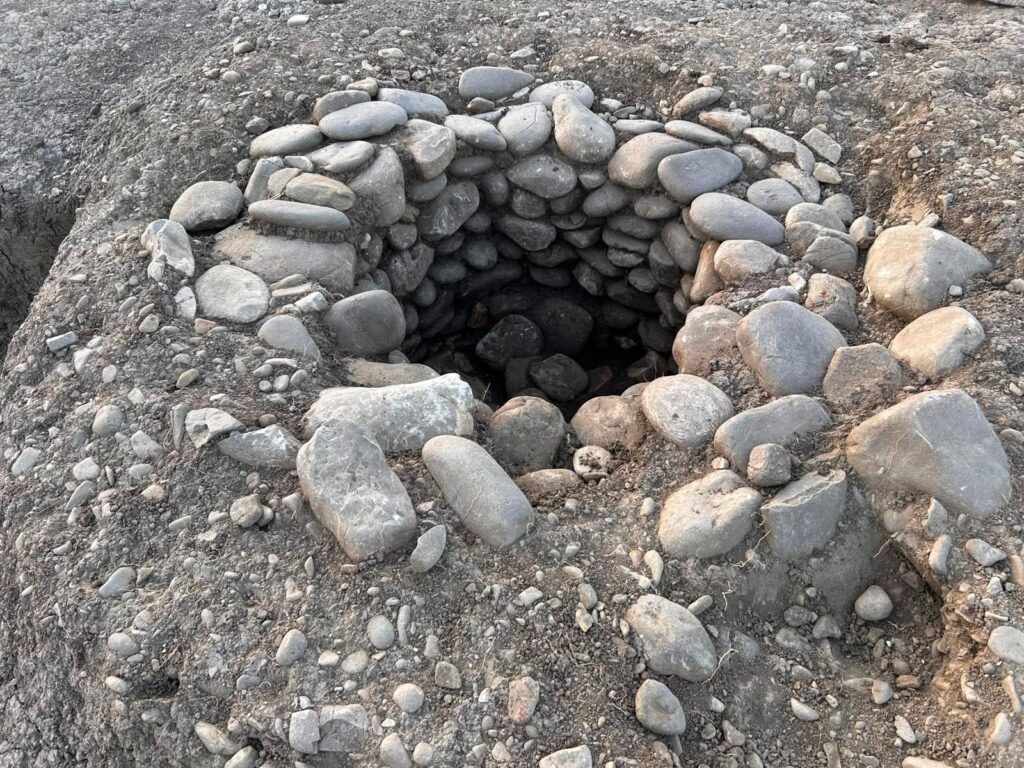
Archaeologists from the University of Bologna have uncovered a remarkably preserved ritual well at the ancient Etruscan city of Kainua, near Marzabotto, revealing bronze votive offerings and human skeletal remains that shed new light on Etruscan foundation rites and the sacred role of water.
A discovery set to become a milestone in Etruscan studies has emerged from the archaeological park of Kainua, in what is now Marzabotto, Italy. The find was announced at the close of the 39th archaeological excavation campaign led by the University of Bologna, under the direction of Professor Elisabetta Govi of the Department of History, Cultures, Civilizations.
A Well Dedicated to the Goddess Uni
The ritual well was found within the sacred urban precinct dedicated to Uni, the supreme Etruscan goddess equivalent to the Greek Hera and Roman Juno. This sanctuary area already contains two monumental temples that inscriptions attribute to Etruria’s chief divine couple, Tinia (the counterpart of Zeus and Jupiter) and his consort Uni. The same complex also holds evidence of the cult of Vei, a goddess associated with agricultural and human fertility, comparable to the Greek Demeter or Roman Ceres.
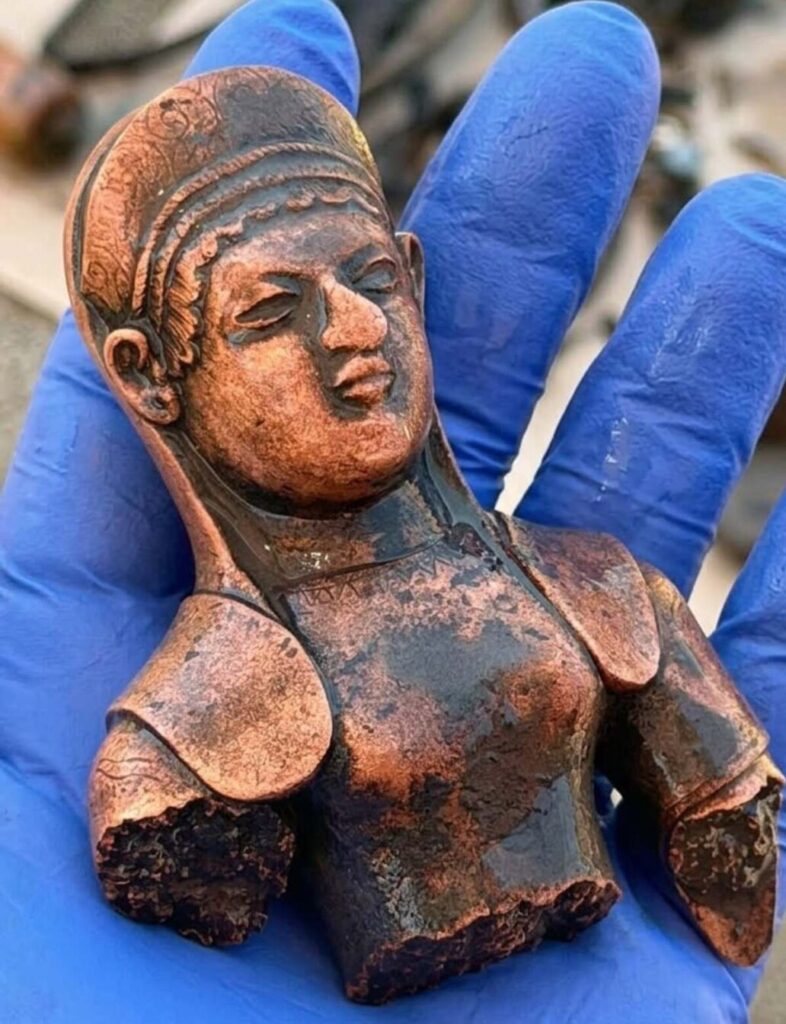
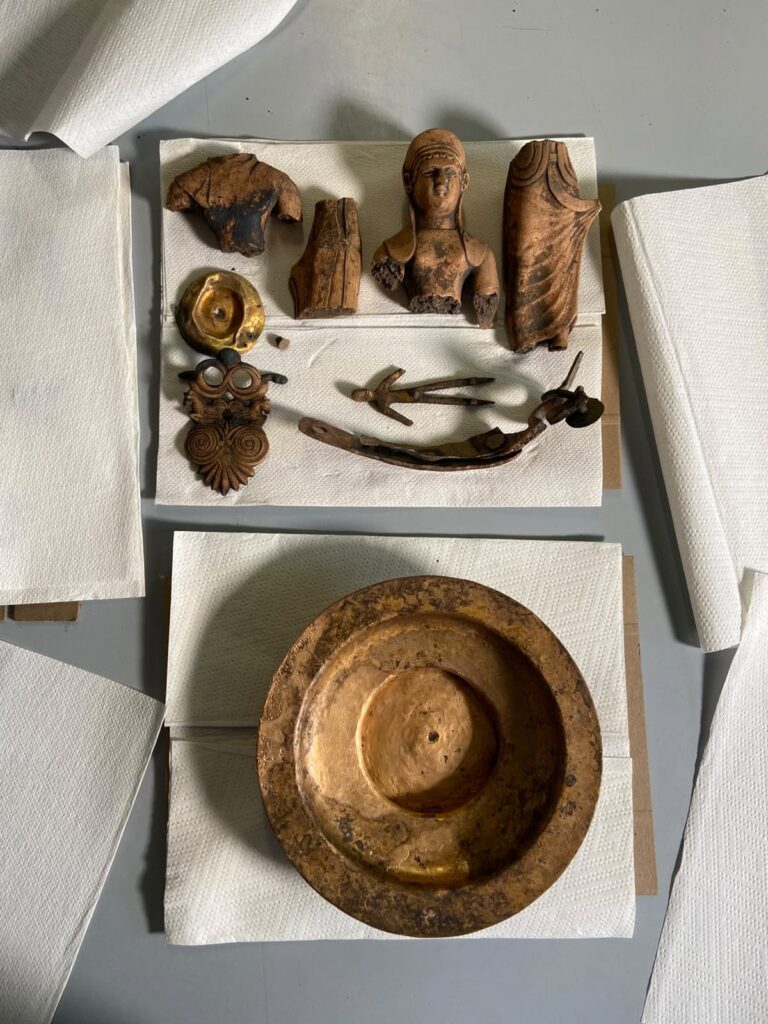
Excavators, working with the support of the Gruppo Ravennate Archeologico (G.R.A.), reached the bottom of the well to find two extraordinary bronze female statuettes and a rare bronze plate, all of which still retain their original metallic sheen despite more than two millennia underground.
Votive Offerings and a Ritual Closure
According to Professor Govi, the bronze objects were deposited as votive offerings during a solemn foundation rite for the well, dated to between the late 6th and early decades of the 5th century BC: a period that coincides with the very founding of the city of Kainua itself.
Just as striking is evidence of how the well’s use came to an end. Two adult human skeletons were found in association with what researchers interpret as a ritual closure of the structure, marking the definitive end of its function.
Together, the findings indicate that the well served a purpose far beyond simple water supply. Researchers argue it carried deep religious significance tied directly to the city’s founding and to a broader Etruscan cult of water, offering fresh insight into how Etruscan communities marked both the birth and the ceremonial “death” of their sacred infrastructure.
Rewriting Etruscan Foundation Rituals
“The results of this excavation campaign enrich our knowledge of the foundation rites of Etruscan cities and of Etruscan religiosity itself,” Govi explained, noting that the well’s placement within the sanctuary’s existing cultic framework strengthens the connection between water veneration and urban foundation ceremonies across Etruria.
The University of Bologna has carried out continuous archaeological research at the Kainua site since 1988, steadily building one of the most complete pictures available of daily and religious life in an Etruscan city. The 2026 campaign was made possible by a €140,000 grant from the Italian Ministry of Culture’s Directorate-General for Museums, supported by DiVA, the Department for the Enhancement of Cultural Heritage, which has backed the research since 2025 and is committed to continuing that support.
The funding falls under a framework agreement signed in 2023 between the University of Bologna and the MNEMA — National Etruscan Museum of Marzabotto — which also allowed the excavation season to be extended by two additional weeks in 2026. That extension proved decisive: it was during this additional excavation window that the ritual well, with its intact artifacts and human remains, came to light.
A Living Museum for a Living Excavation
The discovery arrives at a pivotal moment for the MNEMA, which reopened to the public in June following a major renovation and rethinking of its identity. Rather than presenting a static historical collection, the museum has repositioned itself as a dynamic cultural laboratory, closely connected to ongoing fieldwork.
Under this new approach, museum director Denise Tamborrino’s team plans to incorporate the newly discovered artifacts into the exhibition as soon as scientific analysis and conservation allow, giving visitors a rare opportunity to follow an active excavation in near real time rather than viewing a fixed display.
The project reflects a wider collaboration between the National Museums of Bologna — Regional Directorate of National Museums of Emilia-Romagna, led by Luigi Gallo — the MNEMA, and the University of Bologna, uniting scientific research, heritage protection, and museum outreach in a single continuous effort.
As restoration work on the bronze statuettes and plate continues, archaeologists say the Kainua ritual well promises to remain a key reference point for understanding how the Etruscans sanctified water, marked the founding of their cities, and ritually closed the structures that no longer served them.
