
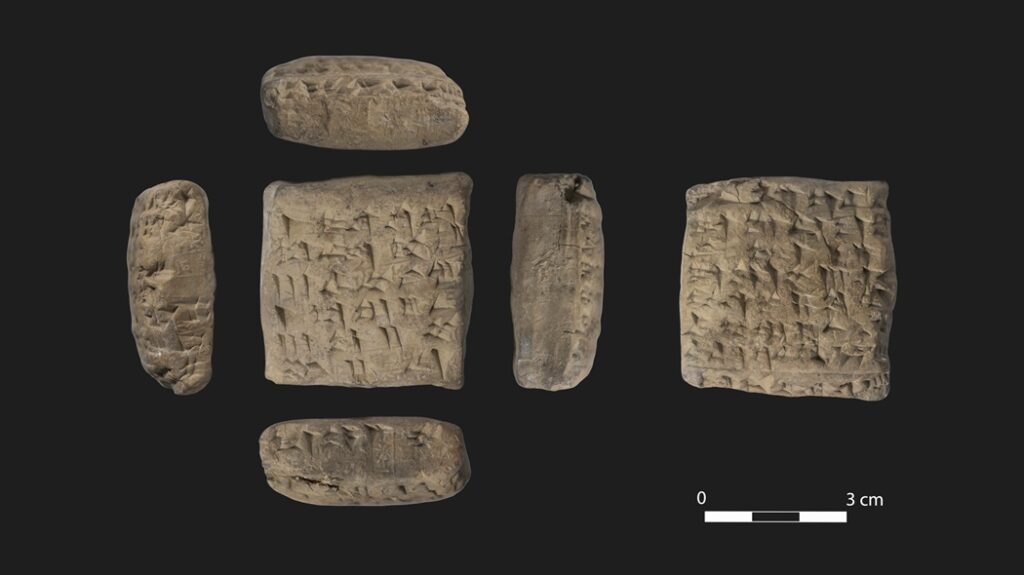
A small clay tablet discovered in an ancient production building near Baghdad has provided archaeologists with a record of beer, barley, and sesame oil transactions from nearly 4,000 years ago. The cuneiform document dates to the reign of Babylonian king Hammurabi or his successor Samsu-iluna, offering a closer look at the economic activities of a Mesopotamian city.
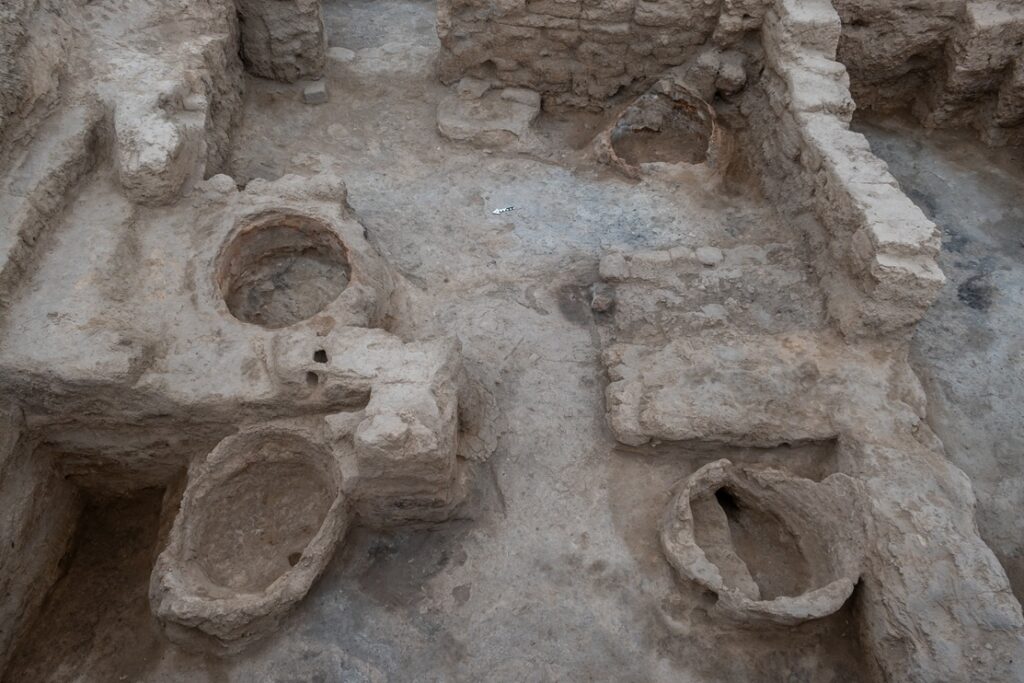
Archaeologists from the University of Catania and Iraq’s State Board of Antiquities and Heritage found the tablet during their 2026 excavations at Tell Muhammad, on the southern outskirts of Baghdad. The discovery accompanied ovens and other installations that researchers associate with bread-making and possibly additional food-processing activities.
A Babylonian Tablet from an Ancient Production Building
The tablet emerged from a building along an ancient street connecting Tell Muhammad’s city gate with its sacred precinct. Outside the entrance, archaeologists identified a semicircular workbench, while the interior contained ovens and circular installations associated with food preparation.
The building offers physical evidence of activities within the city, while the tablet provides a written record of economic transactions involving everyday commodities.
Annunziata Rositani, a philologist at the University of Messina working with the archaeological mission, identified references to barley, sesame oil, and a beer known as kurunnum. Her study connects the document to the Old Babylonian period, when written records played an important role in tracking the movement and exchange of goods.
The inscription does not provide a beer recipe. Nor has the excavation team conclusively established that people brewed beer inside the building, although the production installations make the possibility worth investigating.
Researchers also collected charred organic remains from the structure. Further laboratory analyses may help identify the materials processed there and clarify how its occupants used the ovens and other installations.
A City Between Two Powerful Kingdoms
Tell Muhammad stands on the eastern bank of the Tigris River, within the modern metropolitan area of Baghdad. Approximately four millennia ago, the settlement occupied a politically sensitive region between Babylon and Eshnunna, two major powers competing for influence in Mesopotamia.
Archaeological evidence places important phases of the city’s occupation between approximately 2000 and 1595 BC, a period that witnessed the rise of Babylon’s First Dynasty and the expansion of Hammurabi’s kingdom.
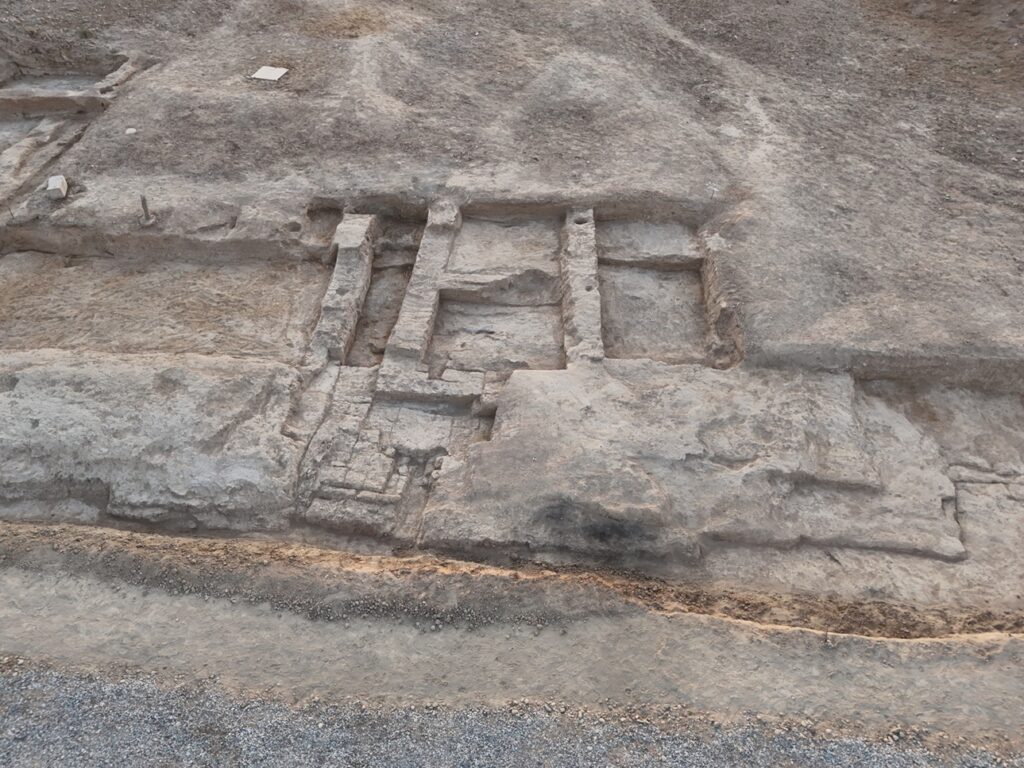
The city’s defenses reflect that unsettled political landscape. Excavations have documented an imposing mudbrick wall approximately five meters thick, together with a monumental entrance and a smaller secondary gateway protected by a bastion. Archaeologists also identified traces of fire on the exterior of the smaller passage.
These fortifications belong to a broader program of archaeological investigation rather than the tablet’s immediate discovery context. The team first exposed the principal city gate during its 2022 excavation campaign.
Earlier Iraqi excavations also investigated the settlement’s sacred area, including temple structures. The continuing Italian-Iraqi project has since expanded research into the city’s defenses, buildings and everyday activities.
Reconstructing Daily Life in Ancient Mesopotamia
For decades, the history of Hammurabi’s Babylon has attracted attention for its kings, laws and military campaigns. The discoveries at Tell Muhammad bring another aspect of that world into focus: the production and exchange of ordinary goods.
Barley was an important crop in Mesopotamia, while beer featured in the region’s food economy and written administrative records. Sesame oil was another commodity that households and institutions could acquire, distribute, and exchange.
At Tell Muhammad, the relationship between the production building and the cuneiform tablet allows archaeologists to investigate how such activities operated within an urban neighborhood. The written document identifies transactions, while the surviving architecture provides the setting for further investigation.
The 2026 field season concluded in late October, but research on the recovered materials continues. Laboratory results and further study of the tablet may provide a more detailed understanding of the building’s activities and the people who worked there.
The excavation forms part of the Baghdad Urban Archaeological Project, which resumed investigations at Tell Muhammad in 2022. Alongside archaeological research, the Iraqi and Italian teams are conserving the site’s ancient structures and developing opportunities for visitors to explore this part of Babylonian history.
