
More than 2,000 years ago, someone killed a young woman in what is now Northern Ireland. A sharp weapon severed her head from her body, and her remains ended up in a peat bog. Her head has never been found, and researchers still cannot explain why she died.
An unusual investigation at Belfast’s Ulster Museum has brought her case before a modern coroner. Archaeologists and forensic specialists have examined the evidence to reconstruct not only her violent death but also the life she led before it. The young woman, known as Ballymacombs More Woman, was between 15 and 22 years old when she died.
A Young Woman’s Remains in an Irish Bog
Workers cutting peat near Bellaghy, County Londonderry, discovered her remains in October 2023. Police initially considered whether they had encountered evidence of a recent death, but radiocarbon dating eventually placed the woman in the Iron Age, between approximately 343 and 1 BCE.
Early examinations suggested that the remains belonged to a teenage boy. Further analysis established that the individual was female, while examination of her neck vertebrae revealed evidence of deliberate decapitation. Researchers estimate that she stood approximately 5 feet 6 inches tall.
Professor Eileen Murphy of Queen’s University Belfast identified cut marks consistent with a sharp weapon. According to earlier findings published by National Museums NI, the injuries suggest that someone struck the young woman from behind before removing her head. Whether the killing formed part of a ritual or resulted from another act of violence remains unknown.
An Iron Age Death Before a Modern Coroner
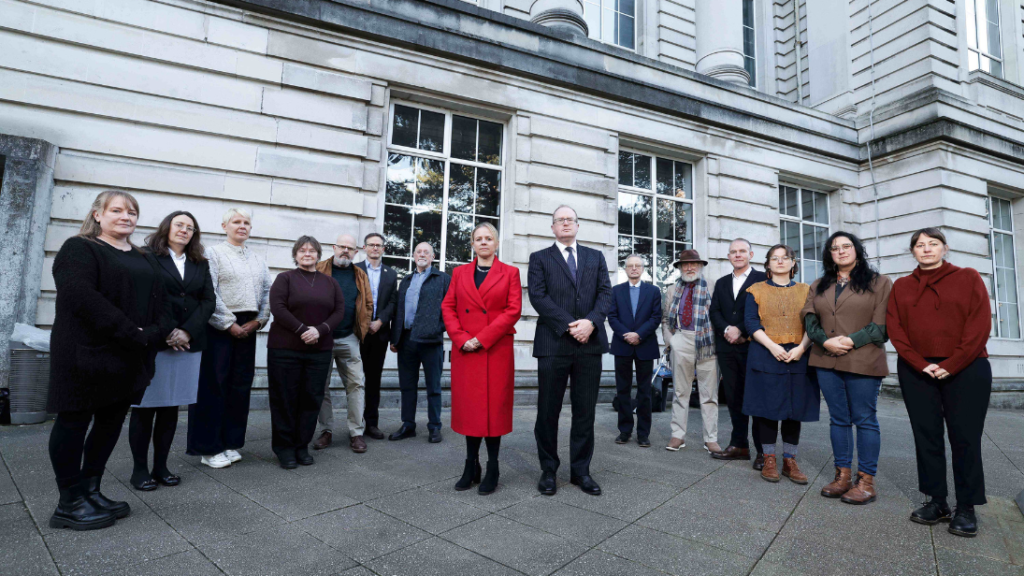
On November 16, 2026, researchers gathered at Belfast’s Ulster Museum for an unusual public examination of the case. Northern Ireland coroner Joe McCrisken joined archaeologists, forensic specialists, and museum researchers to consider evidence from the woman’s remains using the framework of a modern death investigation.
The event was not an official legal inquest. Instead, the museum brought together scientific findings to examine questions familiar to coroners: who the deceased was, when and where she died, and how she met her death. Researchers also explored what the surviving evidence could establish about the circumstances surrounding the killing.
The international research team used micro-CT scanning, three-dimensional imaging, digital mapping, and examinations of bone and preserved soft tissues. These techniques helped researchers reconstruct aspects of the woman’s appearance, health, and diet while providing further information about the injuries she suffered.
As the Ulster Museum explained in its November 17 announcement, the investigation could address many questions about the woman’s death but could not identify her killer or establish a motive. Those uncertainties remain central to interpreting the archaeological evidence.
A Violent Death and the Possibility of Ritual Sacrifice
Violent deaths appear among several well-known Iron Age bog bodies from northwestern Europe. Archaeologists have documented people who suffered serious injuries before their bodies entered wetlands, sometimes under circumstances that suggest ritual activity.
The deliberate removal of the Ballymacombs More Woman’s head raises similar questions. Researchers have compared her case with other bog bodies, including Denmark’s Tollund Man and Grauballe Man, and Ireland’s Clonycavan Man and Old Croghan Man. Some of these individuals suffered injuries that scholars have interpreted in connection with ritual practices.
The similarities with other Iron Age bog bodies have raised the possibility that the young woman died as part of a ritual sacrifice. Yet the circumstances of her killing remain a mystery. The wounds on her neck tell researchers how she died, but offer few clues about who killed her or why.
The Woven Fabric That Survived Beside Her
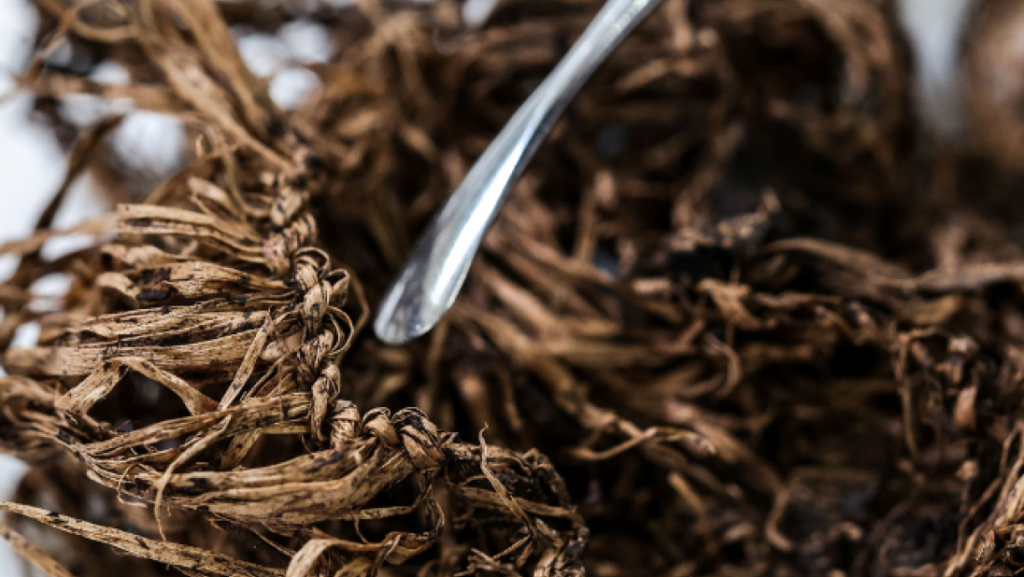
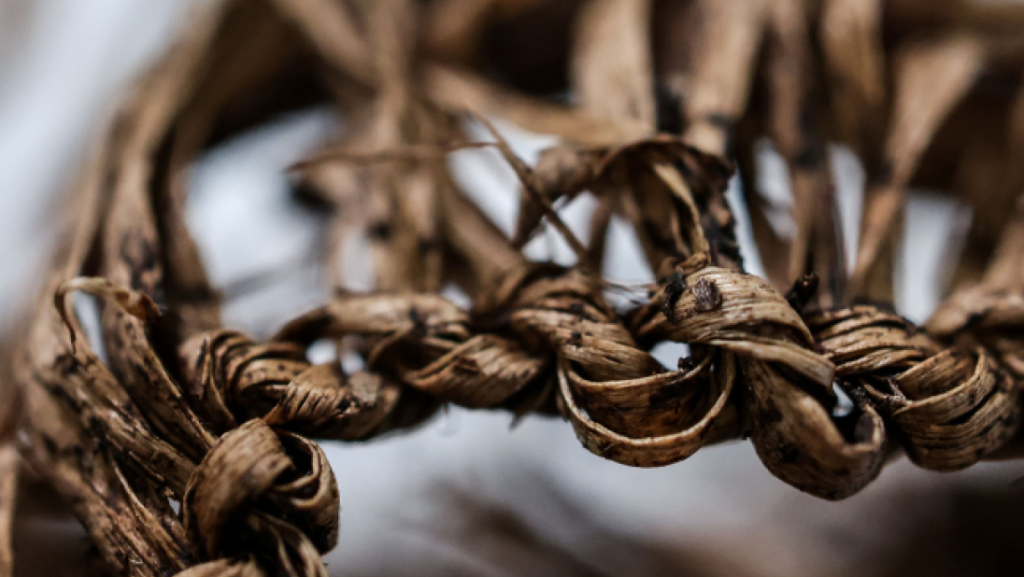
Among the objects recovered with the young woman’s remains was a piece of woven plant material beneath her knees. Professor Susanna Harris and doctoral researcher Nysa Loudon of the University of Glasgow examined its fibres and identified a technique called twining, which created a woven border and loose fringe.
Radiocarbon analysis dated the material to between 363 and 160 BCE, consistent with the woman’s lifetime. The researchers suggest that the fabric may have formed part of clothing, an ornament, or another personal object, although its original purpose remains uncertain.
The Glasgow researchers’ analysis adds another dimension to a case dominated by evidence of violence. Together with studies of her diet and living environment, the textile offers clues about the community and material culture that surrounded her during her lifetime.
National Museums NI plans to incorporate the research into a new interpretation at the Ulster Museum’s Early Peoples gallery without displaying the woman’s remains. The museum hopes to tell a fuller account of someone whose identity and circumstances remain unknown.
