

Bones from one of Ireland’s most important Mesolithic sites, long regarded as the earliest evidence of domestic cattle in Ireland and Britain, have been identified as bear and wild boar remains. The finding removes a key piece of evidence used for more than three decades to argue that farming reached Ireland before 4000 BC.
For decades, a handful of fragmented animal bones from Ferriter’s Cove on Ireland’s Dingle Peninsula appeared to tell an extraordinary story. Identified as cattle, they seemed to show that domesticated animals had reached Ireland while its inhabitants were still living largely as Mesolithic hunter-gatherers.
The remains became known informally as the “Kerry Cow” and occupied an unusually influential place in discussions of how farming reached Ireland. Their identification suggested that hunter-gatherers on the island may have been interacting with Neolithic farming communities from continental Europe before agriculture itself became established.
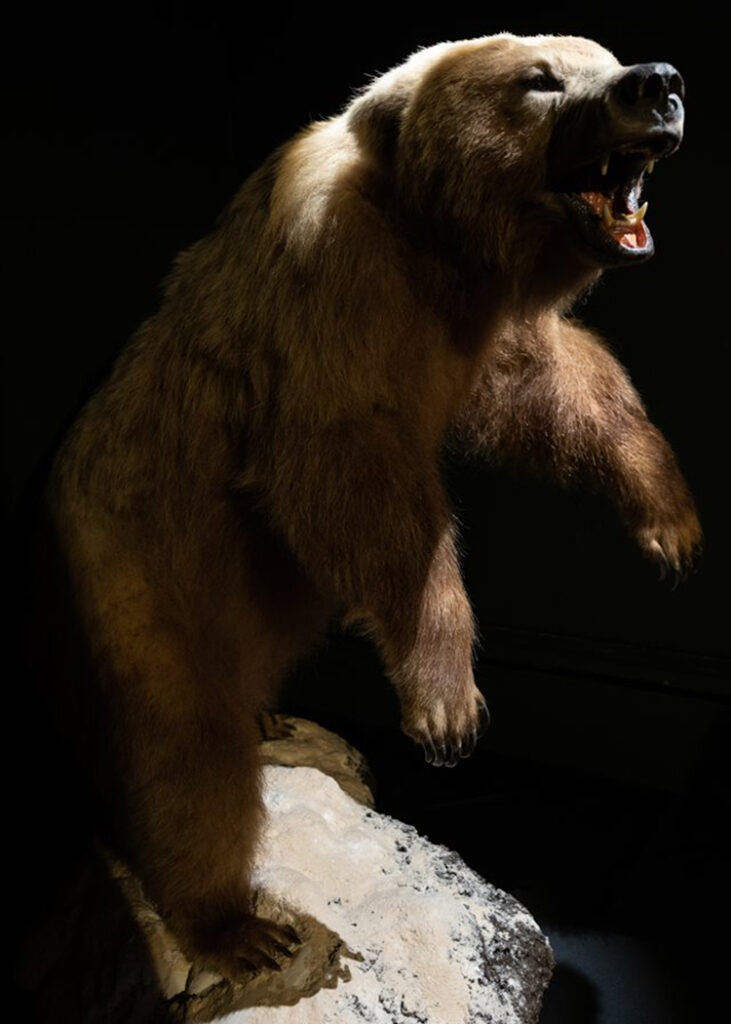
New biomolecular analysis has now dismantled that interpretation. Researchers led by University College Dublin (UCD) found that the bones did not belong to cattle but instead came from a bear and a wild boar, removing one of the most frequently cited archaeological arguments for the presence of domesticated cattle in Ireland before about 4000 BC.
A Famous Exception to Ireland’s Farming Timeline
Ferriter’s Cove, a small coastal site in County Kerry, was excavated under archaeologist Professor Peter Woodman during the 1980s and 1990s. Archaeological evidence placed occupation of the site toward the end of Ireland’s Mesolithic period, which broadly lasted from about 8000 to 4000 BC.
Among the finds were fragmented animal bones that were identified as belonging to domestic cattle. Their apparent age created a problem for the established archaeological picture because cattle were not expected to have been present on the island before the beginning of the Neolithic period.
If cattle were present at Ferriter’s Cove before 4000 BC, then at least one major element of the Neolithic farming economy had reached Ireland while Mesolithic communities were still present. The bones therefore offered potential evidence for contact, exchange or the gradual adoption of farming practices before the more visible Neolithic transformation of the island.
For more than 30 years, the “Kerry Cow” remained part of that debate, despite its interpretation resting on a fundamental assumption about species identification. The new research has now tested that assumption using molecular evidence rather than relying solely on the physical appearance of the fragmented bones.
Ancient Proteins Reveal a Different Animal
The investigation forms part of a Research Ireland-funded project led by Dr Martin Moucheron of UCD’s School of Archaeology, under the mentorship of Professor Graeme Warren. Researchers are returning to important Mesolithic collections and testing earlier interpretations with scientific methods that were unavailable when many of the sites were originally excavated.
Working with researchers from University College Cork and laboratories in France, the team re-examined the original Ferriter’s Cove material, which is now held at UCC. The bones were analysed using Zooarchaeology by Mass Spectrometry, or ZooMS, a technique that identifies animals through molecular differences in collagen proteins preserved within bone.
ZooMS is particularly valuable when archaeological remains are too fragmented for reliable identification based on shape alone. Small pieces of bone may have lost the anatomical features traditionally used to distinguish one species from another, while their collagen can retain a molecular signature that allows researchers to identify the animal more securely.
The Ferriter’s Cove results were decisive, showing that the supposed cattle fragments belonged instead to bear and wild boar. The findings are reported in the Prehistoric Society’s PAST 113 under the title “No sacred cows: ZooMS identification of the Late Mesolithic bone assemblage at Ferriter’s Cove, Co. Kerry, Ireland.”
What the Discovery Changes, and What It Does Not
The new identification means Ferriter’s Cove can no longer be used as evidence that domesticated cattle were present in Ireland during the Mesolithic. According to the research team, there is currently no archaeological evidence demonstrating the presence of domestic cattle in Ireland before 4000 BC, while the argument that the animals reflected direct contact with continental farming communities also loses one of its strongest supporting pieces of evidence.
That does not mean Mesolithic Ireland was isolated from the rest of Europe, nor does it settle every question surrounding the arrival of agriculture. Instead, the result removes a particularly influential exception from the archaeological record and brings the evidence into closer alignment with the broader transition to Neolithic lifeways around the beginning of the fourth millennium BC.
The implications extend beyond Ireland because the Ferriter’s Cove remains had also been cited as exceptionally early evidence for domesticated livestock across the islands of Ireland and Great Britain. Their re-identification therefore affects wider discussions about when farming communities, animals and agricultural practices first became established in this part of northwestern Europe.
The transition from hunting and gathering to agriculture was not simply marked by the appearance of cattle or cultivated plants. It involved major changes in food production, settlement, material culture and relationships with the landscape, while questions remain over whether those changes were driven by incoming farmers, interaction with hunter-gatherers, gradual adoption or combinations of these processes.
An Old Collection Produces a New Discovery
The Ferriter’s Cove result also illustrates how major archaeological discoveries do not always require a new excavation. Material recovered decades ago can preserve information that could not be extracted when it was first studied, allowing modern techniques to test interpretations that once appeared secure.
Methods including ZooMS, ancient DNA analysis and isotope studies are increasingly being applied to museum and university collections. These approaches can reveal new information from old material and, in some cases, overturn identifications that were originally based primarily on morphology.
For Moucheron, reassessing these collections also offers another route into the lives of Ireland’s Mesolithic communities, whose archaeological traces are generally less conspicuous than the monumental tombs associated with later Neolithic societies. Ferriter’s Cove remains important precisely because of that Mesolithic record, even though one of the site’s most famous interpretations has now been removed.
Further analyses of the bear remains are already underway to determine whether they belonged to brown bears or polar bears. The distinction could provide new evidence about Ireland’s prehistoric bear populations before bears eventually disappeared from the island during later prehistory.
For more than three decades, the Ferriter’s Cove bones helped support a particular explanation for how farming began in Ireland. Modern protein analysis has now shown that the supposed “Kerry Cow” was actually evidence of wild animals living alongside Ireland’s Mesolithic communities, forcing archaeologists to reconsider one of the best-known pieces of evidence in the debate.
Moucheron, M., Warren, G., Kanne, K., Gearey, B., McCarthy, M., Ó Donnabháin, B., Bray, F., & Garbé, L. (2026). No sacred cows: ZooMS identification of the Late Mesolithic bone assemblage at Ferriter’s Cove, Co. Kerry, Ireland. PAST, 113, 1–2.
