
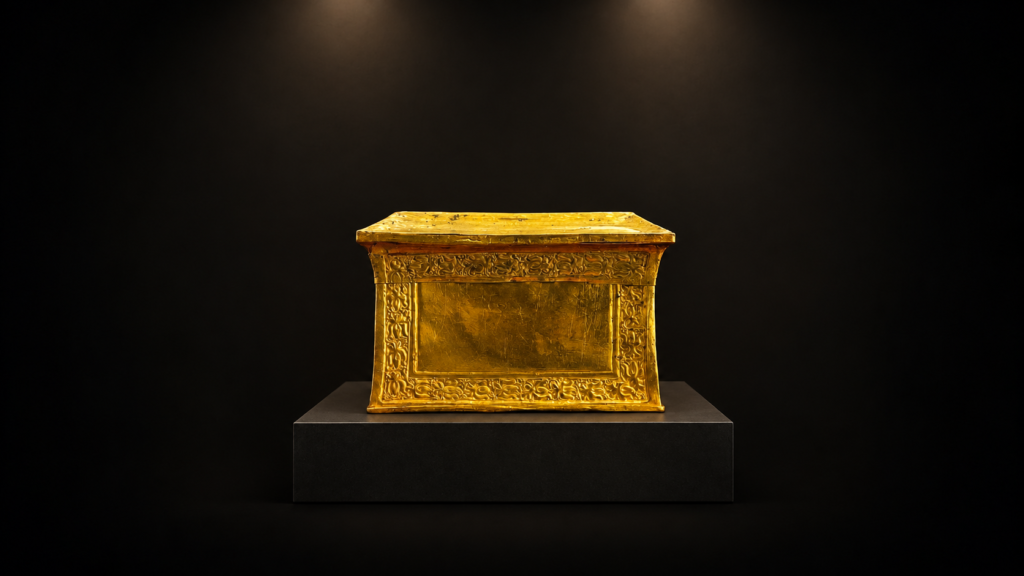
When archaeologists examined a bronze box recovered from the ruins of an ancient Buddhist tower in Vietnam, they initially intended to preserve it intact for display. But a broken corner exposed something unexpected inside: a much smaller box made of gold.
The discovery, made during excavations in 1985 and 1986, turned out to be one of Vietnam’s most remarkable Buddhist artifacts. Dating to the seventh or eighth century, the gold reliquary contained tiny objects regarded as sacred relics. According to the Nghệ An Museum, it remains the only gold Buddhist relic box of its kind found in the country.
A Sacred Object Hidden Inside a Tower
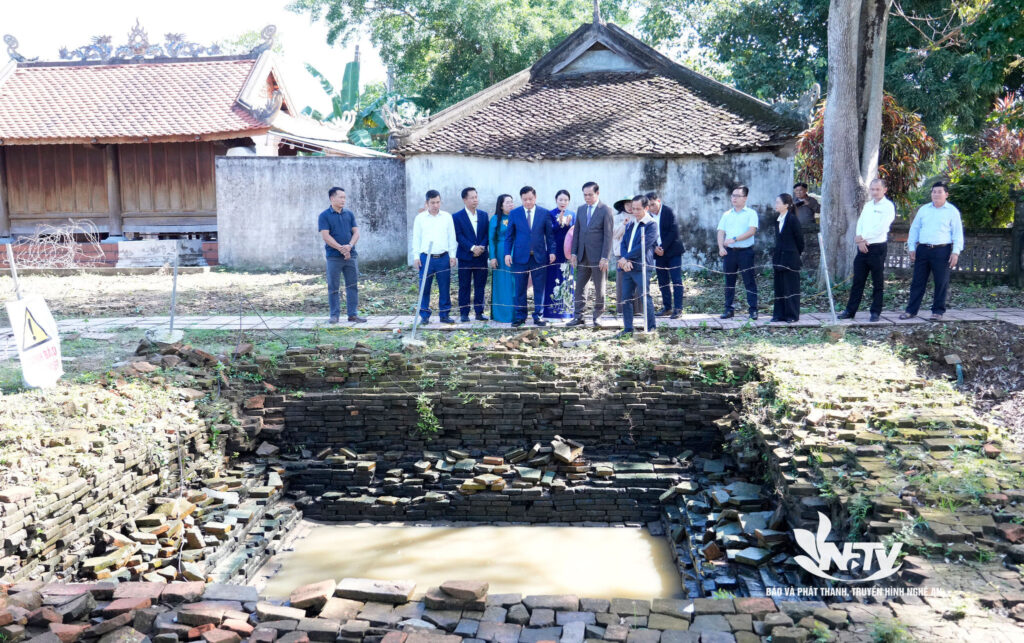
The box was discovered at Tháp Nhạn, an ancient Buddhist site near the Lam River in Nghệ An Province. By the time archaeologists arrived, the tower had long since collapsed, leaving its foundations buried beneath the ground.
At the center of the structure, excavators found a hollow wooden post made from sections of tree trunk. Inside it was the bronze container, carefully enclosing the smaller gold box. The arrangement suggests that protecting the contents had been an important consideration when the tower was built.
Inside the gold box were two small whitish objects identified as sacred relics, together with ash and fragments of charred rice.
In Buddhism, relics known as śarīra are traditionally associated with the cremated remains of the Buddha or revered monks and teachers. For believers, they carry deep spiritual significance, representing a connection to individuals whose teachings continue to shape Buddhist life.
Such relics were often placed inside stupas, where people could gather to pray, make offerings, and express devotion. They were not ordinary possessions intended for everyday use. Their placement within a religious monument was itself an act of reverence.
The Tháp Nhạn find offers archaeological evidence of this tradition in Vietnam more than thirteen centuries ago. The identity of the relics themselves, however, has not been scientifically established.
Gold, Lotus Flowers, and Buddhist Tradition
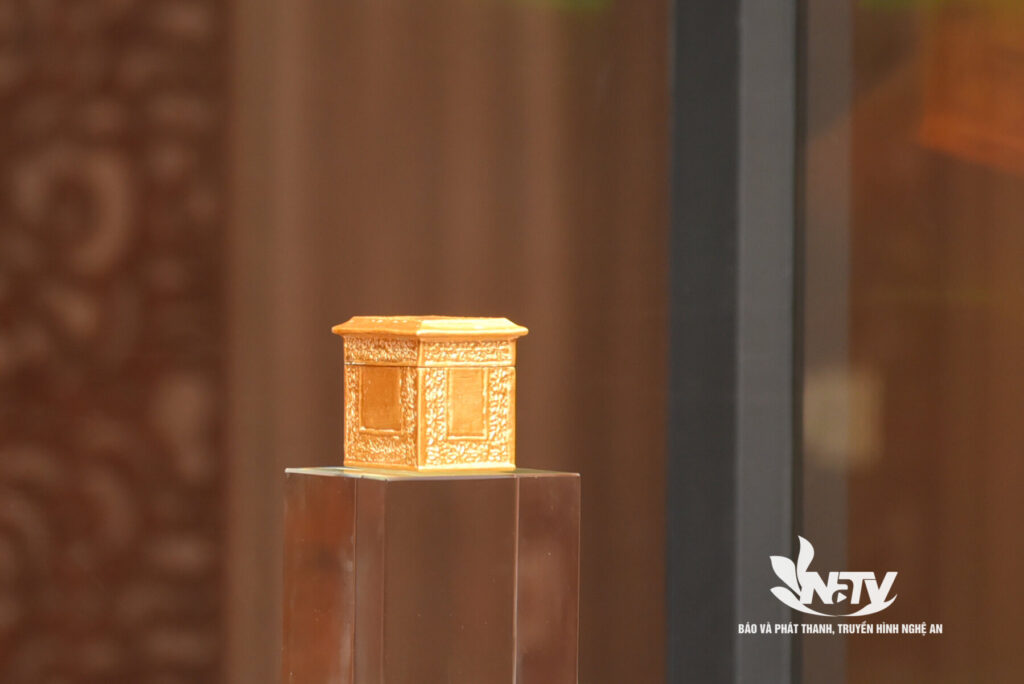
The reliquary is surprisingly small, measuring just eight centimeters long, five centimeters wide, and 5.5 centimeters high. It weighs approximately 200 grams, with a separate lid shaped somewhat like a miniature roof.
Its decoration is particularly elaborate. Six-petaled flowers adorn the lid, while a band of stylized lotus blossoms runs around the body. The patterns were carefully worked into the gold, despite the limited space available.
The lotus is among Buddhism’s most familiar symbols, associated with purity and spiritual awakening. Its presence on a container intended to protect sacred relics was therefore especially fitting.
Vietnam designated the Tháp Nhạn reliquary a National Treasure in 2017. Following decades of preservation, the gold box is now displayed in a dedicated exhibition room at the Nghệ An–Xô viết Nghệ Tĩnh Museum in Nghệ An Province, where visitors can see one of the country’s most distinctive surviving objects from its early Buddhist past.
Văn hóa Nghệ An (Nghe An Culture) (Vietnamese)
Nghệ An Provincial Party Committee (Vietnamese)
