
Archaeologists have discovered a new Anglo-Saxon grave at Sutton Hoo in eastern England, where the remains of a human body survived not as bones but as an impression preserved in sand. The burial, found alongside a brooch, knife, tweezers, and beads, raises the possibility that another grave lies beneath it.
The discovery comes from excavations conducted by the Time Team in partnership with the National Trust at Garden Field, a cemetery separate from Sutton Hoo’s celebrated royal burial mounds. The findings, announced in November 2026, are drawing attention to a less familiar part of one of Britain’s most important archaeological landscapes.
A Human Body Preserved in Sand
One of the most unusual aspects of the discovery is the condition of the human remains. Instead of uncovering a recognizable skeleton, archaeologists encountered what specialists call a sand body.
Sutton Hoo’s acidic soil can gradually dissolve bones, leaving little of the original skeleton behind. Under certain conditions, however, the surrounding sand retains the body’s shape, creating a hardened impression of the person once buried there.
Similar remains were identified during earlier excavations at Sutton Hoo, particularly in the 1980s. Their appearance can be striking, but they are also difficult to investigate because much of the original skeletal evidence has disappeared.
The newly reported burial contained several personal objects, including a brooch, a knife, tweezers, and beads. Such artifacts can help archaeologists examine burial customs, clothing, and personal possessions, although their presence alone cannot establish the deceased person’s identity or social standing.
Perhaps more intriguingly, preliminary findings suggest that a second burial may lie beneath the first. Further archaeological examination will be necessary to establish whether the suspected feature represents another grave and how the two might be related.
Beyond Sutton Hoo’s Royal Burials
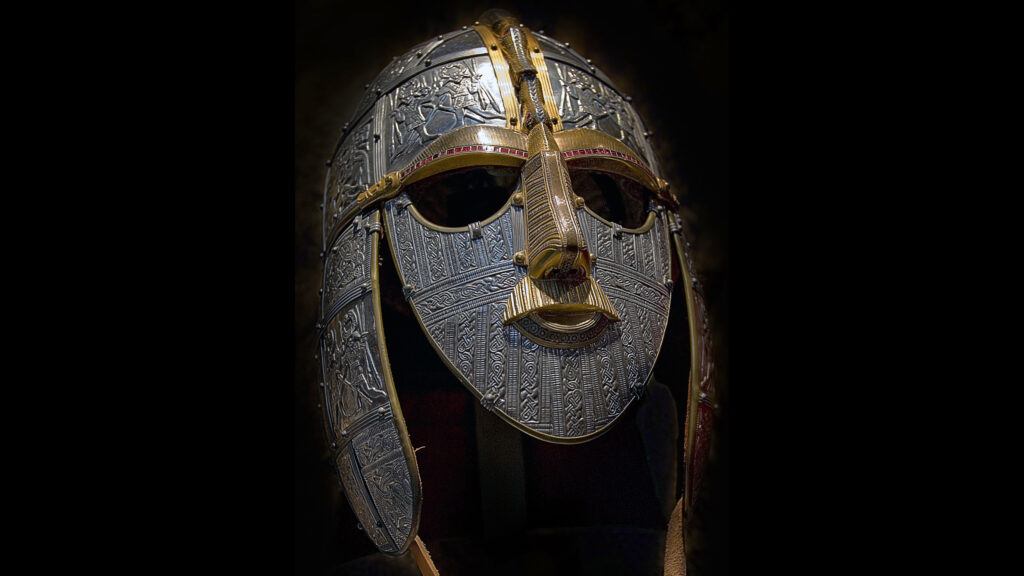
Sutton Hoo is best known for the extraordinary ship burial discovered in 1939 by archaeologist Basil Brown. The 27-meter-long vessel contained a burial chamber filled with weapons, gold ornaments, silverware, and objects that reflected connections extending far beyond early medieval England.
The burial is frequently associated with Rædwald, a seventh-century king of East Anglia, although the identity of the person interred there remains uncertain.
The famous royal cemetery has dominated public understanding of Sutton Hoo for decades. Yet the surrounding landscape contains evidence of other burial grounds, earlier activity, and communities whose lives were closely connected to the region.
Garden Field is particularly important in this broader picture.
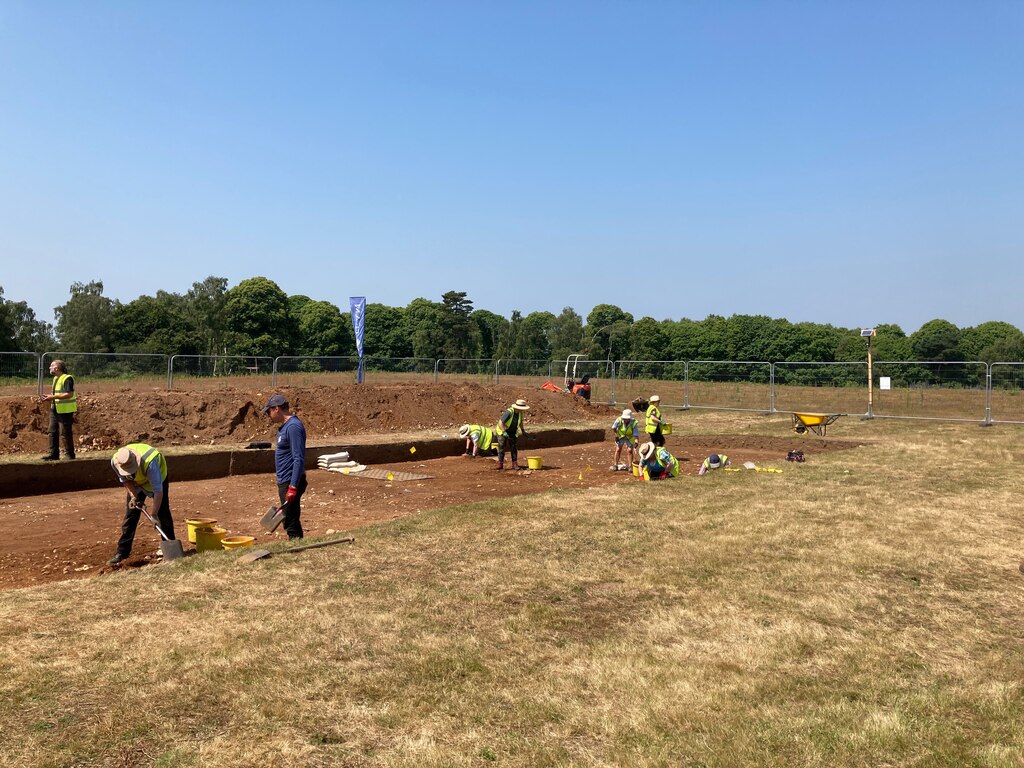
According to the National Trust’s account of its archaeological partnership with Time Team, investigations have explored the field’s complicated archaeological history, including evidence of an Anglo-Saxon cemetery and activity extending into earlier periods.
Unlike the monumental ship burial, graves in Garden Field may help researchers investigate a wider range of people who lived and died in this part of East Anglia.
The distinction matters because royal burials represent only a small portion of early medieval society. Understanding the communities around these prominent burial monuments requires examining less elaborate graves and the broader landscape in which they were created.
Time Team Returns to Sutton Hoo
The discovery forms part of a two-year research collaboration between the National Trust and Time Team, the archaeological television project associated with presenter Sir Tony Robinson.
During the summer of 2025, archaeologists returned to Garden Field for another excavation campaign, combining fieldwork with investigations of the surrounding landscape.
The official Time Team announcement for its second Sutton Hoo season describes renewed investigations of Anglo-Saxon burials, additional cremation graves, and an especially intriguing discovery in Garden Field.
The project also builds on earlier geophysical surveys designed to identify archaeological features beneath the surface without extensive excavation.
Time Team has documented the investigations in a new series, with episodes beginning to appear publicly in November 2026. The program follows the excavation process while introducing audiences to parts of Sutton Hoo that remain less familiar than its royal burial mounds.
For archaeologists, the latest grave adds another piece to a complicated archaeological record. Its unusual preservation, associated personal objects, and the possibility of an additional burial offer new questions about how people used the Garden Field cemetery.
Sutton Hoo’s royal treasures established its importance nearly nine decades ago. The ongoing excavations are now extending that story beyond the individuals buried beneath its most famous mounds.
