
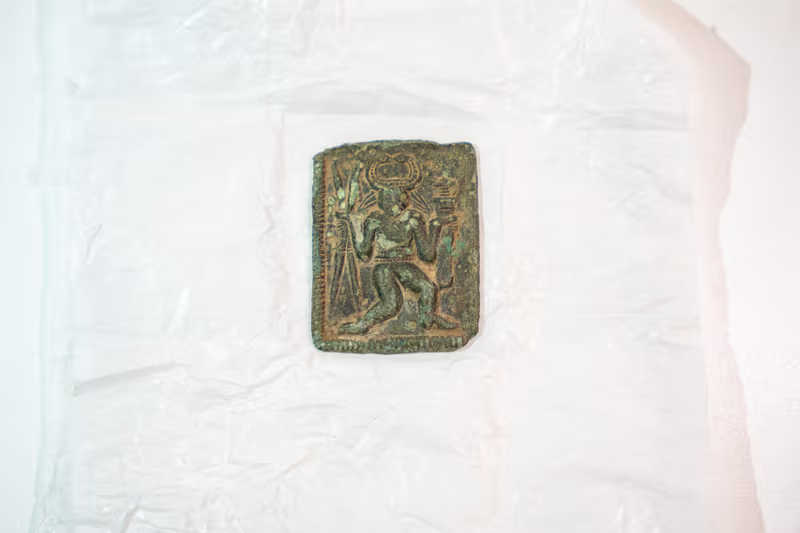
A tiny copper-alloy stamp found in a field in Kent may preserve the missing trace of a workshop tradition that once produced some of early England’s most powerful warrior imagery.
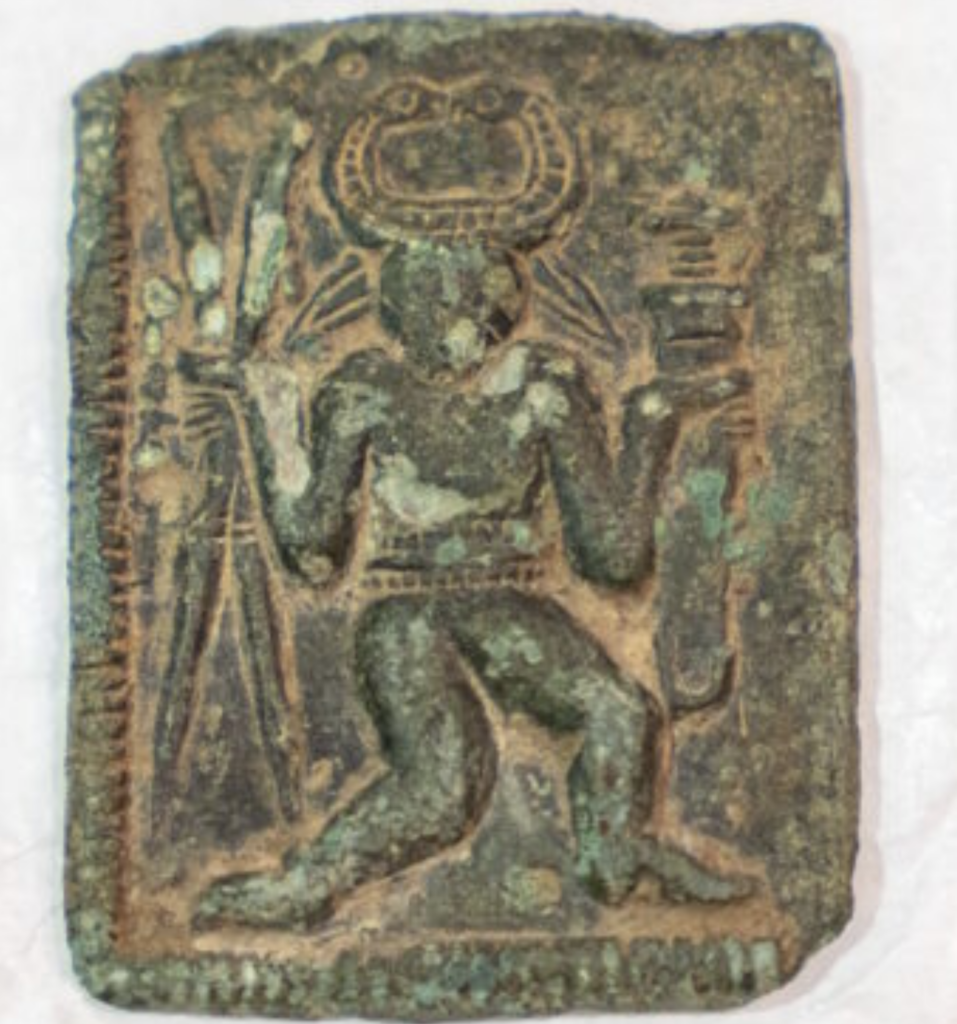
The object, discovered near Lynsted by metal detectorist Stephen Newbury, dates to the late sixth or early seventh century. It is small, but it carries an image that belongs to the highest ranks of early medieval society: a weapon-bearing human figure, shown in motion, with a horned headpiece ending in bird heads.
Experts believe the object was not an ornament, but a tool. It was used to press designs into thin sheets of metal, creating decorative foils that could be attached to elite military equipment, including helmets.
That makes the Lynsted find more than a rare survival. It is the only confirmed example of its kind found in Britain, and it may change how archaeologists think about where England’s most prestigious early medieval helmets were made.
A rare tool, not just a rare object
The stamp is known as a die, or patrice. In skilled hands, it would have turned a flat sheet of metal into a raised image.
The technique, often called pressblech, was used across parts of early medieval northern Europe. A craftworker placed a thin metal foil over the carved die, covered it with a softer protective layer, and struck it so the image rose from the surface. The decorated foil could then be fixed to a helmet, weapon fitting or other elite object.
The Lynsted die therefore gives archaeologists something that finished treasures often cannot provide. It points to the act of making.
Gold fittings, decorated weapons and ceremonial helmets tell us what early medieval elites wanted to display. A die stamp tells us how such images could have been produced, copied and circulated. It brings the story closer to the workshop, where status was shaped by hand before it appeared in a burial chamber or on a battlefield.
The local production question
For years, some of the most elaborate early medieval helmets associated with England have been discussed through their Scandinavian connections. That is not surprising. Similar motifs are known from Sweden and Denmark, and the aristocratic world of the sixth and seventh centuries was deeply connected across the North Sea.
But the Kent stamp complicates a simpler import story.
If a tool capable of producing this kind of helmet decoration was present in England, then local craftworkers may have been doing more than receiving finished prestige objects from abroad. They may have been making comparable elite equipment themselves.
This does not mean every famous Anglo-Saxon helmet was made in Kent. Nor does it remove Scandinavia from the picture. The more interesting possibility is that early England belonged to a shared northern world of symbols and techniques, but also had its own specialist workshops capable of working at a very high level.
That is the real force of the Lynsted find. It shifts attention from ownership to production.
A warrior image with older meanings
The figure on the stamp is difficult to ignore.
It appears to wear a horned headpiece, with curved terminals shaped like birds’ heads. Its legs are bent, as though the figure is walking, dancing or performing. It holds weapons, including spears and a sword. Similar figures are known from elite early medieval helmet panels and are often described as “weapon dancers.”
The meaning of such imagery remains debated. It may have referred to martial identity, ritual performance, heroic myth or pre-Christian belief. The bird-headed horns suggest that the image was not merely decorative. It belonged to a symbolic language that carried meaning for the people who saw it.
That symbolic charge matters. A helmet decorated with such figures was not only protective armour. It turned the wearer into a public image of authority. In early medieval elite society, metalwork could speak. It could signal ancestry, power, warrior status and connection to a wider heroic world.
The Lynsted stamp shows that this visual language was available to craftworkers in England.
Kent’s place in the early medieval world
Kent is an important part of the story.
In the sixth and seventh centuries, the region was one of the most outward-looking areas of Anglo-Saxon England. Its position near the Channel connected it to continental Europe, while its elite burials and metalwork show strong evidence of wealth, exchange and cultural contact.
The Lynsted die now adds a more technical layer to that picture. Kent was not only a place where imported objects could arrive. It may also have been a place where high-status imagery was manufactured.
That distinction is important for understanding early England. A society that imports prestige objects can be wealthy and connected. A society that makes them also has trained specialists, elite patrons and workshop knowledge. The stamp points toward that second possibility.
It suggests a local craft environment able to handle complex imagery, precise metalworking and the demands of aristocratic display.
The Sutton Hoo connection, without the easy answer
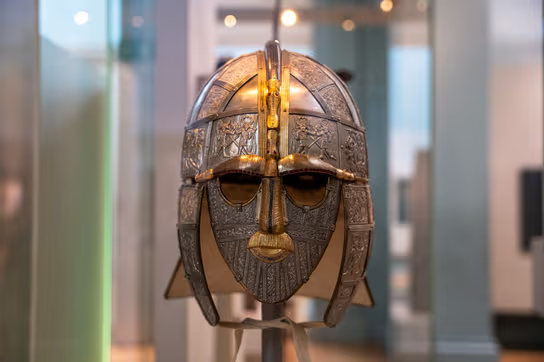
The comparison with the Sutton Hoo helmet is unavoidable, but it should be used carefully.
The famous helmet from the ship burial in Suffolk has decorated panels showing warrior scenes, including figures often described as dancing warriors. The Lynsted stamp is closely comparable in size and design to such panels, which is why the find has attracted attention.
But the stamp does not simply answer the question of where the Sutton Hoo helmet was made. It opens a better question: how many elite workshops in early England were capable of producing this kind of imagery?
That question matters more than a single attribution. The Sutton Hoo helmet remains part of a world of international links, long-distance exchange and shared aristocratic symbols. The Kent discovery suggests that English craftworkers may have been active contributors to that world, not passive recipients of imported prestige.
In that sense, the Lynsted die is powerful because it is unfinished history. It is not a glittering helmet from a royal grave. It is the tool behind the glitter.
A small survival from a lost craft
The object has now been officially declared Treasure because of its historical importance. It has also been recorded by the Portable Antiquities Scheme as KENT-23D64B. There is hope that it may eventually be acquired and displayed locally at the Beaney House of Art and Knowledge in Canterbury.
Its future display would keep the object close to the landscape where it was found. That would be fitting, because the importance of the stamp lies precisely in place.
A single tool from Kent cannot rewrite all of early medieval metalworking. But it can change the direction of the question. Instead of asking only which prestige objects came to England from abroad, archaeologists now have stronger reason to ask what was being made inside England itself.
The Lynsted stamp is small. Its implication is not. Somewhere in early medieval Kent, or within the networks connected to it, a craft tradition may have existed that was capable of producing imagery for the highest level of warrior display.
The helmet was the visible symbol. This stamp may be the quieter evidence of the hands that made such symbols possible.
Cover Image Credit: Kent County Council
