
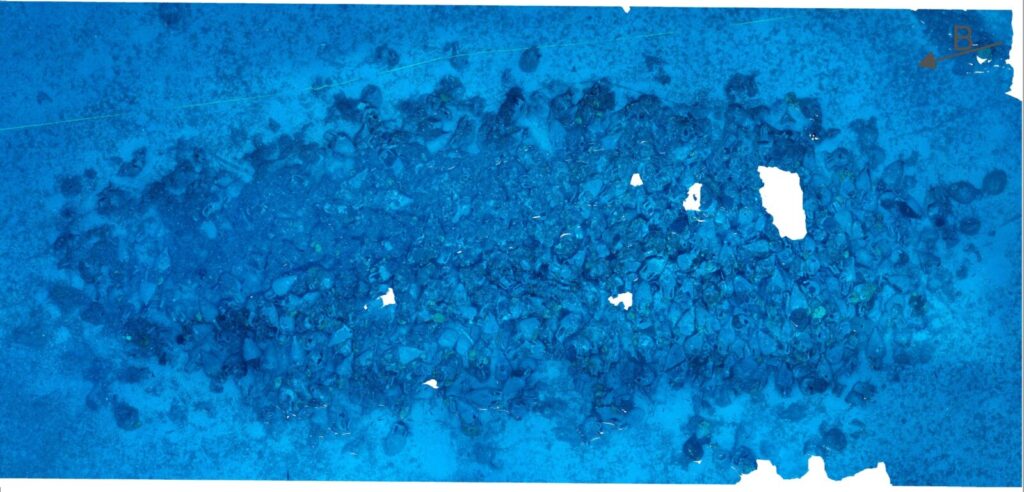
Off the coast of Andros, Greek underwater archaeologists have found something remarkable: the cargo of an ancient merchant ship, now ranking among the richest Late Classical shipwreck sites uncovered in the Aegean in years.
The wreck sits 39 to 44 meters down, and it’s carrying a lot — somewhere between 600 and 650 transport amphorae. Pottery pulled from the site suggests the ship went down sometime in the late fifth or early fourth century BC. That’s more than 2,300 years ago.
Greece’s Ministry of Culture made the announcement on July 31, 2026. Per the ministry, the Ephorate of Underwater Antiquities went out to investigate after a tip from a private citizen.
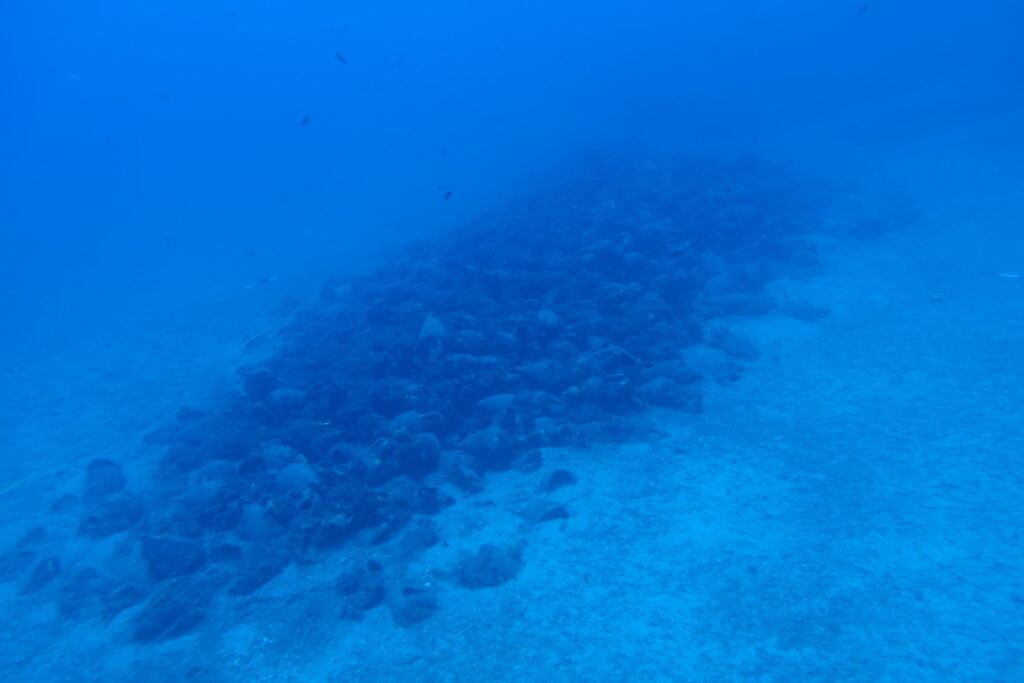
Three kinds of amphorae, one crowded seabed
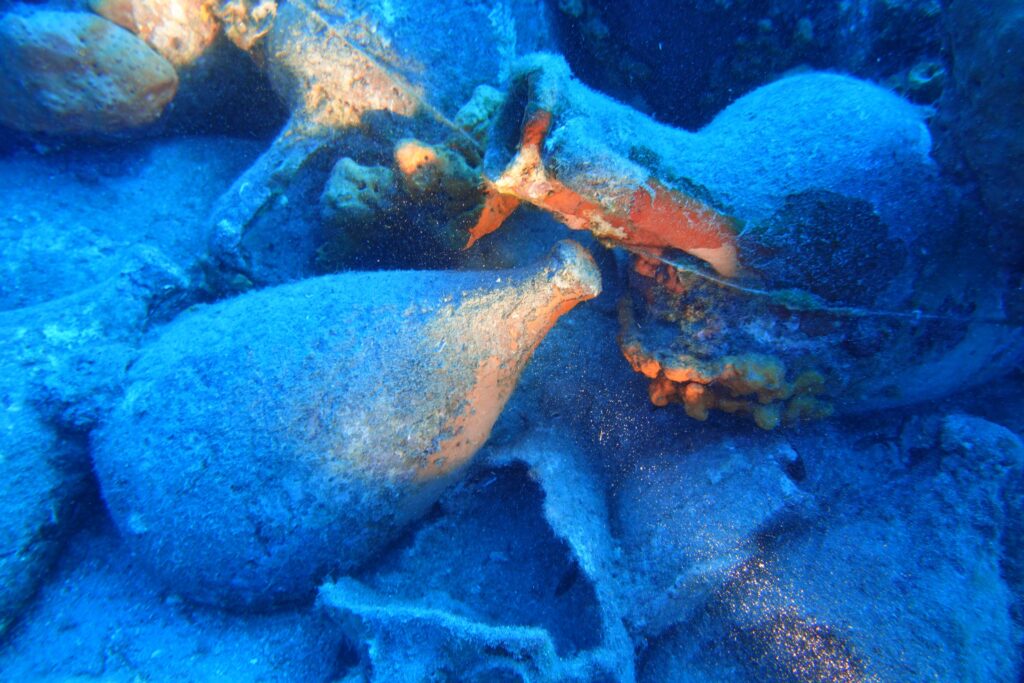
The seafloor here is blanketed in pointed commercial amphorae — the shipping containers of the ancient world. Divers have so far distinguished three types: amphorae from Mende, others tied to Peparethos, and a third group known as the Solokha 2 type.
Mende, on the Kassandra Peninsula in the northern Aegean, was a major trading hub. Peparethos sat on what’s now the island of Skopelos. Both places built their reputations on wine — and on shipping it out by sea.
The Solokha 2 type is murkier. It’s really a shape classification more than a known city of origin, and scholars are split on whether it traces back to the northern Aegean or the Black Sea.
Archaeologists brought up one example of each amphora type for closer study — conservation work that should eventually reveal more about the clay, the workshops, and possibly even what the vessels once held.
That matters because amphorae weren’t just containers. Their shape, the clay they were made from, and any stamped markings act almost like a return address, letting researchers track how goods moved between ports. Northern Aegean amphorae in particular are known to have traveled far — turning up in Athens, the Black Sea, and other markets well beyond where they were made.
Where was this ship headed?
Having three different amphora types on board hints that this wasn’t a single producer’s shipment. More likely, the cargo was picked up piecemeal at different stops before the ship pressed on toward a bigger market.
One reasonable guess at the route: south out of the northern Aegean, maybe starting at Mende, swinging past Peparethos, and then into the waters near Andros — with Athens and Piraeus as a likely next stop, or perhaps another southern or central Aegean port.
Athens is a strong candidate, though nothing confirms it yet. We do know Mendean and Solokha-type amphorae were reaching Athens in the late fifth century BC, so it fits. But the ship could just as easily have been part of a longer trade loop tying together the northern Aegean, the Cyclades, and points further south. Without knowing the ship’s exact position, the full makeup of the cargo, and how many of each amphora type it carried, the starting point and final destination stay open questions.
An anchor, some ballast stones, and not much else
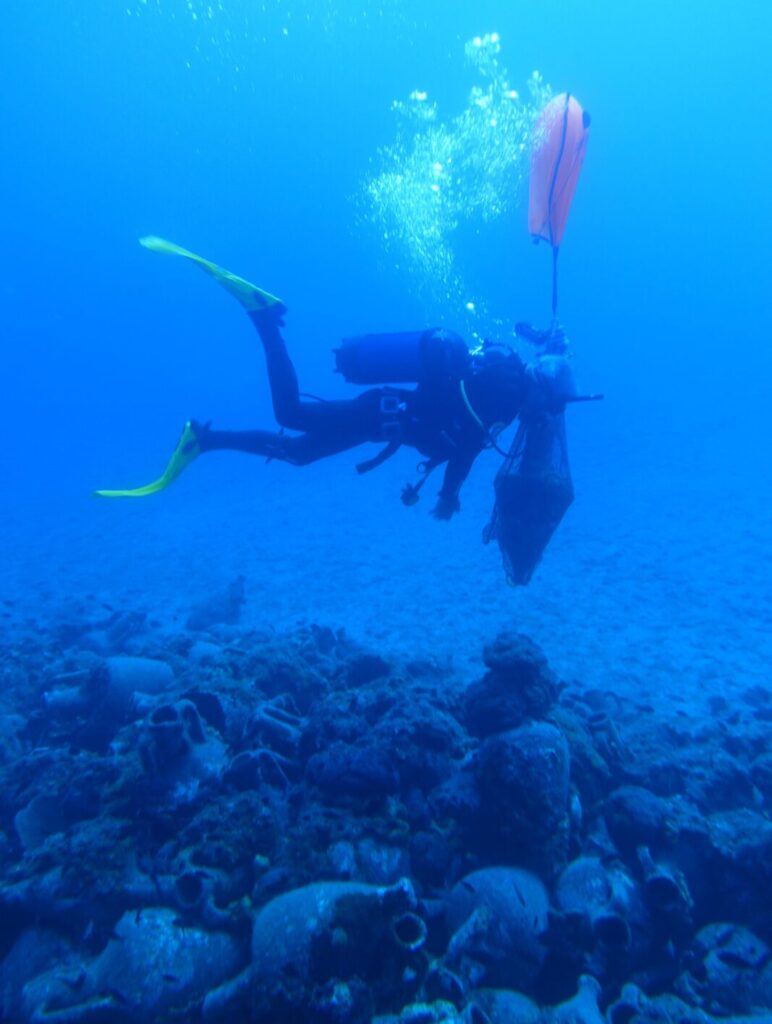
Along with the amphorae, the underwater archaeology team found a fragment of a lead anchor stock and a handful of stones that might have served as ballast. Small as they are, these pieces could tell researchers something about how the ship was built, how much it could carry, and exactly how it came to rest on the seabed.
Notably absent from the ministry’s report: any mention of surviving wooden hull. Right now, the case for the ship rests on the amphora field, that anchor fragment, and the possible ballast.
None of this is easy to study at nearly 44 meters down. Divers only get so much time on each trip, and every artifact has to be documented in place — without disturbing how it sits relative to the rest of the wreck. Eventually, the way the amphorae are arranged might reveal how they were packed into the hold, and whether the ship landed on the bottom intact or came apart on the way down.
The inspection team included diving archaeologist Dionysios Evangelistis, diving conservator Angelos Tsompanidis, and seabed technician Louis Mersenier, all with the Ephorate of Underwater Antiquities.
There’s more work ahead — figuring out what filled those amphorae, where the voyage started, and whether Athens was really the intended endpoint. But even now, before those answers come in, the Andros wreck offers something rare: a snapshot of ancient trade frozen in place, hundreds of cargo jars still sitting exactly where a voyage ended more than two thousand years ago.
