
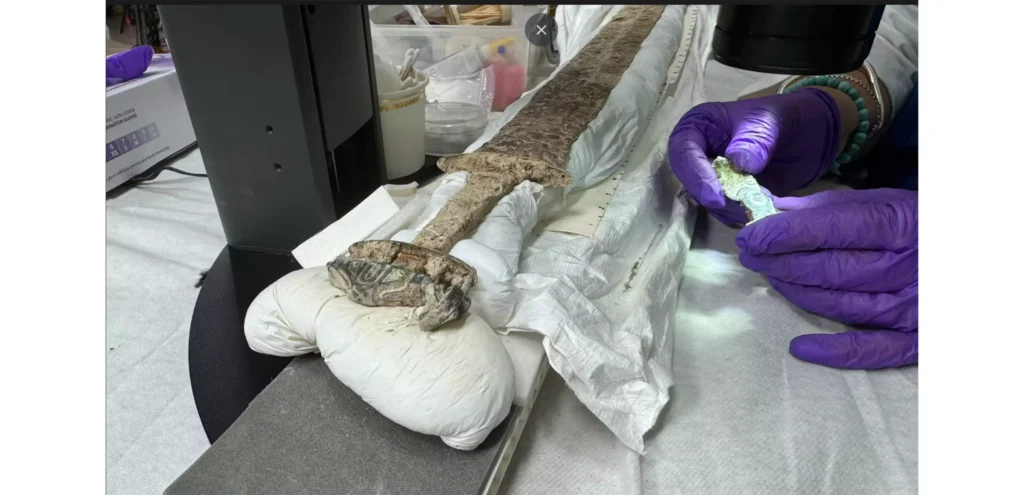
A remarkably well-preserved sixth-century Anglo-Saxon sword discovered near Canterbury is offering archaeologists new insights into early medieval power, migration, and European connections. The find, led by researchers from the University of Central Lancashire, has captured international attention and will feature on BBC Two’s Digging for Britain.
Archaeologists from the University of Central Lancashire (UCLan) have uncovered an extraordinary sixth-century sword in an Anglo-Saxon cemetery near Canterbury, Kent. The weapon, dating back around 1,500 years, is considered one of the most impressive early medieval finds in recent decades due to its exceptional state of preservation and rich symbolic significance.
The discovery was led by Professor Duncan Sayer, Professor of Archaeology at UCLan, and will be discussed in detail on the BBC’s flagship archaeology programme Digging for Britain. The episode, titled Saxon Gold and Buried Coins, highlights the importance of the find within the broader context of Anglo-Saxon Britain.
A Sword Fit for Power and Prestige
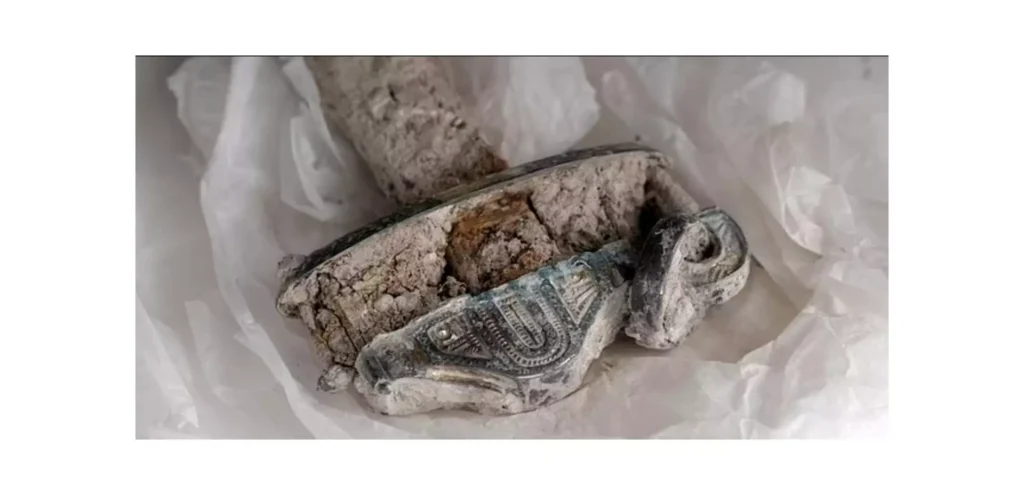
The sword immediately stood out to researchers because of its elaborate craftsmanship. It features a silver-and-gilt hilt and rare runic inscriptions etched into the blade and associated metal fittings. Runes were used across Northern Europe before the widespread adoption of the Latin alphabet, making the inscriptions particularly valuable for understanding early medieval literacy and cultural exchange.
Even more astonishing were the traces of organic material preserved alongside the weapon. Archaeologists identified remains of a wooden and leather scabbard lined with beaver fur—an extremely rare survival that speaks to both the burial conditions and the high status of the individual interred.
“Swords like this were more than weapons,” Professor Sayer explained. “They were symbols of authority and lordship, often passed down through generations.” According to the burial position, the man appears to have been laid to rest embracing the sword, suggesting a deeply personal bond between warrior and weapon.
An Exceptionally Rich Anglo-Saxon Cemetery
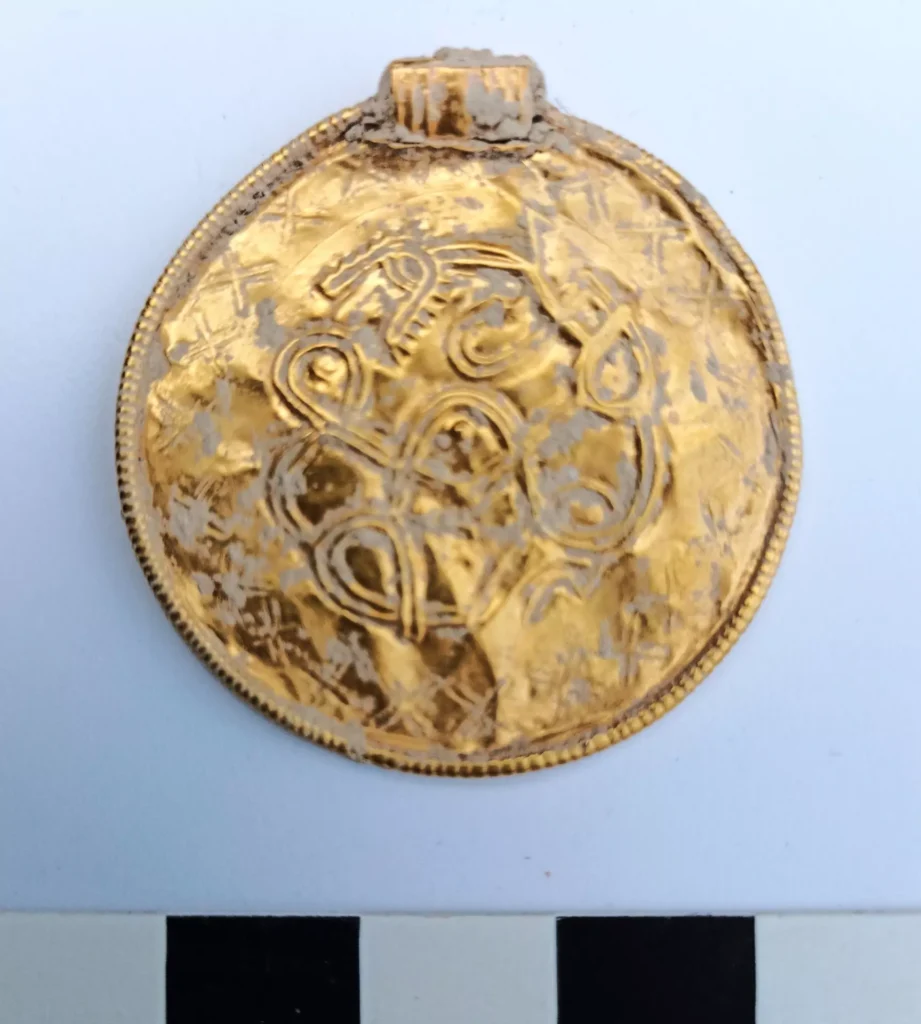
The sword was uncovered in an Anglo-Saxon cemetery that is proving to be one of the richest of its kind in southern England. Alongside the sword, archaeologists discovered a gold pendant decorated with a serpent or dragon motif. The pendant is believed to have belonged to a woman of high social status or to have been kept as a treasured family heirloom. Finding two such high-status objects in close association is highly unusual.
Other graves at the site contain an impressive array of grave goods. These include spears, shields, seaxes (single-edged knives), beads, buckles, brooches, clasps, and even a well-preserved wooden bucket. Weapons were predominantly found in men’s graves, while women’s burials often contained jewelry and domestic items, reflecting social roles within Anglo-Saxon society.
Evidence of Migration and European Links
Perhaps most significant is what the cemetery reveals about early medieval migration and international connections. Several artifacts uncovered at the site are of Scandinavian and Frankish origin. In one case, Scandinavian items were found in a woman’s grave dating to the late fifth century, highlighting Kent’s role as a crossroads between Britain and continental Europe.
Professor Sayer emphasized that the site offers “important clues about the early medieval political landscape, ties to Europe, and migration evidence.” These discoveries challenge older views of isolated Anglo-Saxon communities and instead point to a dynamic, interconnected world.
National Recognition on Digging for Britain
The significance of the find has not gone unnoticed. Digging for Britain presenter Professor Alice Roberts described the sword as unlike anything she had seen before. “I’ve never seen one that’s so beautifully preserved,” she said, calling the cemetery “extraordinary” for its richly furnished graves and remarkable weapon burials.
So far, archaeologists have fully examined only 12 of the more than 200 graves at the site. With the majority still untouched, the research team believes many more important discoveries lie ahead as excavations continue.
As work progresses, the Canterbury cemetery is set to become a key reference point for understanding Anglo-Saxon England, elite identity, and early medieval Europe—proving that even after 1,500 years, the past still has powerful stories to tell.
University of Central Lancashire
Cover Image Credit: University of Central Lancashire
