
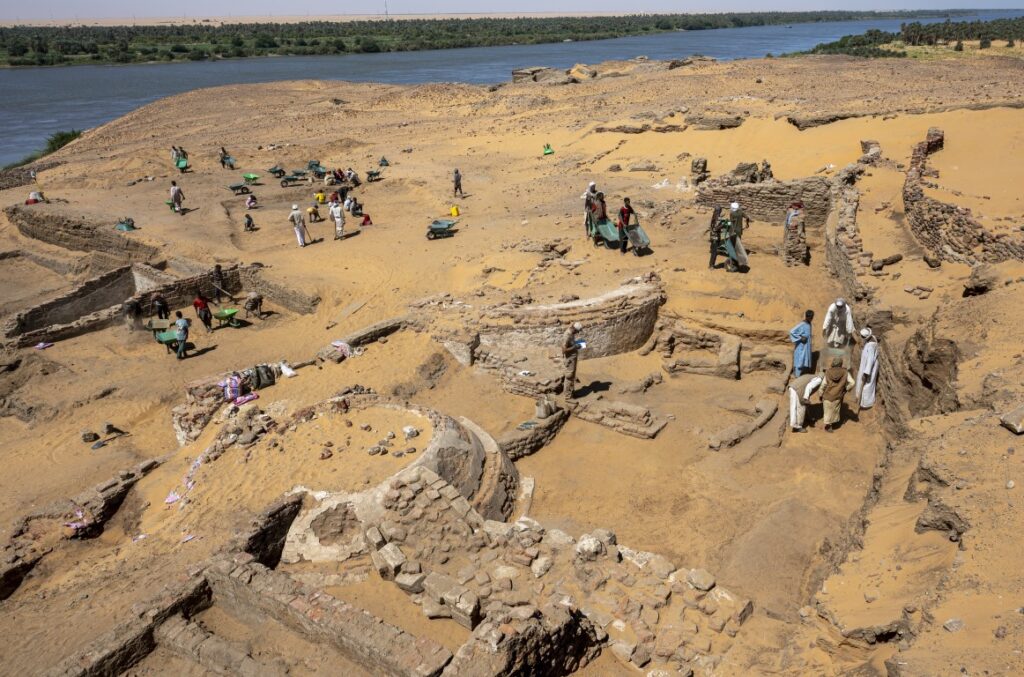
A massive medieval church being excavated in the ancient city of Dongola on the banks of the Nile in Sudan may change long-held views regarding the religious history of the region. The structure, reported to be larger than the White House in Washington, features newly uncovered monumental stairs and architectural remains that have left researchers with a significant question: Has one of the most important cathedrals of Christian Nubia been sought in the wrong place until now?
A Polish-Sudanese team, led by Prof. Artur Obłuski from the Center for Mediterranean Archaeology of the University of Warsaw, has been investigating new sections of the structure identified as the Great Church of Jesus. Recent excavations have revealed monumental stairs leading to the church entrance, large buttresses supporting its apse, and a portion of its original flooring.
A Medieval Church Larger Than the White House
Old Dongola, located within the current borders of Sudan, was the capital of the Christian Kingdom of Makuria during the Middle Ages. For centuries, the city on the Nile developed as one of the region’s primary political, economic, and religious centers. The Great Church of Jesus, located within the city’s walled center, may be one of the most striking examples of Makuria’s monumental architecture.
Archaeologists have determined that the structure is approximately 47 meters wide and 57 meters long, with an estimated height that may have reached 21 meters. However, as a large portion of the church remains underground, these measurements have not yet been fully verified through excavation.
Explaining the scale of the building, excavation director Prof. Artur Obłuski makes a striking comparison: “This building is larger than the White House in Washington. And we plan to excavate it.”
According to Obłuski, fully investigating such a massive structure requires a much more comprehensive effort than ordinary archaeological digs. The team needs to perform deep excavations, which requires securing additional resources.
The stairs uncovered during the last research season allowed the team to reach the original flooring level for the first time. Nevertheless, archaeologists have only been able to examine a small portion of the church so far; the full plan of the structure and the changes it underwent across different periods have not yet been finalized.
Was Dongola’s Cathedral Located Elsewhere?
The true significance of the discovery stems not only from the size of the structure. Researchers believe the Great Church of Jesus may have played a much more central role in the development of church architecture and religious authority within the Kingdom of Makuria.
Until now, the church accepted as Dongola’s cathedral was located outside the city’s walled center. However, the location, dimensions, and architectural features of the Great Church of Jesus bring this traditional definition into question.
Prof. Obłuski notes that some large religious structures were not used solely for worship but also influenced the architecture of subsequent generations. Citing the influence of the Hagia Sophia in Constantinople on regional architecture, the researcher suggests that the Great Church of Jesus may have held a similar position for Nubia.
This interpretation does not definitively prove the structure was a cathedral. Further archaeological evidence is needed regarding its date of foundation, its position within the religious hierarchy, and its relationship with other large places of worship. Nonetheless, the new findings provide a significant basis for revising current assessments of medieval Nubian church architecture.
A Second Church and Greek Religious Texts
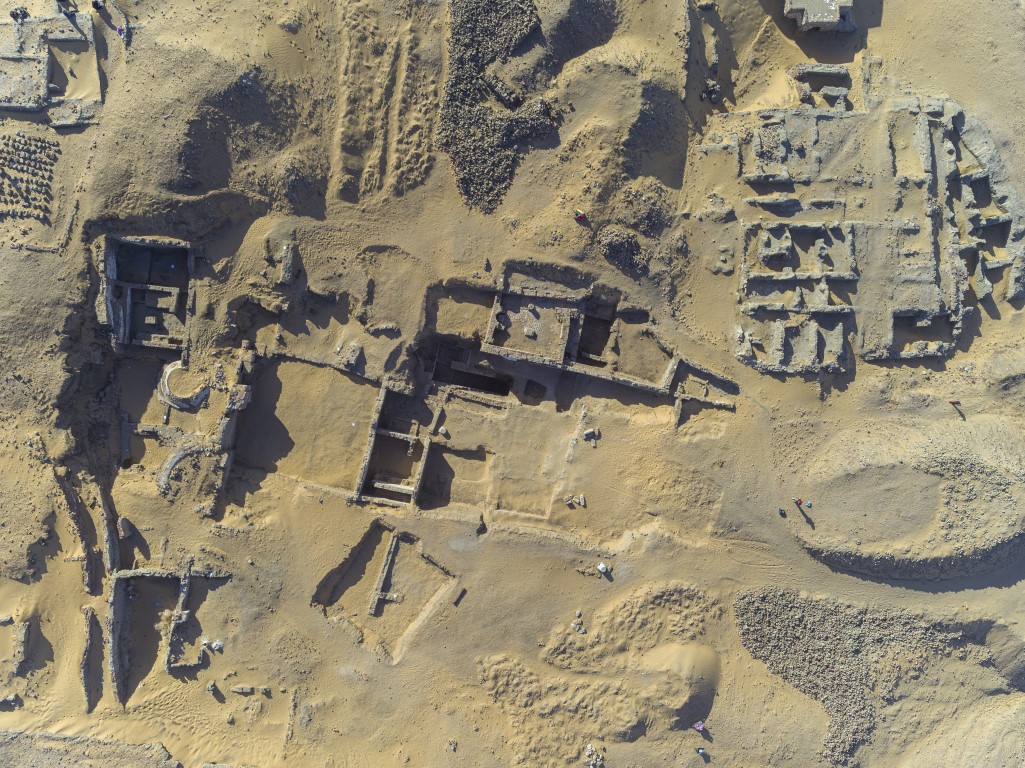
One of the unexpected results of the excavations was the discovery of another church on the upper floor of a structure adjacent to the Great Church of Jesus. Detecting paint residues on walls preserved up to about one meter in height, archaeologists believe the structure was once adorned with rich murals.
Obłuski stated that fragments of painted plaster from this church have filled six large shelves, though very few of the decorations remain preserved on the walls. Researchers are comparing these to the better-preserved paintings of another church discovered on the north side of the Great Church of Jesus in 2023, which is associated with King David, who reigned in the 13th century.
Plaster fragments containing Greek inscriptions were also found in the fill layers of the newly discovered smaller church. Dr. Agata Deptuła, the team’s epigraphy expert, associates these texts with religious hymns and prayers from the Old Testament.
One fragment was identified as a portion of the prayer of Hannah, the mother of the Prophet Samuel. The texts, carefully written with letters approximately half a centimeter high, provide new insights into the written culture used in the religious life of Dongola. While texts from the Psalms were previously known in the region, the discovery of these types of sacred hymns is a remarkable development for researchers.
The Future of the Great Structure Underground
Researchers first detected the Great Church of Jesus in 2021. Excavations expanded with the support of the Polish National Science Centre have made it possible to examine the structure’s architecture in greater detail. Recent work has shown that even a small portion of the church can yield vital information.
Archaeological efforts also face preservation challenges. In the autumn of 2024, Old Dongola was hit by the worst flood since 1988, damaging some of the roofing systems protecting the ruins. Before starting new excavations, the team worked with the Warsaw University of Technology to implement conservation measures for the site.
The future goal of Obłuski and his team is to more accurately determine the actual dimensions and architectural layout of the Great Church of Jesus, which will require significantly deeper excavations.
