
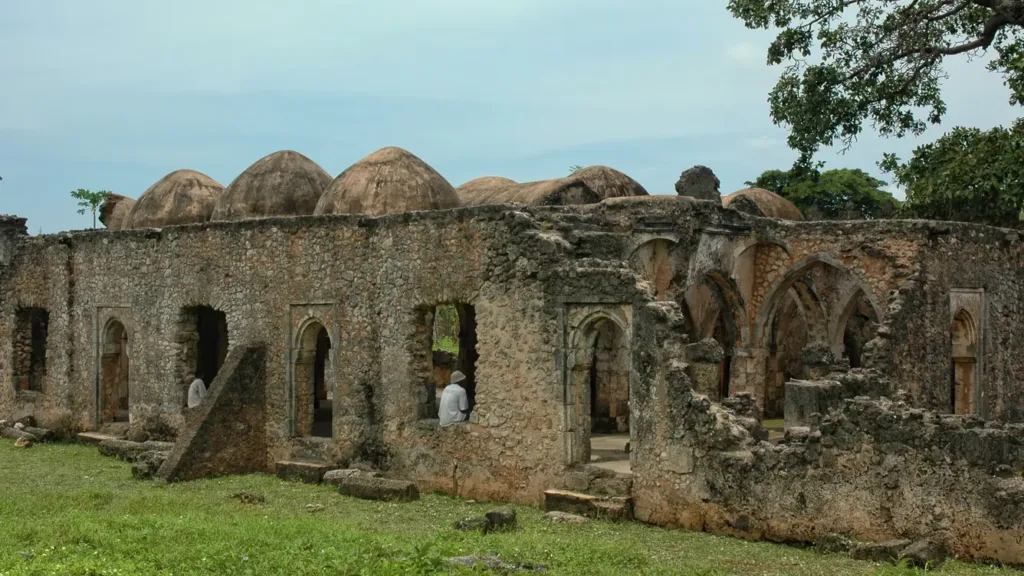
Along the coast of East Africa stand the remains of cities that once astonished travellers arriving from across the Indian Ocean. Their mosques were roofed with domes and vaults. Their palaces contained courtyards, pools and long rows of rooms. Chinese porcelain decorated walls built from coral stone, while merchants exchanged African gold and ivory for silver, glass, perfumes and fine ceramics brought from distant ports.
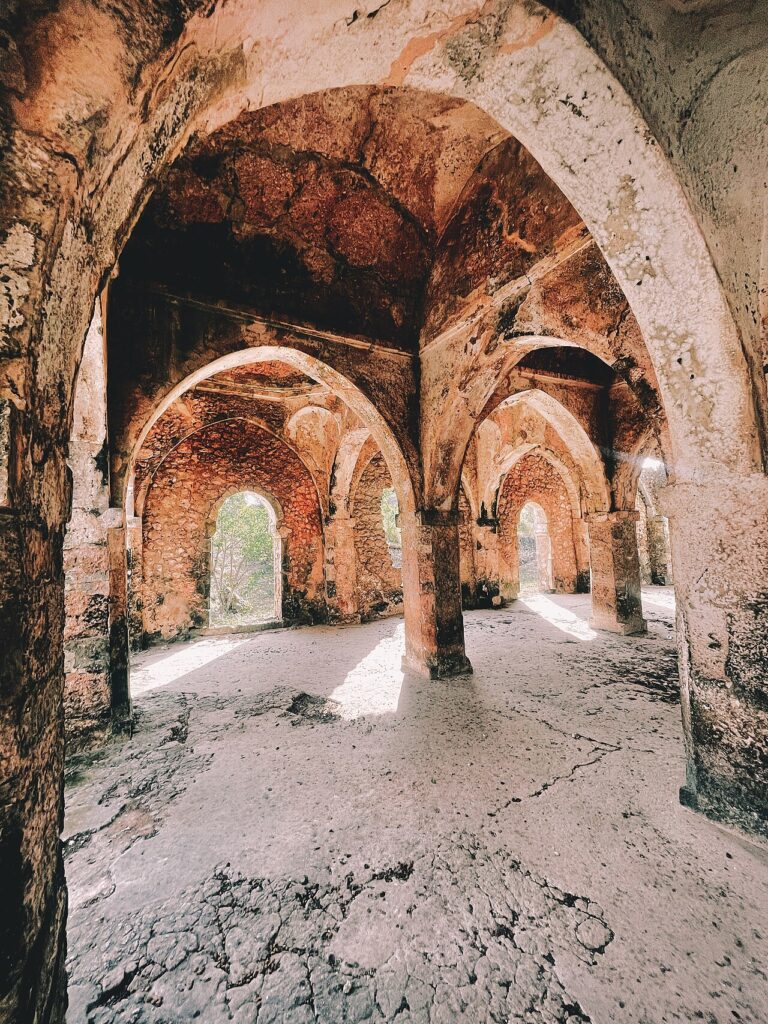
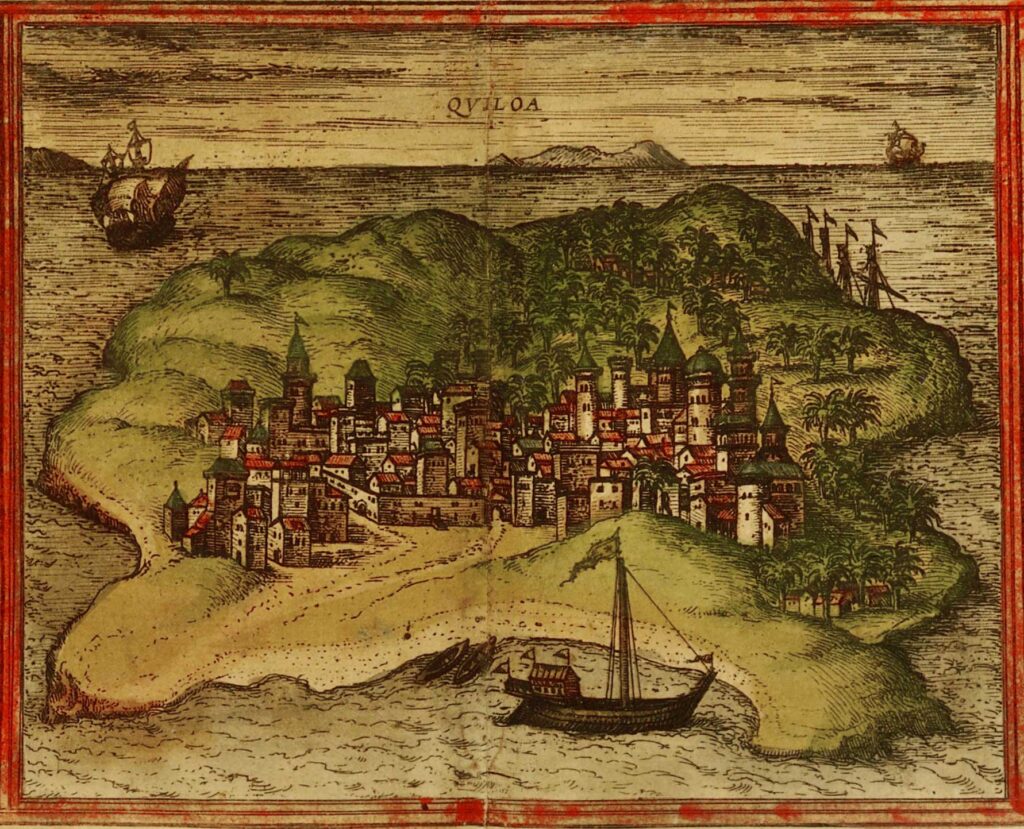
The most impressive of these cities was Kilwa Kisiwani, located on an island off present-day Tanzania. At its height in the 13th and 14th centuries, Kilwa controlled a major part of the maritime trade linking Africa’s interior with Arabia, Persia, India and China. It minted its own coins, built one of the largest palaces in sub-Saharan Africa and expanded a mosque whose great dome remained the largest in East Africa for centuries.
Yet when European researchers began studying these ruins, many refused to believe that Africans had built them.
A history taken away from its builders
Colonial-era scholars saw pointed arches, mosques and imported porcelain and concluded that the settlements must have been foreign creations. The cities were attributed to Arabs, Persians, Phoenicians and, in some speculative accounts, even Romans.
This interpretation rested on a racist assumption: that local African communities could not have planned cities, constructed monumental buildings or participated independently in international commerce.
Researchers also gave disproportionate attention to imported objects. A fragment of Persian pottery or Chinese porcelain was treated as evidence that foreigners had founded the city, while thousands of locally made vessels, tools and everyday objects were often overlooked. More recent archaeological work shows that imported goods generally account for less than five percent of the material found at most Swahili coastal sites.
The deeper archaeological record tells a different story. The Swahili towns developed from fishing, farming and herding settlements established by African communities along the coast during the first millennium CE. Their crops, pottery, livestock, crafts and domestic traditions maintained strong connections with communities in the East African interior.
Even the language provides clear evidence. Kiswahili is not an Arabic language spoken in Africa. It is a Bantu language of African origin that absorbed Arabic, Persian and other foreign words through centuries of travel, trade, religion and intermarriage.
The Swahili cities were therefore not foreign colonies transplanted onto the African coast. They were African societies that became deeply connected to the wider Indian Ocean world.
How African settlements became ocean-facing cities
The sea did not isolate the Swahili coast. It connected it to an enormous commercial world.
Seasonal monsoon winds allowed ships to sail from India and Arabia toward East Africa during one part of the year and return during another. Coastal communities learned to organise their trade around these predictable winds. African products moved toward the ocean, while foreign ceramics, beads, cloth and precious materials arrived in local ports.
Muslim traders were present on the coast by the eighth century, although they were initially probably a minority. Islam became much more widely established around the 11th century, when coral-built mosques and monumental tombs began appearing across the region.
This transformation did not erase the African character of the settlements. Instead, coastal communities adopted Islam and incorporated foreign ideas into their own social world. Houses, food traditions and local crafts continued to reflect connections with the African mainland even as the cities became more visibly Islamic.
The great stone buildings can also create a misleading impression. Only part of the urban population lived in coral-built houses. Most residents probably occupied homes made from wood, earth and woven materials, which left fewer visible traces. The ruins that survive therefore reveal the world of mosques, merchants and wealthy families more clearly than the lives of fishermen, craftspeople, farmers, servants and labourers.
What ancient DNA added to the story
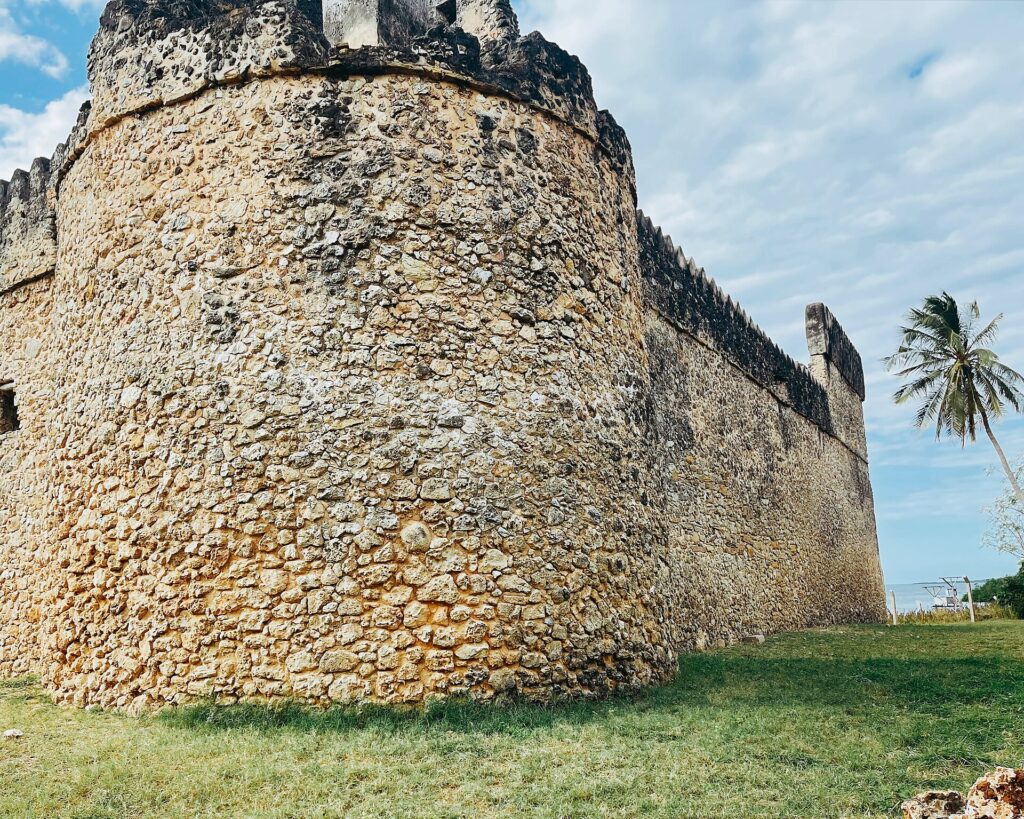
In 2023, a major ancient DNA study brought a new dimension to the debate. Researchers examined the remains of 80 people buried at coastal settlements including Kilwa, Songo Mnara, Mtwapa, Manda, Faza and Lindi.
The results revealed family histories shaped by both Africa and Asia. Many individuals carried ancestry connected primarily with African women, alongside ancestry associated with men from Persia. Smaller contributions linked to India were also identified. The mixing appears to have begun around the year 1000, at roughly the same time that Islam was becoming more widespread on the coast. After about 1500, Arabian ancestry became more prominent in the communities studied.
The findings gave some support to Swahili traditions that remembered ancestors arriving from a Persian region known as Shiraz. But they did not revive the old colonial idea that Persians arrived, displaced Africans and built the cities themselves.
The people examined were already members of communities formed through generations of marriage, cultural exchange and local development. The study concluded that the medieval elites of towns such as Mtwapa were not foreign colonists, but descendants of mixed populations living within an overwhelmingly African cultural setting.
There is also an important limitation. Most of the remains came from elite burial contexts and date between the 13th and 18th centuries. They cannot represent every person who lived along the enormous Swahili coast. DNA does not define Swahili identity, which was created through language, religion, family, local belonging, and shared ways of life as much as biological ancestry.
New research is moving beyond palaces and sultans
Some of the most recent studies are turning away from monumental buildings to examine people who rarely appear in written histories.
Research published online in late 2025 examined unusual pottery from the 11th- to 15th-century settlements of Tumbatu and Mkokotoni in Zanzibar. Archaeologist Henriette Rødland argues that some vessels may preserve the traditions of women who arrived from the East African interior, perhaps as migrants or enslaved people.
The interpretation remains preliminary, and pottery alone cannot prove that its makers were enslaved. But the study raises a significant possibility: women brought into coastal towns may have preserved skills learned from their mothers and grandmothers, leaving their identities in the shapes, surfaces and manufacturing techniques of ordinary cooking pots.
This changes the human picture of the Swahili city. It was not inhabited only by sultans, merchants and foreign sailors. Its population included people arriving from nearby villages, the African interior and distant ports, as well as servants, dependants and enslaved individuals whose lives were woven into the city’s households and economy.
Surveys conducted around Zanzibar Stone Town in 2023 and 2024 are also challenging the idea of the Swahili city as a compact foreign-looking port separated from Africa. Archaeologists are studying the settlements, roads, wells, agricultural areas and religious sites surrounding the urban centre. Their work suggests that coastal cities may have depended on broad inhabited landscapes connecting town, countryside and sea.
At Kilwa itself, researchers are re-examining trenches first excavated more than half a century ago. New radiocarbon dating is being used to test a chronology that was largely built from coins and imported ceramics. The results are still being prepared for publication, but the project may refine when different parts of the city appeared, expanded and declined.
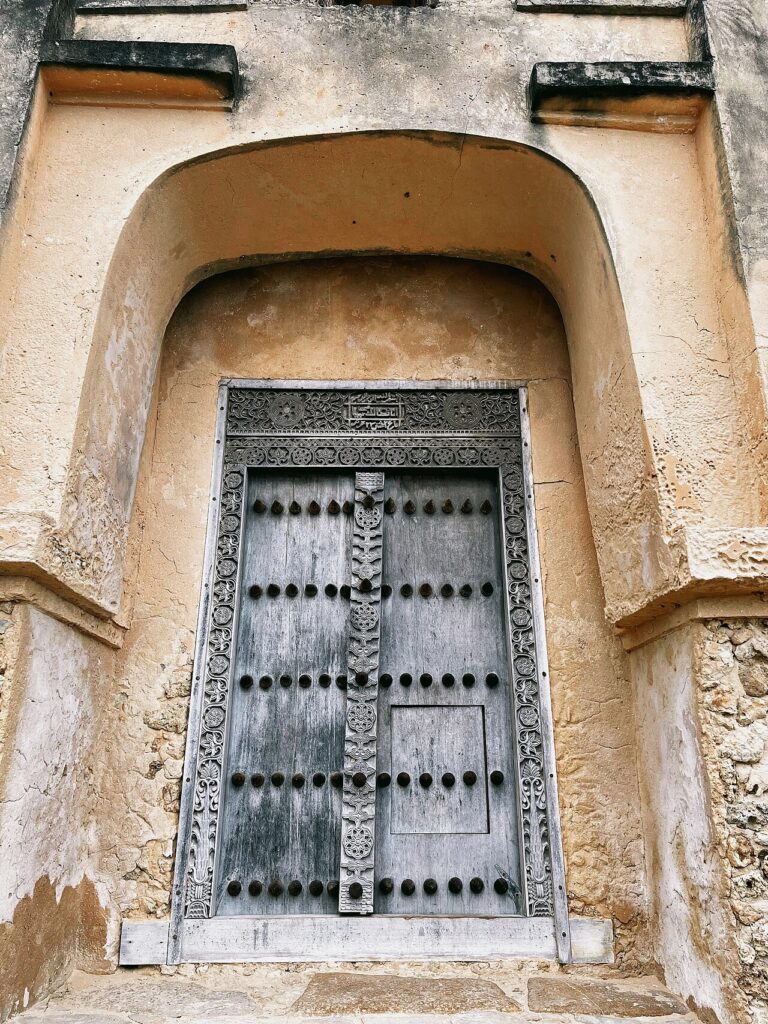
An African civilisation open to the world
The question of who built the Swahili stone cities no longer requires a choice between “African” and “foreign.”
Their foundations were African. Their language was African. Their food, crafts and earliest settlements grew from East African communities. But those communities lived beside one of the medieval world’s greatest maritime highways. They welcomed travellers, adopted Islam, married newcomers and turned imported objects and ideas into parts of their own society.
Kilwa Kisiwani was neither a Persian city accidentally located in Africa nor an isolated African settlement untouched by the outside world. It was something more historically compelling: an African city that helped shape the Indian Ocean world on its own terms.
Sources
Alders, W. (2026). Townlands of the Swahili Coast: A framework for compact, high-density tropical urbanism on Eastern Africa’s Indian Ocean rim. Journal of Archaeological Research. https://doi.org/10.1007/s10814-025-09218-9
Brielle, E.S., Fleisher, J., Wynne-Jones, S. et al. Entwined African and Asian genetic roots of medieval peoples of the Swahili coast. Nature 615, 866–873 (2023). https://doi.org/10.1038/s41586-023-05754-w
Callaway, E. (2023, March 31). Ancient DNA illuminates Swahili culture’s origins. Nature. https://doi.org/10.1038/d41586-023-00941-1
Centre for Urban Network Evolutions. (2026, January 7). High-resolution dating of an urban chronology at Kilwa Kisiwani, Tanzania. Aarhus University. https://urbnet.au.dk/research-projects/east-africa/high-resolution-dating-of-an-urban-chronology-at-kilwa-kisiwani-tanzania
Rødland, H. (2026). Traces of clay: Exploring slave and migrant identities in medieval Swahili Zanzibar. Cambridge Archaeological Journal, 36(3), 342–355. https://doi.org/10.1017/S0959774325100292
UNESCO. (n.d.). World Kiswahili Language Day. Retrieved August 1, 2026, from https://www.unesco.org/en/days/kiswahili-language
UNESCO World Heritage Centre. (n.d.). Ruins of Kilwa Kisiwani and ruins of Songo Mnara. Retrieved August 1, 2026, from https://whc.unesco.org/en/list/144/

