
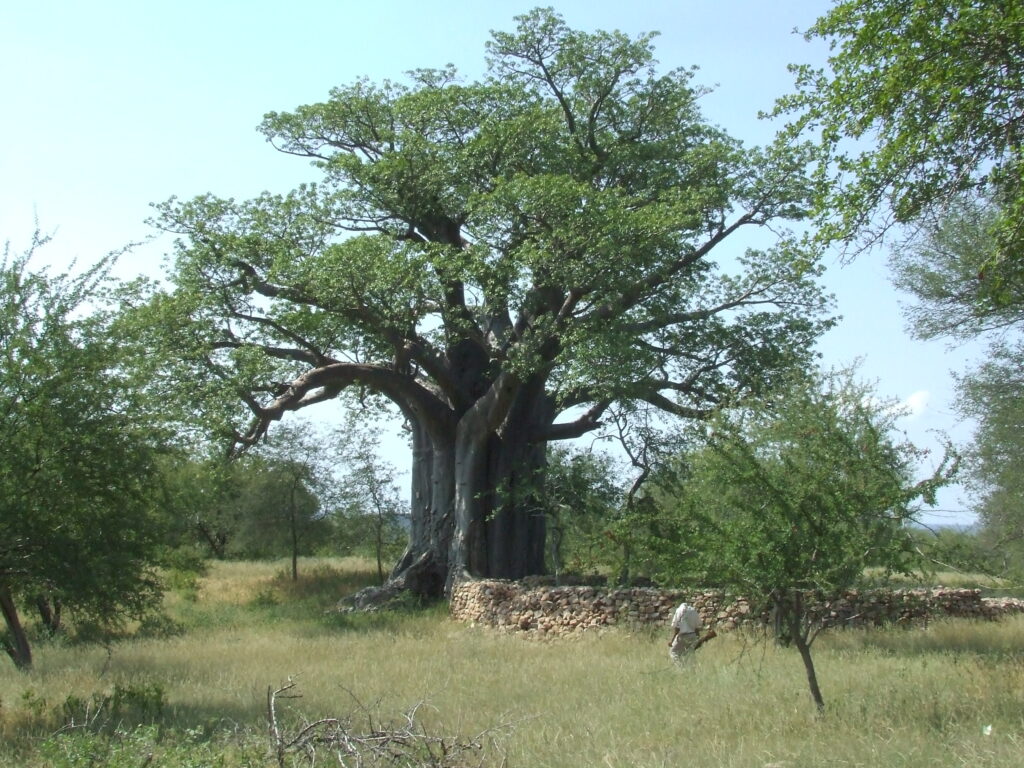
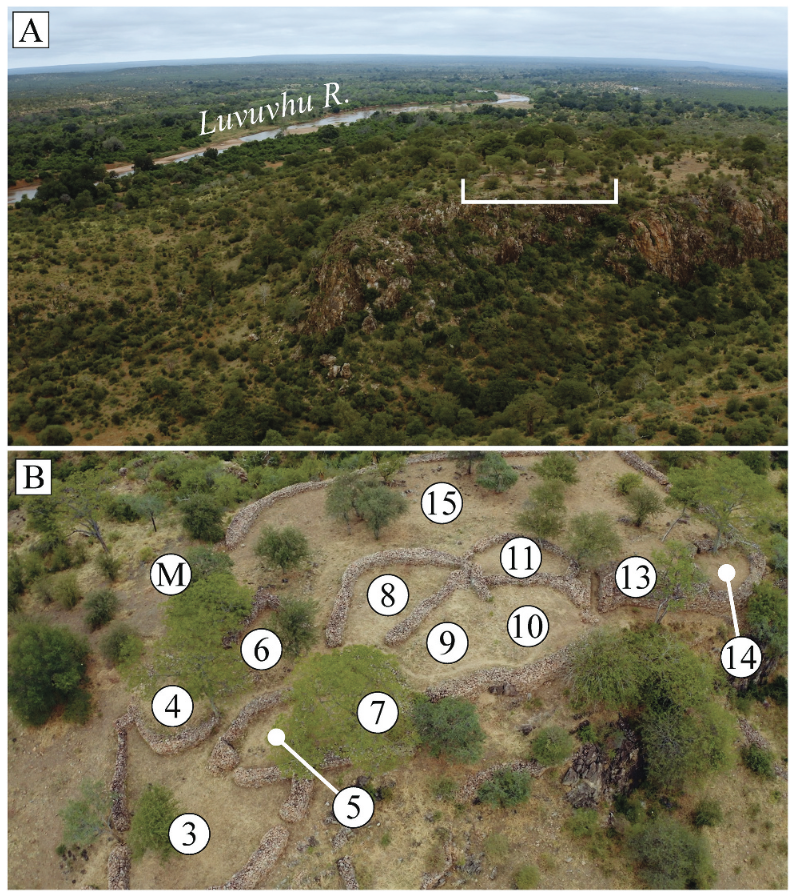
Deep inside South Africa’s Kruger National Park, on a sandstone hill above the Limpopo and Luvuvhu rivers, the stone-walled remains of Thulamela still hold the outline of a powerful African kingdom.
A new study argues that Thulamela, once celebrated as one of post-apartheid South Africa’s most important heritage sites, has never been properly understood. Its gold objects, human burials, craft production, stone architecture, and wider political landscape point to a complex African kingdom that flourished between the 15th and 17th centuries AD, yet much of the original archaeological material has remained underanalysed and unpublished for decades.
The study, published in Conservation and Management of Archaeological Sites, revisits Thulamela not as a romantic lost city, but as a neglected royal and economic centre whose story has been shaped by discovery, politics, incomplete research, and long silence.
A Stone-Walled Kingdom on a Strategic Hill
Thulamela lies in the far northern part of Kruger National Park, where the landscape opens toward the Limpopo and Luvuvhu river system. Its position was not accidental. From the hilltop, the settlement overlooked routes that connected inland communities with the wider southeast African coast.
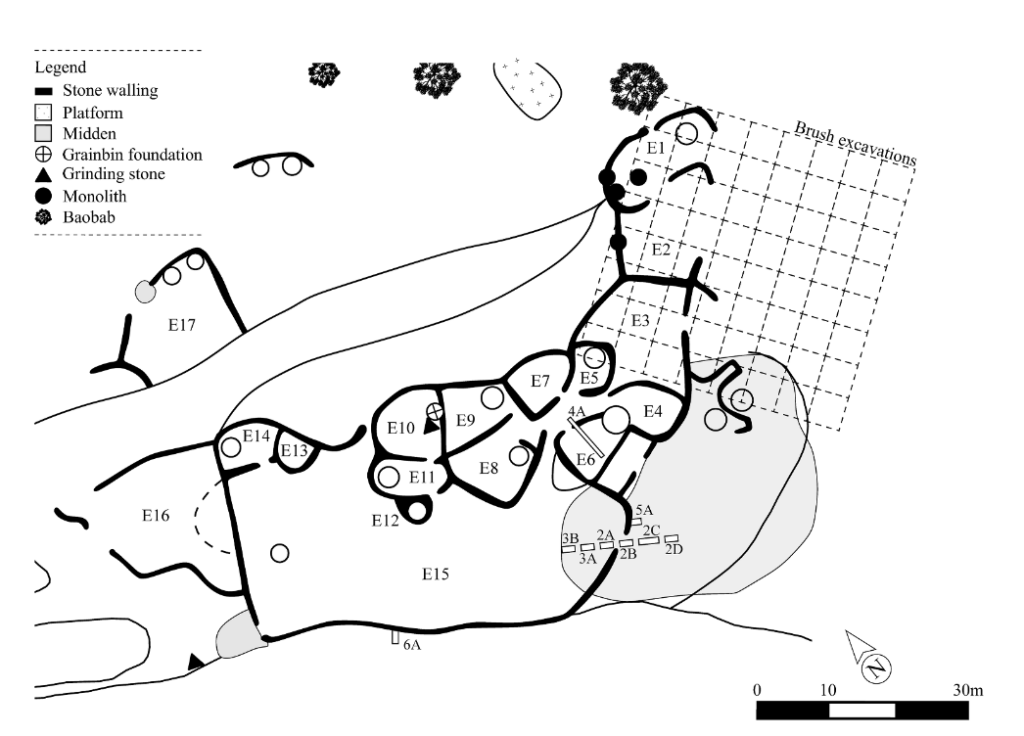
Archaeological work in the 1990s showed that the walled complex covered about nine hectares. It contained dry-packed stone walls, residential zones, passageways, open areas, middens, kraals, grain-storage platforms, and stone monoliths. These features place Thulamela among the great stone-walled centres of southern Africa, often discussed alongside Mapungubwe and Great Zimbabwe.
Yet the authors stress that Thulamela cannot simply be explained by borrowing models from better-known sites. For years, it has been treated as a familiar type of African capital, but the evidence from Thulamela itself remains too thinly studied to support many of the stronger claims made about its internal hierarchy, ethnic identity, or political structure.
Radiocarbon dates place the occupation mainly between AD 1447 and 1643, after the peak of Mapungubwe and Great Zimbabwe. This timing makes Thulamela especially important for understanding how power, craft production, and trade developed in southern Africa during a later phase of the Iron Age.
Gold That Changed the Story of Thulamela
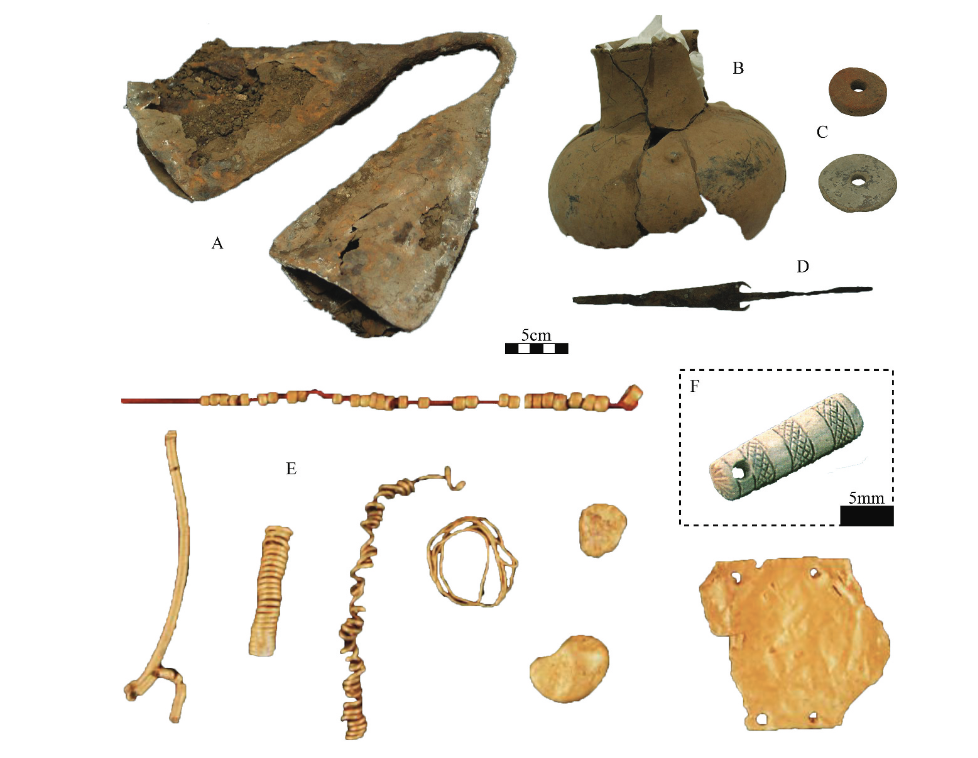
The finds that first brought Thulamela to public attention were gold objects and evidence of gold working. In the mid-1990s, the discovery of gold items associated with human burials turned the site into a symbol of precolonial African achievement at a time when South Africa was rethinking its past after apartheid.
The gold assemblage included ornaments and worked items that were not isolated curiosities. They belonged to a broader material world that included iron and copper artefacts, spindle whorls, beads, ceramics, faunal remains, and finely made objects. Together, they point to a settlement with skilled craft specialists, access to wealth, and social distinctions visible in both architecture and burial practice.
One detail stands out: the study notes what appears to be evidence for gold working, based on a ceramic sherd with gold residue adhering to it. That small trace shifts the picture. Thulamela was not only a place where gold circulated or was worn by elites. It may also have been a place where gold was processed, shaped, or worked as part of a local craft economy.
The gold should not be treated as a single spectacular treasure story. It belongs to a wider system of production, ritual, status, and political authority. Its presence beside human remains also raises questions about who was buried at Thulamela, how power was displayed, and how wealth was tied to ancestry, leadership, and memory.
Human Burials Beneath Hut Floors
During rehabilitation work in 1993, Sidney Miller and his team identified human remains beneath the floors of two hut areas. The burials were studied and later reburied in consultation with community representatives.
The two burials have often been described in royal terms, with one interpreted as male and the other as female. They have been linked to ideas of a chief, king, queen, or elite household. But the study is careful with these labels. The dates suggest that the male and female burials may not have been contemporary, and some of the usual assumptions about a “king and wife” or a fixed royal layout remain open to question.
This does not weaken the burials. It makes them more interesting. They show that Thulamela contained high-status funerary practices, but they also expose the limits of what can be said without stronger excavation records, full publication, and renewed chronological work.
More Than Trade: A Centre of Craft, Power, and Daily Life
Thulamela’s location connected it to long-distance networks, including routes that eventually linked the interior to the Mozambique coast and the Indian Ocean world. Exotic goods such as glass beads and porcelain, along with locally worked materials, show that the settlement participated in wider systems of exchange.
But reducing Thulamela to trade alone would miss the broader story.
The site also preserves evidence of farming, food storage, craft production, metalworking, textile-related activity, domestic life, elite space, burial practice, and political organisation. Spindle whorls point to thread or cloth production. Iron arrowheads and metal objects speak to technical skill. Ceramics and faunal remains preserve the more ordinary rhythms of life. The stone-walled layout suggests planned space, movement, authority, and possibly controlled access.
Thulamela was not only a node in a trade route. It was a lived settlement, a political centre, a craft landscape, and a place where wealth and identity were made visible through objects, buildings, and burial.
A Kingdom Compared Too Quickly with Great Zimbabwe
Because Thulamela has stone walls, elite spaces, gold, and a hilltop setting, it has often been interpreted through the so-called Zimbabwe Pattern, a model used to describe stratified settlements in which leaders occupied elevated or restricted spaces while other groups lived around them.
The comparison is understandable, but the new study argues that it has often been used too quickly. Many claims about Thulamela’s internal organisation depend on assumptions drawn from other sites or from later ethnographic models. Enclosures have been labelled as the chief’s area, a wife’s residence, a reception zone, or a craft area, but the evidence behind these interpretations has not always been published in enough detail for other scholars to test.
This is one of the central problems of Thulamela. The site looks like a major kingdom centre, but the archaeological record has not yet been made to do the work required of it.
The Unstudied Archive in the Basement
One of the strongest points in the study is not about a newly discovered object, but about what has been left undone.
After the 1990s work, many finds from Thulamela were boxed and stored at the Ditsong Museum in Pretoria. The large ceramic assemblage, spindle whorls, metal objects, beads, and other finds were not fully analysed. Much of the excavation archive, including drawings and records, also remained unpublished or difficult to access.
Only a small selection of gold items reached public display at the Skukuza Museum. The rest of the material largely disappeared from public and academic view.
That gap has shaped Thulamela’s reputation. It became famous enough to be cited, but not studied enough to be understood. The new research programme aims to reverse that by cataloguing the finds, applying non-destructive analysis, rebuilding the chronology, and placing the hilltop settlement back into its surrounding landscape.
A Heritage Site Entangled with Living Communities
Thulamela’s story also belongs to the more recent history of Kruger National Park and the Makuleke people. The Makuleke occupied the region in the nineteenth and twentieth centuries and were forcibly removed in 1969 as conservation policies expanded. At least 2,000 people were moved from the area to Ntlaveni. After South Africa’s 1994 Land Restitution Act, the Makuleke lodged a land claim, and the land was eventually returned before being leased back to the national park.
This recent history matters because Thulamela is not an isolated ruin. It sits within a landscape of contested heritage, displacement, conservation, and community memory.
The authors also avoid assigning Thulamela too neatly to any single modern ethnic group. The site has been linked to Venda heritage, but the study notes that there is no definitive evidence tying it directly to one contemporary community. Venda, Tsonga, Makuleke, and other local voices remain central to the region’s heritage, but the ancient kingdom itself requires careful archaeological reconstruction rather than inherited labels.
New Research Across the Landscape
The current team plans to move beyond the walled complex. This is a crucial shift. Earlier work focused heavily on the hilltop centre, leaving the broader settlement network poorly understood.
The researchers are now examining the original finds, planning new excavations, and surveying the wider region. More than 100 archaeological sites have already been identified around Thulamela. The team also intends to use LiDAR, multispectral remote sensing, and 3D documentation to map and record the landscape before more evidence is lost.
This broader approach may help answer questions that have remained unresolved for decades: When did Thulamela rise? How long did its power last? How was authority organised? Who lived around the royal centre? How did craft production, farming, trade, and political control fit together? Why did the settlement eventually decline?
A Fragile Kingdom at Risk
Thulamela is not only understudied; it is also physically vulnerable. Flooding has damaged parts of the site and caused walls to collapse. Animal activity, theft, irregular conservation work, and natural erosion continue to threaten archaeological traces on the hill and in the valley below.
The danger is direct. If the site is not recorded and studied soon, parts of the kingdom’s layout may become impossible to reconstruct.
The renewed work at Thulamela is therefore not just a new academic project. It is a rescue of evidence from a place that has already lost time, material, and public attention.
Thulamela’s Place in African History
Thulamela’s gold, burials, stone walls, craft evidence, and landscape position reveal a kingdom deeply embedded in the political and economic history of southern Africa. It was not an isolated hilltop settlement on the edge of history. It was part of a world of skilled production, inherited authority, local farming, regional power, and long-distance connections.
The forgotten kingdom of Thulamela now stands at the centre of a different question: not whether precolonial African societies were complex, but why one of the clearest examples was allowed to remain so poorly understood for so long.
The gold first drew attention to the site. The burials gave it human depth. The unfinished archive now gives archaeologists their next task. Thulamela is no longer only a lost or forgotten kingdom. It is an unfinished history waiting to be properly read.
Forssman, T., van Heerden, J., Chewins, L., & Delius, P. (2026). Thulamela: Gold, Human Burials, and a Forgotten African Kingdom. Conservation and Management of Archaeological Sites, 1–18. https://doi.org/10.1080/13505033.2026.2664111
Cover Image Credit: Public Domain
