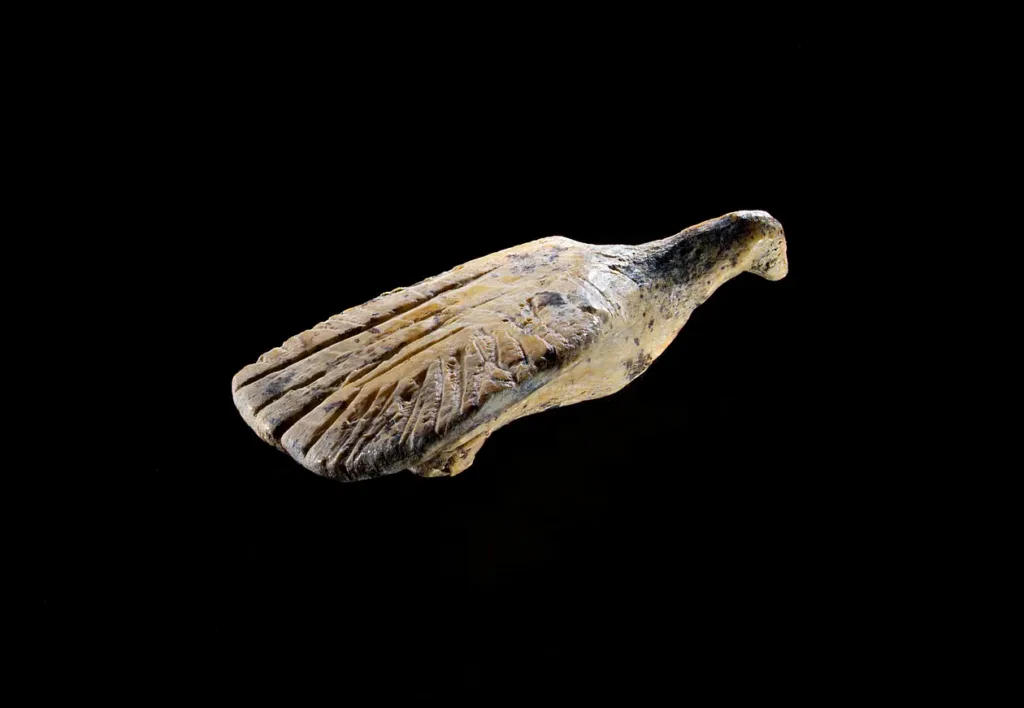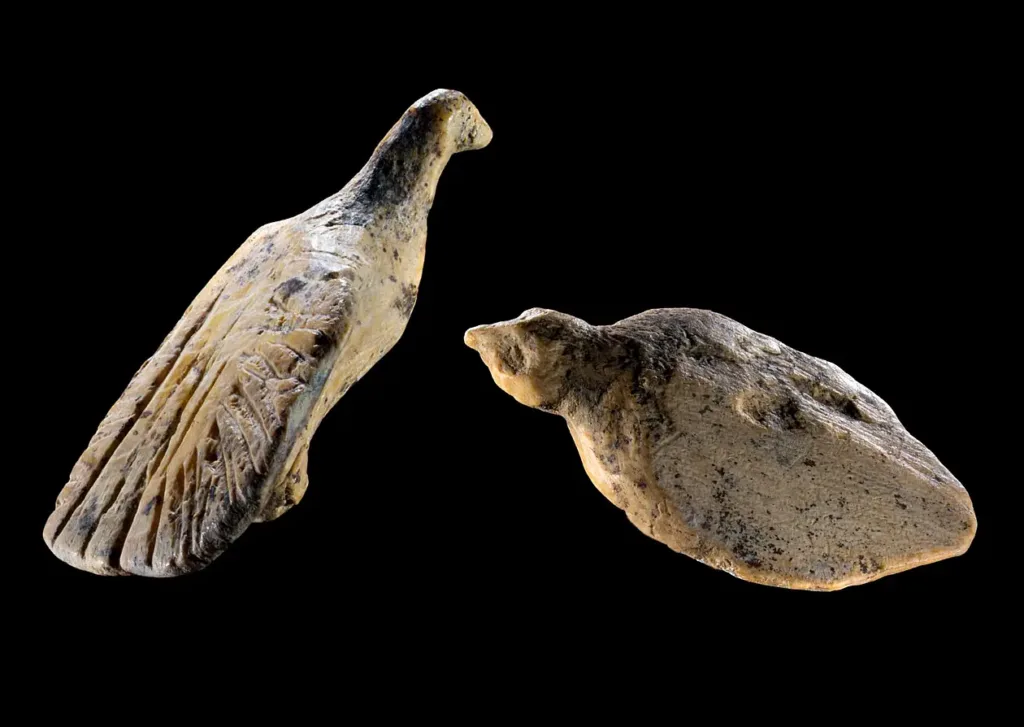
Two miniature bird figures carved from mammoth ivory around 40,000 years ago have been discovered in Hohle Fels Cave in southwestern Germany, adding rare new examples to some of the world’s earliest known figurative art.
Archaeologists from the University of Tübingen recovered the figures from deep Aurignacian layers inside the UNESCO World Heritage cave, located in the Swabian Jura. Despite being little larger than a thumbnail, both sculptures preserve remarkably detailed observations of bird anatomy and behavior.
The discoveries were presented as Hohle Fels’ “Find of the Year” by Professor Nicholas Conard, who leads the archaeological research at the site.
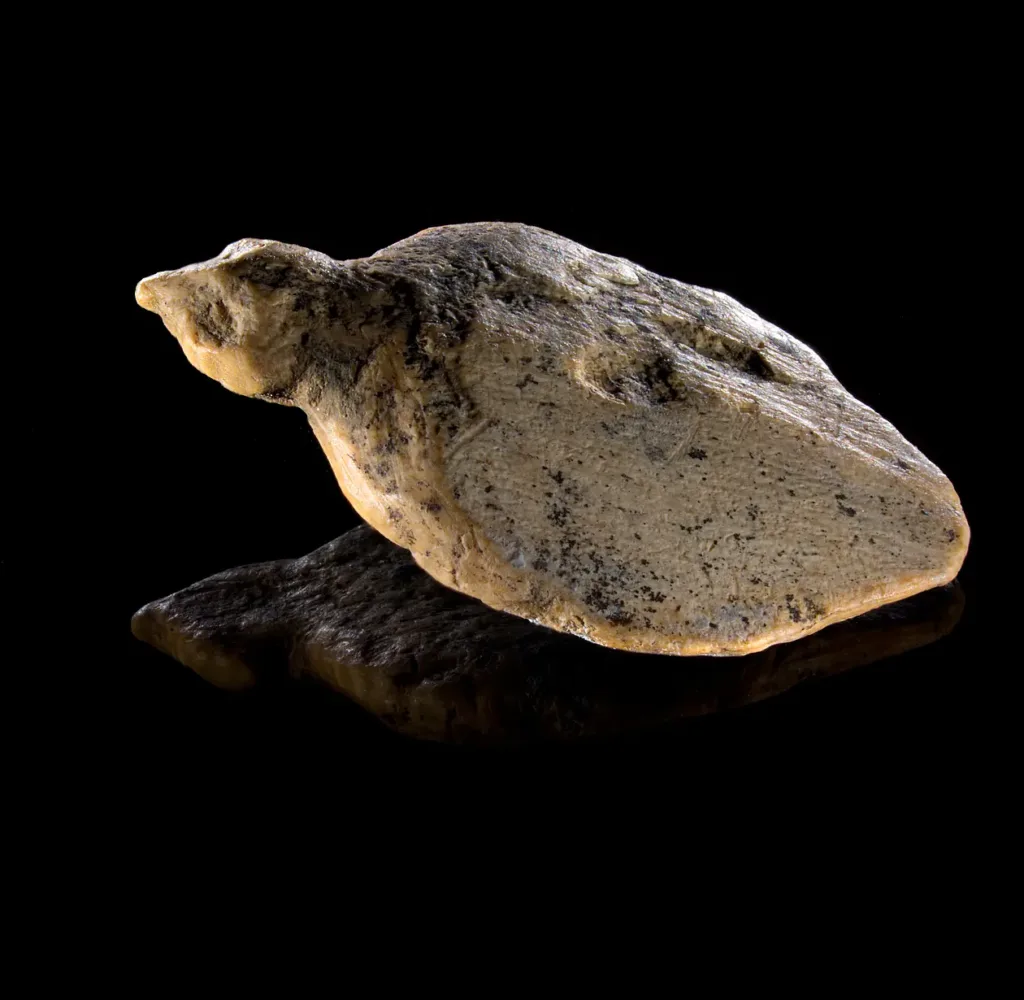
One figure depicts a resting bird, perhaps sitting on a nest, while the second shows a bird with its wings spread wide. Part of its left wing is missing, and the fragment has not been found.
It remains unclear whether the two birds were carved by the same person. Although they came from the same archaeological layer, they were discovered approximately 1.5 meters apart and may have been created at different times or even by different generations.
The Smallest Known Ice Age Artwork from the Region
The bird with outstretched wings measures only two centimeters long, one centimeter wide, and half a centimeter high. It is the smallest Ice Age sculpture yet discovered within the UNESCO World Heritage region of the Swabian Jura.
Most other figurative artworks found in the area measure between three and nine centimeters.
The two newly discovered birds are also exceptionally light. One weighs approximately 1.3 grams, while the other weighs just 0.7 grams.
Their small size, however, did not prevent the carvers from adding fine anatomical details. The resting bird has prominent round eyes, while the winged figure has a clearly defined beak and parallel incisions across its wings, apparently representing feathers.
According to Conard, the sculptures were not simplified bird-shaped objects. Their makers translated careful observations of living animals into ivory figures detailed enough to raise questions about the species depicted and the actions they were performing.
Ice Age Birds Captured in Motion
Most animal figures from the European Ice Age are shown in static positions. The newly discovered birds are unusual because they appear to represent specific forms of behavior.
The resting bird has a broad, flattened posture, with its head drawn close to its body and its legs tucked underneath. Researchers suggest that it may represent a nesting or brooding bird.
The second figure has widely spread wings and an elongated neck. Interpretations range from a bird in flight or landing on water to one displaying threatening or courtship behavior.
The species cannot yet be identified with certainty. Researchers have suggested ptarmigan, whose bones frequently occur at archaeological sites in the region. Other possibilities include capercaillie, related game birds or certain birds of prey.
A Signature Motif of Hohle Fels Cave
The discoveries also strengthen evidence that individual Ice Age sites may have developed their own artistic traditions.
A waterbird carved from mammoth ivory was discovered at Hohle Fels approximately 25 years ago. With the two new figures, the cave has now produced three bird sculptures.
By contrast, the three other major Ice Age art sites within the same UNESCO World Heritage area have yielded numerous carvings of mammoths, cave lions, wild horses and other animals—but no birds.
This pattern suggests that the artists working at Hohle Fels may have been particularly interested in birds. Different ivory-working communities may have selected different animals as meaningful subjects, giving each archaeological site its own recognizable artistic signature.
Why birds mattered to the hunter-gatherers who occupied Hohle Fels around 40,000 years ago remains unknown. The figures may have served as personal talismans, group symbols or objects connected with stories and rituals that have not survived.
The two ivory birds will be displayed near their discovery site at the Museum of Prehistory and Ice Age Art in Blaubeuren. They form the centerpiece of the exhibition “Light as a Feather, Heavy with Research: Discover the Miniature Birds of Ice Age Art,” which will remain open until April 4, 2027.