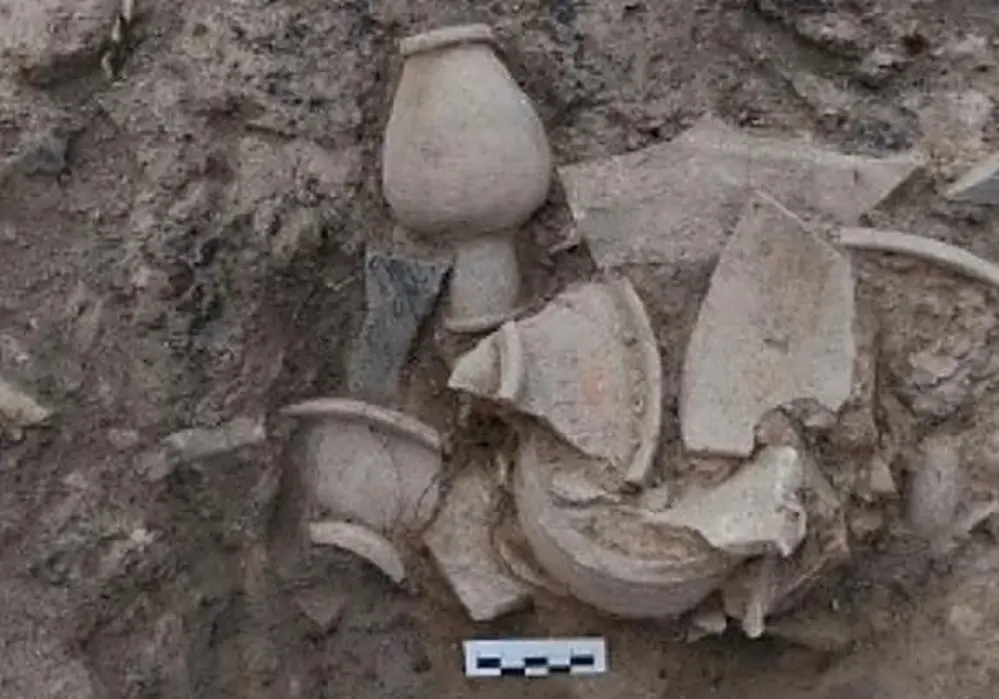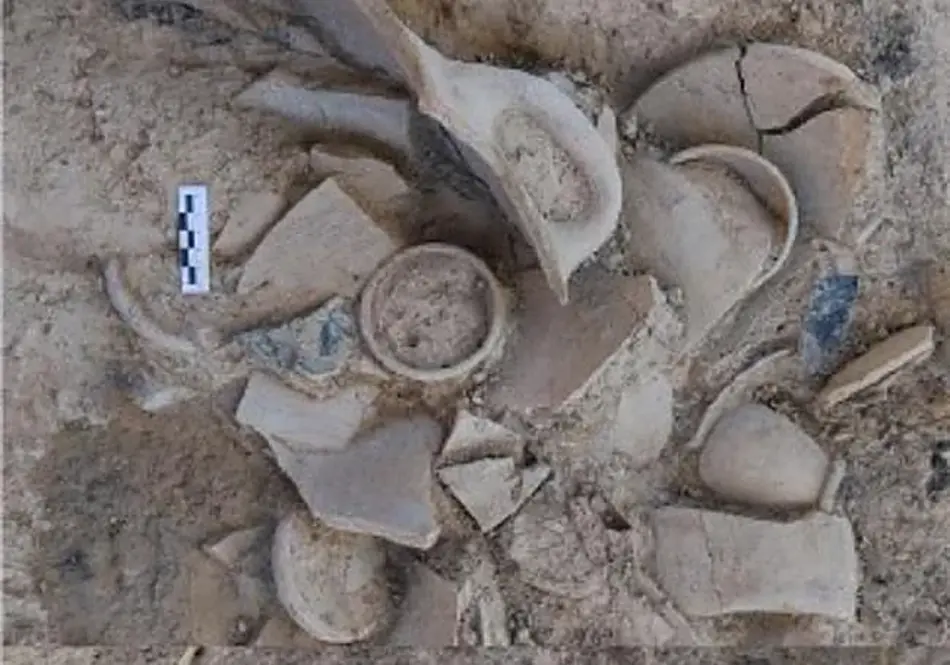
Construction work on a private plot in Alicante, Spain, has uncovered a 2,200-year-old Iberian necropolis containing complete sets of weapons, bronze ornaments, weighing equipment and a remarkably preserved ritual burner attributed to the Punic goddess Tanit.
The cemetery was discovered in the coastal district of La Albufereta, an area already known for its rich Iberian, Carthaginian and Roman archaeological heritage. Preliminary dating places the burials in the final third of the third century BCE, during a period of intense military and political upheaval in southeastern Iberia.
Archaeologists believe the four tombs may have belonged to members of the same military family or lineage connected to the Iberian warrior elite.
A Cemetery Filled with Weapons
Because the building plot lies within a designated archaeological monitoring zone, the developer commissioned Arquealia to oversee the work. The excavation was directed by archaeologists Jesús Moratalla and Gabriel Segura under the supervision of Alicante City Council’s heritage department.
Excavators documented four tombs and two associated ritual areas. The graves contained unusually rich funerary assemblages dominated by weaponry, with several apparently preserving almost complete Iberian warrior panoplies.
Among the discoveries are falcatas—the curved swords closely associated with Iberian warriors—along with knives, spears, shields, horse bits, spurs and several types of javelin, including soliferrea and pila.
The presence of horse equipment suggests that at least some of those buried may have held mounted or high-ranking military roles. Bronze fibulae and other clothing ornaments further indicate the elevated social position of the deceased.
Two tombs also contained rare sets of bronze balance pans, while one included several standardized weights. These objects may point to involvement in trade, the control of valuable goods or another activity requiring precise measurement.
The Head of a Goddess
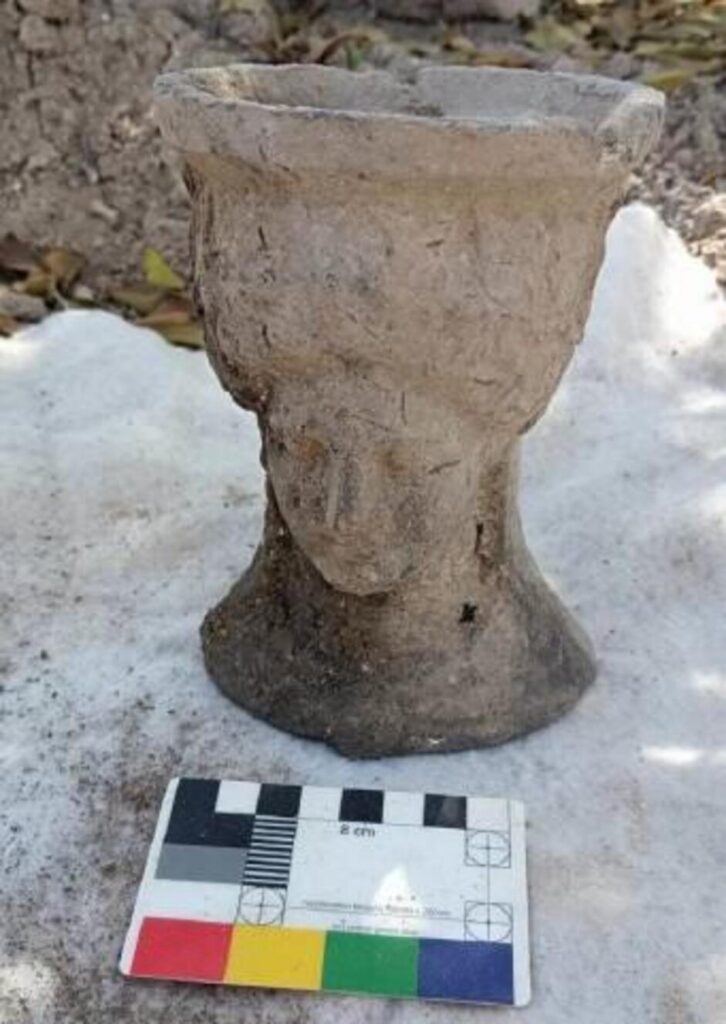
One of the most striking objects is a ritual burner, or thymiaterion, shaped like a woman’s head and preserved in exceptional condition. Archaeologists have provisionally identified the face as a representation of Tanit, a deity of Phoenician origin who became one of the principal goddesses worshipped at Carthage.
Her appearance in the cemetery would be significant given the region’s close connections with the Punic world during the late third century BCE. The identification, however, remains preliminary and will require detailed iconographic study.
Other grave goods include a chariot wheel and a fragment of Iberian stone sculpture identified as the carved hoof of a deer. Archaeologists also recovered approximately 30 small vessels that appear to have been used during a collective funerary banquet.
Such gatherings allowed relatives and members of the wider community to commemorate the dead while reinforcing family identity and social status. The vessels, ritual areas and burner suggest that the cemetery was not simply a place of burial but also a carefully organized ceremonial space.
Connection to a Carthaginian Stronghold
The chronology and character of the finds have led researchers to associate the necropolis with the nearby settlement of Tossal de Manises, located in the same Albufereta area.
The site later became the Roman city of Lucentum, but archaeological investigations have shown that its first major fortified settlement was established by the Carthaginians during the final third of the third century BCE. Its construction formed part of the wider Carthaginian expansion in Iberia that preceded the Second Punic War between Rome and Carthage.
The newly discovered cemetery lies around 300 meters northeast of La Albufereta’s principal burial ground. Its separation from the larger necropolis may have emphasized the distinctive status of the people buried there.
Archaeologists currently propose that the tombs belonged to a military gens—a family or lineage whose identity was closely connected with warfare. The complete weapons, horse equipment, luxury bronzes and ritual objects support that interpretation, although researchers stress that it remains a preliminary hypothesis.
Moratalla and Segura are now preparing the excavation’s scientific report. The recovered artifacts are being stored by Alicante City Council and are expected to undergo conservation and further analysis before their potential public display.