
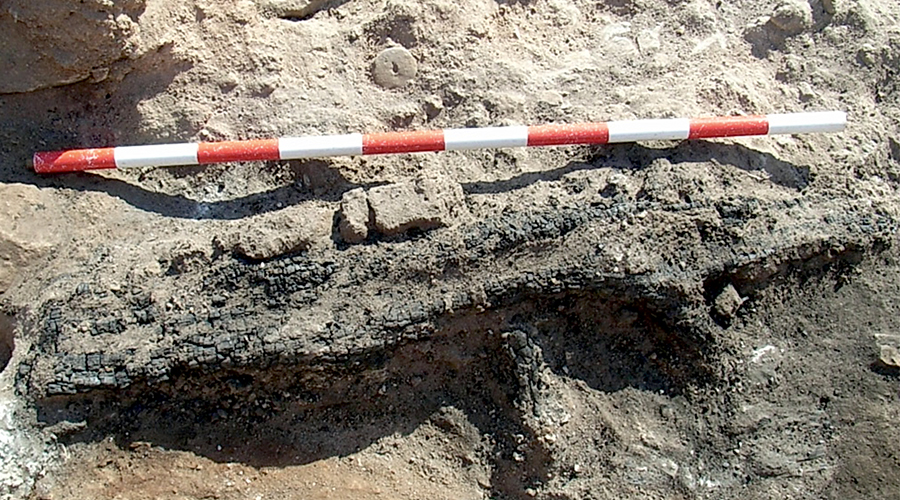
Archaeologists uncover an exceptionally preserved warp-weighted loom at Cabezo Redondo, shedding new light on Bronze Age textile production and early fabric innovation in the Iberian Peninsula.
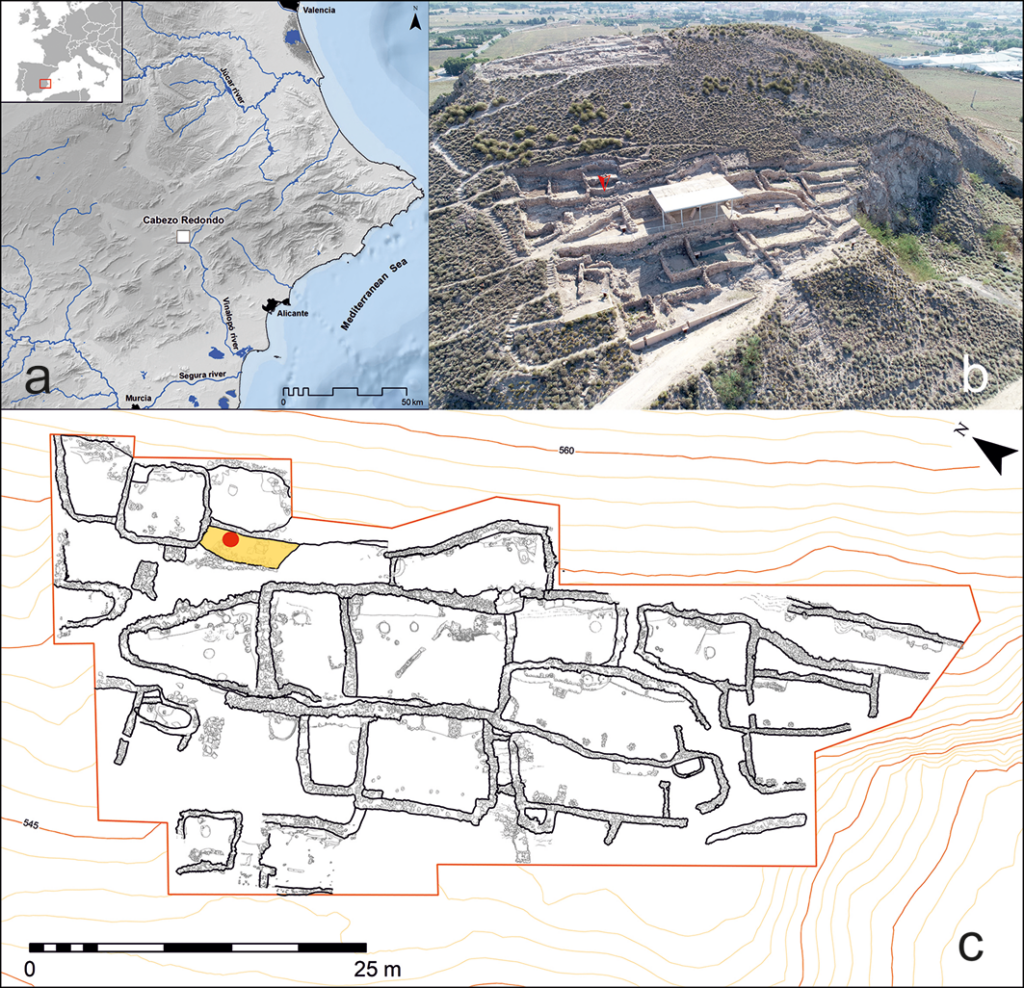
A remarkable archaeological discovery in southeastern Spain has revealed one of the most complete Bronze Age textile production systems ever found in Europe. At the prehistoric settlement of Cabezo Redondo near Alicante, researchers have identified the remains of a warp-weighted loom preserved for more than 3,500 years after being sealed by a devastating fire.
The discovery offers an unprecedented glimpse into how ancient communities produced textiles during the Middle Bronze Age, a period when weaving technologies were undergoing significant transformation across the Mediterranean.
A Fire That Preserved Prehistory
According to archaeological analysis led by the University of Alicante and collaborating institutions, the loom was destroyed and instantly sealed by a fire event dated to approximately 1507–1428 BC. Paradoxically, this catastrophic destruction is what ensured its preservation.
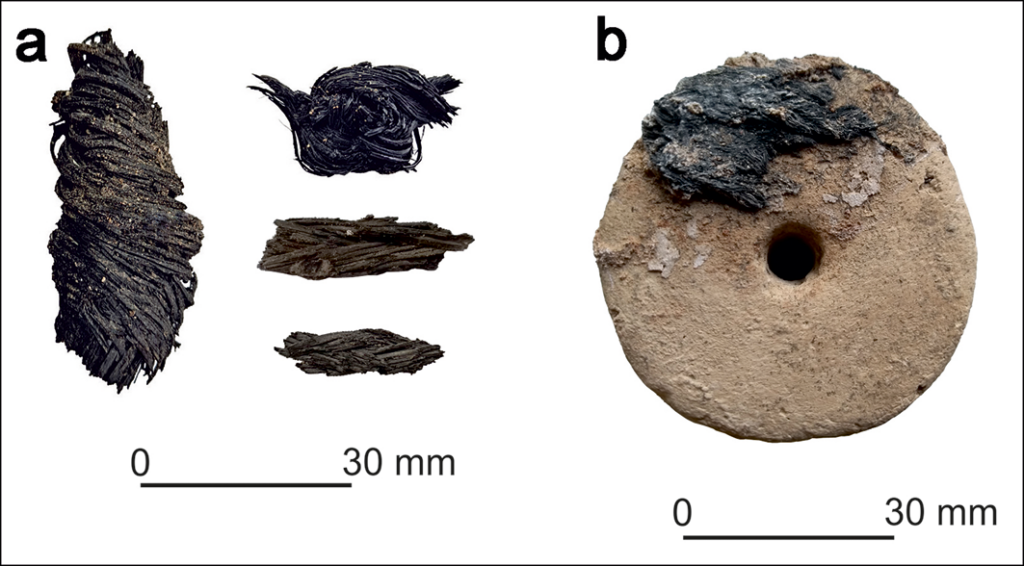
The flames carbonized wooden beams, plant fibers, and domestic materials, creating a sealed archaeological context that protected fragile organic remains from decay. As a result, researchers recovered not only clay loom weights, but also charred timber and rope fragments made from esparto grass—materials rarely preserved in prehistoric sites.
A Complete Bronze Age Weaving System
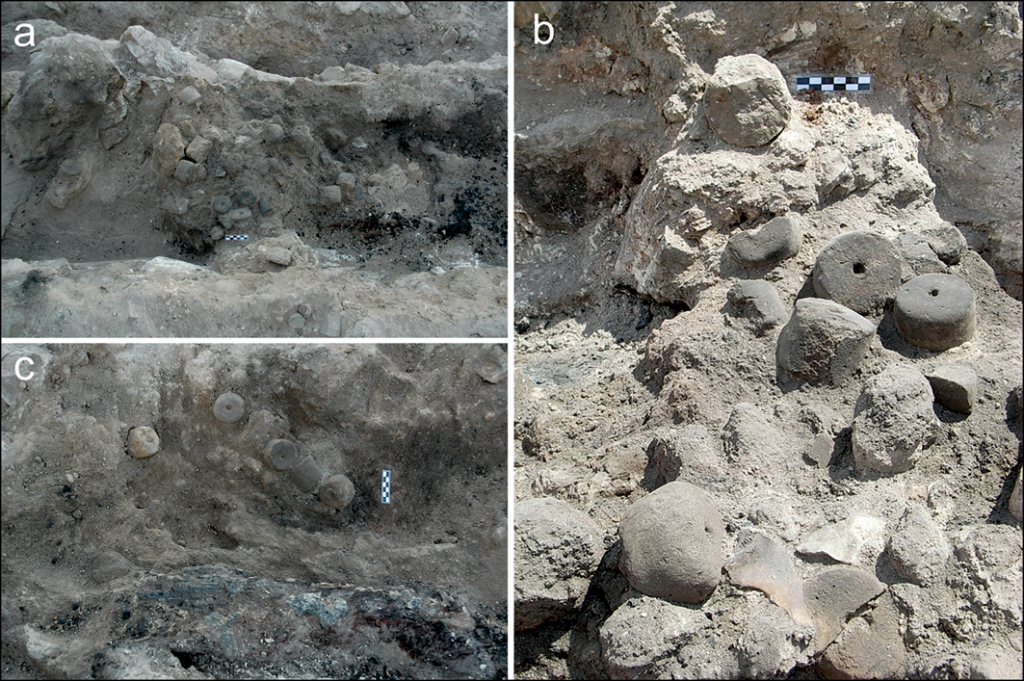
Excavations revealed a full weaving installation on a raised platform within the settlement. The structure included upright wooden posts made of Aleppo pine, horizontal beams, and a dense cluster of 49 cylindrical clay loom weights. These weights, each with a central perforation, were used to keep warp threads under tension during weaving.
Most of the weights were relatively light, averaging around 200 grams—significantly lower than typical Bronze Age loom weights, which often range between 400 and 900 grams. This detail is crucial, as lighter weights suggest the production of finer, more delicate textiles using thinner threads.
Alongside the loom structure, archaeologists also found braided esparto cords and spindle whorls, indicating that spinning and weaving were carried out in the same domestic activity area.
Evidence of Technological Change
The combination of lightweight loom weights and textile tools suggests a major shift in textile production during the mid-second millennium BC. Researchers believe this reflects a transition from coarser linen-based fabrics toward finer wool textiles, which require more precise tension control during weaving.
This technological evolution is one of the most significant insights from the discovery. The data suggests that Bronze Age communities were experimenting with new textile types, potentially increasing both the quality and diversity of fabrics produced.
How the Loom Worked
Reconstruction studies indicate that the loom could have been configured in different ways depending on the desired fabric.
With two rows of loom weights, weavers likely produced open, lightweight tabby fabrics—simple over-under weaves similar to modern gauze. Alternatively, arranging the weights in four rows would have enabled more complex twill fabrics, which are denser, stronger, and capable of decorative patterns.
This flexibility shows that Bronze Age textile production was not static but highly adaptable, with weavers adjusting loom setups to create different textile types.
A Window into Daily Life
Beyond its technological importance, the discovery also provides insight into the social organization of prehistoric communities. Unlike metalworking or luxury crafts, weaving at Cabezo Redondo appears to have been a shared domestic activity rather than a specialized profession.
The loom was located in a semi-open communal area connected to nearby houses, suggesting that multiple households may have participated in textile production. This supports the idea that weaving was a central part of daily life, likely involving collaborative work.
Rare Preservation in European Archaeology
Warp-weighted looms were widely used across prehistoric Europe, but their wooden components almost never survive due to decay. In most cases, only clay loom weights remain, making full reconstructions extremely difficult.
The Cabezo Redondo discovery is therefore exceptional. It is one of the rare cases in Europe where both the structural wood and associated textile tools have been preserved together, offering a nearly complete picture of Bronze Age weaving technology.
Rethinking Bronze Age Textile Production
The findings challenge earlier assumptions that Bronze Age textile production in the Iberian Peninsula was relatively simple and uniform. Instead, the evidence suggests a more complex and evolving system, with experimentation in fiber types, weaving techniques, and loom configurations.
The presence of spindle whorls alongside weaving equipment further indicates a fully integrated production chain—from spinning fibers into thread to weaving finished textiles.
A Key Site for Understanding Ancient Innovation
Researchers emphasize that Cabezo Redondo is now one of the most important archaeological sites for studying textile production in Bronze Age Europe. The combination of exceptional preservation, radiocarbon dating, and material analysis provides a rare opportunity to understand how early societies produced and adapted essential technologies.
As studies continue, the site is expected to contribute further insights into how prehistoric communities in the western Mediterranean developed increasingly sophisticated craft systems.
The discovery of the 3,500-year-old loom in Alicante reveals far more than an ancient craft—it uncovers a moment of technological transition in human history. Preserved by fire and buried in time, the loom at Cabezo Redondo demonstrates that Bronze Age societies were already innovating in textile production, experimenting with materials and techniques that would shape fabric-making traditions for millennia.
This extraordinary find not only enriches our understanding of prehistoric Europe but also highlights the ingenuity and adaptability of early weaving communities.
Basso Rial RE, García Atiénzar G, Carrión Marco Y, Martín de la Sierra Pareja P, Barciela González V, Hernández Pérez MS. Evidence of a warp-weighted loom in the Bronze Age settlement of Cabezo Redondo (south-east Spain). Antiquity. Published online 2026:1-18. doi:10.15184/aqy.2026.10312
Cover Image Credit: Basso Rial RE (2026), Antiquity.
