
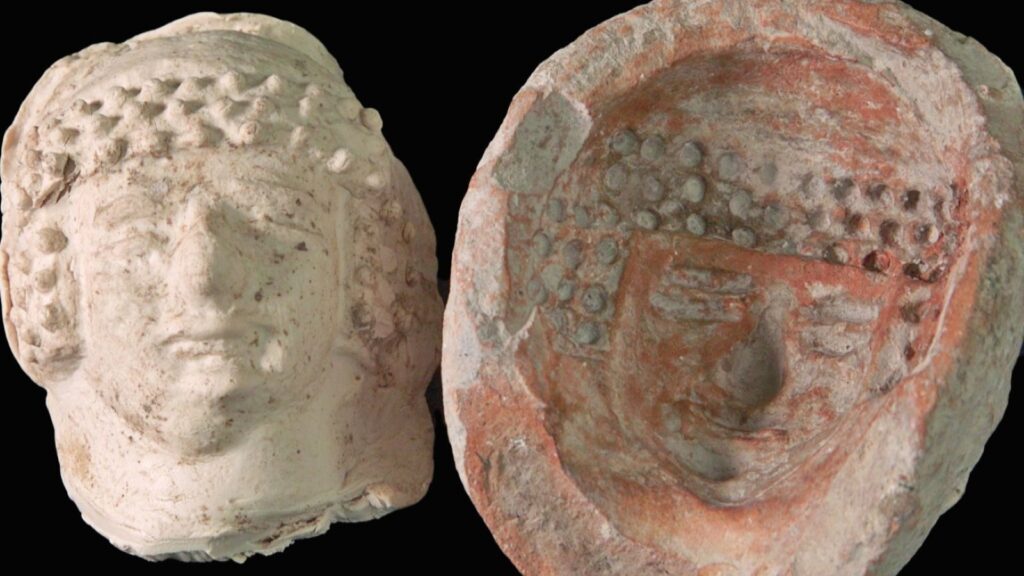
A rare ceramic mold discovered beneath Jerusalem’s Tower of David has provided the first direct evidence that the city’s distinctive clay figurines were manufactured locally during the First Temple period.
The mold, which was used to shape the face of a female figurine, dates to the late First Temple period, between the eighth and sixth centuries BCE. Although archaeologists have recovered large numbers of figurines from Jerusalem, no mold used to produce them had previously been found in the city.
The discovery therefore resolves at least part of a long-standing archaeological question: were Jerusalem’s figurines made by local craftspeople, or were they brought into the city from workshops elsewhere in the Kingdom of Judah?
A Face Emerges from the Soil
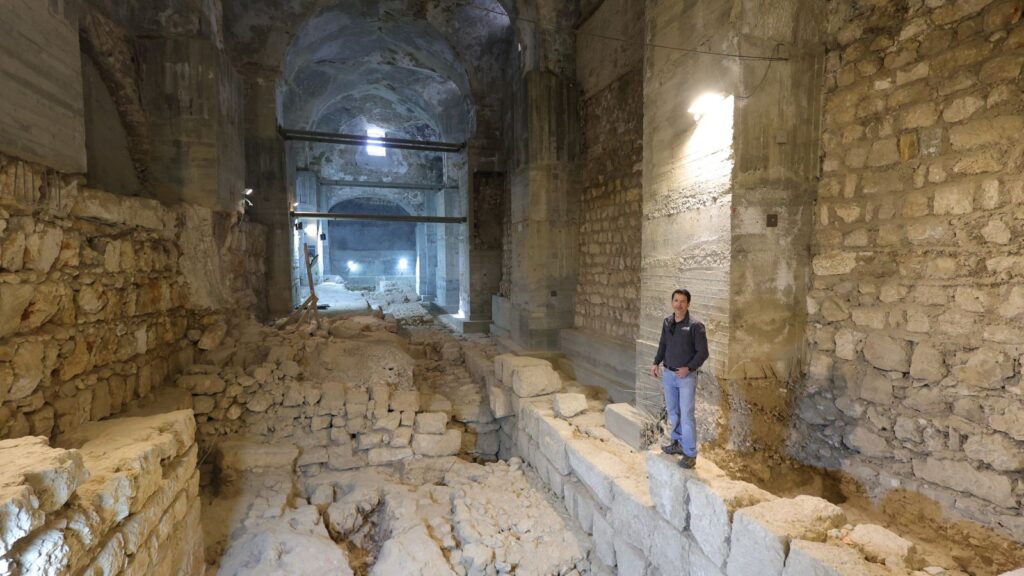
The mold was uncovered during Israel Antiquities Authority excavations at the Kishle, a historic structure within the Tower of David Jerusalem Museum complex near Jaffa Gate.
Archaeologists found it while sifting soil removed from fills and accumulated deposits dating to the First Temple period. The excavations are being conducted as part of preparations for the museum’s new Schulich Wing for Archaeology, Art and Innovation.
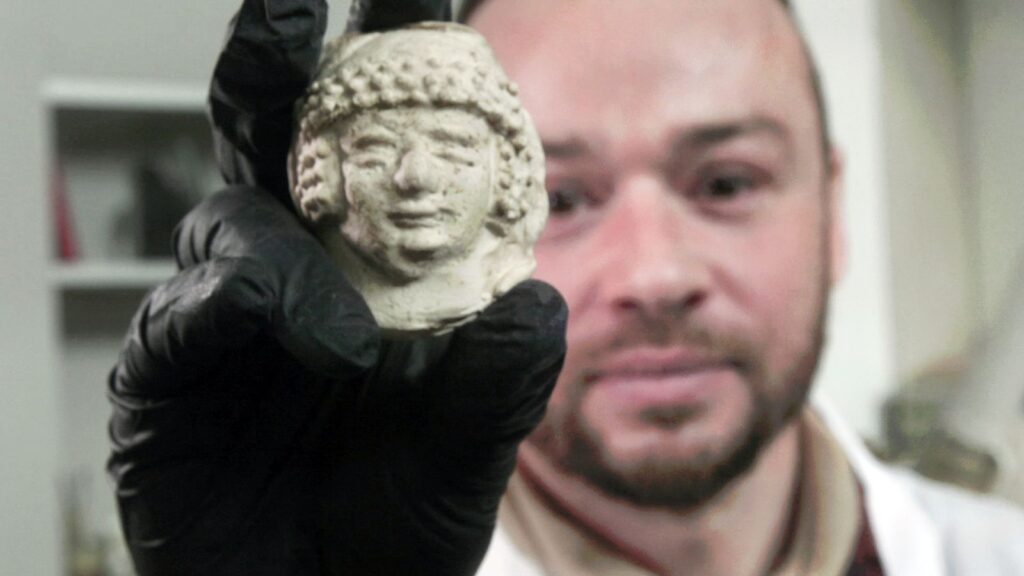
After its discovery, ceramics conservator Tamar Gonen carefully removed the soil embedded inside the mold. The cleaning revealed delicately formed facial features and an elaborate hairstyle composed of rows of curls.
Conservation specialist Sviatoslav Klindukhov subsequently produced a modern cast from the ancient mold. The result reconstructed the complete face that a Jerusalem craftsperson intended to reproduce approximately 2,700 years ago.
First Evidence That the Figurines Were Made in Jerusalem
Clay figurines are among the most familiar objects recovered from settlements belonging to the Iron Age Kingdom of Judah. Examples have been found in homes, streets, tombs and other contexts across Jerusalem and the surrounding region.
Yet finished figurines reveal only part of their manufacturing process. Until the Kishle discovery, archaeologists had not identified a production mold in Jerusalem that could demonstrate where their faces were formed.
“This raised the question of whether they were manufactured locally or imported from elsewhere,” excavation director Amit Re’em said. According to Re’em, the newly discovered mold shows that at least some of the figurines circulating in ancient Jerusalem were made within the city itself.
The figurines generally measured between 10 and 20 centimetres in height. Their heads and bodies were manufactured separately: the face was pressed into a mold, while the remainder of the head and the pillar-like body were usually shaped by hand. This construction method explains why many examples are discovered broken at the neck.
They were originally coated with a white slip and decorated with pigments including red, yellow and black, although their painted surfaces have rarely survived.
Who Did the Female Figurines Represent?
The best-known examples are commonly called Judean Pillar Figurines. They portray women with stylized cylindrical bodies, prominent breasts, carefully arranged hair, and hands placed beneath or against the chest.
Their purpose remains one of the most debated questions in the archaeology of ancient Judah.
Some scholars have interpreted the figures as representations of Asherah, a goddess associated with fertility and protection in the ancient Levant. Others argue that they represented mortal women, household guardians or figures used in rituals connected with pregnancy, childbirth, healing and family welfare.
The Israel Antiquities Authority has also raised the possibility that some served as household amulets intended to secure protection, blessing and good fortune. An older interpretation identifying them as children’s toys has not been completely dismissed, although their widespread presence in domestic and funerary settings suggests that their function may have been more complex.
Part of a Wider Figurine Tradition
Comparable Judean Pillar Figurines have been recovered from sites across the former Kingdom of Judah. Tell en-Naṣbeh, generally identified with biblical Mizpah, produced one of the largest assemblages known outside Jerusalem, while examples have also been documented at Ramat Rahel, Beth Shemesh, Lachish and other Iron Age settlements.
Researchers studying terracotta figurines from neighbouring areas such as Ammon, Moab and the Jordan Valley have identified groups of objects apparently produced from the same molds. These “mold links” demonstrate that workshops elsewhere in the southern Levant were using repeatable designs and organized manufacturing techniques during the Iron Age. Actual production molds, however, remain far less common than the figurines made from them.
The Kishle artifact is therefore significant not because molded figurines were unknown, but because it places part of that production process directly inside ancient Jerusalem.
A Small Object with Wider Implications
The Kishle excavations have exposed a long sequence of Jerusalem’s history, including remains associated with the Kingdom of Judah, the Hasmonean and Herodian periods, Ottoman construction and the building’s later use as a prison during the British Mandate. Archaeological investigation of the site began in 1999 and has continued in several phases.
Unlike the thousands of broken figurines recovered across Judah, the newly discovered mold represents the workshop stage before those objects entered homes and everyday life.
Its carved face offers more than a reconstruction of an ancient hairstyle. It provides rare physical evidence of a craftsperson working in Jerusalem during the final centuries of the Kingdom of Judah—and of the private beliefs, anxieties and hopes carried into the city’s households through small objects made of clay.
