
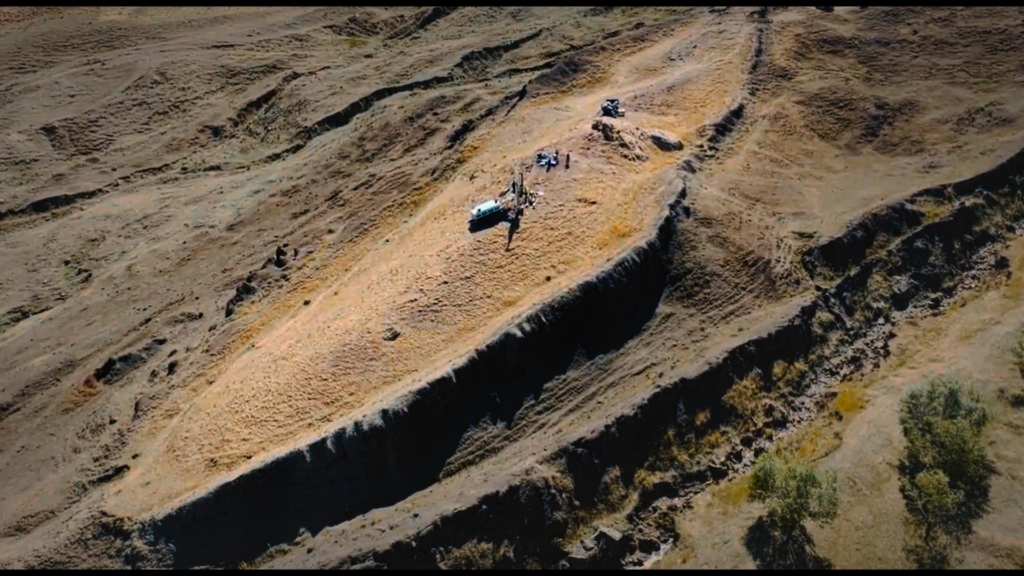
Every new finding creates excitement for researchers searching for traces of Noah’s Ark in Ağrı. However, as the studies progress, the number of unanswered questions also grows. Most recently, it was announced that carbonized wood fragments were recovered from a depth of approximately nine meters in the Durupınar Formation. The research team believes these remains could shed light on the history of the ship-shaped formation that has been a subject of long-standing debate.
The newly announced wood samples represent the most notable development in the research following previous radar scans and drilling operations in the region. However, the age of the fragments, the species of the tree, and their relationship to the geological environment have not yet been finalized. Consequently, no scientific conclusion has been reached as to whether the findings belong to an ancient ship.
Wood Fragments Recovered from Nine Meters Deep
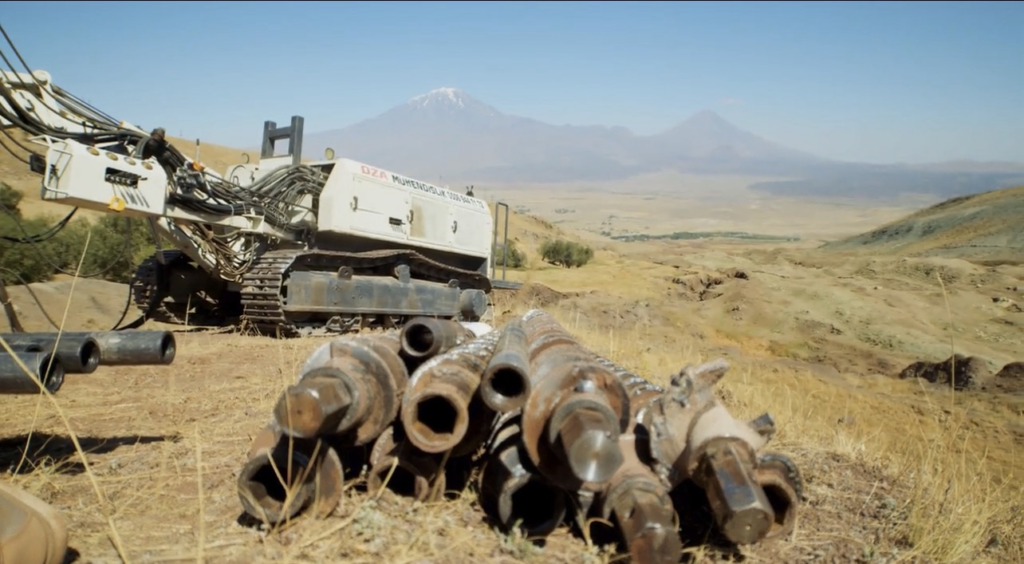
A team led by Prof. Dr. Cenker Atila, a faculty member of the Department of Archaeology at Sivas Cumhuriyet University, conducted drilling, ground-penetrating radar, and geological sampling studies in the Durupınar Formation in the Doğubayazıt district of Ağrı during the 2026 research season.
According to the official statement from the university, the research was carried out with the participation of scientists from various countries. Fieldwork, which began in June, was completed on September 11. The team collected soil and core samples from various depths to understand the internal structure of the formation.
In a statement published on October 27 by Noah’s Ark Scans, the organization supporting the research, it was reported that carbonized wood fragments were obtained from approximately nine meters below the surface during drilling. According to the statement, researchers sent the samples to a laboratory for carbon-14 dating and species identification.
The fact that the findings were extracted from such a depth is of great interest to the researchers. However, the depth at which an object is found does not directly indicate its age. The formation process of the sedimentary layer where the wood was found, whether the material was transported there later, and its relationship with other surrounding remains must also be investigated.
Independent analysis to document that the samples are indeed carbonized wood is crucial for the next stages of the study.
Three-Level Structure in Radar Scans
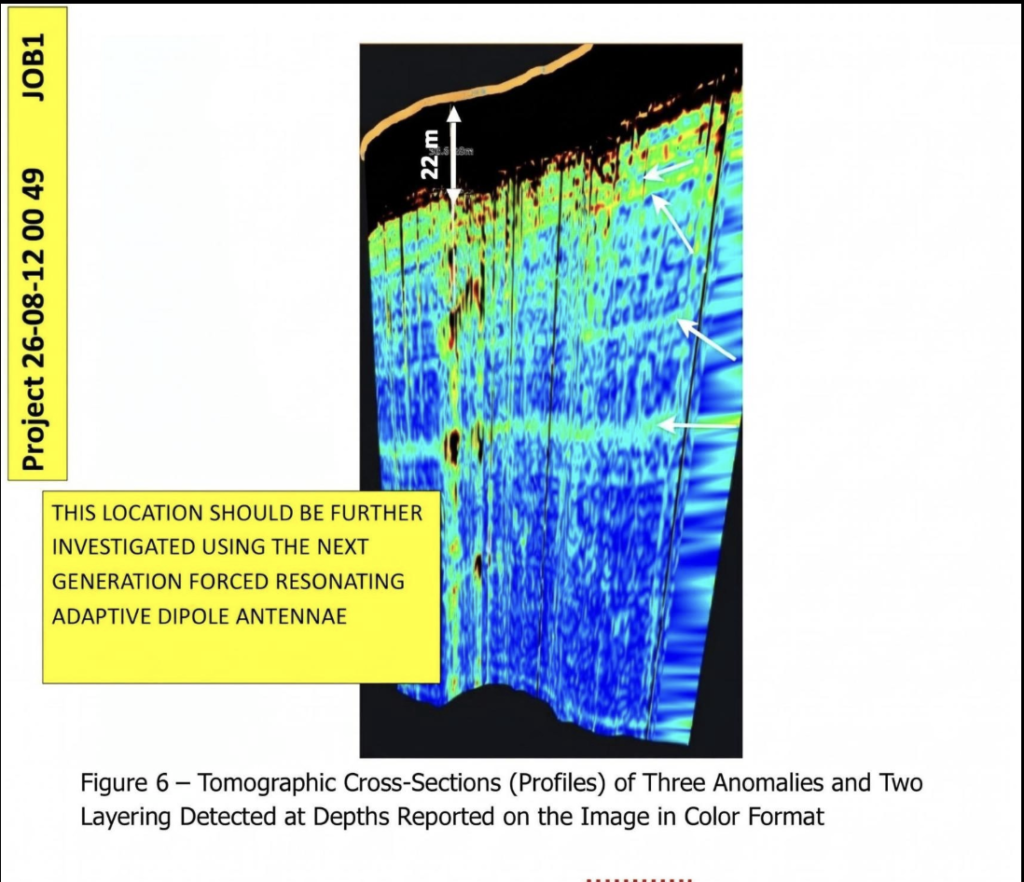
The research is not limited to physical samples. The team also conducted radar scans to identify areas with different densities and characteristics underground.
Speaking at the 8th International Mount Ararat and Noah’s Ark Symposium hosted by Ağrı İbrahim Çeçen University in October, Prof. Dr. Cenker Atila announced that only about 20% of the radar data evaluation has been completed.
According to Atila, corridor-like linear anomalies and areas that could be interpreted as rooms, which had been reported previously, were detected again. Furthermore, a structure thought to have three separate levels was identified in the radar data.
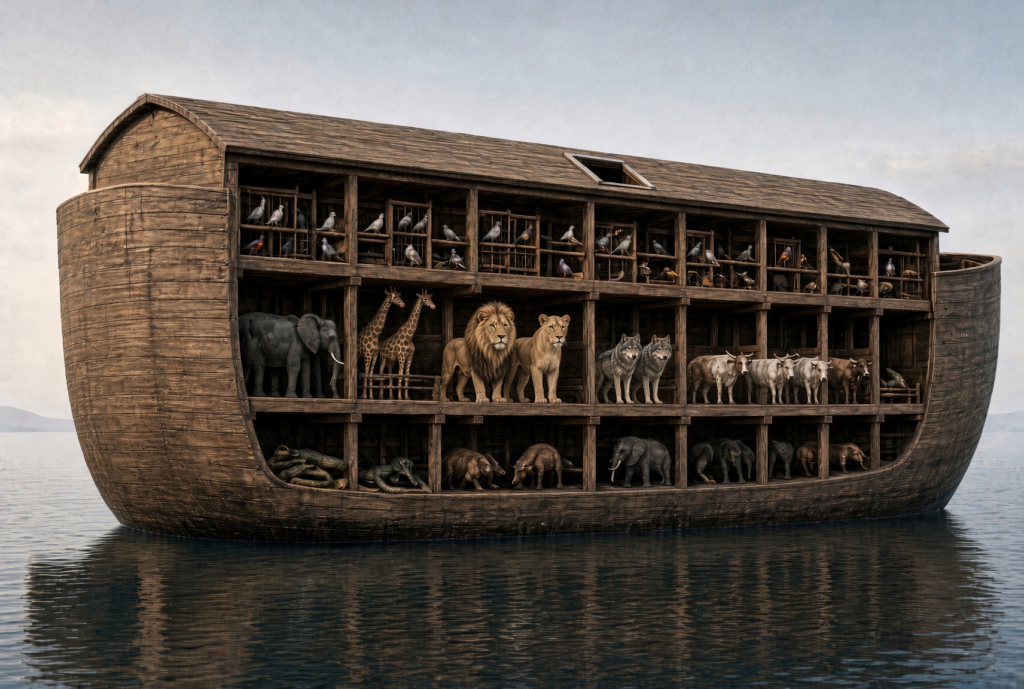
Prof. Dr. Atila stated during the symposium that while Noah’s Ark is described as having three decks in holy books, their radar research has also identified a three-level structure.
This similarity is among the most striking results of the research. However, the presence of three different levels in radar images does not prove that these are human-made floors. Natural layering underground, rock boundaries, and different geological characteristics can also create distinct shapes in radar data.
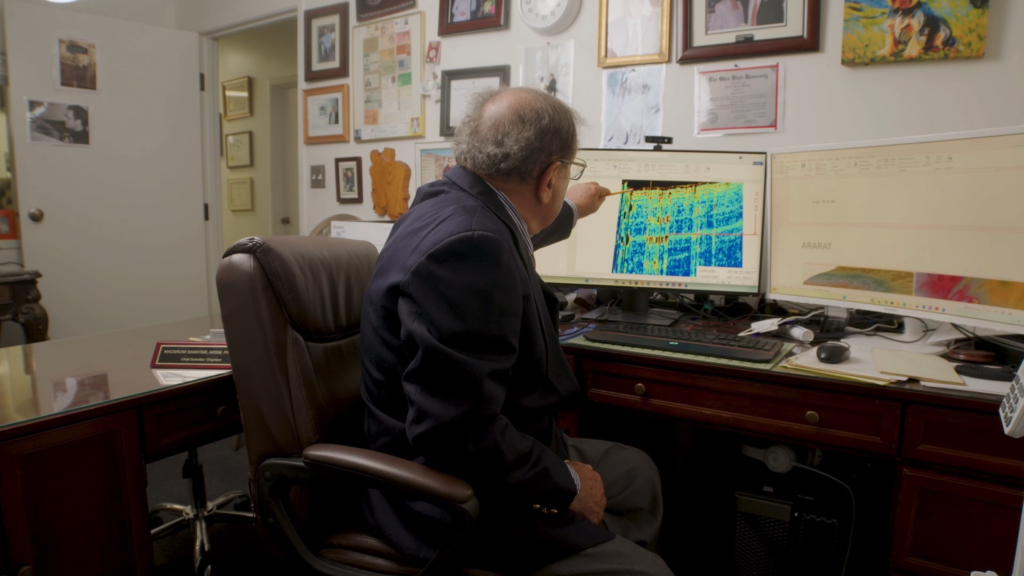
Dr. Khosrow Bakhtar, a member of the research team, argues that the regular structures in the radar images cannot be explained by natural geological processes. Nevertheless, this interpretation needs to be tested through independent geophysical and geological examinations.
Previous Findings and Geological Debates
The Durupınar Formation has been associated with Noah’s Ark since it was noticed in aerial photographs in 1959. The ship-shaped formation, approximately 157 meters long, has been the subject of various radar studies, surface examinations, and geological assessments in the past.
Interpretations regarding man-made walls, ship compartments, and petrified wood put forward in previous studies have not gained general acceptance in the scientific community. A study published in 1996 by geologists Lorence Collins and David Fasold argued that the formation was created by natural geological processes.
For this reason, it is not possible to view the new radar anomalies from the 2026 research as a definitive confirmation of previous interpretations. Conversely, the examination of physical samples may provide new data to test assumptions based solely on images.
One of the most critical questions facing the researchers is whether the fragments reported as carbonized wood actually point to ancient human activity.
Could There Be Another Explanation for the Carbonized Wood?
Andrew Jones, founder of Noah’s Ark Scans and vice president of the research project, acknowledges that while the new findings are important, it is too early for definitive conclusions.
Jones noted that while the carbonized fragments could be remains from Noah’s Ark, they could also be remnants left by a shepherd who lit a fire in the region centuries later. This second possibility remains a hypothesis for now.
According to Jones, carbon-14 dating and other laboratory examinations must be completed to determine the exact age of the wood.
This statement highlights the fundamental challenge in interpreting the new find. Even if the existence of the wood fragments is confirmed and they are found to be ancient, further evidence will be needed to understand which human activity they are associated with.
Specifically, the location of the material, the surrounding sediments, and any possible signs of craftsmanship must be examined together.
Laboratory Results Will Determine the Next Phase of Research
Prof. Dr. Cenker Atila announced that photographs of the carbonized wood samples will be shared with the public. The research team continues the laboratory analysis of hundreds of soil and core samples collected from the field. Detailed analysis of the radar data and new research reports are expected to be completed in the coming months.
The carbon-14 method may help determine the approximate age of the samples, while examinations of the wood anatomy may reveal the tree species. However, these results alone will not prove that the samples belong to a ship.
For that, questions such as the relationship between the wood and the geological layer it was found in, the possibility of natural transport, and whether it was processed by human hands must be answered. Whether the three-level structure in the radar data represents actual architectural elements can be evaluated by comparing results obtained from different scientific methods.
Whatever the findings ultimately reveal, the research at Durupınar may still provide valuable insights into the region’s geological past and traces of human activity. Even if the formation proves to have no connection to Noah’s Ark, the search itself would not necessarily end. For those seeking the vessel described in religious traditions, the possibility of finding it elsewhere would remain. For archaeologists and geologists, however, the task is more immediate: to understand what the evidence actually reveals, wherever it may lead.
